When you click on links to various merchants on this site and make a purchase, this can result in this site earning a commission. Affiliate programs and affiliations include, but are not limited to, the eBay Partner Network.
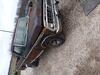
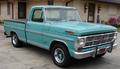
I have a 1976 Ford f150 ranger XLT with a 360 Cid in it with 92,000 original miles. Okay so long story short I pulled this truck out of a field for $900. He wanted 1500 for it but all I had was $900 that I could pull out of the bank. Now when I first got the truck I was having some issues with it but the carburetor. It had what I believed was a 2150 or 2100. I rebuilt it twice and the first time not much improvement. The second time I rebuilt it I got a lot of improvement but it was still dumping fuel into the engine. So in the end I ended up buying a brand new one online which fixed all my issues as far as that for the most part. I advance the timing a little bit by ear. I was having overheating issues and I was told that this would fix that and it did. Now I do believe I want to go with a carburetor that can really maybe wake up to 360 but I don't know what to put on it. I'm planning on running 33 10.50s on it though. It has 3.5 gears in it. An nMP 203 transfer case so it's full time four wheel drive. I got it legal about 3 months after I got the truck after rewiring it from front to back and so on and so forth. It has an exhaust leak on the driver side exhaust manifold so my plan is to get some long tube headers I hope and help it breathe as well as fix my exhaust leak. I'm not sure if the gauge is accurate on the instrument cluster but it does say it's running a little high on the oil pressure. I am currently running 10W-30 in it. I am also having issues with the temp gauge on the instrument cluster being that it never gets above the "C" when it does get hot. I'm also replaced the radiator being that the old one was leaked and no matter which one I got out of the junk or they all had holes in them on the old brass radiators. I got an aluminum Three core radiator. I have done a full tune up on the truck except for the spark plugs. I have condensation of an extreme amount at the PCV valve on the oil filler cap. It had milky oil for a bit from my short drives on the dipstick but the last time I ran it down the road I evaporated I'd say about 90% of the moisture out. Also I have belt squeaking when the truck is extremely cold when I press on the accelerator. I'd like to say that I am not a new one it comes to working on vehicles I worked in a shop for quite a few years but it was on mostly newer vehicles and nothing this old. I feel like a kid in the candy store who kind of knows what he's doing but isn't exactly confident. So here comes down to what carburetor do you think would be best for my daily driver? Do you think switching too long to headers is recommended? I've heard that they can be a pain in the butt to install. And here's the dumbest question of all is there any way that I can get my MPG up past 8 miles per gallon. I've seen some people claim they can get 12 or 13 which I would be happy with.
Haha! Now that's funny right there...
Not raggin' on ya though. I'm probably the longest-winded poster around. From here, I actually appreciate all the details you provided.
Originally Posted by 1982 f150 explorer
It had what I believed was a 2150 or 2100. I rebuilt it twice and the first time not much improvement. The second time I rebuilt it I got a lot of improvement but it was still dumping fuel into the engine.
Glad the new one seemed to fix the issue. But don't ignore the fuel pump putting out too much pressure either.
In fact, if you replaced the pump, I'd be surprised if it didn't put out too much pressure! And if you did not replace the pump, after sitting in a field for a spell I'm even more shocked that it still worked at all!
Originally Posted by 1982 f150 explorer
I advance the timing a little bit by ear. I was having overheating issues and I was told that this would fix that and it did.
Good, but it would still be good to check/verify the timing. Since you have worked on vehicles, you would normally have a timing light of your own. But since they are all newer, maybe you never needed one!
If you don't, you can sometimes "rent" (as in borrow) one from a local chain store.
Originally Posted by 1982 f150 explorer
Now I do believe I want to go with a carburetor that can really maybe wake up to 360 but I don't know what to put on it.
Now, my next statement could be wrong, but I don't think so. A carburetor alone waking up a 360? Not gonna' happen! Especially on a '76 vintage version? I'm only pretty certain, but we'll let others that have actually driven mid-seventies truck 360's with that tire and gear combination set the reality tone.
I'm still a fan though, and I like several, but while I think it will run well and you will like it, it's not going to be a game changer in the power department.
I like the Edelbrock carbs for ease of maintenance, but not a fan off-camber or off-road. Holley's have the most variations and options and fans, but I've only had decent luck with them myself. Just because my lack of wanting to drill down deeper and deeper. I do like the Summit brand carb that looks like an old Ford Autolite 4100 though!
Never run one, but after seeing the fun results on an episode of Engine Masters on Motor Trend, I'm a fan already.
Originally Posted by 1982 f150 explorer
I'm planning on running 33 10.50s on it though. It has 3.5 gears in it.
Not the greatest combination, as many have found. But mostly the griping comes from the 302 engine crowd. Some with the larger, torquier engines actually like the combination. But I bet more that have the 4.11's are even happier.
And gearing can be the game changer (or deal breaker) in the "wakes it up" department. And it can improve your mileage, or make it worse. Take your pick...
Originally Posted by 1982 f150 explorer
It has an exhaust leak on the driver side exhaust manifold so my plan is to get some long tube headers I hope and help it breathe as well as fix my exhaust leak.
I'd say the headers will help as much, if not more than the carburetor. Certainly help when used in conjunction with the carb swap.
And yes, they can be a pain. No experience with the 360, but my 400 I ended up returning them because the passenger side hit the frame and I got tired of trying to tweak things to make them work.
Originally Posted by 1982 f150 explorer
I'm not sure if the gauge is accurate on the instrument cluster but it does say it's running a little high on the oil pressure.
Common complaint. The only way to know, is to verify with independent gauges. Or just drive on, oblivious to the actual temps, pressures, charging and fuel levels!
Speaking of which, does your cluster have an ammeter/Battery gauge, or just the warning lamp?
Originally Posted by 1982 f150 explorer
I have done a full tune up on the truck except for the spark plugs.
Sorry to be a nit-picker here, but you have not given it a full tune up until the plugs have been changed. Unless they looked almost new, they might be a source of trouble.
Then again, if it runs good now, then there's really no dire reason to jump in and change them.
But I still say re-check the timing with a light. If you have not done so already that is.
Originally Posted by 1982 f150 explorer
I have condensation of an extreme amount at the PCV valve on the oil filler cap. It had milky oil for a bit from my short drives on the dipstick but the last time I ran it down the road I evaporated I'd say about 90% of the moisture out.
Well, that's partially good anyway. Did you change the oil from when it was sitting? Have you changed out the old PCV valve for a new one?
One other thing to check with the PCV system would be the amount of gunk that has burned into the tube and carb spacer. Is it a clean path for vacuum? I've seen them completely clogged before. It was a 360 in a passenger car (or was it a 351M? I can't remember now) and the spacer was caked up with EGR debris and the metal vacuum tube for the PCV valve was almost fully clogged itself.
But let's still hope it was just excess condensation, and not a leaky head gasket or cracked head or block.
Originally Posted by 1982 f150 explorer
Also I have belt squeaking when the truck is extremely cold when I press on the accelerator.
Might be the alternator belt. Do you know which alternator you have? The large case 1G is fairly notorious for this when there is not enough belt wrap on the pulley. Not a common issue with the pickups I don't believe, but they were also not a commonly checked option box on these trucks either. Most of them got the small case 1G in the 50-60 amp range. The large case models ranged from 70 to 105 amps usually.
An old glazed belt can do it. V-belts were supplanted by wide belts (usually serpentine) in the late seventies in cars, and by the mid-'80's on trucks I think. So not a big issue when you started working on them I'm guessing.
Belt tension is a real thing too, so check the tension on them all, but especially the alternator.
Originally Posted by 1982 f150 explorer
And here's the dumbest question of all is there any way that I can get my MPG up past 8 miles per gallon. I've seen some people claim they can get 12 or 13 which I would be happy with.
haha again!
Not a dumb question at all. But one that we've been dealing with for 40 years and more.
There are many things you can do to improve the efficiency of a mid-seventies smogged out truck engine. Nothing wrong with being "smogged out" and in fact it's why we have 600 horsepower engines that might actually get 30mpg nowadays! But smog rules were literally in their infancy at this point. So the manufacturers were in a steep learning curve as to what worked, what did not, and what made things worse. At the time, power was secondary (tertiary?) and mpg suffered.
But improving your mileage? Your 8mpg around town is quite typical. But along with engine size and design and level of development, your gearing, tire size, tire design, tire pressure, vehicle weight, carburetor design and jetting, exhaust type, engine condition, and even your right foot's attitude towards the go pedal, all have something to do with it.
I'm looking forward to seeing if my mpg increases at all with my rebuilt 400 with whatever carburetor (or efi) and exhaust I choose. But 13.5 was the most my truck has EVER gotten. That was on a trip up our Highway 5, fully loaded up to it's max GVWR, many years ago.
That was the second time I'd experienced a vehicle under more load than normal, getting more gas mileage than normal. Seems that some engines like to have the carburetor opened up a bit wider when cruising down the road.
The normal mileage for that truck is 12 on the highway, 7-8 around town.
That's with 4.11 gears and 31" or so heavy duty truck tires. Changing to 35's (255/85/16) did not seem to change it. Looked and felt better though!
Haha! Now that's funny right there...
Not raggin' on ya though. I'm probably the longest-winded poster around. From here, I actually appreciate all the details you provided.
Glad the new one seemed to fix the issue. But don't ignore the fuel pump putting out too much pressure either.
In fact, if you replaced the pump, I'd be surprised if it didn't put out too much pressure! And if you did not replace the pump, after sitting in a field for a spell I'm even more shocked that it still worked at all!
Good, but it would still be good to check/verify the timing. Since you have worked on vehicles, you would normally have a timing light of your own. But since they are all newer, maybe you never needed one!
If you don't, you can sometimes "rent" (as in borrow) one from a local chain store.
Now, my next statement could be wrong, but I don't think so. A carburetor alone waking up a 360? Not gonna' happen! Especially on a '76 vintage version? I'm only pretty certain, but we'll let others that have actually driven mid-seventies truck 360's with that tire and gear combination set the reality tone.
I'm still a fan though, and I like several, but while I think it will run well and you will like it, it's not going to be a game changer in the power department.
I like the Edelbrock carbs for ease of maintenance, but not a fan off-camber or off-road. Holley's have the most variations and options and fans, but I've only had decent luck with them myself. Just because my lack of wanting to drill down deeper and deeper. I do like the Summit brand carb that looks like an old Ford Autolite 4100 though!
Never run one, but after seeing the fun results on an episode of Engine Masters on Motor Trend, I'm a fan already.
Not the greatest combination, as many have found. But mostly the griping comes from the 302 engine crowd. Some with the larger, torquier engines actually like the combination. But I bet more that have the 4.11's are even happier.
And gearing can be the game changer (or deal breaker) in the "wakes it up" department. And it can improve your mileage, or make it worse. Take your pick...
I'd say the headers will help as much, if not more than the carburetor. Certainly help when used in conjunction with the carb swap.
And yes, they can be a pain. No experience with the 360, but my 400 I ended up returning them because the passenger side hit the frame and I got tired of trying to tweak things to make them work.
Common complaint. The only way to know, is to verify with independent gauges. Or just drive on, oblivious to the actual temps, pressures, charging and fuel levels!
Speaking of which, does your cluster have an ammeter/Battery gauge, or just the warning lamp?
Sorry to be a nit-picker here, but you have not given it a full tune up until the plugs have been changed. Unless they looked almost new, they might be a source of trouble.
Then again, if it runs good now, then there's really no dire reason to jump in and change them.
But I still say re-check the timing with a light. If you have not done so already that is.
Well, that's partially good anyway. Did you change the oil from when it was sitting? Have you changed out the old PCV valve for a new one?
One other thing to check with the PCV system would be the amount of gunk that has burned into the tube and carb spacer. Is it a clean path for vacuum? I've seen them completely clogged before. It was a 360 in a passenger car (or was it a 351M? I can't remember now) and the spacer was caked up with EGR debris and the metal vacuum tube for the PCV valve was almost fully clogged itself.
But let's still hope it was just excess condensation, and not a leaky head gasket or cracked head or block.
Might be the alternator belt. Do you know which alternator you have? The large case 1G is fairly notorious for this when there is not enough belt wrap on the pulley. Not a common issue with the pickups I don't believe, but they were also not a commonly checked option box on these trucks either. Most of them got the small case 1G in the 50-60 amp range. The large case models ranged from 70 to 105 amps usually.
An old glazed belt can do it. V-belts were supplanted by wide belts (usually serpentine) in the late seventies in cars, and by the mid-'80's on trucks I think. So not a big issue when you started working on them I'm guessing.
Belt tension is a real thing too, so check the tension on them all, but especially the alternator.
haha again!
Not a dumb question at all. But one that we've been dealing with for 40 years and more.
There are many things you can do to improve the efficiency of a mid-seventies smogged out truck engine. Nothing wrong with being "smogged out" and in fact it's why we have 600 horsepower engines that might actually get 30mpg nowadays! But smog rules were literally in their infancy at this point. So the manufacturers were in a steep learning curve as to what worked, what did not, and what made things worse. At the time, power was secondary (tertiary?) and mpg suffered.
But improving your mileage? Your 8mpg around town is quite typical. But along with engine size and design and level of development, your gearing, tire size, tire design, tire pressure, vehicle weight, carburetor design and jetting, exhaust type, engine condition, and even your right foot's attitude towards the go pedal, all have something to do with it.
I'm looking forward to seeing if my mpg increases at all with my rebuilt 400 with whatever carburetor (or efi) and exhaust I choose. But 13.5 was the most my truck has EVER gotten. That was on a trip up our Highway 5, fully loaded up to it's max GVWR, many years ago.
That was the second time I'd experienced a vehicle under more load than normal, getting more gas mileage than normal. Seems that some engines like to have the carburetor opened up a bit wider when cruising down the road.
The normal mileage for that truck is 12 on the highway, 7-8 around town.
That's with 4.11 gears and 31" or so heavy duty truck tires. Changing to 35's (255/85/16) did not seem to change it. Looked and felt better though!
Paul
Okay so that was actually not even close to everything I did to the truck when I got it, 🤣 when I got the truck it actually had brand new spark plug wires that were chewed and brand new spark plugs from what I could see. I just wanted to go with the 33s with the 10-5 width to get that little bit of extra improvement and travel. I know that it wouldn't be that much more weight for the engine to pull because I would keep it around same because I'm not going to 12:50 width. I do know that I have an advantage with 3.5 gear ratio though. As for the fuel pump I actually did replace it. As for the instrument cluster I actually replaced the board on it entirely thinking back I probably should have replaced the stepper motors too but I didn't, I had enough issues chasing wires for days trying to figure out what went to what and getting the right diagram because Ford couldn't make up the damn mind. And yeah I am definitely concerned about the headers fitment issues I've heard about. I was thinking about going for a holly 600 CFM four barrel. And I do have a timing light but I can't find the TDC mark on the crank or the rule. I have plans to see if I could get some timing tape to do it but I just haven't gotten around to it yet I also want to install a tac in it as well.
Sounds good. I’m a huge fan of timing tape and use it wherever I can.
It’s been a lifesaver for tuning in some cases. Especially good for those with Ford 302 and 351 Windsors.
Ford used at least two, if not three different locations for timing marks and pointers, depending upon which vehicle the engine was installed in.
Sounds good. I’m a huge fan of timing tape and use it wherever I can.
It’s been a lifesaver for tuning in some cases. Especially good for those with Ford 302 and 351 Windsors.
Ford used at least two, if not three different locations for timing marks and pointers, depending upon which vehicle the engine was installed in.
I have been unable to find it thus far I'm worried I might have scratched it off. But I do know how to find top dead center . My belief is that you find top dead center and then you mark on the crankshaft and then you put timing tape lined up with the mark and then you use a timing light ( I do have an old school Craftsman timing light) I would say my biggest hurdle right now is cash because I bought the truck as my daily driver from the field after it's sad for probably 25 years probably not my best choice but I did only pay $900 for it. After an accident in my previous vehicle from falling asleep at the wheel I lost everything and ended up moving back in with my parents until I could get on my feet that was in January. Been trying to get a job since. I live in a rural area so a vehicle is a must. I'm also disabled from the Army so I can't walk very far anymore. I used to walk 7 miles every day to and from work at one time when I was younger. So as far as I've gotten this truck has been on the very bottom dollar. I can't wait to have some actual money to throw into it. Plan is a resto mod. Took me quite a while to decide on that because I was thinking about keeping it original but then I'm like I just want the truck for me. Thanks for your advice man I really appreciate it and also the conversation.
Thanks. Glad you’re on the mend!
From all low points…
Short of timing tape, you can still find top dead center and then mark it with whatever method you choose.
From scratching a line in it, to a simple sharpie mark. Or even some fingernail polish!
Just make sure that you mark the zero point adjacent to whatever timing pointer your engine has. Then find the 10° before TDC location, and mark that as well.
You could choose 10, or any number you want such as 14 perhaps. I like 10 because it gives a standard point of reference that works for almost any engine in any condition.
If you choose to advance your timing a little further, that’s fine. But at least you’ll know where you are.
Just make sure your marks line up with the timing pointer, and not some other random spot.
A dial-back timing light is great, but is far from necessary. Plenty of perfectly good tuneups have been done with standard timing lights.
It may be possible that the outer ring of the balancer has slipped. Since you know how to locate tdc. If the marks are not lining up with the pointer then as suggested timing tape of measure the marks on the balancer and make new marks.
Thanks for your service, I hope the VA is helping you. Good luck
It may be possible that the outer ring of the balancer has slipped. Since you know how to locate tdc. If the marks are not lining up with the pointer then as suggested timing tape of measure the marks on the balancer and make new marks.
Thanks for your service, I hope the VA is helping you. Good luck
Thing is if it has slipped then it is not working like it should and should be replaced.
Just saying
BTW if using a dial back timing light and who is not now days, all you need to do is mark TDC
Dave ----
Thing is if it has slipped then it is not working like it should and should be replaced.
Just saying
BTW if using a dial back timing light and who is not now days, all you need to do is mark TDC
Dave ----
I don't know if it has slipped or not I just know that I haven't been able to find it and I ran sandpaper over and I was looking for timing marks I ran it while using the sandpaper.
It may be possible that the outer ring of the balancer has slipped. Since you know how to locate tdc. If the marks are not lining up with the pointer then as suggested timing tape of measure the marks on the balancer and make new marks.
Thanks for your service, I hope the VA is helping you. Good luck
Originally Posted by 1982 f150 explorer
I don't know if it has slipped or not I just know that I haven't been able to find it and I ran sandpaper over and I was looking for timing marks I ran it while using the sandpaper.
My point was if the balancer has slipped it is not good for the motor as it will shake its self apart.
Now because of what someone posted that marks have moved all over and not knowing if the balancer has slipped how can you mark TDC with anything on the motor and know the balancer is right?
The only way I know to make sure balancer is true is to get a new one.
Now once you know you have a non-slipped one in hand you can match it up to yours and if it has not slipped return the new one if you can.
But if the rubber is starting to come out or is all cracked I would replace it just to be safe.
Just my .02
Dave ----
Can you post a picture of your damper? Especially around the timing pointer?
Just curious how yours is set up.
And though I’m not a huge fan of just replacing things if they ain’t broke, this is an almost 50-year-old vehicle that’s been sitting in a field.
Under those conditions, I don’t care how low the mileage actually is. or to reverse paraphrase Indiana Jones, “it ain’t the mileage, it’s the age”…
It would be nice to see a pic, but hey, maybe it’s still pristine and perfectly usable.
Plenty of parts like that still a use.