



Need code diagnosis

Thread Starter
|
5th Wheeling
Joined: Aug 2016
Posts: 48
Likes: 4
Need code diagnosis
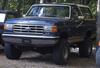
1995 F-150 4x4 XLT 5.8l 160XXX - New engine mounts, distributor, rotor, plugs, wires, MAP, intake O2 and TPS sensors, EGR, IAC, plus many more. View my last thread for background issues and repairs/replacements if you want.
So I just solved my previous issue of a rough driving truck. I removed the passenger head, did repairs, put it back together and the truck drives great. Now it’s throwing codes:
KOEO:
126, 128, 172, 212, 327, 334
KOER:
126, 172, 334, 411
I sprayed starter fluid all around the intake manifold and around vacuum lines and no change at all in RPMs. I had replaced every single vacuum line and ran them according to diagrams I found on here. It all seems fine. All sensors, solenoids, etc have been replaced. The only issue I know I have is my engine temp sensor stopped working after the repair (new one in the mail) and I suspect my upstream 02 sensor may be bad (also in the mail) but that thing is seized to hell and back so that’ll be some effort.
But, I don’t understand why I’m getting a lot of these codes when these parts are all new; maybe 10 miles on them since installed. I did do a diagnostic check on the IAC sensor and it passed, resistance and volts are within spec.
Thoughts?
So I just solved my previous issue of a rough driving truck. I removed the passenger head, did repairs, put it back together and the truck drives great. Now it’s throwing codes:
KOEO:
126, 128, 172, 212, 327, 334
KOER:
126, 172, 334, 411
I sprayed starter fluid all around the intake manifold and around vacuum lines and no change at all in RPMs. I had replaced every single vacuum line and ran them according to diagrams I found on here. It all seems fine. All sensors, solenoids, etc have been replaced. The only issue I know I have is my engine temp sensor stopped working after the repair (new one in the mail) and I suspect my upstream 02 sensor may be bad (also in the mail) but that thing is seized to hell and back so that’ll be some effort.
But, I don’t understand why I’m getting a lot of these codes when these parts are all new; maybe 10 miles on them since installed. I did do a diagnostic check on the IAC sensor and it passed, resistance and volts are within spec.
Thoughts?

Fleet Owner


Joined: Oct 2005
Posts: 20,789
Likes: 1,753
From: Kentucky
Did you test any of those new sensors? There are two parts to KOEO tests and Stored Code display. Were any of the "KOEO" codes you listed from Stored Codes? Did you clear the Stored Codes after replacing any sensor?
What color is the Ignition Control Module (ICM) installed on the truck? It should be a Motorcraft black version for your model year truck. This is related to your Code 212.
Code 327 and 334...is there a vacuum supply to the EVR and EGR valve? Did you measure the actual EGR Valve Position (EVP) sensor voltage?
Code 172..do you have any exhaust leaks upstream of the O2 sensor?
What color is the Ignition Control Module (ICM) installed on the truck? It should be a Motorcraft black version for your model year truck. This is related to your Code 212.
Code 327 and 334...is there a vacuum supply to the EVR and EGR valve? Did you measure the actual EGR Valve Position (EVP) sensor voltage?
Code 172..do you have any exhaust leaks upstream of the O2 sensor?
Thread Starter
|
5th Wheeling
Joined: Aug 2016
Posts: 48
Likes: 4
I only tested the IAC (OK) and the EGR (it’s new, removed vacuum to test rudimentarily and RPMs changed, so the plunger isn’t seized).
I unplugged the battery yesterday to reset and checked codes. It threw KOEO 173, 212 & 334. KOER codes were the same as today. Today I took it for a .5 hr drive until CEL came on. Checked codes (new codes added) and made this post.
The ICM is a black CCM style. It had a grey in previously which was changed to black per this forum.
There is strong vacuum to the EGR. I am unfamiliar with the EVR or what it is, I get no info online about that.
I am horrible with electric so I’m not sure exactly which wires need probing on the EGR, I get a voltage reading two different ways: 2.6v - 4v - Increases voltage when RPMs increase. 2.3v - 1.2v. Voltage decreases when RPMs increase.
The tube that collects exhaust gas back to the engine downstream from the O2 sensor had a large hole in it that was repaired. I used to have a large leak at the flange where the exhaust manifold mates with the exhaust piping that has also been repaired. I can feel air moving at speed at the rear passenger side of the engine bay but cannot detect where it is coming from. I do not think head cover gasket (new) and cannot feel air near that general area. It’s back a bit more and down further. Hard to tell when that engine is hot. It could be exhaust gasket, but that is also new and torqued properly with zero issues.
I unplugged the battery yesterday to reset and checked codes. It threw KOEO 173, 212 & 334. KOER codes were the same as today. Today I took it for a .5 hr drive until CEL came on. Checked codes (new codes added) and made this post.
The ICM is a black CCM style. It had a grey in previously which was changed to black per this forum.
There is strong vacuum to the EGR. I am unfamiliar with the EVR or what it is, I get no info online about that.
I am horrible with electric so I’m not sure exactly which wires need probing on the EGR, I get a voltage reading two different ways: 2.6v - 4v - Increases voltage when RPMs increase. 2.3v - 1.2v. Voltage decreases when RPMs increase.
The tube that collects exhaust gas back to the engine downstream from the O2 sensor had a large hole in it that was repaired. I used to have a large leak at the flange where the exhaust manifold mates with the exhaust piping that has also been repaired. I can feel air moving at speed at the rear passenger side of the engine bay but cannot detect where it is coming from. I do not think head cover gasket (new) and cannot feel air near that general area. It’s back a bit more and down further. Hard to tell when that engine is hot. It could be exhaust gasket, but that is also new and torqued properly with zero issues.
Fleet Owner
Joined: Oct 2005
Posts: 20,789
Likes: 1,753
From: Kentucky
There should be no vacuum applied to the EGR valve at idle.

For reference: EGR Valve Position sensor (EVP)
EVP output at KOEO or KOER should be between 0.24 to 0.67 VDC. In theory the signal output should be the same KOEO or KOER. If the output rises KOER versus KOEO that implies vacuum is getting applied by a faulty EGR Valve Regulator (EVR). If there is any vacuum applied to the EGR valve at idle that will be the most likely cause of Code 334.
I can feel air moving at speed at the rear passenger side of the engine bay but cannot detect where it is coming from. I do not think head cover gasket (new) and cannot feel air near that general area. It’s back a bit more and down further. Hard to tell when that engine is hot. It could be exhaust gasket, but that is also new and torqued properly with zero issues.
Thread Starter
|
5th Wheeling
Joined: Aug 2016
Posts: 48
Likes: 4
The diagram of the EVR (I had been calling it EVP) changed things. I realized from that web link that I had the vacuum lines going to it incorrectly swapped.
I had been working off this diagram which matches everything in my engine bay and I did not know which part of the Tetris-style ‘L’ shape for the vacuum lines at the EVP, TAB and TAD solenoids was “top” and “bottom” so I assumed “top” on the page was “top” of the solenoid, which seems to not be the case: in the vacuum diagram the “bottom” yellow line from EVR goes to the EGR, and in the website this is marked as the “top” vacuum connection.
So, I swapped all my lines. Now, the bottom vacuum plug on all the 3 solenoids are getting main vacuum.
I started the truck and it idled beautifully, smoother than ever before. No shake in the slightest. Then after about a minute or two of running it died and will not start. It cranks strong. Fuel pressure is 35 psi and codes are: 111, 10, 212, 334.
I feel we’re narrowing this down as I learn more about this vacuum and EGR system.
I do not know the brand of the ICM, there is no brand name on the face, only this info: REPF542701 - 2020/07/10 - 0005. Seems to simply be a model # and date of manufacture. If I remove it, maybe a make name underneath?
Also, I replaced the air injection pipes that connect the heads, there was a large rust hole in it. All of that system back there was re-connected or replaced while I had all the top end guts removed.
I had to make my vacuum lines work, based off the diagram plus making other connections that aren’t listed on the diagram. Used a lot of wye fittings to branch off of things. Here is my own drawing of my setup:
https://i.imgur.com/XbTZ1CI.jpg
I probably got something wrong here. I may take a video and link it here to walkthrough everything in hopes to explain and simplify.
edit:
Video of vacuum setup:
https://youtu.be/XUY5jZJ6E34
I had been working off this diagram which matches everything in my engine bay and I did not know which part of the Tetris-style ‘L’ shape for the vacuum lines at the EVP, TAB and TAD solenoids was “top” and “bottom” so I assumed “top” on the page was “top” of the solenoid, which seems to not be the case: in the vacuum diagram the “bottom” yellow line from EVR goes to the EGR, and in the website this is marked as the “top” vacuum connection.
So, I swapped all my lines. Now, the bottom vacuum plug on all the 3 solenoids are getting main vacuum.
I started the truck and it idled beautifully, smoother than ever before. No shake in the slightest. Then after about a minute or two of running it died and will not start. It cranks strong. Fuel pressure is 35 psi and codes are: 111, 10, 212, 334.
I feel we’re narrowing this down as I learn more about this vacuum and EGR system.
I do not know the brand of the ICM, there is no brand name on the face, only this info: REPF542701 - 2020/07/10 - 0005. Seems to simply be a model # and date of manufacture. If I remove it, maybe a make name underneath?
Also, I replaced the air injection pipes that connect the heads, there was a large rust hole in it. All of that system back there was re-connected or replaced while I had all the top end guts removed.
I had to make my vacuum lines work, based off the diagram plus making other connections that aren’t listed on the diagram. Used a lot of wye fittings to branch off of things. Here is my own drawing of my setup:
https://i.imgur.com/XbTZ1CI.jpg
I probably got something wrong here. I may take a video and link it here to walkthrough everything in hopes to explain and simplify.
edit:
Video of vacuum setup:
https://youtu.be/XUY5jZJ6E34
Fleet Owner
Joined: Oct 2005
Posts: 20,789
Likes: 1,753
From: Kentucky
Hard to say who the manufacturer of the ICM may be. The last few we have seen that came in a Motorcraft box were not branded on the part. I caution you to never trust the color of the ICM anymore since we have seen several examples of black aftermarket ICMs that trigger Code 212 and other driveability issues. At the very least check the circuit between ICM Pin 4 and PCM Pin 4 to verify the IDM signal path is good between the ICM and PCM (computer). If that is verified good then you most likely have a counterfeit black ICM.
1994 and up CCD Ignition
1994 and up CCD Ignition
Thread Starter
|
5th Wheeling
Joined: Aug 2016
Posts: 48
Likes: 4
I began by referencing this site. I wasn’t getting spark from the coil. I got to step 6: I put a sharpened length of copper wire into the LH spot of the coil and hooked it up to my test light. When the engine cranked the test light lit and the engine started. Who knows. I’ve turned it off and on multiple times and it starts fine now. Faulty wire?
Now, the engine idles at ~1500 rpm. It drops down to 1000 when in gear. If I press on the accelerator at idle it revs up to 2000 and stays there for a little while before slowly dropping back down to 1500.
It has a new TPS sensor installed. I probed the TPS and got 5.0v no matter the RPMs.
KOER - 412, 172, 411
Now, the engine idles at ~1500 rpm. It drops down to 1000 when in gear. If I press on the accelerator at idle it revs up to 2000 and stays there for a little while before slowly dropping back down to 1500.
It has a new TPS sensor installed. I probed the TPS and got 5.0v no matter the RPMs.
KOER - 412, 172, 411
Trending Topics
Fleet Owner
Joined: Oct 2005
Posts: 20,789
Likes: 1,753
From: Kentucky
411, 412 are related to the air injection system (Thermactor). Code 172 indicates a lean condition...may be related to the high idle/vacuum leak.
FTE Stories
Ford Trucks for Ford Truck Enthusiasts

3 Best / 3 Worst Parts of Modern Ford Ownership
Brett Foote
10 Amazing Upgrades That Solve Common Ford Truck Owner Headaches
Pouria Savadkouei
Every 2026 Ford Engine Explained
Brett Foote
10 Ugly Ford Trucks That We Still Kinda Love
Joe Kucinski
10 Things Every Truck Owner NEEDS (2026 Edition)
Michael S. Palmer
Rezvani's Latest Post-Apocalyptic Monster Is a Ford F-150 Raptor Underneath
Verdad Gallardo
Top 10 Most Expensive Ford Trucks Ever Sold on Bring a Trailer
Joe Kucinski
2027 Ford Super Duty Buyer's Guide (Every Model, Engine, & Package)
Brett Foote
Top 10 Ford Truck Tragedies
Joe Kucinski
Thread Starter
|
5th Wheeling
Joined: Aug 2016
Posts: 48
Likes: 4
I made a mistake. I just tested the signal wire and grounded to battery negative. It read 0.8v closed throttle and 4.5 WOT. So its working correctly.
I sprayed starter fluid everywhere around the intake manifold and vacuum lines and heard no jump in RPMs. I guess I need to do more reading about how to find a vacuum leak.
I sprayed starter fluid everywhere around the intake manifold and vacuum lines and heard no jump in RPMs. I guess I need to do more reading about how to find a vacuum leak.
Thread Starter
|
5th Wheeling
Joined: Aug 2016
Posts: 48
Likes: 4
I did the propane method to test for vacuum leaks. Used a long hose attached to the small tank. Went everywhere around the intake manifold multiple times, around every vacuum line, not the slightest change to RPMs.
Fleet Owner
Joined: Oct 2005
Posts: 20,789
Likes: 1,753
From: Kentucky
The propane or carb cleaner test on these EFI trucks is usually inconclusive. Too many vacuum lines, visible and hidden, vacuum reservoirs and the huge upper intake make finding vacuum leaks frustrating.
If the truck is still idling high verify the throttle is fully closed. If it is then another quick test is cap off all of the vacuum lines except the MAP sensor and fuel pressure regulator. Start the engine.
If the idle drops down then you know the leak is external to the engine. If the idle remains high the leak is on the engine.
If the truck is still idling high verify the throttle is fully closed. If it is then another quick test is cap off all of the vacuum lines except the MAP sensor and fuel pressure regulator. Start the engine.
If the idle drops down then you know the leak is external to the engine. If the idle remains high the leak is on the engine.

Thread
Thread Starter
Forum
Replies
Last Post
Alvardo Vizcaino
1987 - 1996 F150 & Larger F-Series Trucks
8
May 27, 2019 06:10 PM
carguy4165
1968-Present E-Series Van/Cutaway/Chassis
9
Oct 13, 2017 07:50 PM
skidoorulz
1987 - 1996 F150 & Larger F-Series Trucks
14
Jun 24, 2016 09:43 PM
4.9LOldFordTruck
1987 - 1996 F150 & Larger F-Series Trucks
5
Dec 16, 2015 11:32 AM
idfliers
1980 - 1986 Bullnose F100, F150 & Larger F-Series Trucks
14
Jan 3, 2003 10:37 PM