When you click on links to various merchants on this site and make a purchase, this can result in this site earning a commission. Affiliate programs and affiliations include, but are not limited to, the eBay Partner Network.
you realize the same company that machines the flats also is machining your rollers?
lol
Btw pls don’t make blanket statements about engine builders walking away from flats…last one I had done was an aggressive custom for a street strip 521 by an engine masters pro builder….I told him weekend warrior not professional and he said flat all day long if I am not doing consistent PM’s on the valvetrain…..too many issues with rollers coming unglued wrecking alot of parts.
You certainly are offended by an alternative point of view.
I'm not making blanket statements. As I said, do your research. Google flat-tappet failure, and you will find a mile-long list of engine builders that are now swearing against them. I didn't say it's not possible. I linked you to a builder who is confident in using them and shows you how he measures them. He didn't even go into break-in. He went into the actual details of why they are failing.
Rollers will tolerate a cam with a one thou taper, even though it should not. It might die early, and the lifter will get blamed. If the taper on the cam is off by one thou, the flat tappet will wipe it out. If you don't have the ability to check everything on the cam and lifters, you are taking more chances with flat tappets.
I wasn't even talking about trying to build the biggest and baddest engine around. I'm talking about reliability. I've put 300K miles on a roller (302 Ford), so don't tell me that because some of them have fallen apart, they all will. Everything is on the edge of survival when you build for maximum performance. That's why a top-fuel car gets rebuilt after every run. You must find your balance point.
Manufacturers went away from flat tappets, not because they could get more aggressive lifts or life out of the cam. They did it because they needed to get ZDDP out of the oil to make catalytic converters last longer. No common oil available today has the formulation for flat tappets. You can buy specialty oil formulated for flat tappets, but you will pay a severe premium for it. Once the break-in is done, the flat tappet is still viable with today's oils.
I'm not saying flat tappets are not usable these days. The cam taper can be measured with a micrometer. I don't have a surface plate to validate the flat tappet, do you? But unless you have the tools to check them, you are definitely rolling your dice.
If you have a cam or flat tappet lifters out of spec, you'll likely wipe the cam during a "proper" break-in. It's much more than handling procedures.
You certainly are offended by an alternative point of view.
You must find your balance point.
Manufacturers went away from flat tappets, not because they could get more aggressive lifts or life out of the cam. They did it because they needed to get ZDDP out of the oil to make catalytic converters last longer. No common oil available today has the formulation for flat tappets. You can buy specialty oil formulated for flat tappets, but you will pay a severe premium for it. Once the break-in is done, the flat tappet is still viable with today's oils.
Again, do your research. Choose your own risks.
Dear Chip,
1.) I am not offended and always like to learn...
2.) Finding a balance point is exactly my point....the first few posters said "Thou shalt only run roller cams....all else will fail at cam break-in as another lost soul to flat tappet hell."
3.) Roller cams also produce less emissions generally speaking...the OEM's didn't convert to roller so they can make more hp/ci..but instead govt regulations had an impact...same reason why EGR systems exist...it's not because they make more hp
4.) For me, a mild truck engine with mild springs that will peak probably 4500 rpm or less can be rebuilt (long block) for sub $3k all in doesn't constitute spending an additional $800-$1000 on a roller cam conversion....So i fully agree with your comment about doing research...it's the exact reason why the OP started this thread in the first place.
BTW - I run roller cams too....it's right for the application. But I'm not going to make a gray issue black and white....just the same as someone saying all 335 series engines are garbage. LOL
The 335's are garbage compared to the 385 series and FE's. and that's what we're talking about on 73-79's.
Roller cams are superior in every way to flat tappets except one, the cost, end of story.
There's not much gray in the world of mechanics if you take emotions out of the debate. find a mechanic who'll take a flat tappet 400 over a roller cam 460 and that's a guy you don't want to do business with.
Thanks for the input. I'm sorry I poked the hornets nest. I need to rebuild the engine because I know I have at least 2 trashed pistons.
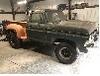
Vehicle.... 79 Scab 4x4 F150 C6 8' bed, 35" tires, 410 gears, no traction device yet but considering it. elevation mostly 4000 - 7500ft
I would like to get a reasonable 250-300 horse (tell me I'm crazy), 85/87 octane gas 100k mile engine. ( I know a flat tappet needs zinc but uncertain how long zinc will be available.)I know I want to change the cam profile but do not know to what (greener than green here) straight up timing. In '20&'21 I would pull a 1980 20' camper in heavy city traffic at 80+ mph. Then back down to 70-75. Only short times like 30-40 minutes. Still want to be able to do that. Otherwise basic country/city driving. Some off-road but not much. Mostly hard pack 2 tracks.
Can this be done with specs above with higher compression (what numbers) with the stock intake and carb? Aluminum intake & 4 barrel. (Size) What would be the max HP/trq I can get before it starts to affect fuel mileage? It was averaging 9.5-10.5 and would like to stay in that area.
Once again sorry for the bee's nest and long follow up. I'm sure some of the things listed are counter effective but that's why I'm asking and learning.
You asked good questions it's not your fault some people don't like improvements. I don't like a lot of changes myself.
Zinc will be around for years don't let that sway your decision.
You can get the HP you want but your fuel economy probably won't exceed what you were getting before. compression is key to performance but there are many factors playing into that, a major one is your cam . with the right cam and 8.5:1 or a little better compression you should get what you want on regular or mid grade fuel. 9:1 you'll be looking for super. don't let people talk you into high compression where you have to back your timing off to spare the pistons that's counterproductive.
You can ask a lot of questions and get varying answers but none will be as good as Brent's advice. make a list of your goals and ask him what you can do to achieve it and what he can do with a custom grind cam to make it work. I can assure you he won't steer you wrong and you won't do better .on my 428 I has him do a custom roller cam that would bleed off enough compression the 10:1 TRW's in my 428 CJ would run on pump premium and he nailed it perfectly. depending on piston options you may need to do something similar.
In my opinion, it’s not a bad thing to have a good debate as long as all of the parties are doing so in good faith and being respectful. Get the information out there, and everyone can consider the facts for themselves and make an informed decision.
With that said, if the engine needs a rebuild, there’s a lot of stuff you should do “while you’re in there” as they say. My thoughts based on what you said your needs are… Just go with an RV style cam (I would convert to hydraulic roller, but that’s just me). Pony up the cash for an aluminum intake manifold. Port match the heads after you get a good three angle valve job. Throw in headers and a decent flowing exhaust system if you have the budget. That should get you there.
Also, please just forget about fuel economy. It’s a 50 year old 400ci engine. It’s never going to be anything but a guzzler. 1MPG or so here and there… Who cares? If you really need the extra $3 it takes to fill the tank, you might need to reconsider driving an ancient, heavy *** truck with a three speed.
It was 1972, Sonny's Auto was selling a bunch of stuff really cheap as they were gonna move and what sold didn't have to be moved. I bought a new in the box Isky 310 cam for my 340, I think I paid $30 for the stick, 310 adv duration in & ex, 0.440" lift with stock rockers, hydraulic flat tappet cam. I bought gaskets and even new lifters, , etc ... and a buddy put it all in the next Saturday afternoon and called me on the phone to let me hear it at break in, I was working at a Kayo gas station. My buddy came out to the station and picked me up in my car later, we cruised it.
It was racy sounding, long on duration, lots of overlap, and with stock springs I saw the tach going past 6500 up ion the mountain ... I said "well crap" There was no valve float like was before with the stock cam, I figured I'd blow it up if I kept it like that. 340s weren't then regularly run up to near 7k. Car already had an Edelbrock LD340 intake and 780 Holley and 4 speed with a 3.91 rear.
Monday after school I went to the Plymouth dealership to order a Purple Stripe cam, less duration, more lift. Some called it a "Hemi Grind" due to the specs. Fellow in the parts dept had recently owned the car, his younger brother went to school with me, was how I knew about the car. I said I wanted to order a cam for the Dart. He said "wait here", he went in the back room, brought out a new Purple Stripe 340 cam he had bought for the car but had not installed yet, $35 later, it was mine.
That night my other buddy who had put the Isky in for me helped me put the Purple Stripe cam in, we reused the same gaskets and lifters he had put in just a couple days earlier. We did a long break in, then I just drove it. It made better torque at lower rpm.
I sold the "Isky 310" to a fellow to put in his older 273 HI Po Signet. I wouldn't do that today, but it worked then. Make no mistake, I'd still sell the Isky cam to him, I just doubt that I'd reuse those "broken in with Isky cam" lifters on my new Mopar DC Purple Stripe cam. I think the break in that we did ... is what did it. Now a days, I'd probably start over with new lifters.
Looking for the 250-300 HP/trq on 85/87 octane attainable or has to be one or the other? HP/trq or octane? Is the HP/ trq a " pie in the sky thing" for what I want?
440sixpack.... 8.5 compression, is that static or dynamic?
MPG... I not looking to increase but to minimize decrease. Staying the same at 9.5-10.5 MPG is fine.
Free flowing exhaust... Yes. Headers, I would rather not. I know the stock ex manifold will be the bottle neck but do not need or want that kind of performance. For what I m doing, headers will not really be a benefit.
Viper Pilot.... Quote, , please just forget about fuel economy. It’s a 50 year old 400ci engine. It’s never going to be anything but a guzzler."".
Between the scab and the 79bronco, they are daily drivers. The scab will see 1 or 2 trips a year from Wyoming to Michigan OR Wyoming to NC. So MPG decrease, I would rather not if possible. Better I know won't happen but making it worse, if I can prevent would be nice.
You both mentioned compression. Do I go with a silv-o-lite TYPE piston or go with Tim Myer (TMI) pistons? I'm looking for 10+years of reliability not go fast.
335 series engines in stock form are absolutely terrible.
With basic improvements, then can be way better and reach your goals, reliably.
I would not waste any time with 351ci..you need a 400 rotating assembly.
Spend some time on TMeyers website.
Do his oiling mods and buy his pistons so you have good quench.
I had a 400 with stock bottom end (garbage quench), stock heads milled approx .030", cheapo summit cam, performer intake, headers/duals, non-retarded cam timing set.
Dyno'd on a mustang type dynamometer at 240rwhp/350rwtq.
Add 10% to the above for the more typical dynojet numbers.
That's through a T18, 205 case, 60 rear, and 33x12.50 tires on steel wheels.
3.55 rear gear and 37" tires normally would net avg 10-11mpg with best ever of 12mpg.....in hilly SW PA.
There was hardly any money in that engine and i towed up to 9000lbs detonation free on the ign curve i set at the dyno.
For a relevant data point, same day, same dyno, different truck....
416 FE, 10.5:1, ported factory iron CJ heads, big cam, headers, rpm intake
made 275rwp, 400rwtq
That's through an NP435, 205 case, 60 rear, and 33x12.50 on steel wheels
So the point is that there is no need to run away from the platform in fear, as with basic, cheap, improvements (as with any 50 yr old platform), they can be made pretty good.
I’d go tmi pistons with stock heads and Dss or custom if you go with a more efficient head. My 78 supercab gets a consistent 8mpg 33s/3.50, you have me beat already.
For ever one "Oh no I wiped out my cam" story, there's probably thousands, if not ten of thousands of flat tappet cam installations that go smoothly. How many tens of thousands of reman motors get rebuilt with flat tappets? If it was a big concern, they'd all be putting retro fit cams in what they could for the slight, if any, additional cost to avoid warranty claims. Mass media has ruined peoples concept of reality. Confirmation bias has everyone convinced cam wear is an issue because all you ever read about are the problems. If everyone that never had a problem posted, no one would think there's an issue because the problems would seem statistically insignificant. I'd like to see some failure rates of flat tappets vs their installed numbers, I'd bet it's well under 1%...and I'd put serious money the majority of failures are hobbyist who don't fully know what they're doing.
OEMs have been using roller lifters and rockers regularly since, at least, the late 80's early 90's, so the argument they aren't durable isn't really relevant. Buy quality parts.
If the cost to go to a roller cam isn't prohibitively expensive to you, there's no reason to not do it. There's also no reason to be afraid of flat tappets.
If I had the money and was rebuilding my engine I'd go roller for sure.
I am very grateful that the RV cam in my engine was purchased back in 1972.
I don't think the quality of the steel, quality control or tolerances being used these days is up to par with what it used to be.
Other than a custom manufacture.
I don't have a problem buying a high zinc oil.
I do believe that when precision and performance is important, a roller is the only wah to go.
If the cost to go to a roller cam isn't prohibitively expensive to you, there's no reason to not do it. There's also no reason to be afraid of flat tappets.
Just follow the break-in instruction and use the PROPER lube.
Even an engine builder is only gonna have custody or control over break in for a short window of time, then it's up to an owner. Beak in is a long process. I suspect a lot of failures are the result of an owner later not following instructions for oil changes, filter changes, waiting to put the stiff springs in, etc. I've heard guys with new cars or engines in old cars say that they just "break them in like they are gonna use them". Even a new engine has a new cam and new lifters to mate.
What does every OEM do? They build more engines and pay more warranty claims than anyone.
As to rollers all I've seen, which isn't much, is the roller rockers coming apart in LS motors, spreading tiny needles throughout the engine.
Roller cam followers probably do come apart but I haven't seen a thread about that...
Lots of wiped out flat tappet cam threads though.......
I make a very good living replacing lifters that have failed on GM engines. I opted not to own one of those vehicles even though I work for a dealer because of this.
This Hennessey Takes the Expedition Tremor's Off-Roading Capability to the Next Level
Slideshow: The VelociRaptor Expedition gains a lift, upgraded suspension, Brembo brakes, and trail-ready equipment while retaining the stock 440-horsepower EcoBoost V6.
Rezvani's Latest Post-Apocalyptic Monster Is a Ford F-150 Raptor Underneath
Slideshow: Called the Fortress, the 850-horsepower pickup combines Raptor underpinnings with military-inspired features, survival equipment, and a starting price of $285,000.







 Now a days, I'd probably start over with new lifters.