




Reciever capacity??

Thread Starter
|
More Turbo

Joined: Dec 2012
Posts: 565
Likes: 33
From: Newcastle & Gillette WY
Reciever capacity??
I usually spend my time at FTE on the 99-2016 Super Duty forum, but I think this question/discussion is more appropriate here.
I bought my 2001 F250 Super Duty new in November of '01. At the time, I had a small TT--a 19-foot Rancho el Rae and the ratings of the Ford factory installed reciever easily exceeded the requirements of my trailer. In 2010, I upgraded to a Puma Palimino 27FQ which weighs about 7,000 pounds when loaded for my use. I suspect the tongue weight is pretty close to 700 pounds. When I upgraded the TT, I never gave the reciever ratings a thought, and I've been towing this way for twelve years, although I do not use the trailer more than a few times a year, and usually don't travel over 75-150 miles (round trip) when I do. I tow at reduced speeds, usually 60-65 mph as well.
Fast forward: Today I noticed the reciever is rated for 600 pounds tongue weight and 6,000 pounds trailer weight! I've used this set up all those years without any problem. I always use my Reese "Straight-Line" equalizing hitch, which works very well for both equalizing and sway control. And I crawl under my truck each spring and inspect suspension components and the reciever mounting bolts, flanges and welds for cracking/pitting, and general wear and tear.
So now, I'm wondering if others are towing a trailer that exceeds their reciever ratings and by how much. I'm sure there is a margin of error built into those recievers, and perhaps they are conservative to account for corrosion and other wear as the vehicle ages. And I've noted at least one internet company specializing in trailer equipemnt, parts, supplies and associated parts and accessories for tow vehicles offers different rating for the recievers they sell depending on whether an equalizer hitch is used or not. The differences in those ratings are about equal to the difference between my current TT weights and the ratings on my reciever, or about 15%.
I'm also wondering if anyone has had one of the early recievers fail--There are lots of Super Duty trucks where I live and I've never heard of a failure.
I will upgrade to a reciever that exceeds my current TT requirements before next summer, but this experience has left me wondering just how much more weight one of these recievers can take in excess of its ratings, and for how long....
I am not suggesting this practice was "OK" or that I was right to have done so, I just missed checking before. And of course, no one else should follow this example.
And if there are any other "Early SD" die-hards out there pulling newer, heavier trailers, you might just want to check out your reciever's ratings!
I bought my 2001 F250 Super Duty new in November of '01. At the time, I had a small TT--a 19-foot Rancho el Rae and the ratings of the Ford factory installed reciever easily exceeded the requirements of my trailer. In 2010, I upgraded to a Puma Palimino 27FQ which weighs about 7,000 pounds when loaded for my use. I suspect the tongue weight is pretty close to 700 pounds. When I upgraded the TT, I never gave the reciever ratings a thought, and I've been towing this way for twelve years, although I do not use the trailer more than a few times a year, and usually don't travel over 75-150 miles (round trip) when I do. I tow at reduced speeds, usually 60-65 mph as well.
Fast forward: Today I noticed the reciever is rated for 600 pounds tongue weight and 6,000 pounds trailer weight! I've used this set up all those years without any problem. I always use my Reese "Straight-Line" equalizing hitch, which works very well for both equalizing and sway control. And I crawl under my truck each spring and inspect suspension components and the reciever mounting bolts, flanges and welds for cracking/pitting, and general wear and tear.
So now, I'm wondering if others are towing a trailer that exceeds their reciever ratings and by how much. I'm sure there is a margin of error built into those recievers, and perhaps they are conservative to account for corrosion and other wear as the vehicle ages. And I've noted at least one internet company specializing in trailer equipemnt, parts, supplies and associated parts and accessories for tow vehicles offers different rating for the recievers they sell depending on whether an equalizer hitch is used or not. The differences in those ratings are about equal to the difference between my current TT weights and the ratings on my reciever, or about 15%.
I'm also wondering if anyone has had one of the early recievers fail--There are lots of Super Duty trucks where I live and I've never heard of a failure.
I will upgrade to a reciever that exceeds my current TT requirements before next summer, but this experience has left me wondering just how much more weight one of these recievers can take in excess of its ratings, and for how long....
I am not suggesting this practice was "OK" or that I was right to have done so, I just missed checking before. And of course, no one else should follow this example.
And if there are any other "Early SD" die-hards out there pulling newer, heavier trailers, you might just want to check out your reciever's ratings!

Fleet Mechanic


Joined: Dec 2021
Posts: 1,735
Likes: 1,116
Only receiver ive had fail was on a 2005 F250. I had a 300lb debris loader mounted to a swing away insert on it for all of 2 months before the driver side weld started to separate. Nothing on the entire truck is rated from the factory at its maximum stress rating, there is always an error margin taken into consideration. As for inspections, thats why us responsible commercial users who have a trailer in tow daily do a pre trip inspection before each use. For the infrequency you tow, id say youll most likely not have an issue. Do it every day and you just may see failure, but at how long is anyones guess.

Laughing Gas

Joined: Mar 2019
Posts: 947
Likes: 144
From: Columbus Ohio
I usually spend my time at FTE on the 99-2016 Super Duty forum, but I think this question/discussion is more appropriate here.
I bought my 2001 F250 Super Duty new in November of '01. At the time, I had a small TT--a 19-foot Rancho el Rae and the ratings of the Ford factory installed reciever easily exceeded the requirements of my trailer. In 2010, I upgraded to a Puma Palimino 27FQ which weighs about 7,000 pounds when loaded for my use. I suspect the tongue weight is pretty close to 700 pounds. When I upgraded the TT, I never gave the reciever ratings a thought, and I've been towing this way for twelve years, although I do not use the trailer more than a few times a year, and usually don't travel over 75-150 miles (round trip) when I do. I tow at reduced speeds, usually 60-65 mph as well.
Fast forward: Today I noticed the reciever is rated for 600 pounds tongue weight and 6,000 pounds trailer weight! I've used this set up all those years without any problem. I always use my Reese "Straight-Line" equalizing hitch, which works very well for both equalizing and sway control. And I crawl under my truck each spring and inspect suspension components and the reciever mounting bolts, flanges and welds for cracking/pitting, and general wear and tear.
So now, I'm wondering if others are towing a trailer that exceeds their reciever ratings and by how much. I'm sure there is a margin of error built into those recievers, and perhaps they are conservative to account for corrosion and other wear as the vehicle ages. And I've noted at least one internet company specializing in trailer equipemnt, parts, supplies and associated parts and accessories for tow vehicles offers different rating for the recievers they sell depending on whether an equalizer hitch is used or not. The differences in those ratings are about equal to the difference between my current TT weights and the ratings on my reciever, or about 15%.
I'm also wondering if anyone has had one of the early recievers fail--There are lots of Super Duty trucks where I live and I've never heard of a failure.
I will upgrade to a reciever that exceeds my current TT requirements before next summer, but this experience has left me wondering just how much more weight one of these recievers can take in excess of its ratings, and for how long....
I am not suggesting this practice was "OK" or that I was right to have done so, I just missed checking before. And of course, no one else should follow this example.
And if there are any other "Early SD" die-hards out there pulling newer, heavier trailers, you might just want to check out your reciever's ratings!
I bought my 2001 F250 Super Duty new in November of '01. At the time, I had a small TT--a 19-foot Rancho el Rae and the ratings of the Ford factory installed reciever easily exceeded the requirements of my trailer. In 2010, I upgraded to a Puma Palimino 27FQ which weighs about 7,000 pounds when loaded for my use. I suspect the tongue weight is pretty close to 700 pounds. When I upgraded the TT, I never gave the reciever ratings a thought, and I've been towing this way for twelve years, although I do not use the trailer more than a few times a year, and usually don't travel over 75-150 miles (round trip) when I do. I tow at reduced speeds, usually 60-65 mph as well.
Fast forward: Today I noticed the reciever is rated for 600 pounds tongue weight and 6,000 pounds trailer weight! I've used this set up all those years without any problem. I always use my Reese "Straight-Line" equalizing hitch, which works very well for both equalizing and sway control. And I crawl under my truck each spring and inspect suspension components and the reciever mounting bolts, flanges and welds for cracking/pitting, and general wear and tear.
So now, I'm wondering if others are towing a trailer that exceeds their reciever ratings and by how much. I'm sure there is a margin of error built into those recievers, and perhaps they are conservative to account for corrosion and other wear as the vehicle ages. And I've noted at least one internet company specializing in trailer equipemnt, parts, supplies and associated parts and accessories for tow vehicles offers different rating for the recievers they sell depending on whether an equalizer hitch is used or not. The differences in those ratings are about equal to the difference between my current TT weights and the ratings on my reciever, or about 15%.
I'm also wondering if anyone has had one of the early recievers fail--There are lots of Super Duty trucks where I live and I've never heard of a failure.
I will upgrade to a reciever that exceeds my current TT requirements before next summer, but this experience has left me wondering just how much more weight one of these recievers can take in excess of its ratings, and for how long....
I am not suggesting this practice was "OK" or that I was right to have done so, I just missed checking before. And of course, no one else should follow this example.
And if there are any other "Early SD" die-hards out there pulling newer, heavier trailers, you might just want to check out your reciever's ratings!
Its rated at 600/6000 without a WDH. I cant imagine ever pulling heavier than that without one anyways, and if you do you nuts!

Fleet Mechanic
Joined: Jan 2022
Posts: 1,410
Likes: 713
I read about it all the time in the SD forum here and FB group I'm in. At least 50% of guys think they don't need a WDH with their SD trucks.....
Fleet Mechanic
Joined: Dec 2021
Posts: 1,735
Likes: 1,116
Depends what youre towing. Trailers that you cant configure, it does help. Trailers that you can configure the load, not really necessary.

Tuned
Joined: Nov 2019
Posts: 309
Likes: 213
Am I missing something from my 2022 SD manual? I read it cover to cover, and it says nothing about WD hardware and trailering. I was surprised.
Trending Topics

Tuned
Joined: Mar 2019
Posts: 256
Likes: 253
From: Auburn, WA

FTE Stories
Ford Trucks for Ford Truck Enthusiasts

Top 6 Best Deals Available on New Fords & Lincolns Right Now
Brett Foote
This Hennessey Takes the Expedition Tremor's Off-Roading Capability to the Next Level
Verdad Gallardo
Top 10 Fords at 2026 Carlisle Ford Nationals
Joe Kucinski
3 Best / 3 Worst Parts of Modern Ford Ownership
Brett Foote
10 Amazing Upgrades That Solve Common Ford Truck Owner Headaches
Pouria Savadkouei
Every 2026 Ford Engine Explained
Brett Foote
10 Ugly Ford Trucks That We Still Kinda Love
Joe Kucinski
10 Things Every Truck Owner NEEDS (2026 Edition)
Michael S. Palmer
Rezvani's Latest Post-Apocalyptic Monster Is a Ford F-150 Raptor Underneath
Verdad Gallardo
Fleet Mechanic
Joined: Jan 2022
Posts: 1,410
Likes: 713
 .
.
Tuned
Joined: Nov 2019
Posts: 309
Likes: 213
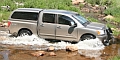
As best I can tell, Ford does not give different weight limit numbers for weight carrying versus WD towing on the SD, as it does with the F150. Big gains using WD on the F150 (see image below for F150).
It's 18,200 max trailer and 1,820 max tongue wt for SRW F350 SD as marked on the hitch with or without WD equipment. 2022 SD

It's 18,200 max trailer and 1,820 max tongue wt for SRW F350 SD as marked on the hitch with or without WD equipment. 2022 SD
Hotshot
Joined: Oct 2015
Posts: 19,726
Likes: 12,873
From: Wyoming

As best I can tell, Ford does not give different weight limit numbers for weight carrying versus WD towing on the SD, as it does with the F150. Big gains using WD on the F150 (see image below for F150).
It's 18,200 max trailer and 1,820 max tongue wt for SRW F350 SD as marked on the hitch with or without WD equipment.
It's 18,200 max trailer and 1,820 max tongue wt for SRW F350 SD as marked on the hitch with or without WD equipment.
Tuned
Joined: Mar 2019
Posts: 256
Likes: 253
From: Auburn, WA
I believe that prior to 2017 the Super Duty hitch showed both WD and non-WD numbers. There was a huge discussion starting in 2017 about what it meant that the WD number was no longer there. It wasn't Ford saying that you don't need a WDH, but that the hitch/truck could carry the entire tongue weight without a WDH. In many cases, while the truck can handle that tongue weight, the drive quality will be crap. I tried pulling my toy hauler with a standard ball mount. Around town, it's not too bad. But on the highway it was pretty bad.

FTE Community Team


Joined: Jan 2019
Posts: 10,781
Likes: 1,512
I usually spend my time at FTE on the 99-2016 Super Duty forum, but I think this question/discussion is more appropriate here.
I bought my 2001 F250 Super Duty new in November of '01. At the time, I had a small TT--a 19-foot Rancho el Rae and the ratings of the Ford factory installed reciever easily exceeded the requirements of my trailer. In 2010, I upgraded to a Puma Palimino 27FQ which weighs about 7,000 pounds when loaded for my use. I suspect the tongue weight is pretty close to 700 pounds. When I upgraded the TT, I never gave the reciever ratings a thought, and I've been towing this way for twelve years, although I do not use the trailer more than a few times a year, and usually don't travel over 75-150 miles (round trip) when I do. I tow at reduced speeds, usually 60-65 mph as well.
Fast forward: Today I noticed the reciever is rated for 600 pounds tongue weight and 6,000 pounds trailer weight! I've used this set up all those years without any problem. I always use my Reese "Straight-Line" equalizing hitch, which works very well for both equalizing and sway control. And I crawl under my truck each spring and inspect suspension components and the reciever mounting bolts, flanges and welds for cracking/pitting, and general wear and tear.
So now, I'm wondering if others are towing a trailer that exceeds their reciever ratings and by how much. I'm sure there is a margin of error built into those recievers, and perhaps they are conservative to account for corrosion and other wear as the vehicle ages. And I've noted at least one internet company specializing in trailer equipemnt, parts, supplies and associated parts and accessories for tow vehicles offers different rating for the recievers they sell depending on whether an equalizer hitch is used or not. The differences in those ratings are about equal to the difference between my current TT weights and the ratings on my reciever, or about 15%.
I'm also wondering if anyone has had one of the early recievers fail--There are lots of Super Duty trucks where I live and I've never heard of a failure.
I will upgrade to a reciever that exceeds my current TT requirements before next summer, but this experience has left me wondering just how much more weight one of these recievers can take in excess of its ratings, and for how long....
I am not suggesting this practice was "OK" or that I was right to have done so, I just missed checking before. And of course, no one else should follow this example.
And if there are any other "Early SD" die-hards out there pulling newer, heavier trailers, you might just want to check out your reciever's ratings!
I bought my 2001 F250 Super Duty new in November of '01. At the time, I had a small TT--a 19-foot Rancho el Rae and the ratings of the Ford factory installed reciever easily exceeded the requirements of my trailer. In 2010, I upgraded to a Puma Palimino 27FQ which weighs about 7,000 pounds when loaded for my use. I suspect the tongue weight is pretty close to 700 pounds. When I upgraded the TT, I never gave the reciever ratings a thought, and I've been towing this way for twelve years, although I do not use the trailer more than a few times a year, and usually don't travel over 75-150 miles (round trip) when I do. I tow at reduced speeds, usually 60-65 mph as well.
Fast forward: Today I noticed the reciever is rated for 600 pounds tongue weight and 6,000 pounds trailer weight! I've used this set up all those years without any problem. I always use my Reese "Straight-Line" equalizing hitch, which works very well for both equalizing and sway control. And I crawl under my truck each spring and inspect suspension components and the reciever mounting bolts, flanges and welds for cracking/pitting, and general wear and tear.
So now, I'm wondering if others are towing a trailer that exceeds their reciever ratings and by how much. I'm sure there is a margin of error built into those recievers, and perhaps they are conservative to account for corrosion and other wear as the vehicle ages. And I've noted at least one internet company specializing in trailer equipemnt, parts, supplies and associated parts and accessories for tow vehicles offers different rating for the recievers they sell depending on whether an equalizer hitch is used or not. The differences in those ratings are about equal to the difference between my current TT weights and the ratings on my reciever, or about 15%.
I'm also wondering if anyone has had one of the early recievers fail--There are lots of Super Duty trucks where I live and I've never heard of a failure.
I will upgrade to a reciever that exceeds my current TT requirements before next summer, but this experience has left me wondering just how much more weight one of these recievers can take in excess of its ratings, and for how long....
I am not suggesting this practice was "OK" or that I was right to have done so, I just missed checking before. And of course, no one else should follow this example.
And if there are any other "Early SD" die-hards out there pulling newer, heavier trailers, you might just want to check out your reciever's ratings!
Either way: I think you're fine. Also, check out this thread: https://www.ford-trucks.com/forums/2...ing-on-sd.html
Another thought: Just about every hitch has a rating for conventional and a higher rating for when a WDH is used, but think about this: Just because a WDH is used doesn't mean that all WDH's are used the same way. What if one is over-tightened on a small trailer, or under-tightened on a large trailer? The physics could be all over the place with the same hitch, but still be within the definition that gives it the higher rating. I've personally never seen one fail without some other outside factor involved, usually damage.
FTE Community Team
Joined: Jan 2019
Posts: 10,781
Likes: 1,512
Lots of folks tow 7K or 10K flatbeds over 6,000 without a WDH without issue, depending on how it's loaded of course. Flatbeds aren't near as iffy in most conditions as camp trailers though. Personally, I wouldn't tow a camp trailer with more than one axle very far without a WDH involved.


Fleet Mechanic
Joined: Nov 2015
Posts: 1,487
Likes: 217
Get a Class 5 Curt 15810 commercial duty hitch. They are literally about 3x as thick for the size of wall tubing and brackets used compared to the factory hitch. Also rated to 17,000 pounds. I just ordered one for my f350 and Amazon managed to send me one for a Chevy.