



Camper Package Sway Bar compared to Hellwig

Logistics Pro


Joined: Jan 2013
Posts: 3,778
Likes: 153
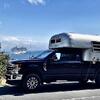
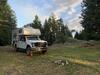
I wondered about hat, That is my F 450 in those the pics and I was told its a Hellwig bar, I believe it, as you can see its BIG!

Mountain Pass
Joined: Nov 2019
Posts: 227
Likes: 75
From: Monterey
With the truck in stock form the rear end would bounce up when hitting even a small hole in the ground or going over the expansion cracks at overpasses.
Adding the SuperSprings allowed for putting a 3700 lb camper load and having to sag at the rear of the truck. More than 50% of the camper load was being supported by the outside wheels and so one needs more load capacity as a result to minimize sway. There is no way that heavier duty shocks would compensate for the extra weight of the camper with its higher center of gravity.
The adjustable shocks were key to being able to tune the suspension to minimize porpoising with the camper in the bed. Once I had the front shocks adjusted I left them at the same setting regardless of the load in the bed. With the bed empty I used the same setting at the rear wheels as I did for the front shocks.
My 2022 F-150 came without a rear sway bar but its soft ride is terrific and so no gain from adding an aftermarket one.
Sway bars were a common upgrade for race cars based on sedans and coupes. It improved traction in the turns and was valuable for this reason. With race trucks the rear end is very light which is also quite different from a pickup with a heavy camper in the bed. One cannot generalize that what works in one situation will work in all situations.
Many people upgrade the shocks to reduce sway with a camper and when that does not fix the problem they add a rear sway bar and when that does not work they then try devices that limit suspension travel. They do not realize that the problem is in dynamic loading of the suspension on one side of the truck when the center of gravity shifts outward in a turn.
The factories approach to add load capacity is to add more springs. To increase tire load capacity two more tires are added at the rear. This is the simplest and cheapest approach to increasing load capacity. SRW F-250 or DRW F-350 have the same shocks and same rear sway bar. The F-350 adds more leaf springs and is available with two more rear wheels. This is not rocket science.
Adding the SuperSprings allowed for putting a 3700 lb camper load and having to sag at the rear of the truck. More than 50% of the camper load was being supported by the outside wheels and so one needs more load capacity as a result to minimize sway. There is no way that heavier duty shocks would compensate for the extra weight of the camper with its higher center of gravity.
The adjustable shocks were key to being able to tune the suspension to minimize porpoising with the camper in the bed. Once I had the front shocks adjusted I left them at the same setting regardless of the load in the bed. With the bed empty I used the same setting at the rear wheels as I did for the front shocks.
My 2022 F-150 came without a rear sway bar but its soft ride is terrific and so no gain from adding an aftermarket one.
Sway bars were a common upgrade for race cars based on sedans and coupes. It improved traction in the turns and was valuable for this reason. With race trucks the rear end is very light which is also quite different from a pickup with a heavy camper in the bed. One cannot generalize that what works in one situation will work in all situations.
Many people upgrade the shocks to reduce sway with a camper and when that does not fix the problem they add a rear sway bar and when that does not work they then try devices that limit suspension travel. They do not realize that the problem is in dynamic loading of the suspension on one side of the truck when the center of gravity shifts outward in a turn.
The factories approach to add load capacity is to add more springs. To increase tire load capacity two more tires are added at the rear. This is the simplest and cheapest approach to increasing load capacity. SRW F-250 or DRW F-350 have the same shocks and same rear sway bar. The F-350 adds more leaf springs and is available with two more rear wheels. This is not rocket science.
Mountain Pass
Joined: Nov 2019
Posts: 227
Likes: 75
From: Monterey
Did you install the Hellwig before or after you modified your springs?
What I discovered over the years is impressions about handling and what helps are highly individualistic as combinations of campers and trucks along with loadings and driving skills vary greatly. I could say your impressions of the impact your spring change makes is a placebo effect. In the end this is all just opinion yours or mine and neither is any more valid.
What I discovered over the years is impressions about handling and what helps are highly individualistic as combinations of campers and trucks along with loadings and driving skills vary greatly. I could say your impressions of the impact your spring change makes is a placebo effect. In the end this is all just opinion yours or mine and neither is any more valid.
Truck sway with a heavy slide-in camper is very obvious and can be seen and does not depend at all on a seat of the pants impression. At the end of my driveway I need to make a 110 degree turn and my driveway is at a 15% incline so a great deal of the weight of the camper is being supported by the outside wheel.
When sway is the result of inadequate payload support it makes no sense at all that a sway bar is going to increase the payload for a truck. Payload ratings by the factory are based on the springs and the wheels and not on whether a sway bar is present.
My Max Tow F-150 came with an additional leaf spring and no rear sway bar. The 2.7 Ecoboost Payload Package uses the 3.73 rear axle and 9.75" gearset but still no rear sway bar. If Ford does not consider a sway bar as essential for increasing the payload of a truck that should tell you something. My 2022 F-150 has such a smooth ride that a rear sway bar would not improve any aspect of its handling. Its ride is vastly different from that of my GM 2500 diesel pickup.
Key to load capacity is the springs (F-350 adds more springs to get more payload capactiy). Stronger springs require tougher shocks and for a truck with a camper the requirements and loads on the front shocks is a lot less than for the rear shocks and so adjustable shocks/dampeners work best. But if you have money to burn then buy a rear sway bar and tell yourself that it made a great deal of difference.
Hotshot
Joined: Jan 2010
Posts: 10,060
Likes: 491
From: Bristol, TN.
So, if you dealt with the springs first, is it not reasonable to assume that addition may have negated the effect of the sway bar and thereby impacted your impressions?
Here is my two cents. There simply is no database to support the multitude of opinions offered in this forum about handling. To substantiate all the claims about what is better or worse for anything it is not adequate for any of us (my opinion) to simply offer anecdotal examples or textbook solutions. To really make comparative statements comparisons have to be made on a singular vehicle driven by drivers who are blind to what components are installed before they rate them. That of course is to deal with the effects of expectancy or what is more commonly termed placebo. Until that happens, no matter who says it or what they say I respect it as opinion. If what I believe is necessary can not take place
If we were to build a very large sample size and factor in all the variables, I think we could run a multi-factorial analysis and offer some fairly solid suggestions.
Here is my two cents. There simply is no database to support the multitude of opinions offered in this forum about handling. To substantiate all the claims about what is better or worse for anything it is not adequate for any of us (my opinion) to simply offer anecdotal examples or textbook solutions. To really make comparative statements comparisons have to be made on a singular vehicle driven by drivers who are blind to what components are installed before they rate them. That of course is to deal with the effects of expectancy or what is more commonly termed placebo. Until that happens, no matter who says it or what they say I respect it as opinion. If what I believe is necessary can not take place
If we were to build a very large sample size and factor in all the variables, I think we could run a multi-factorial analysis and offer some fairly solid suggestions.

Lead Driver


Joined: Apr 2016
Posts: 7,201
Likes: 1,340
From: Bahstun
Brothers 68 nova on a certain long on ramp for testing
was a S6 with no swaybars and added in 350
leaned bad in curves and tires squealed at 45
added in rear sway bar, tires squealed at 50
Added in front HD sway bar, tires squealed at 70
if sway bar can only deflect 2000 lbs, it wont do much with a big load unless you upgrade it
I also wonder how many dont replace the axle SB bushings and that slop negates the sway bar from working faster than the end links being worn
was a S6 with no swaybars and added in 350
leaned bad in curves and tires squealed at 45
added in rear sway bar, tires squealed at 50
Added in front HD sway bar, tires squealed at 70
if sway bar can only deflect 2000 lbs, it wont do much with a big load unless you upgrade it
I also wonder how many dont replace the axle SB bushings and that slop negates the sway bar from working faster than the end links being worn
FTE Stories
Ford Trucks for Ford Truck Enthusiasts

Top 10 Most Expensive Ford Trucks Ever Sold on Bring a Trailer
Joe Kucinski
2027 Ford Super Duty Buyer's Guide (Every Model, Engine, & Package)
Brett Foote
Top 10 Ford Truck Tragedies
Joe Kucinski
AEV FXL Super Duty - the Super Duty Raptor Ford Doesn't Make
Brett Foote
Lobo Vs Lobo: Proof the F-150 Lobo Should Be Even Lower!
Michael S. Palmer
Ford's 2001 Explorer Sportsman Concept Looks For a New Home
Verdad Gallardo
10 Best Ford Truck Engines We Miss the Most!
Joe Kucinski
2026 Shelby F-150 Off-Road: Better Than a Raptor R?
Brett Foote
2027 Super Duty Carhartt Package First Look: 12 Things You NEED to Know!
Michael S. Palmer
Mountain Pass
Joined: Nov 2019
Posts: 227
Likes: 75
From: Monterey
It is should not be that difficult to understand that sway is going to result when a rear wheel cannot support the load placed on it. In a turn or with a cross wind the load is more than 50% on the outside wheel.
How anyone can think that a "sway" bar is going to be as effective as increasing the load capacity at the rear wheel by adding leaf springs is beyond me. Often people are confused with the names applied to a device as with the sway bar or a "shock absorber". The shock absorber is more accurately referred to as a dampener by the Brits as they understood that it only dampens the ocsillation of the wheel when there are springs in place. The "shock absorber"actully does little to reduce the shock of hitting a hole or bump in the road.
If the "sway bar" was effective in reducing sway with a heavy payload then it would also reduce sag in truns and it does not. The Ford F-150 max tow package adds 2 leaf springs and the max payload option adds 3 leaf springs and neither package adds a rear sway bar. Ford's max payload packages have consisted of a lower gearset and upgraded springs, but not a sway bar. Ford engineers do know what they are doing and do the necessary payload calculations for all their truck variations. You will not find a payload spec that requires a sway bar on an F-150 truck.
But beliefs are difficult to set aside for most people and instead contrary information will cause them to dig in deeper.
How anyone can think that a "sway" bar is going to be as effective as increasing the load capacity at the rear wheel by adding leaf springs is beyond me. Often people are confused with the names applied to a device as with the sway bar or a "shock absorber". The shock absorber is more accurately referred to as a dampener by the Brits as they understood that it only dampens the ocsillation of the wheel when there are springs in place. The "shock absorber"actully does little to reduce the shock of hitting a hole or bump in the road.
If the "sway bar" was effective in reducing sway with a heavy payload then it would also reduce sag in truns and it does not. The Ford F-150 max tow package adds 2 leaf springs and the max payload option adds 3 leaf springs and neither package adds a rear sway bar. Ford's max payload packages have consisted of a lower gearset and upgraded springs, but not a sway bar. Ford engineers do know what they are doing and do the necessary payload calculations for all their truck variations. You will not find a payload spec that requires a sway bar on an F-150 truck.
But beliefs are difficult to set aside for most people and instead contrary information will cause them to dig in deeper.
Logistics Pro
Joined: Jan 2013
Posts: 3,778
Likes: 153
It is should not be that difficult to understand that sway is going to result when a rear wheel cannot support the load placed on it. In a turn or with a cross wind the load is more than 50% on the outside wheel.
How anyone can think that a "sway" bar is going to be as effective as increasing the load capacity at the rear wheel by adding leaf springs is beyond me. Often people are confused with the names applied to a device as with the sway bar or a "shock absorber". The shock absorber is more accurately referred to as a dampener by the Brits as they understood that it only dampens the ocsillation of the wheel when there are springs in place. The "shock absorber"actully does little to reduce the shock of hitting a hole or bump in the road.
If the "sway bar" was effective in reducing sway with a heavy payload then it would also reduce sag in truns and it does not. The Ford F-150 max tow package adds 2 leaf springs and the max payload option adds 3 leaf springs and neither package adds a rear sway bar. Ford's max payload packages have consisted of a lower gearset and upgraded springs, but not a sway bar. Ford engineers do know what they are doing and do the necessary payload calculations for all their truck variations. You will not find a payload spec that requires a sway bar on an F-150 truck.
But beliefs are difficult to set aside for most people and instead contrary information will cause them to dig in deeper.
How anyone can think that a "sway" bar is going to be as effective as increasing the load capacity at the rear wheel by adding leaf springs is beyond me. Often people are confused with the names applied to a device as with the sway bar or a "shock absorber". The shock absorber is more accurately referred to as a dampener by the Brits as they understood that it only dampens the ocsillation of the wheel when there are springs in place. The "shock absorber"actully does little to reduce the shock of hitting a hole or bump in the road.
If the "sway bar" was effective in reducing sway with a heavy payload then it would also reduce sag in truns and it does not. The Ford F-150 max tow package adds 2 leaf springs and the max payload option adds 3 leaf springs and neither package adds a rear sway bar. Ford's max payload packages have consisted of a lower gearset and upgraded springs, but not a sway bar. Ford engineers do know what they are doing and do the necessary payload calculations for all their truck variations. You will not find a payload spec that requires a sway bar on an F-150 truck.
But beliefs are difficult to set aside for most people and instead contrary information will cause them to dig in deeper.
I have owned 6 Superdutys and they ALL had swaybars. Some of my F 350s had a swaybar to small and I replaced it with a B Hellwig BIG WIG.
At the most basic, overload springs deal with the PAYLOAD in the bed of the truck. The swaybar deals with the truck - highway interface specifically the LEAN and keeping both rear wheels planted.
There I was in the Pits working on my Car trying to squeeze a bit more out of it as I do battle with others on the 1320. An older guy comes over to me and he says I been watching you and you all the HP you need. Your sturggle is getting it to the ground. I look at at him and ask what do you suggest. He say, to replace that weak street swaybar with an HD unit and you will notice. Just so happened I had the Axle set off a 67 427/425 hp vette. I looked at and swapped them out. The next weekend I improved my trap times and mph and I was able to come off the line at 6800 rpm and keep those wheels planted on the asphalt. It took my traps down from the 12.7s to the 12.3s. That is what a swaybar does for ya. This was in 1965.

F 350 Dually OEM sway bar Vs Hellwig Big Wig sway bar....incredible difference in performance and handling!


Laughing Gas

Joined: Jun 2013
Posts: 1,097
Likes: 514
From: Yokosuka Japan
The purpose of a sway bar is to evenly distribute road shocks from one wheel to the opposite one which can improve handling. With my pickup the addition of overload springs and Ranch adjustable shocks and higher load capacity tires provided 100% of the gains in handling with a heavy slide-in camper in the bed.
I later added a Hellwig Bigwig rear sway bar and found it provided no gain in handling with the camper in the bed. lt did however, greatly smooth out the ride when the bed was empty. Before adding the rear sway bar (non on the stock 2500 truck) if I hit a bump the rear end would bounce up and greatly reduce control in turns. With the addition of the rear sway bar this wheel hop was greatly reduced.
If your truck already has a rear sway bar there is nothing to be gained by changing it with a Hellwig sway bar. Focus on the load support, shock dampening, and tire support with the truck. Tires that barely support the load are going to experience more sidewall flex which impacts handling and the tires will run hotter and be more lilely to suddenly fail.
What we call shock absorbers the Brits more accurately call dampeners, and they are meant to minimize spring oscillation and not to provide load support. Before I added SuperSprings to my truck the shocks had to work a lot harder as the range of axle movement was greater. I needed to fix the springs first. The adjustable shocks helped in that my rear wheels with the camper in the bed needed twice as much dampening as the front wheels and I could dial in the adjustments to minimize porpoising. Adjustable shocks like the Rancho XL should be included in any "camper" package.
I later added a Hellwig Bigwig rear sway bar and found it provided no gain in handling with the camper in the bed. lt did however, greatly smooth out the ride when the bed was empty. Before adding the rear sway bar (non on the stock 2500 truck) if I hit a bump the rear end would bounce up and greatly reduce control in turns. With the addition of the rear sway bar this wheel hop was greatly reduced.
If your truck already has a rear sway bar there is nothing to be gained by changing it with a Hellwig sway bar. Focus on the load support, shock dampening, and tire support with the truck. Tires that barely support the load are going to experience more sidewall flex which impacts handling and the tires will run hotter and be more lilely to suddenly fail.
What we call shock absorbers the Brits more accurately call dampeners, and they are meant to minimize spring oscillation and not to provide load support. Before I added SuperSprings to my truck the shocks had to work a lot harder as the range of axle movement was greater. I needed to fix the springs first. The adjustable shocks helped in that my rear wheels with the camper in the bed needed twice as much dampening as the front wheels and I could dial in the adjustments to minimize porpoising. Adjustable shocks like the Rancho XL should be included in any "camper" package.

Fleet Mechanic

Joined: Jan 2023
Posts: 1,315
Likes: 445

For those who want data to compare factory vs aftermarket sway bars, there are numerous websites that will help calculate sway bar force. Here is one:
https://robrobinette.com/Suspension_Spreadsheet.htm
You will see the bar diameter has the most effect on how much opposing force a sway bar will create. How much force do you need? I don't know but it's inarguable that stiff sway bars on lightly loaded vehicles create a rougher ride.
https://robrobinette.com/Suspension_Spreadsheet.htm
You will see the bar diameter has the most effect on how much opposing force a sway bar will create. How much force do you need? I don't know but it's inarguable that stiff sway bars on lightly loaded vehicles create a rougher ride.
Mountain Pass
Joined: Nov 2019
Posts: 227
Likes: 75
From: Monterey
It may be inarguable but it is also false. On my 2500 truck with helper springs the ride was made significantly smoother when the bed was empty with the addition of a sway bar at the rear axle. Sway bars distribute forces at one wheel to the opposite wheel which is a negative attribute on a sports car but a positive one on a pickup where very little weight is on the rear wheels as compared to a car - think about it.
If you do not have first hand experience your theories are worthless and add nothing to the discussion. Might as well get medical advice from an ignorant politician or news entertainer.
If you do not have first hand experience your theories are worthless and add nothing to the discussion. Might as well get medical advice from an ignorant politician or news entertainer.