When you click on links to various merchants on this site and make a purchase, this can result in this site earning a commission. Affiliate programs and affiliations include, but are not limited to, the eBay Partner Network.
Hello. I took ownership of my grandfathers 68 f100. I believe it has a 360 engine. I am having air blow past the plugs. At first I thought noise was exhaust leak. Hooked up a blower on exhaust and sprayed soapy water on plugs, several of them are leaking compression. Tried putting a fresh plug in the worst ones. It helped a little, but did not seal them.
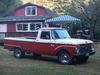
I see that retreading the plug holes is an option. One dumb question is the plug size. Are the plugs 14mmx1.25. Has anyone rethreaded? Any tips would really help. If anyone knows what rethreader kit I should get, please let me know. I also would like a reliable source for parts. Here is my truck, she’s a survivor
If the plugs screw in and out, rethreading is not the answer. You should have 18mm plugs with a tapered seat. It is possible that the corresponding taper in the head is rusted causing the leak but it is a pretty rare thing.
Post the number on the plugs you are using and a picture if you can. That would help. But my gut says you have exhaust leaks which is very common on those engines.
If you go to just about any auto supply store you should be able to get a 18mm thread chaser. I must admit I cannot remember ever having the plugs leak like you are describing.
One way to locate an exhaust leak is by squirting transmission fluid into the air horn with the throttle cracked open so that a lot of smoke is generated. The neighbors will thank you for killing any mosquitos in the area.
Yes to pictures.
After all these years, it’s always possible that someone changed either a cylinder head or the entire engine. If you get a good close-up shot, well lit of one of the leaking spark plug holes we can see if they are tapered seats with issues, or flat that require a gasket.
I’m not sure any of these vintage Ford engines did use a gasket, but it was pretty common with other makes.
in a pinch, you can also make a spark plug thread cleaner with an old plug.
Simply file two sides of the threaded area flat and thread it in and out a couple of times.
Acts as a scraper. Not really a thread repair, but can get a lot of gunk out.
Probably even a tapered tool out there somewhere to clean up the seats.
I may run it down to muffler shop to check exhaust at the heads
any info on the plug issue I appreciate. How would I clean the plug area without knocking all that crap in the block?
thanks
steve
If you are cleaning around the plug area, you can remove plug and put a small piece of rag in it, clean and blow it out. I never knew they had metric threads and had to look it up after reading it.
Rig up a piece of tubing to your wife’s high dollar vacuum cleaner hose to pull any loose chips while chasing the threads. Now, she will not mind buying you that shop vacuum for Christmas!
Its pretty dirty around there. I would not want that junk in my motor, and as was mentioned, it should be sucked out of there.
I would blow the crap out of it before I took any more of the plugs out. Cant really see why the plugs wont seat unless its just that rusty, and it does look pretty rusty.
Still should seat up, even if a little rusty. What are you torqueing them to?
As was mentioned you may have leaky manifolds, and FE style engines are famous for exhaust leaks at the manifolds, and darned near all of them leak. Only two kinds really, one that is leaking and one that has just had the gaskets replaced. That said, I would check this out, and make sure.
Most people swear a lot when taking these off, and replacing the gaskets, as the bolts a prone to breaking off. This normally happens in the top holes, while the bottom usually come out. Probably as may ideas on getting these out with out breaking them as there are days in this month.
I have found heating them with a cutting torch a few times and letting them cool between heat cycles helps.
The last one I did, I soaked them for several days with Kroil and got all of them out. They had not been in for too long, maybe 10 years, and the bolts were stainless.
Let us know how you come out..
I would stuff a strip of rag soaked in air filter oil (sticky stuff) in the hole with the piston at the top. Use a 20GA (shotgun) brush with PB Blaster, twist it in and out a few times should do it. Use Autolite 45 plugs and it should be good to go.
Thanks everyone. What should I torque the plugs to? I appreciate all you helping. Damn cold around here. A garage heater might help. I used to use a kerosene heater years ago. It put a film on everything. Maybe they are better now. I’m going to clean everything up and then torque them properly. Then I will evaluate the exhaust…….big goals.
IF you have an air compressure with the plugs in and eye ware on blow out around the plugs.
Might be able to get a small screw driver down in there to scrape the area and blow it out again.
Then pull the plugs and see what it looks like. A rag in the hole to keep stuff out but if you take an old plug and brake the top off you can screw it back in and it should give you more room to work / scrape the area clean.
Also before putting the plugs back in I would crank the motor over a few time as it should blow anything out that might made it pass the rag.
As for heat a few years back I bought a forced air propane heater dual temp like this 1 temp one https://www.northerntool.com/shop/to...37784?seeAll=1
I forget the size but it heats my 3 bay garage pretty fast, no insulation, and then kick it to low and can work with out a coat on and outside temp in the high 20's
They say to ventalate but I have a lot of "day light" showing around the 2 large bay doors and the ridge vent.
I did have to buy a 40 lb tank as the small 20 lb grille tanks dont flow enough gas to work the heater.
I am vary happy with it
Dave ----
Rezvani's Latest Post-Apocalyptic Monster Is a Ford F-150 Raptor Underneath
Slideshow: Called the Fortress, the 850-horsepower pickup combines Raptor underpinnings with military-inspired features, survival equipment, and a starting price of $285,000.







 Rusty holes