When you click on links to various merchants on this site and make a purchase, this can result in this site earning a commission. Affiliate programs and affiliations include, but are not limited to, the eBay Partner Network.
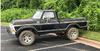
Have a 74 2WD with a 360. It's been well used to say the least but still hauls stuff quite well.
Oil pressure is low at hot idle, barely 5psi on a mechanical gauge.
Runs smooth, quiet, and doesn't use much oil. I figure it's a good candidate for a high volume oil pump? None of the following are absolutely necessary, but it could also use:
intake gasket
exhaust manifolds planed
freeze plugs (replaced the accessible plugs with rubber a while back).
I can pull the engine no problem. Seems to me it would be a heck of a lot easier doing all those with it out of the truck. Pull the engine or no?
Not really interested in a full rebuild at this point (aka fixing it right).
I'd put a real gauge on it to check oil pressure first. Being a 2wd with a 360, I think you are gonna have to pull it to replace the oil pump.
Once it's out to pull the pan and put the new oil pump in, you may as well take a look at a couple rod or main bearings. I'd either put it on an engine stand or roll it over upside down or standing on back end on wood blocks (to keep crank and flex plate, etc up off the pavement), not just hanging by a hook ... but that's just me.
The exhaust manifolds will come off with less hardware breakage when done outside the truck and if by chance you do break a bolt it would be easier to address it with the motor outside the truck. I would also replace the oil pan gasket and front and rear main seal while the motor is out given the cost of a quart of oil these days.
10-15 pounds at hot idle is fine. On newer motors many manufacturers state 6 psi at idle is minimum. Most new motors idle with low pressure. My coyote 5.0 does and we’ll as and ls 5:3 in our Yukon. As long as it ramps up nicely with rpm. As stated could step up in weight slightly and gain a little pressure. If you start hearing noises, then I would worry.
I agree IF you are going to do internal work on the engine, it is worth pulling in my opinion...but as other have alluded to, 6psi may not be bad enough for the effort. If is was me, I would try running a heavier weight oil or add a pint of STP until I was ready to actually put bearings in also...
I am not at all adverse to using 20w50 oil, I have a couple dozen quarts to use up anyway. I think it's what is in my '77 now.
Might would be a lighter weight, like 10w30 or 15w40 ... if II wasn't retired and if I maybe needed to start it on bitter cold winter mornings at "zero dark thirty" to drive into town to a job ... but if I'm starting the '77, it's a fairly nice day. Even before retirement, I drove the "work car" from my home out to the road... after a warm up walk from the kitchen door.
If you have the means to pull the engine then I'd pull it. As mentioned before..if you bust a few exhaust bolts it will be easier to fix and waaay easier to replace the freeze plugs. Also a good time to do a little cleaning up the engine compartment and maybe some fresh paint on the engine. Just completed an engine swap in my F350...broke 3 exhaust bolts. Two I managed to extract myself but the third one was a bear...had to remove the head and take it to a machine shop. If that would have happened with the engine in the truck...well to me it would have been impossible.
Best of luck 🤞🤞. Keep us posted.
Edit: With engine out it's also a lot easier to replace the steering coupler...mine was broke. So while it's out...do yourself a favor and give everything a look over for wear/damage. I think I fixed 3-4 other things that I probably wouldn't have noticed with the engine in place.
-Pull engine
-Put it on an engine stand. Clean exterior.
-Heads and intake off
-Stamp con rods so you don't mix 'em up
-Wire brush carbon off combustion chambers and pistons
-Disassemble bottom end
-Mic bores, crank
-Dingleball hone cylinders
-Clean block, new freeze plugs
-New rings on pistons
-Reassemble with new bearings, new cam and lifters, new double roller timing chain
-Paint & reinstall
If you weren't 3+ hours away, I'd take a trip and help you out.
If you’re up to it, you’d be well served pulling it to give it a shade tree rebuild.
New crank bearings (will fix oil pressure).
New cam bearings and RV cam!
New lifters
New timing set
Valve job on both heads
Quick ball hone and new piston rings
brass freeze plugs and coolant flush
All new seals and a couple cans of Krylon
No need for a HV pump if you do this, in fact FE’s don’t always play nice with HV pumps because of their inherent over-oiling of valve train—oil pools and smokes.
You can take this opportunity too replace the clutch or trans front seal and motor mounts while its out and the engine should last a very long time.
On the other hand, you don’t really need to pull the engine. I’ve had a small block that ran pretty good with 1-2 PSI at idle.
So if you’re inclined, you could get several years from a HV pump and 20W-50.
Just be sure to drop a couple oil restricting jets in the head oil passages and clean out the oil drain ports in heads otherwise you’ll be drowning your valves in oil.
Have a 74 2WD with a 360. It's been well used to say the least but still hauls stuff quite well.
Runs smooth, quiet, and doesn't use much oil.
Your above opening statement answers your question. No way I'd ever pull that engine. JUST RUN IT. You'll likely get many thousands of miles out of it as-is.
When you pull an engine with high miles and age, the snowball effect is very difficult to avoid and starts a chain reaction of sometimes frustrating and costly events. DON'T PULL IT until you are prepared financially and mentally for the total rebuild.
Your above opening statement answers your question. No way I'd ever pull that engine. JUST RUN IT. You'll likely get many thousands of miles out of it as-is.
When you pull an engine with high miles and age, the snowball effect is very difficult to avoid and starts a chain reaction of sometimes frustrating and costly events. DON'T PULL IT until you are prepared financially and mentally for the total rebuild.
There's the voice of experience. Thanks Mark 8 for that. However a broken bolt in the block may make your decision for you.
Read this this morning from a fellow member. Represents the snowball effect.
Well had lots of problems but think I got it all worked out. Fist I got the spacer wrong for the new. Breaks. Got to love getting parts and no directions. Then the bushings didn't fit on the rear front spring hangers. Then the bracket for the front ride side caliper was bent I guess from shipping. Then the treads for the break caliper on the right side had had a burr and kept wanting to cross thread. Then I screwed up my measurements on the tie rod and had to redue it. So it was all just a mess. But after several days everything is in and all seems to work. Next is mounting the motor trans and transfer case. Hope that all goes better.
Rezvani's Latest Post-Apocalyptic Monster Is a Ford F-150 Raptor Underneath
Slideshow: Called the Fortress, the 850-horsepower pickup combines Raptor underpinnings with military-inspired features, survival equipment, and a starting price of $285,000.