





Ideling
Cargo Master


Joined: Apr 2003
Posts: 2,059
Likes: 426
From: Too close to Houston
I think he’s saying he lets the oil warm to 100° before driving.
I don’t idle more than 15 seconds or so before putting it in drive myself. I get in, start the truck, then take off easy after fastening my seat belt and checking the mirrors and gauges. If it’s cold enough that I need a jacket I’ll start the truck with my key fob as I’m walking towards it. Oil is over 100°F by the time I get to the highway.
I don’t idle more than 15 seconds or so before putting it in drive myself. I get in, start the truck, then take off easy after fastening my seat belt and checking the mirrors and gauges. If it’s cold enough that I need a jacket I’ll start the truck with my key fob as I’m walking towards it. Oil is over 100°F by the time I get to the highway.

FTE Legend

Joined: Mar 2017
Posts: 31,968
Likes: 9,197
From: Western NY

And the starters ain't cheap, if I'm gonna be just a few minutes running in to get a coffee or whatever I let her idle. I do idle after towing until my oil temp hits 195 or so, never leave until the oil temp gets to 100.
I really wish I had an EGT gauge like I did in my 7.3 , I never shut down until it got below 350 & that seemed to work pretty good for 380k miles.
I really wish I had an EGT gauge like I did in my 7.3 , I never shut down until it got below 350 & that seemed to work pretty good for 380k miles.
As to EGTs, you should get yourself a digital monitor or monitor with your phone or an old device with FORscan or Torque Pro.
Cargo Master
Joined: Feb 2010
Posts: 2,298
Likes: 94
From: Delta, CO
I read here to let EGT1 get to a low of 400 degrees. If it's higher than that, I usually let it drop below 400, to at least 375 degrees, sometimes to 350. But I do like it to be below 400 degrees to be honest.
As to EGTs, you should get yourself a digital monitor or monitor with your phone or an old device with FORscan or Torque Pro.
As to EGTs, you should get yourself a digital monitor or monitor with your phone or an old device with FORscan or Torque Pro.

Mountain Pass

Joined: Jan 2022
Posts: 140
Likes: 114
From: Driving
It's just a truck. Y'all have too much mechanical sympathy! I get in and drive. Idle 30 seconds max to put on seatbelt and put phone in cupholder. Only idle while fueling if my wife is in the truck. Or unless a regen just ended. Granted I barely tow, but now that we're back to + $5 a gallon it's only running if it's moving!
Last edited by 85e150; Dec 21, 2022 at 07:56 PM. Reason: Remove political item

Tuned
Joined: Jul 2021
Posts: 372
Likes: 199
From: NE Oklahoma
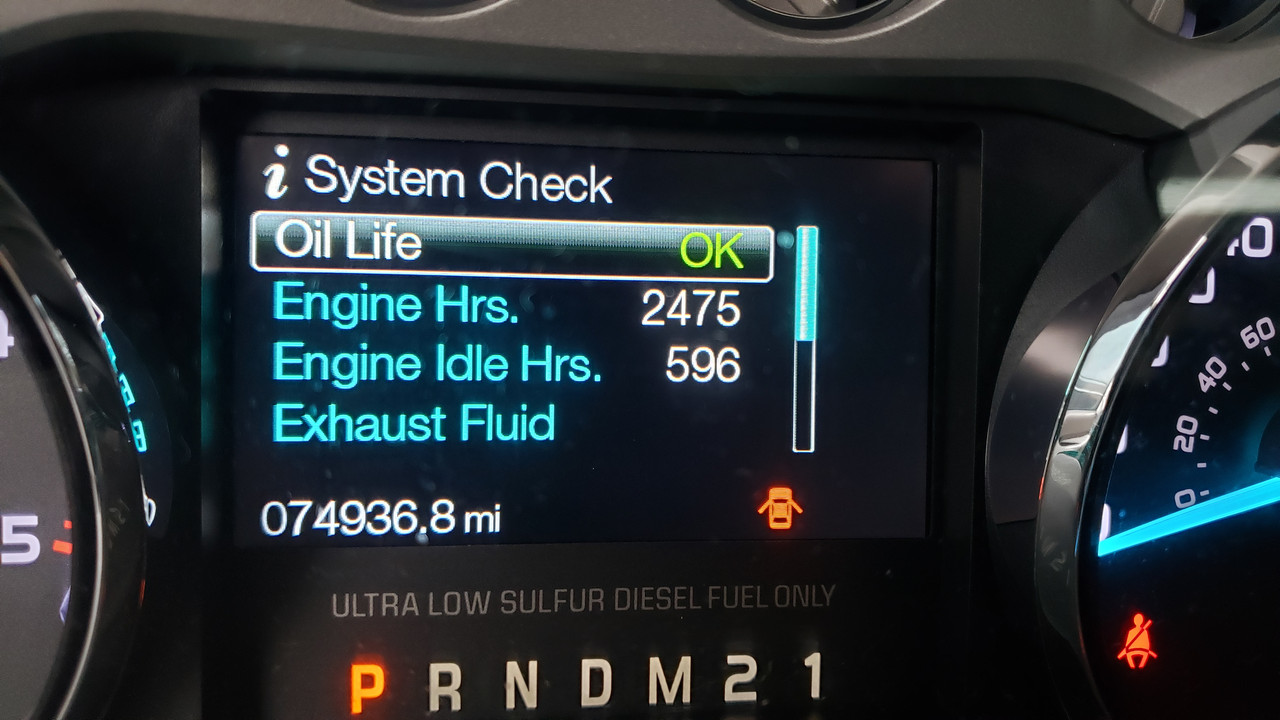
I agree with g5 dave everyone is overthinking it. I idle the hell out of my truck for my own comfort. I also start and stop the engine probably a dozen times a day. Don't idle it after pulling because usually by the time I'm off the highway and park it's had time to cool down. I do let it run on high idle in the winter months for about 10 minutes, once again for my comfort.
Tuned
Joined: Mar 2020
Posts: 325
Likes: 106
From: SoCal
This I don't do... my theory is it creates air in the fuel and maybe the conditioner doesn't get it all out before it makes it to the CP4 pump and increases wear. Is this just paranoia or could there be some logic here?
FTE Stories
Ford Trucks for Ford Truck Enthusiasts

Top 6 Best Deals Available on New Fords & Lincolns Right Now
Brett Foote
This Hennessey Takes the Expedition Tremor's Off-Roading Capability to the Next Level
Verdad Gallardo
Top 10 Fords at 2026 Carlisle Ford Nationals
Joe Kucinski
3 Best / 3 Worst Parts of Modern Ford Ownership
Brett Foote
10 Amazing Upgrades That Solve Common Ford Truck Owner Headaches
Pouria Savadkouei
Every 2026 Ford Engine Explained
Brett Foote
10 Ugly Ford Trucks That We Still Kinda Love
Joe Kucinski
10 Things Every Truck Owner NEEDS (2026 Edition)
Michael S. Palmer
Rezvani's Latest Post-Apocalyptic Monster Is a Ford F-150 Raptor Underneath
Verdad Gallardo
Cargo Master
Joined: Feb 2010
Posts: 2,298
Likes: 94
From: Delta, CO
Hmmm that is an interesting thought

Laughing Gas

Joined: Feb 2007
Posts: 769
Likes: 156
Also I only refill my fuel tank when it reaches about half the tank.
More Turbo
Joined: Oct 2010
Posts: 587
Likes: 101
From: Nampa, Idaho
Tuned
Joined: Mar 2020
Posts: 325
Likes: 106
From: SoCal
I never run any vehicle while fueling for other reasons, but I agree, this is interesting. The stream of diesel is very likely churning the fuel in the tank with air bubbles, and since the fuel pump is running, it may suck in some of that air. Just depends on the location of the pump and how deep the air bubbles are driven If you're not running the engine, the air bubbles should float up and out of the fuel pretty fast since diesel is just a fluid. Then when you start the engine after fueling, no air bubbles. I never thought about this.

FTE Legend
Joined: Mar 2017
Posts: 31,968
Likes: 9,197
From: Western NY
All this talk of air bubbles in the fuel is the very reason I bought an Air Dog -- to get rid of entrained air in our fuel that is created by the very motion of the truck's movement. With the amount of pressure these CR engines are running, air is no good... Still needs to be installed. Hopefully soon after my DPK kit is in.

Tuned
Joined: Jul 2021
Posts: 372
Likes: 199
From: NE Oklahoma
Draining fuel and or water from the fuel conditioning module does not introduce air into the system. It's a low point drain and would require draining the entire separator before air is introduced into the fuel lines heading to the rails. At that point the fuel system would need to be re-primed in order for the engine to start.
The re-priming process is the important part, if not done correctly it can lead to wear on the HPFP.
I replaced my factory 26 gal tank with the S&B 56 gallon tank. The factory tank was just an open rectangle with a low point at the fuel pickup. The S&B tank has a low point at the fuel pickup as well but also includes baffles that surround that low point to reduce fuel sloshing around while in motion.