When you click on links to various merchants on this site and make a purchase, this can result in this site earning a commission. Affiliate programs and affiliations include, but are not limited to, the eBay Partner Network.
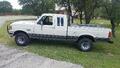
I've been tinkering with my 88 F150 for a while now, had a few threads about it already, asked a few questions before. Stalling issues that have been constant.
Anyway, tried fixing everything but the tanks and pumps to start off with, finally removed the box and inspected the fuel system. Replaced both rusty tanks, both pumps. Also replaced the fuel filter again for good measure, and tore apart and recleaned the fuel tank selector valve. Along the way, lost the screw for the internal plate and had to replace with a new screw, so that might be an issue?
Had to wait for tank pressure valve grommets until yesterday. Finally put everything back together and put 10 gallons of gas into each tank. Attempted to start the truck, and it was deader than ever. Assumed mass amounts of air in the lines from major parts being taken out and cleaned or replaced. Indeed, using a punch to depress the Schrader valve released tons of air, with no fuel. Eventually put the fuel pressure gauge back on the Shrader valve, and used its relief to take pressure off after building, with a lot of air, then finally a little gas with a lot of air, and finally more gas than air bubbles. Truck finally started and ran.
However, I am back to the same situation I was at when I got the truck started months ago, with bad tanks and bad tank pumps. The truck will idle forever, no problems. However, driving it around for a while still induces the same exact stall, requiring me to let the truck sit for a while before I can start it up again. The new tank pumps are working, and the box is still off so I can look at them and poke them. But, the symptoms seem to remain the same from before the big fuel system overhaul.
When I was test driving it on the property for a long period of time, with the high velocity rail pump doing 100% of the work, did I strain it until I over worked and damaged it? Is it possible there is still excess air in the lines from all that changing of parts and draining of fuel lines? Could this be an issue with my EGR code I got on my scanner? Is there something I'm overlooking, not noticing? Are there any signs of a bad high velocity pump other than not making it up to 45psi or higher on a running pressure test?
After stall, I have to wait probably around 2-3 minutes before it will start again, but often will quickly stall again. Five minutes of wait time until it will start and run for more than a few seconds, and enough to move it again for even another half a minute to move it again to a better temporary parking spot in the yard.
That's why I suspect continuing fuel problems, seems to act like it did when it depleted the fuel reserve in the valve, had to let it build up again. Doesn't seem to be affected as much by what the engine temperature is, as it can do this stalling act even when it is relatively cool.
The motor is the 300 I6, and gauge tests have been consistently ~46psi at idle, even when both of the fuel tank pumps were completely dead and not working at all. I'll go run yet another test, but it seems like it keeps at lower end, but acceptable pressure forever at idle, no matter how warm the engine gets. Mazda 5 speed.
Assumed mass amounts of air in the lines from major parts being taken out and cleaned or replaced. Indeed, using a punch to depress the Schrader valve released tons of air, with no fuel. Eventually put the fuel pressure gauge back on the Shrader valve, and used its relief to take pressure off after building, with a lot of air, then finally a little gas with a lot of air, and finally more gas than air bubbles. Truck finally started and ran.
What are you doing?
It’s fuel injected and will prime itself. Cycle the key a few times to purge the air from the system.
Originally Posted by jas88
When it dies, will it start back up on starting fluid without waiting for the cool down period?
I did prime the fuel system a dozen times. Nothing happened. Primed it another dozen times, then checked the Schrader valve with a punch and high pressure air came out. Had to keep priming and priming and priming, and then releasing the pressure until gas finally came out. Either that is a sign of something wrong, or it was because there was that much air from the nearly empty tank valve, nearly dry lines, and new dry fuel filter all being refilled with fresh fuel at the same time.
Also I was going to mention the brilliance of the ether trick, but it would not let me edit my previous post. Will try here in a bit.
The dual function reservoir does add more complexity to the priming process. Jumper Pins 2 and 6 on the diagnostic port then turn the key to the Run position. That keeps the fuel pump turned on.
If you still have air after a minute or so you have another problem.
I did prime the fuel system a dozen times. Nothing happened. Primed it another dozen times, then checked the Schrader valve with a punch and high pressure air came out. Had to keep priming and priming and priming, and then releasing the pressure until gas finally came out. Either that is a sign of something wrong, or it was because there was that much air from the nearly empty tank valve, nearly dry lines, and new dry fuel filter all being refilled with fresh fuel at the same time.
I think there is something wrong. It has been a long time since I had the fuel system that dry but it shouldn’t take that long to get fuel to the injectors.
I just changed rear fuel tank,rear fuel pump,inline hi pressure fuel pump and the dual tank selector/reservoir valve on 87 F150 3 cycles of the key on the rail was primed.
I would think you have another problem somewhere in the system.
Have a new inline pump from the local Napa coming today. But, got the truck running and gave it one last test drive, and got it into a better uphill position to work on it.
Spent a little time this morning looking at the rear pumps while they were working. I noticed that there appeared to be a large air bubble in the front tank out hose when the front pump was running, and played with it a little. Turns out the line is still mostly air! I thought the new front tank pump might be defective, but when I took the hose off and tested the pump flow directly, it is far more than adequate and the pump is working perfectly. Plugged it back into the air filled hose, and the same thing happened, the fuel makes it a little ways into the line before stopping against the wall of air.
What would cause this? Is the tank selector valve stuck, did my different bolt which might be slightly longer in the valve cause a problem, or is my valve possibly shot? Is it a sign the high velocity pump is dying and cannot prime the line and suck in the fuel? What would be causing so much pressure that a perfectly functioning tank pump cannot push fuel through the line it was built to push fuel through?
So take the line from the front tank fuel pump off of the selector valve and check flow into the selector valve. Then connect fuel line back to the selector valve if it has good flow.
Take the input flow line off the fuel filter and see if you have same flow through your selector valve. Or the output line from selector to the HP fuel pump
If no fuel flow to fuel filter in then I say you have no fuel thru the selector valve.
The dual function reservoir does add more complexity to the priming process. Jumper Pins 2 and 6 on the diagnostic port then turn the key to the Run position. That keeps the fuel pump turned on.
If you still have air after a minute or so you have another problem.
have you checked fuel pressure, and not assume, or guess its ok.
have you checked fuel pressure, and not assume, or guess its ok.
When it pumps up and runs, 46-48psi at the rail, and always an even +10 when I take the vacuum line off the regulator.
When the truck stalled, it would usually drop to 10-15psi and stutter, and either recover or stall completely. That was before changing the tanks and tank pumps.
When I pulled the truck out of the weeds to get it running again, I assume the rear pumps were dead, and the rail pump was doing 100% of the work. As I kept testing and fixing things, and driving it on the rail pump only, it was stalling sooner and sooner. I assume at this point the rail pump is dying, because the rear tanks are obviously working, and even if the high velocity pump can get back up to snuff after sit time and priming, the shorter and shorter run times and all that waiting and priming to get it to run probably indicate the big pump is failing.
I assume that just because it still can get back up to 45psi with the pressure gauge attached, does not mean the main pump is healthy.
The main pump sound quieter when it does start and run. However, it is whining more and more with each stall. My fuel pressure gauge isn't long enough to put on the window to read when I'm driving around the yard, so I can't monitor while driving, which creates the stall.
Unless they gave you the wrong FPR, your pressure already indicates, too low, then under a load(ie-going uphill) it stalls, pressure should be 50+(if not 55-60) at idle, not 45-48, on the I6(300), a few members have found out the hard way, example below, working pressure needs to be 50+, not 45-47->which the Standar PR-18 is, and is wrong one. Doesnt matter what year, I6(300) you have, or like rla2005 said, recheck your dual function reservoir.
Took out the old line pump, Bosch. Was this original, or is this a different pump? When my mechanic did work on it 10 years ago, I remember him saying he changed out a fuel pump, but I assumed it was just one of the tank pumps. Negative connector seemed loose on the pump terminal, and the wire came off with the tight fitting boot. It sits loose on the new Napa pump's negative terminal.
I'm going to put the new pump in anyways, but I do want to test the old pump now that its out. What is the correct voltage to the pump so I can adjust my bench power supply for best results? I can rig up some fuel line into a source of fuel and probably rig up the outgoing fuel line to my fuel pressure guage and see what it does outside the truck. If not to keep the old fuel pump if not faulty, it could help determine what else might be going on.
This Hennessey Takes the Expedition Tremor's Off-Roading Capability to the Next Level
Slideshow: The VelociRaptor Expedition gains a lift, upgraded suspension, Brembo brakes, and trail-ready equipment while retaining the stock 440-horsepower EcoBoost V6.
Rezvani's Latest Post-Apocalyptic Monster Is a Ford F-150 Raptor Underneath
Slideshow: Called the Fortress, the 850-horsepower pickup combines Raptor underpinnings with military-inspired features, survival equipment, and a starting price of $285,000.