When you click on links to various merchants on this site and make a purchase, this can result in this site earning a commission. Affiliate programs and affiliations include, but are not limited to, the eBay Partner Network.
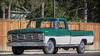
Working through a few adjustments and improvements on my 1967 f100. One of those is installing a tachometer. Bought a basic Bosch model and followed the instructions, but I'm missing something as I'm still not getting any rpm readings when the truck is running.
Below are pictures of my setup, minus the white wire for the Guage light. It's not a nite time truck, so less worried about that.
Turn on your headlight switch, then make sure that the rheostat is turned all the way up to bright for the instrument lights. See if the tach works then.
Also it's time for some long due maintenance that does not seem like normal maintenance but is.
With the battery disconnected, pull all the fuses (and bolt substitutes!) and clean/wire-brush/de-rust your fuse box contact points the best you can. Likely you can't get it all off after all these years, but you can at least help the electrons move about the cabin a little better.
Then put the fuses back in, with a little dielectric grease on the ends to reduce corrosion re-formation down the road.
Then connect the tach power wire to another switched circuit.
You might even check the two male spade connectors sticking up there over on the left side. I seem to remember that they were both constant power, but if one is switched on with the ignition/key, that would be a great one to use for the tachometer and all you need for a good contact is a crimped on female spade connector.
If they're both constant on the other hand, then just the way you did it already, but on a different fuse, would be best.
I did what 1 Ton was suggesting and found that the slot I used was switched on with ignition at ACC or ON. I also put an inline mini fuse holder on the end of my tach red wire and put a 3amp fuse in so that the tach is fused.
Yeah, your wiring is in fantastic shape Centennial. Looking almost new in there!
And a clever hack for the small fuse too. Those pesky instrument cluster fuses were always hard to remove and replace. Always thought I was going to break the glass on those. I like what you did there by putting it on the side.
Also it's time for some long due maintenance that does not seem like normal maintenance but is.
With the battery disconnected, pull all the fuses (and bolt substitutes!) and clean/wire-brush/de-rust your fuse box contact points the best you can. Likely you can't get it all off after all these years, but you can at least help the electrons move about the cabin a little better.
Then put the fuses back in, with a little dielectric grease on the ends to reduce corrosion re-formation down the road.
Then connect the tach power wire to another switched circuit.
You might even check the two male spade connectors sticking up there over on the left side. I seem to remember that they were both constant power, but if one is switched on with the ignition/key, that would be a great one to use for the tachometer and all you need for a good contact is a crimped on female spade connector.
If they're both constant on the other hand, then just the way you did it already, but on a different fuse, would be best.
paul
Thanks all! Going to disconnect everything and give it a brush, as well as get the proper connector for the box. Seeing that clean, shiny, neat wiring hurts though lol! Most of the electrical is very DIY-Special, I'll be very excited when I can do a proper rewiring and get everything cleaned up.
I wish I could take credit for the condition of the wiring and the rest of the truck for that matter. I am the third owner and have had the truck just under 4 years. The other 50 plus years of care needs to be credited to the previous two owners. Pressure is on me not to mess up this all original survivor.
Thanks again all. Power looks to be live but now having issues with the RPMS itself. Not sure if you can tell, but there's two green wires off the coil. I noticed when i took off the gauge panel there were a few free hanging wires there. Would the 67 have had a wire pre-run for a tachometer, or no?
I would have to say no. No factory tach wire.
I can’t guarantee that of course, just because I’ve never heard of them having one.
But that’s my thought on it.
I guess I can reread what’s gone before, but is this factory wiring for the most part? If so then one of those green wires could be what someone else put in for the tachometer, but the other one should be red with a green stripe. The factory power wire from the switch to the coil was red with green.
is that the case here?
Went back and looked at the previous pictures. I see what you’re saying and both wires look to be green, and not stock original.
Somebody replaced the original one which would have been a single wire.
That’s the only thing I can think of that could’ve taken place here. And it was done a while back too apparently, because the connectors are looking a little crusty at the coil.
Here's my guess, but could easily be off the mark! Following 1Ton's comments I think I would trace the heavier gauge green wire (the one uppermost in your picture) back to where it starts. I suspect it may have been a previous tachometer wire to the negative/ignition post on the coil and is not hooked up to anything. If that is the case I would connect it to the green wire on your tach which should give you your RPM. Make sure your ground wire goes to a good ground and your red has fused power switched by the ignition switch in ON or ACC position. You may have already done this, and if so disregard this reply.
I am not familiar with the Bosch tach, but you mentioned removing a gauge panel - is this on the tach? Is it possible that the loose wires are to calibrate the tach for 4, 6 or 8 cylinders? My tack is an old Autometer from the 70's and it had 3 sets of looped wire hanging out of the tach. You set it up for 4, 6 or 8 cylinders by clipping two of the loops for the calibration you didn't want. Just a wild guess.
haha! I think that's the rare and desirable "triple-rate" bolt setup.
Up to 50a it's a resistor. Up to 100a it's a foot and knee warmer. Over 100a and it's a slow-blow anti-theft/shrapnel limpet mine and fuse panel eraser.
Very neat option and hardly ever seen for the more common use of the odd shortened 30ca rifle cartridge.
Rezvani's Latest Post-Apocalyptic Monster Is a Ford F-150 Raptor Underneath
Slideshow: Called the Fortress, the 850-horsepower pickup combines Raptor underpinnings with military-inspired features, survival equipment, and a starting price of $285,000.