


6v charging system question

Fleet Owner


Joined: Jul 2004
Posts: 27,301
Likes: 1,059
From: NM
All the instrumentation in the world won't tell you your battery is going to die, so I'm not sure what the point would be? If your ammeter was hooked up correctly, you'd know if the charging system is working.

Fleet Mechanic
Joined: Mar 2005
Posts: 1,462
Likes: 185
From: Dedham, MA
The point isn't to see if the "battery is going to die". A little credit would be nice  . It sounds like it's more for DIAGNOSTICS of the system after a new battery is installed so as to not deplete a brand new battery. Not sure what the issue is with trying to sort that out.
. It sounds like it's more for DIAGNOSTICS of the system after a new battery is installed so as to not deplete a brand new battery. Not sure what the issue is with trying to sort that out.

Thread Starter
|
Fleet Mechanic

Joined: Jun 2020
Posts: 1,907
Likes: 763
From: Hillsborough NJ
The point isn't to see if the "battery is going to die". A little credit would be nice . It sounds like it's more for DIAGNOSTICS of the system after a new battery is installed so as to not deplete a brand new battery. Not sure what the issue is with trying to sort that out.
. It sounds like it's more for DIAGNOSTICS of the system after a new battery is installed so as to not deplete a brand new battery. Not sure what the issue is with trying to sort that out.No issue sorting out the charging issue, the brushes in the gen were shot, and the voltage regulator is questionable. The issue is I had no warning that the generator wasn’t keeping up with the power draw and I want to be able to monitor it more closely. I believe I have my answer thx to everyone here. I need to make sure my ammeter is working correctly, which I’m sure is not, and I need to watch voltage output from the generator. I’ll work on these as soon as the weather allows.

Fleet Mechanic


Joined: Sep 2010
Posts: 1,837
Likes: 468
From: Mason City, Iowa
Here is a possibilty. Maybe a little too modern. If so you could hide it in the glove box.
It is suppose to range from 4 volts to 28. Put a connector and build a harness and you could take it from vehicle to vehicle.
It is suppose to range from 4 volts to 28. Put a connector and build a harness and you could take it from vehicle to vehicle.
Thread Starter
|
Fleet Mechanic
Joined: Jun 2020
Posts: 1,907
Likes: 763
From: Hillsborough NJ
Here is a possibilty. Maybe a little too modern. If so you could hide it in the glove box.
It is suppose to range from 4 volts to 28. Put a connector and build a harness and you could take it from vehicle to vehicle.
https://www.amazon.com/gp/aw/d/B09DF...aWwyp13NParams
It is suppose to range from 4 volts to 28. Put a connector and build a harness and you could take it from vehicle to vehicle.
https://www.amazon.com/gp/aw/d/B09DF...aWwyp13NParams
Fleet Mechanic
Joined: Sep 2010
Posts: 1,837
Likes: 468
From: Mason City, Iowa
Some more ideas...maybe!
Hey Bob,
Before you and your wife drove your truck to the restaurant, did you have your battery disconnected?
Did you connect your battery right before driving it that night? I am wondering because if your voltage regulator has bad or mis-adjusted cutout relay contacts, your battery could discharge through the stuck or welded closed cutout contacts thru the armature windings of the generator to ground. So in addition to Ross's test also take a test light, connect it between ground and the armature terminal of your voltage regulator. If it lights when connecting your fully charged battery then you will know your voltage regulator has a problem. If it doesn't light, then you know the cutout relay is open which would be correct since the engine is not running and the generator is not turning. One of the reason cutout contacts are used in a voltage regulator is to disconnect the battery from the generator when the motor is not running. If it wasn't there it would discharge your battery through the windings of the generator.
Speaking of test lights, you could add a generator status light for testing if you like. Wire it (add it) to the IGN coil wire terminal on your key switch and again the armature terminal on your voltage regulator. It will work just like the old fashioned GEN lights do. With the key on but engine NOT running the light will be ON as it will pass current from the IGN switch to ground thru the generator's Armature windings. After you start the engine the light should go OFF due to the fact the cutout contacts in the voltage regulator will close as it senses voltage being produced by the generator. It basically "shorts" the light out of the circuit. When the engine is running and the test GEN light is ON it tells you either your generator is not charging or you have voltage regulator problems, causing your generator not to charge. If you are stopped and idling with a low RPM, and the light flickers, don't worry. It is telling you that the cutout contacts are bouncing open and closed due to the low voltage that is being produced by the generator at a low RPM. The shop manual will have specific specs as to what voltage the cutout contacts should close at. I would post them but I don't have an F-1 manual. Just know with a generator, with a low RPM such as being stopped at a traffic light, it's not always charging. The cutout relay is open, the battery is providing the current to keep things running and needs some RPM to close the cutout relay again which reconnects the generator to the battery, which you will get with the RPM you are using pulling away from the traffic light.
As mentioned earler, if you can get 7.5 volts across your battery at 1500 RPM it sounds like the generator is doing it's job. But if the battery died sitting after an hour and a half you have to wonder if the battery is plain bad, or the voltage regulator cutout got stuck closed or maybe mis-adjusted and dissapated the batteries' charge thru your generator.
Just some ideas. Sorry it's so long!
Before you and your wife drove your truck to the restaurant, did you have your battery disconnected?
Did you connect your battery right before driving it that night? I am wondering because if your voltage regulator has bad or mis-adjusted cutout relay contacts, your battery could discharge through the stuck or welded closed cutout contacts thru the armature windings of the generator to ground. So in addition to Ross's test also take a test light, connect it between ground and the armature terminal of your voltage regulator. If it lights when connecting your fully charged battery then you will know your voltage regulator has a problem. If it doesn't light, then you know the cutout relay is open which would be correct since the engine is not running and the generator is not turning. One of the reason cutout contacts are used in a voltage regulator is to disconnect the battery from the generator when the motor is not running. If it wasn't there it would discharge your battery through the windings of the generator.
Speaking of test lights, you could add a generator status light for testing if you like. Wire it (add it) to the IGN coil wire terminal on your key switch and again the armature terminal on your voltage regulator. It will work just like the old fashioned GEN lights do. With the key on but engine NOT running the light will be ON as it will pass current from the IGN switch to ground thru the generator's Armature windings. After you start the engine the light should go OFF due to the fact the cutout contacts in the voltage regulator will close as it senses voltage being produced by the generator. It basically "shorts" the light out of the circuit. When the engine is running and the test GEN light is ON it tells you either your generator is not charging or you have voltage regulator problems, causing your generator not to charge. If you are stopped and idling with a low RPM, and the light flickers, don't worry. It is telling you that the cutout contacts are bouncing open and closed due to the low voltage that is being produced by the generator at a low RPM. The shop manual will have specific specs as to what voltage the cutout contacts should close at. I would post them but I don't have an F-1 manual. Just know with a generator, with a low RPM such as being stopped at a traffic light, it's not always charging. The cutout relay is open, the battery is providing the current to keep things running and needs some RPM to close the cutout relay again which reconnects the generator to the battery, which you will get with the RPM you are using pulling away from the traffic light.
As mentioned earler, if you can get 7.5 volts across your battery at 1500 RPM it sounds like the generator is doing it's job. But if the battery died sitting after an hour and a half you have to wonder if the battery is plain bad, or the voltage regulator cutout got stuck closed or maybe mis-adjusted and dissapated the batteries' charge thru your generator.
Just some ideas. Sorry it's so long!
Thread Starter
|
Fleet Mechanic
Joined: Jun 2020
Posts: 1,907
Likes: 763
From: Hillsborough NJ
Hey Bob,
Before you and your wife drove your truck to the restaurant, did you have your battery disconnected?
Did you connect your battery right before driving it that night? I am wondering because if your voltage regulator has bad or mis-adjusted cutout relay contacts, your battery could discharge through the stuck or welded closed cutout contacts thru the armature windings of the generator to ground.
Before you and your wife drove your truck to the restaurant, did you have your battery disconnected?
Did you connect your battery right before driving it that night? I am wondering because if your voltage regulator has bad or mis-adjusted cutout relay contacts, your battery could discharge through the stuck or welded closed cutout contacts thru the armature windings of the generator to ground.
So in addition to Ross's test also take a test light, connect it between ground and the armature terminal of your voltage regulator. If it lights when connecting your fully charged battery then you will know your voltage regulator has a problem. If it doesn't light, then you know the cutout relay is open which would be correct since the engine is not running and the generator is not turning. One of the reason cutout contacts are used in a voltage regulator is to disconnect the battery from the generator when the motor is not running. If it wasn't there it would discharge your battery through the windings of the generator.
Speaking of test lights, you could add a generator status light for testing if you like. Wire it (add it) to the IGN coil wire terminal on your key switch and again the armature terminal on your voltage regulator. It will work just like the old fashioned GEN lights do. With the key on but engine NOT running the light will be ON as it will pass current from the IGN switch to ground thru the generator's Armature windings. After you start the engine the light should go OFF due to the fact the cutout contacts in the voltage regulator will close as it senses voltage being produced by the generator. It basically "shorts" the light out of the circuit. When the engine is running and the test GEN light is ON it tells you either your generator is not charging or you have voltage regulator problems, causing your generator not to charge.
If you are stopped and idling with a low RPM, and the light flickers, don't worry. It is telling you that the cutout contacts are bouncing open and closed due to the low voltage that is being produced by the generator at a low RPM. The shop manual will have specific specs as to what voltage the cutout contacts should close at. I would post them but I don't have an F-1 manual. Just know with a generator, with a low RPM such as being stopped at a traffic light, it's not always charging. The cutout relay is open, the battery is providing the current to keep things running and needs some RPM to close the cutout relay again which reconnects the generator to the battery, which you will get with the RPM you are using pulling away from the traffic light.
As mentioned earler, if you can get 7.5 volts across your battery at 1500 RPM it sounds like the generator is doing it's job. But if the battery died sitting after an hour and a half you have to wonder if the battery is plain bad, or the voltage regulator cutout got stuck closed or maybe mis-adjusted and dissapated the batteries' charge thru your generator.
Just some ideas. Sorry it's so long!
As mentioned earler, if you can get 7.5 volts across your battery at 1500 RPM it sounds like the generator is doing it's job. But if the battery died sitting after an hour and a half you have to wonder if the battery is plain bad, or the voltage regulator cutout got stuck closed or maybe mis-adjusted and dissapated the batteries' charge thru your generator.
Just some ideas. Sorry it's so long!
Thx a bunch for your reply, very helpful.
Thread Starter
|
Fleet Mechanic
Joined: Jun 2020
Posts: 1,907
Likes: 763
From: Hillsborough NJ
Now that spring is here…sometimes…the truck is back together and running. Just a few things to button up before the first drive of the season.
The battery gauge is connected correctly, but there’s almost no movement. At idle it’s dead center, run the engine up and it moves to the right maybe 1/16”, turn on the lights, stays in the same place.
With the new battery, at idle I’m getting 6.4v or so. Rev it up, almost 8v. Lights on at idle the battery drops to just under 6v, rev it up and it’s well over 7. I believe the generator is operating correctly and I hope it will keep up with the halogen headlights.
I found a digital voltmeter, I just need to find a place to mount it. I’ll also implement the generator light as hooler mentioned.
thx again everyone!
The battery gauge is connected correctly, but there’s almost no movement. At idle it’s dead center, run the engine up and it moves to the right maybe 1/16”, turn on the lights, stays in the same place.
With the new battery, at idle I’m getting 6.4v or so. Rev it up, almost 8v. Lights on at idle the battery drops to just under 6v, rev it up and it’s well over 7. I believe the generator is operating correctly and I hope it will keep up with the halogen headlights.
I found a digital voltmeter, I just need to find a place to mount it. I’ll also implement the generator light as hooler mentioned.
thx again everyone!
FTE Stories
Ford Trucks for Ford Truck Enthusiasts

Top 6 Best Deals Available on New Fords & Lincolns Right Now
Brett Foote
This Hennessey Takes the Expedition Tremor's Off-Roading Capability to the Next Level
Verdad Gallardo
Top 10 Fords at 2026 Carlisle Ford Nationals
Joe Kucinski
3 Best / 3 Worst Parts of Modern Ford Ownership
Brett Foote
10 Amazing Upgrades That Solve Common Ford Truck Owner Headaches
Pouria Savadkouei
Every 2026 Ford Engine Explained
Brett Foote
10 Ugly Ford Trucks That We Still Kinda Love
Joe Kucinski
10 Things Every Truck Owner NEEDS (2026 Edition)
Michael S. Palmer
Rezvani's Latest Post-Apocalyptic Monster Is a Ford F-150 Raptor Underneath
Verdad Gallardo
Fleet Mechanic
Joined: Mar 2005
Posts: 1,462
Likes: 185
From: Dedham, MA
This pretty much describes my electrical state with my 6V system (new-ish battery, thick cables, new volt regulator and rewired genny). But it has been in that condition for 2 years and runs fine...didn't even need a maintenance charger over the winter. I think you're okay, but the gen light sounds like a good idea anyway.
Laughing Gas
Joined: Jun 2007
Posts: 815
Likes: 29
From: Richland, WA.
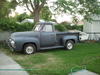
With my 55 I had problems like this and got mad and switched to 12v. I know that is not your answer but I c
an try to look at volt meter on my 54. I wired it up like a Chrysler and it shows both charge and drain most only show charge.
an try to look at volt meter on my 54. I wired it up like a Chrysler and it shows both charge and drain most only show charge.

Thread
Thread Starter
Forum
Replies
Last Post
Jack01
1987 - 1996 F150 & Larger F-Series Trucks
6
Sep 22, 2003 07:31 PM