









F250 Lithium Charging problem

Thread Starter
|
Junior User
Joined: Dec 2018
Posts: 95
Likes: 3
From: Balnarring Victoria Aust
 F250 Lithium Charging problem
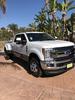
Hi, have a 2018 F250 6.7 diesel and recently changed the factory batteries - due to failing - and replaced them with 2 lithium (850CCA) batteries. Now I get an intermittent message "Charging system low service now". Had charging system checked by 2 auto electricians who both got readings of 14.1 - 14.4 volts and suggested Alternator(s) may be faulty . If the Alternator(S) are faulty, I would have thought the message would be constant but that isn't the case - can be driving for about 2 hours on the highway - have a stop - and restart bingo the message comes up and the little battery icon lights up and stays on. Stop after about an hour and restart and all is normal - no message or battery icon. Is this a problem related to the charging system hasn't the muscle to charge a lithium battery (battery's fully charged @14.7 and charge rate when staring up and running = 14.1v)
Any one had similar problem?
Any one had similar problem?

Freshman User
Joined: Mar 2020
Posts: 26
Likes: 8
May not be able to configure the voltage monitor to work, or even ? disable ? in Forscan settings.
Does your truck have current monitors…thimble size coil which the batt cable passes through ? Search this forum more on BMS.
Many LiFePo4 batteries have a max temp rating that won’t survive underhood temps; example Lifeline Batteries max charge temp is 115F ambient; max discharge temp is 131F. I did not use in a 24V military vehicle for that reason alone.
Have used Li batteries in a camper. Most run a DC-DC converter to both isolate & accurately match the charge voltage and limit max charge current which can overload an alternator. That method doesn’t pan out as the main vehicle battery.
Does your truck have current monitors…thimble size coil which the batt cable passes through ? Search this forum more on BMS.
Many LiFePo4 batteries have a max temp rating that won’t survive underhood temps; example Lifeline Batteries max charge temp is 115F ambient; max discharge temp is 131F. I did not use in a 24V military vehicle for that reason alone.
Have used Li batteries in a camper. Most run a DC-DC converter to both isolate & accurately match the charge voltage and limit max charge current which can overload an alternator. That method doesn’t pan out as the main vehicle battery.

New User
Joined: Nov 2021
Posts: 13
Likes: 10
A friendly suggestion that you really might want to rethink LiFePO4 batteries for your truck.
1) They won't charge in freezing conditions without breaking
2) They don't like hot conditions
3) The high starting loads are really stressful on the BMS components and my shorten they lifespan of the electronics.
4) They may disconnect suddenly if the internal BMS detects a number of issues, which can result in a very nasty voltage spike from the alternator which will fry things. (there are surge protector options for this)
5) LiFePO4 batteries are very, very particular on voltages. You can't drop them in a system designed for flooded, they will die quickly no matter what the battery companies tell you. Many of the battery assembly companies are still learning about the LiFePO4 cells and edge conditions.
6) Continual voltages in the 14's will cook them. - (lithium plating)
7) Lead is a much better and cheaper option for under the hood
If there is a particular reason you need LifePO4 batteries I would install inside the cab, use a DC-DC converter, and install the style with a built in heater. Run whatever special loads you need the lithium for from the batteries themselves. Also, use a coulomb counter since a voltage gauge doesn't really work (flat discharge curve). There are also lifespan verses charging limits (upper and lower) to think about.
For the record I have a truck camper with 300Ah LifePO4 batteries (three 100Ah 12v group 27) installed in the camper and flooded lead under my hood. They are installed inside the thermal envelope of the camper. I have a 2 gauge cable running from the truck batteries to the camper and a DC-DC charger to allow me to control the charging of the lithium batteries: "float" voltage, cell top balance voltage and time- "absorption time", and absorption voltage. I use quotes for "float" and "absorption" since they are flooded terms that aren't really accurate for lithium but are used a lot in discussing lithium charging.
-W
1) They won't charge in freezing conditions without breaking
2) They don't like hot conditions
3) The high starting loads are really stressful on the BMS components and my shorten they lifespan of the electronics.
4) They may disconnect suddenly if the internal BMS detects a number of issues, which can result in a very nasty voltage spike from the alternator which will fry things. (there are surge protector options for this)
5) LiFePO4 batteries are very, very particular on voltages. You can't drop them in a system designed for flooded, they will die quickly no matter what the battery companies tell you. Many of the battery assembly companies are still learning about the LiFePO4 cells and edge conditions.
6) Continual voltages in the 14's will cook them. - (lithium plating)
7) Lead is a much better and cheaper option for under the hood
If there is a particular reason you need LifePO4 batteries I would install inside the cab, use a DC-DC converter, and install the style with a built in heater. Run whatever special loads you need the lithium for from the batteries themselves. Also, use a coulomb counter since a voltage gauge doesn't really work (flat discharge curve). There are also lifespan verses charging limits (upper and lower) to think about.
For the record I have a truck camper with 300Ah LifePO4 batteries (three 100Ah 12v group 27) installed in the camper and flooded lead under my hood. They are installed inside the thermal envelope of the camper. I have a 2 gauge cable running from the truck batteries to the camper and a DC-DC charger to allow me to control the charging of the lithium batteries: "float" voltage, cell top balance voltage and time- "absorption time", and absorption voltage. I use quotes for "float" and "absorption" since they are flooded terms that aren't really accurate for lithium but are used a lot in discussing lithium charging.
-W

Cargo Master


Joined: Mar 2004
Posts: 2,220
Likes: 1,423
From: CA
The Li batteries in the bass boat (trolling motor) took a special charger. Mercury marine did not recommend them as a starting battery, so they can't be any different for your truck. Swap them for an AGM.
Hotshot


Joined: Oct 2015
Posts: 19,698
Likes: 12,824
From: Wyoming

@Whaleya nailed it. He covered all the bases. I bet the BMS on the battery is giving your alternator the finger after a long drive. The battery is full and it doesn't want any more charge. In the case of starting, the starter and glow plugs may be pulling more amps than the BMS will allow.
LiFePO4 as a starting battery is a bad idea. You're not going to get the life out of those expensive batteries that you could if they were in an RV trailer with the proper charging devices.
In the case of my LiFePO4 batteries, I charge them to only 14.4 volts when I'm actively using my RV and 14.2 when I'm not. I have solar so they get charged every day. Your alternator isn't smart enough to do that.
LiFePO4 as a starting battery is a bad idea. You're not going to get the life out of those expensive batteries that you could if they were in an RV trailer with the proper charging devices.
In the case of my LiFePO4 batteries, I charge them to only 14.4 volts when I'm actively using my RV and 14.2 when I'm not. I have solar so they get charged every day. Your alternator isn't smart enough to do that.
Thread Starter
|
Junior User
Joined: Dec 2018
Posts: 95
Likes: 3
From: Balnarring Victoria Aust
Lithium problems
Thanks for all the responses. Some good information !
Some auto electricians said they are a bad choice for a computer managed factory setting charge system, one or two others said they shouldn't be a problem and ignore the intermittent. One said the Lithium batteries don't work with less than a 14.5v charge!
Battery retailer (as you would expect )claim they have been installed in many vehicles without any problems being advised. When I asked about the twin alternator ford system they hadn't had any experience but claimed a couple of Ford Ranger Utes out here had them working fine.
As I paid $1600 for the pair might advertise and go back to the gel/lead acid batteries and wait for Ford to catch up - could be a while as the electrical systems have changed a lot over the past 3 MY models
Some auto electricians said they are a bad choice for a computer managed factory setting charge system, one or two others said they shouldn't be a problem and ignore the intermittent. One said the Lithium batteries don't work with less than a 14.5v charge!
Battery retailer (as you would expect )claim they have been installed in many vehicles without any problems being advised. When I asked about the twin alternator ford system they hadn't had any experience but claimed a couple of Ford Ranger Utes out here had them working fine.
As I paid $1600 for the pair might advertise and go back to the gel/lead acid batteries and wait for Ford to catch up - could be a while as the electrical systems have changed a lot over the past 3 MY models
Last edited by upanddownau; Dec 6, 2021 at 11:37 PM. Reason: correct spelling error
Trending Topics
Hotshot
Joined: Oct 2015
Posts: 19,698
Likes: 12,824
From: Wyoming
Just to give you an idea of how paranoid I am about getting the proper charge profile for my LiFePO4 batteries in my RV trailer, I disconnected the charge coming from the 7-pin cable that would normally go to the house batteries. In other words, the LiFePO4 batteries get zero charge from my F-350. The 7-pin cable doesn't provide a lot of amps, no more than 30 amps due to the fuse and relay. But the alternator can potentially provide a charge of 14+ volts for a long time.
Your experience shows that a drop-in LiFePO4 battery will work in a truck with dual batteries. But I'm surprised that it did. Normally the BMS doesn't allow more than about 120 amps of discharge. But with two batteries in parallel, you get double that so 240 amps. Some BMS will provide a higher amp discharge, but only for a second. Should one of those batteries go out, it may be that one battery alone will not start your truck.
Like I said earlier, I don't think you're going to get the life out of those batteries to justify the expense.
Your experience shows that a drop-in LiFePO4 battery will work in a truck with dual batteries. But I'm surprised that it did. Normally the BMS doesn't allow more than about 120 amps of discharge. But with two batteries in parallel, you get double that so 240 amps. Some BMS will provide a higher amp discharge, but only for a second. Should one of those batteries go out, it may be that one battery alone will not start your truck.
Like I said earlier, I don't think you're going to get the life out of those batteries to justify the expense.
FTE Stories
Ford Trucks for Ford Truck Enthusiasts

Rezvani's Latest Post-Apocalytic Monster Is a Ford F-150 Raptor Underneath
Verdad Gallardo
Top 10 Most Expensive Ford Trucks Ever Sold on Bring a Trailer
Joe Kucinski
2027 Ford Super Duty Buyer's Guide (Every Model, Engine, & Package)
Brett Foote
Top 10 Ford Truck Tragedies
Joe Kucinski
AEV FXL Super Duty - the Super Duty Raptor Ford Doesn't Make
Brett Foote
Lobo Vs Lobo: Proof the F-150 Lobo Should Be Even Lower!
Michael S. Palmer
Ford's 2001 Explorer Sportsman Concept Looks For a New Home
Verdad Gallardo
10 Best Ford Truck Engines We Miss the Most!
Joe Kucinski
2026 Shelby F-150 Off-Road: Better Than a Raptor R?
Brett Foote
New User
Joined: Nov 2021
Posts: 13
Likes: 10
When I am _using_ my RV I have been charging to 14.2 for 20 min (so 20 min once voltage hits 14.2) and then "floating" at 13.7 for the rest of the day. This works for MY cells and MY top balance BMS - YMMY. One challenge is when you have multiple chargers (DC/DC and solar) and start/stop your truck and thus the charge cycle multiple times per day. I'm not sure the best solution for me, but am playing with the charge profiles on my DC/DC charger and also my solar charger. I will be going on a long trip soon and am planning on fine tuning profiles. I also have a voltage logger set up in my RV.
There is a lot people are still learning about LiFePO4 batteries. Heck even the cell phone , laptop, and auto manufacturers are having recalls or OTA updates and they have teams of engineers and massive resources working on batteries.... at least with LiFePO4 in my RV I can minimize the safety concerns verses Li-ion.
-W
PS different battery chemistries have different pros and cons, and not just on price. LiFePO4 isn't "better" then flooded, nor is AGM "better" then flooded onthe other hand flooded isn't "better" then AGM. It all depends on matching the battery to your needs. For example I like flooded because they are cheap and can handle charging abuse but in my skidsteer, which bounces all around, I have AGM to keep the acid inside the battery. My RV is LiFePo4 due to usable capacity for it's size and charging speed.

Lead Driver


Joined: Jan 2002
Posts: 8,653
Likes: 4,738
From: Itinerant
Having lfp batteries in the engine compartment wouldn't be my choice just do to the extreme heat in there which can shorten the life of the batteries by itself not taking into account of the charging regimen that will be thrown at it during the vehicle use.
Anyways here is an older blog in the early stages of lfp and just because these aren't "dropins" the same issues still apply. Scroll down some to the section on the "The Dark Cloud: Premature battery aging?"
https://www.technomadia.com/2015/02/...attery-update/
Anyways here is an older blog in the early stages of lfp and just because these aren't "dropins" the same issues still apply. Scroll down some to the section on the "The Dark Cloud: Premature battery aging?"
https://www.technomadia.com/2015/02/...attery-update/
Heat is a killer.
Hotshot
Joined: Oct 2015
Posts: 19,698
Likes: 12,824
From: Wyoming
When you aren't using your RV I would suggest discharging the batteries to about 80% (so use 20%) and then using a master switch to disconnect the batteries. This will remove any small loads, like a propane detector. Once disconnected, just forget about them. Walk away and forget everything you learned about lead and floating. LiFePO4 don't like to be at 100% for extended times. 14.2 as a float is too high, IMO.
When I am _using_ my RV I have been charging to 14.2 for 20 min (so 20 min once voltage hits 14.2) and then "floating" at 13.7 for the rest of the day. This works for MY cells and MY top balance BMS - YMMY. One challenge is when you have multiple chargers (DC/DC and solar) and start/stop your truck and thus the charge cycle multiple times per day. I'm not sure the best solution for me, but am playing with the charge profiles on my DC/DC charger and also my solar charger. I will be going on a long trip soon and am planning on fine tuning profiles. I also have a voltage logger set up in my RV.
There is a lot people are still learning about LiFePO4 batteries. Heck even the cell phone , laptop, and auto manufacturers are having recalls or OTA updates and they have teams of engineers and massive resources working on batteries.... at least with LiFePO4 in my RV I can minimize the safety concerns verses Li-ion.
-W
PS different battery chemistries have different pros and cons, and not just on price. LiFePO4 isn't "better" then flooded, nor is AGM "better" then flooded onthe other hand flooded isn't "better" then AGM. It all depends on matching the battery to your needs. For example I like flooded because they are cheap and can handle charging abuse but in my skidsteer, which bounces all around, I have AGM to keep the acid inside the battery. My RV is LiFePo4 due to usable capacity for it's size and charging speed.
When I am _using_ my RV I have been charging to 14.2 for 20 min (so 20 min once voltage hits 14.2) and then "floating" at 13.7 for the rest of the day. This works for MY cells and MY top balance BMS - YMMY. One challenge is when you have multiple chargers (DC/DC and solar) and start/stop your truck and thus the charge cycle multiple times per day. I'm not sure the best solution for me, but am playing with the charge profiles on my DC/DC charger and also my solar charger. I will be going on a long trip soon and am planning on fine tuning profiles. I also have a voltage logger set up in my RV.
There is a lot people are still learning about LiFePO4 batteries. Heck even the cell phone , laptop, and auto manufacturers are having recalls or OTA updates and they have teams of engineers and massive resources working on batteries.... at least with LiFePO4 in my RV I can minimize the safety concerns verses Li-ion.
-W
PS different battery chemistries have different pros and cons, and not just on price. LiFePO4 isn't "better" then flooded, nor is AGM "better" then flooded onthe other hand flooded isn't "better" then AGM. It all depends on matching the battery to your needs. For example I like flooded because they are cheap and can handle charging abuse but in my skidsteer, which bounces all around, I have AGM to keep the acid inside the battery. My RV is LiFePo4 due to usable capacity for it's size and charging speed.

Cargo Master


Joined: Apr 2021
Posts: 2,019
Likes: 752
From: Texas
A friendly suggestion that you really might want to rethink LiFePO4 batteries for your truck.
1) They won't charge in freezing conditions without breaking
2) They don't like hot conditions
3) The high starting loads are really stressful on the BMS components and my shorten they lifespan of the electronics.
4) They may disconnect suddenly if the internal BMS detects a number of issues, which can result in a very nasty voltage spike from the alternator which will fry things. (there are surge protector options for this)
5) LiFePO4 batteries are very, very particular on voltages. You can't drop them in a system designed for flooded, they will die quickly no matter what the battery companies tell you. Many of the battery assembly companies are still learning about the LiFePO4 cells and edge conditions.
6) Continual voltages in the 14's will cook them. - (lithium plating)
7) Lead is a much better and cheaper option for under the hood
If there is a particular reason you need LifePO4 batteries I would install inside the cab, use a DC-DC converter, and install the style with a built in heater. Run whatever special loads you need the lithium for from the batteries themselves. Also, use a coulomb counter since a voltage gauge doesn't really work (flat discharge curve). There are also lifespan verses charging limits (upper and lower) to think about.
For the record I have a truck camper with 300Ah LifePO4 batteries (three 100Ah 12v group 27) installed in the camper and flooded lead under my hood. They are installed inside the thermal envelope of the camper. I have a 2 gauge cable running from the truck batteries to the camper and a DC-DC charger to allow me to control the charging of the lithium batteries: "float" voltage, cell top balance voltage and time- "absorption time", and absorption voltage. I use quotes for "float" and "absorption" since they are flooded terms that aren't really accurate for lithium but are used a lot in discussing lithium charging.
-W
1) They won't charge in freezing conditions without breaking
2) They don't like hot conditions
3) The high starting loads are really stressful on the BMS components and my shorten they lifespan of the electronics.
4) They may disconnect suddenly if the internal BMS detects a number of issues, which can result in a very nasty voltage spike from the alternator which will fry things. (there are surge protector options for this)
5) LiFePO4 batteries are very, very particular on voltages. You can't drop them in a system designed for flooded, they will die quickly no matter what the battery companies tell you. Many of the battery assembly companies are still learning about the LiFePO4 cells and edge conditions.
6) Continual voltages in the 14's will cook them. - (lithium plating)
7) Lead is a much better and cheaper option for under the hood
If there is a particular reason you need LifePO4 batteries I would install inside the cab, use a DC-DC converter, and install the style with a built in heater. Run whatever special loads you need the lithium for from the batteries themselves. Also, use a coulomb counter since a voltage gauge doesn't really work (flat discharge curve). There are also lifespan verses charging limits (upper and lower) to think about.
For the record I have a truck camper with 300Ah LifePO4 batteries (three 100Ah 12v group 27) installed in the camper and flooded lead under my hood. They are installed inside the thermal envelope of the camper. I have a 2 gauge cable running from the truck batteries to the camper and a DC-DC charger to allow me to control the charging of the lithium batteries: "float" voltage, cell top balance voltage and time- "absorption time", and absorption voltage. I use quotes for "float" and "absorption" since they are flooded terms that aren't really accurate for lithium but are used a lot in discussing lithium charging.
-W
lithium's are are really not ideal for under hood conditions and will not result in happy customers without changing your charging system configurations
despite cnn they are not the end all of batteries,
they do have purpose...but not as you describe
Thread Starter
|
Junior User
Joined: Dec 2018
Posts: 95
Likes: 3
From: Balnarring Victoria Aust
Lithium barrery
I tried changing the primary battery back to La/gel and leaving the secondary as is (lithium) that worked fine, but I didn't try for a 2 hr trip and chickened out and replaced the lithium with the original Motorcraft. So far so so good no messages after 3 1/2 hour trip both ways. Now have two lithium batteries for sale


Mountain Pass
Joined: Feb 2021
Posts: 166
Likes: 66
From: Loveland CO & NTB NC
I thought being lighter weight and (claimed) longer and robust charge/discharge cycles would be better all round. Interestingly the battery manufacturer is yet to get back after I sent a picture of the slight blistering around the positive terminal (they may still be on xmas leave to be fair).
I tried changing the primary battery back to La/gel and leaving the secondary as is (lithium) that worked fine, but I didn't try for a 2 hr trip and chickened out and replaced the lithium with the original Motorcraft. So far so so good no messages after 3 1/2 hour trip both ways. Now have two lithium batteries for sale
I tried changing the primary battery back to La/gel and leaving the secondary as is (lithium) that worked fine, but I didn't try for a 2 hr trip and chickened out and replaced the lithium with the original Motorcraft. So far so so good no messages after 3 1/2 hour trip both ways. Now have two lithium batteries for sale
