




Trailer tire PSI
Thread Starter
|
More Turbo


Joined: Sep 2019
Posts: 571
Likes: 56
Trailer tire PSI
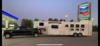
Hey all, my living quarters horse trailer has a GVWR of 15k. I had super heavy duty tires put on it the day it was new couple years ago. The tires that came with it were factory junk basically. The new tires say 110psi cold on the side wall. The shop that did my bearings few months ago I just noticed put them at 80. I’ve noticed they are a little warmer to the touch than I like so I bumped them up to 100psi just now. Haven’t used trailer yet to compare. Should I just bump them up to the rated 110? I was told to always go just under max. Thanks !

Mountain Pass
Joined: Feb 2010
Posts: 140
Likes: 17
From: Brantford Ontario
Just a general answer: if your trailer is anywhere near gross weight then 100lbs sounds about right....Next time you tow it with the new pressure test it again for heat under the same driving cycle that should tell you something especially if it's running a little cooler...
The stiffer setting may also change the trailers handling as well....Again take note as I suspect it may have less side play & is gripping the road more ??
The stiffer setting may also change the trailers handling as well....Again take note as I suspect it may have less side play & is gripping the road more ??
Thread Starter
|
More Turbo
Joined: Sep 2019
Posts: 571
Likes: 56
Just a general answer: if your trailer is anywhere near gross weight then 100lbs sounds about right....Next time you tow it with the new pressure test it again for heat under the same driving cycle that should tell you something especially if it's running a little cooler...
The stiffer setting may also change the trailers handling as well....Again take note as I suspect it may have less side play & is gripping the road more ??
The stiffer setting may also change the trailers handling as well....Again take note as I suspect it may have less side play & is gripping the road more ??

FTE Leadership Emeritus


Joined: May 2014
Posts: 27,356
Likes: 5,952
From: Lake Hartwell, GA

110 PSI is probably the maximum allowed inflation when cold. There is a chart available that lists standard air pressure based on tire type, size, axle rating and GVWR.
Another consideration is the wheel or rim. Not all rims are created equal and not all rims are capable of safely holding 110 PSI.
Don't listen to some guy on the internet when you are looking into your safety. Check for yourself and be confident about your choices.
Another consideration is the wheel or rim. Not all rims are created equal and not all rims are capable of safely holding 110 PSI.
Don't listen to some guy on the internet when you are looking into your safety. Check for yourself and be confident about your choices.

FTE Community Team


Joined: Jan 2019
Posts: 10,781
Likes: 1,512
Most tire manufacturers have a chart of inflation pressure versus weight on tire.
From what we know so far of your situation, you have a 15K trailer and good tires that you've swapped onto it.
Is it a 15K GVW on three axles or two (or four or etc.)?
What load rating do the new tires have?
What size are the tires?
What are the rims rated for?
Are the current tires radial or bias ply?
What were the previous tires rated for?
What were the previous tires' size?
I ask all of this because, for example, many motorhomes and trailers have a certain size tires and a specification for inflation pressure that is lower than the sidewall pressure. Overinflating will make them ride horribly and shake themselves to pieces.
From what we know so far of your situation, you have a 15K trailer and good tires that you've swapped onto it.
Is it a 15K GVW on three axles or two (or four or etc.)?
What load rating do the new tires have?
What size are the tires?
What are the rims rated for?
Are the current tires radial or bias ply?
What were the previous tires rated for?
What were the previous tires' size?
I ask all of this because, for example, many motorhomes and trailers have a certain size tires and a specification for inflation pressure that is lower than the sidewall pressure. Overinflating will make them ride horribly and shake themselves to pieces.
Mountain Pass
Joined: Nov 2014
Posts: 220
Likes: 81
From: Maple Ridge,BC
Hey all, my living quarters horse trailer has a GVWR of 15k. I had super heavy duty tires put on it the day it was new couple years ago. The tires that came with it were factory junk basically. The new tires say 110psi cold on the side wall. The shop that did my bearings few months ago I just noticed put them at 80. I’ve noticed they are a little warmer to the touch than I like so I bumped them up to 100psi just now. Haven’t used trailer yet to compare. Should I just bump them up to the rated 110? I was told to always go just under max. Thanks !
Our 5'er scales about 16,500 lbs, with 12,500 to 13,000 lbs on the axles. I currently use 16" "G" rated tires and normally run pressures of 100 to 104 psi. My rims and tires are rated for 110 psi.
Hotshot
Joined: Jan 2010
Posts: 10,060
Likes: 491
From: Bristol, TN.
Your bearings were changed. That potentially changes heat generated by bearing. If tire pressure was constant in past along with load, I would suggest temperature change has more to do with bearing change than having to do with tires. Tire pressure should reflect load and wheel rating. My two cents,
Steve
Steve
Trending Topics

More Turbo
Joined: Oct 2017
Posts: 562
Likes: 45
FTE Stories
Ford Trucks for Ford Truck Enthusiasts

Top 6 Best Deals Available on New Fords & Lincolns Right Now
Brett Foote
This Hennessey Takes the Expedition Tremor's Off-Roading Capability to the Next Level
Verdad Gallardo
Top 10 Fords at 2026 Carlisle Ford Nationals
Joe Kucinski
3 Best / 3 Worst Parts of Modern Ford Ownership
Brett Foote
10 Amazing Upgrades That Solve Common Ford Truck Owner Headaches
Pouria Savadkouei
Every 2026 Ford Engine Explained
Brett Foote
10 Ugly Ford Trucks That We Still Kinda Love
Joe Kucinski
10 Things Every Truck Owner NEEDS (2026 Edition)
Michael S. Palmer
Rezvani's Latest Post-Apocalyptic Monster Is a Ford F-150 Raptor Underneath
Verdad Gallardo
Thread
Thread Starter
Forum
Replies
Last Post