


65 Econoline pickup

Thread Starter
|
5th Wheeling
Joined: Jul 2021
Posts: 38
Likes: 11
From: New Jersey
Thank you for the valuable trove! I will put the relay idea on my list of necessaries (such as seat belts) once I know it'll sustain operating temps and maybe even hold a sustained 50MPH without colorfully exploding. It'll need new tires almost immediately - plenty of tread, but deeply dry-rotted into the walls.
I probed the load side of the fuse case with 12V but the bulbs did not light. The cluster tub may not have been grounded well enough. Otherwise, have to open the harness & see if there's a break.
Working on the speedometer now. The one that came with it is binding in the odometer transmission, but I can't see where. It'll go almost a half-rev on the tenths & then stick for several revolutions of the head. I'm putting the good face on the yard frame & reinstalling the drum; that one doesn't bind.
The speedo needle twists off like a clock sweep hand does, no problem. Drilled out the face rivets, substituting small R/C screws with nuts.
Thread Starter
|
5th Wheeling
Joined: Jul 2021
Posts: 38
Likes: 11
From: New Jersey
Welp, got the aftermarket gauge set in, topped off the coolant, dumped in five gallons of regular, and let 'er rip
https://i.imgur.com/zDNeIES.mp4
Much, MUCH quieter, and runs fairly smooth, considering it sat for at least three years, and hasn't been to operating temperature until yesterday.
It warmed on up without incident - no leaks - BUT it smokes quite a bit, both just sitting at idle & when revved up. Clearly oil smoke. Assumption is that it needs a rebuild: valve seals and rings. It may also benefit from an Italian tune-up; the rings could be stuck...but that ain't happening until it gets new tires so I don't die.
Speaking of dying, can anybody suggest the proper location for seat belts? This thing never had them. Looking at the fender wells: hole + enormous fender washers...
The gauges all show good readings. Fuel gauge is not reading - could be no current or signal wire at the gauge (the gauge has been tested, it does work) and/or a bad sending unit. First: continuity test on the signal wire, voltage test at the power lug on the gauge.
Holy crap, but does it ever get hot in the cabin without the doghouse, even with the doors open.
https://i.imgur.com/zDNeIES.mp4
Much, MUCH quieter, and runs fairly smooth, considering it sat for at least three years, and hasn't been to operating temperature until yesterday.
It warmed on up without incident - no leaks - BUT it smokes quite a bit, both just sitting at idle & when revved up. Clearly oil smoke. Assumption is that it needs a rebuild: valve seals and rings. It may also benefit from an Italian tune-up; the rings could be stuck...but that ain't happening until it gets new tires so I don't die.
Speaking of dying, can anybody suggest the proper location for seat belts? This thing never had them. Looking at the fender wells: hole + enormous fender washers...
The gauges all show good readings. Fuel gauge is not reading - could be no current or signal wire at the gauge (the gauge has been tested, it does work) and/or a bad sending unit. First: continuity test on the signal wire, voltage test at the power lug on the gauge.
Holy crap, but does it ever get hot in the cabin without the doghouse, even with the doors open.

Mountain Pass


Joined: Aug 2020
Posts: 102
Likes: 5
Looking good, I've wanted one of those for a long time. Could you post the part no. for your alternator belt? It looks like it is a toothed, automotive belt and is probably the same as my 66 P-100 w/ a 170 uses. All I've been able to find were fractional HP type belts and I'd like to change it.
Thanks, John
Thanks, John
Thread Starter
|
5th Wheeling
Joined: Jul 2021
Posts: 38
Likes: 11
From: New Jersey
Looking good, I've wanted one of those for a long time. Could you post the part no. for your alternator belt? It looks like it is a toothed, automotive belt and is probably the same as my 66 P-100 w/ a 170 uses. All I've been able to find were fractional HP type belts and I'd like to change it.
Thanks, John
Thanks, John
Worked on little stuff today.
The fuel gauge works fine; the signal wire from the sending unit is intact & signalling, and there's plenty of current to the power side. So it has to be the sending unit.
I have five gallons of gas in the tank; hopefully, it doesn't reach the opening for the sending unit, so I can replace it with the tank mounted and stay dry. I was drenched removing the tank before, and it only had a couple gallons of extremely foul proto-turpentine in it...the fill collar is at the bottom of the tank & it has no drain, so I got hosed. A Fun Day..
The ignition switch sticks in the START position when I start it; I have to manually rotate it back so the starter doesn't eat itself. I took the cylinder out, and the switch itself rotates & retracts freely, so it's something in the cylinder contacting the switch housing. Lubed it with white lithium. Open to suggestions.
Started it, ran it, got it to temp. Not obviously burning oil now. Huh.
Over the next two days: hoping to install the horns, replace three patches on the front cabin floor with one or two using 16-gauge steel, rebuild the seat frame, and install the doghouse. After that, the doors: window regulators have to be refurbed & installed after the window channel and fuzzies are replaced; install new door gaskets, new lock cylinders to match the ignition.
One of the bugaboos with the doors has been stripped regulator teeth on the crankshaft; the cranks won't seat on fully and just spin no matter how much the set screw is tightened. I bought a set of regulators for a Falcon, but those gorgeous, shiny, perfect splined shafts are a good inch shorter than the E100s. After thrashing many ideas and buying slide-on toothed shafts (that don't fit the Ford window cranks, and god only knows what does fit them) I tried cleaning out the shaft splines...the recommended method is with a file, but these are truly bitched and mashed and the file just laughed, so I went after the driver's side* with a Dremel carrying the thinnest composition blade I have...and it appears to have worked - the handle now slides all the way on, where it would only go part-way before; we'll find out when it's all assembled.
*more f**kery: it's actually the passenger unit! The regulators are on backwards/swapped: it takes a great deal more force to raise the windows than to lower them. Who knows how long these were mounted like this, but it has been several years to maybe decades because everything in these doors is older than hell and corroded, with no sign of anything, even the glass, having ever been replaced. Hell, maybe they were installed at the factory that way. Throw it on the pile
There's no evidence I can find that this ever had window washers installed...I have to get way up under the dash to see if there are holes that are filled with Bondo. If not, installing a system goes on the list.
Also: did these trucks have any kind of a reverse light? Can't find a switch cage anywhere around the transmission or shift linkage, and no reference to one in the wiring diagram. Think it would be a smart thing to have, and it wouldn't be difficult to fab up & install.

More Turbo

Joined: Jan 2011
Posts: 546
Likes: 41
From: Fayetteville, NC
It could be the fuel tank is not grounded. In the corner of the tank where there is just a flange, drill a small hole then use a sheet metal screw to attach a wire. Attach the other end of the wire to the frame.
the reverse lights were an option until 1967 when they were standard. I have added reverse lights and just wire them to a switch on the dash. You just have to remember to turn them on and off..
the reverse lights were an option until 1967 when they were standard. I have added reverse lights and just wire them to a switch on the dash. You just have to remember to turn them on and off..
Thread Starter
|
5th Wheeling
Joined: Jul 2021
Posts: 38
Likes: 11
From: New Jersey
Removed 1-large factory horn and a pair of aftermarket snails; I tested them all, and got tiny ruptured duck noises, so binned they are.
Installed two aftermarket horns and actually bolted the relay to one of them on the back side of the bulkhead. Ran a piece of 12GA zip cord to the starter relay lug, with a 15A mini-fuse pack. Surprisingly, it works great! I figured the horn contact would be a bit spotty, but so far so good.
Trying the tank bonding thing tomorrow, to see if the sending unit is any good.
Main event tomorrow is floor patching and installing the doghouse. If there's time I may start on the doors. Still trying to figure out how to attach the window channel fuzzies; there are no instructions with the kit; the manual refers to there being a few screws here & there; the passenger side has the fuzzy channels (though no fuzz to speak of); the driver's side has zero channels at all, anywhere, so the glass rattles something awful when the door is shut. That side has no door gasket either, which isn't saying much as the passenger-side gasket has essentially fossilized to a lithic state. They must be factory.
The sash scrubbies appear to clip on, but we'll see; the ones on my '66 Bonneville are screwed on.
I can tell you right now that there is no way in hell I'd remember to flip a switch for the reverse lights. If I install one, I'll fab a switch cage and put a momentary switch in, just build the whole thing from scratch. 'Course, it would be a big help to know where Ford stuck it...something to research.
(edit) well, that was easy...https://www.ford-trucks.com/forums/1...pd-column.html
Installed two aftermarket horns and actually bolted the relay to one of them on the back side of the bulkhead. Ran a piece of 12GA zip cord to the starter relay lug, with a 15A mini-fuse pack. Surprisingly, it works great! I figured the horn contact would be a bit spotty, but so far so good.
Trying the tank bonding thing tomorrow, to see if the sending unit is any good.
Main event tomorrow is floor patching and installing the doghouse. If there's time I may start on the doors. Still trying to figure out how to attach the window channel fuzzies; there are no instructions with the kit; the manual refers to there being a few screws here & there; the passenger side has the fuzzy channels (though no fuzz to speak of); the driver's side has zero channels at all, anywhere, so the glass rattles something awful when the door is shut. That side has no door gasket either, which isn't saying much as the passenger-side gasket has essentially fossilized to a lithic state. They must be factory.
The sash scrubbies appear to clip on, but we'll see; the ones on my '66 Bonneville are screwed on.
I can tell you right now that there is no way in hell I'd remember to flip a switch for the reverse lights. If I install one, I'll fab a switch cage and put a momentary switch in, just build the whole thing from scratch. 'Course, it would be a big help to know where Ford stuck it...something to research.
(edit) well, that was easy...https://www.ford-trucks.com/forums/1...pd-column.html
Thread Starter
|
5th Wheeling
Joined: Jul 2021
Posts: 38
Likes: 11
From: New Jersey
Update:
Tried bonding the tank. There was no change, but everything else is done: floor patched,

 '
'


doghouse installed, carpet & interior installed;


re-tracked the driver's seat and it is solid now.

Installing the driver's seat was a unique PITA because the inner rear bolt has to be dropped down into a box canyon bordered by the inner fender, the doghouse, and the tiny box that shelters the battery cables as they travel to the doghouse from the battery box.

I made the mistake of not prepping by chasing the caged nut there, and I could not get the bolt to catch no way no how. Eventually I gave up and pushed a 1/4" stove bolt up through the cage nut and captured it with a nut, making a standing stud. It's a hell of a lot easier getting a nut to start on a good bolt than playing hide 'n' seek blind.
Still have to clamp up the wiring underneath. BUT I drove it around the neighborhood, and it ran well - choke needs adjustment, but it stopped smoking. It also wanders all over the road like a lost puppy, so you really have to pay attention. The king pins and the steering box seem tight; the tires are badly dry-rotted, so I'll get new tires and have them check the alignment, May also be bad tie rod/drag link ends...we shall see.
At speeds over 40MPH, the speedometer loses its mind. I don't expect to drive it much over 60 anyhow, so I'm not worried about it.
Aaannnd the gas gauge may be working! It's up off the rest, and showing a fraction of a quarter of a tank.
Once I get the doors/windows rebuilt, it should be good to tool around in for awhile. The rear channel inserts are giving me fits. The kit came with no instructions; there are five spots in the back & top where a fastener appears to clip in to secure the insert; however, they don't stick well to the back of the insert, and the button side that's supposed to snap in with hand squeezin' + harsh language will not. In fact,. I applied a drift, a small hammer; then a wooden drift and a C-clamp. All I succeeded in doing was mangle the channel insert and literally dish the welded tab mount where the thing is supposed to snap in to the window frame. The mangling ain't too bad but it won't survive another round of that. I'm debating using butyl tape in place of the clips, or small flush-headed screws.

I'm open to suggestions.
Tried bonding the tank. There was no change, but everything else is done: floor patched,
doghouse installed, carpet & interior installed;
re-tracked the driver's seat and it is solid now.
Installing the driver's seat was a unique PITA because the inner rear bolt has to be dropped down into a box canyon bordered by the inner fender, the doghouse, and the tiny box that shelters the battery cables as they travel to the doghouse from the battery box.
I made the mistake of not prepping by chasing the caged nut there, and I could not get the bolt to catch no way no how. Eventually I gave up and pushed a 1/4" stove bolt up through the cage nut and captured it with a nut, making a standing stud. It's a hell of a lot easier getting a nut to start on a good bolt than playing hide 'n' seek blind.
Still have to clamp up the wiring underneath. BUT I drove it around the neighborhood, and it ran well - choke needs adjustment, but it stopped smoking. It also wanders all over the road like a lost puppy, so you really have to pay attention. The king pins and the steering box seem tight; the tires are badly dry-rotted, so I'll get new tires and have them check the alignment, May also be bad tie rod/drag link ends...we shall see.
At speeds over 40MPH, the speedometer loses its mind. I don't expect to drive it much over 60 anyhow, so I'm not worried about it.
Aaannnd the gas gauge may be working! It's up off the rest, and showing a fraction of a quarter of a tank.
Once I get the doors/windows rebuilt, it should be good to tool around in for awhile. The rear channel inserts are giving me fits. The kit came with no instructions; there are five spots in the back & top where a fastener appears to clip in to secure the insert; however, they don't stick well to the back of the insert, and the button side that's supposed to snap in with hand squeezin' + harsh language will not. In fact,. I applied a drift, a small hammer; then a wooden drift and a C-clamp. All I succeeded in doing was mangle the channel insert and literally dish the welded tab mount where the thing is supposed to snap in to the window frame. The mangling ain't too bad but it won't survive another round of that. I'm debating using butyl tape in place of the clips, or small flush-headed screws.
I'm open to suggestions.
FTE Stories
Ford Trucks for Ford Truck Enthusiasts

Top 6 Best Deals Available on New Fords & Lincolns Right Now
Brett Foote
This Hennessey Takes the Expedition Tremor's Off-Roading Capability to the Next Level
Verdad Gallardo
Top 10 Fords at 2026 Carlisle Ford Nationals
Joe Kucinski
3 Best / 3 Worst Parts of Modern Ford Ownership
Brett Foote
10 Amazing Upgrades That Solve Common Ford Truck Owner Headaches
Pouria Savadkouei
Every 2026 Ford Engine Explained
Brett Foote
10 Ugly Ford Trucks That We Still Kinda Love
Joe Kucinski
10 Things Every Truck Owner NEEDS (2026 Edition)
Michael S. Palmer
Rezvani's Latest Post-Apocalyptic Monster Is a Ford F-150 Raptor Underneath
Verdad Gallardo
Thread Starter
|
5th Wheeling
Joined: Jul 2021
Posts: 38
Likes: 11
From: New Jersey
Thank you!
Pictures to follow...Ida fallout is sucking up my free time.
I got the doors done over the weekend. I've never done this before, so it was a long slog on the driver's side door that went somewhat smoother on the passenger's door.
NOBODY has instructions or good directions for this. Not Ford, not the kit-sellers, nor any of the other parts folks, sites, forums, YouTube...
First off: the window channel fuzzy kit comes with these clips that are supposed to hold them in the channels. As noted, they were impossible to get 'snapped' in to the base of the channel. But that was nothing compared to trying to figure out how to attach them to the channel inserts. (the sill fuzzies were fine; they had their clips pre-installed)
In short: they can't. The only way to securely fasten the clips to the back side of the insert would be with silicone adhesive caulk. Or Gorilla Glue. Considering how much movement you have to have to assemble the whole thing, I don't like the odds that the snap would line up with all 6 holes in the door channel.
The driver's door had no remnants whatsoever, so it wasn't until I got to the other side that I had a chance to see how Ford did it. First off, the clips that are sold today look exactly like what Ford made, except for two things: 1) Ford swaged the clips straight into the metal of the back side of the insert. - they have six tiny points driven in to the metal body of the insert; 2) The ones you get today have two enormous points - there is no way that's happening without destroying both parts...
An upholstery shop I know suggested #4 or #6 flush-head sheet-metal screws...and that you shouldn't concern yourself with fastening it to the door just yet: install the insert in the channel- it'll stay there - and reassemble the rest of it. We also batted around just using silicone adhesive - sparingly; you only need to hold it a bit, it largely stays put on its own. As I write this, I have no fasteners at all in mine, yet, and the windows operate fine. So I suggest binning the clips entirely if you run into the problems I did. You can roll the window down & literally pull the insert down to apply adhesive, or just leave them in & use a couple of the screws. No rush.
I was blissfully unaware that the new divider channel (between the vent window & the main) had no brackets. You have to drill off the ones you have (mine were in great shape - surface rust only - considering the years of abuse) and figure out a method for attaching them to the new one. I wound up using 2-sided brass rivets from Michael's which are really for clothing & upholstery, but they seem to hold fine.
The rubber vent window backing insert came with its own rivets: I used a nail set, clamped into my vise as the anvil, to spread them & finished them with a small drift/large flush nail set. These have to be riveted as the metal backing slips over the new channel. In case the Michael's rivets (which I used to hold the vent window seal bracket as well as the mounting brackets on the driver's side) fail at some point, I picked up a dozen or so 3/32" (or 3mm) DuBro machine screws and nylon nuts at an R/C hobby store: these are used for R/C aircraft construction, and they work great in place of rivets if one side doesn't have to be flush. These have flush heads that take a hex, and they buried nicely into the fuzz. I used them on the passenger side - and found that you may have to find some way to flush rivet the bottom of the vent window strip as the threads of the bolt seem to interfere with the rubber seal. (I'll post a photo. Really)
Once the divider is rebuilt, it's the first thing to go back in. It can take some messing around to be sure it fits right - the distance between the top bracket and the middle bracket is critical, as neither bracket has any play north-south. On both I somehow measured it short, so when the middle bracket was up against its mounting point, the top bracket was 1/2" or so south of the top edge of the door. drilling new holes and shifting it was a lot easier with bolts...
Once in, put the sill fuzzies on. Why? Because those little metal stringy bits at the end of the curved end are supposed to wrap back around the back edge of the channel at the sill, and the window channel insert is installed over them.
Then install the channel, making sure to get it up in the corner pocket for the glass. And this is where not fixing them is important: The next thing is to install the glass and set the divider channel to hold the glass. It sorta sticks to the fuzzies; the glass didn't move much. Mine might have been stunned by the sensation of actual felt rather than banging around in metal like it had been for years.
In any event, once the channels are fixed, shove the glass all the way up and slap the glass up a couple of times to seat it up there good. Then get your regulator installed.
Essentially, you're done at this point - let it sit and let the parts all get used to each other, then see if the channel insert moves around. I'm probably going to countersink a couple #4s just to fix it in place - I marked off where the solid metal is adjacent to the clip holes, so I know where to drill through.
I wasn't quite done. The window crank and door lever shaft ends were severely beaten up. I'd been kvetching about how to deal with this - the (NLA) regulators for Econolines have really long shafts, and the Mustang/Falcon regulators are way too short. There's no easy solution.
When I recall where I watched or read this - and it may have been here - I will post attribution. But my memory fails right now.
Late one night was found an article about stripped regulator ends and what to do. This one dude said he'd never replaced them, he always filed out the grooves. Yes, it reduces the teeth somewhat, and may eliminate some entirely, but the main issue with getting levers & cranks to grip is that the stripping prevents them from seating completely on the shaft, and that getting the handle all the way on as far as it can go, and set with the screw, is the key to getting them snug again.
And he was right! Forget the file, though; life is too short. I used a Dremel with the thinnest cutting blade I could find. Damn; all four shafts restored, all nice 'n' snug.
Then the door seals were installed. Nice seals, they work just great if you don't install the wrong side out. They were marked left and right - I got that sorted - but somehow I got the driver's side one...inside out. And the gasket gets real thick at some points, such points not being anywhere on the striker side of the door. I got away with whittling it down using a boxcutter, but I may need to replace that one at some point.
The 3M trim adhesive in the black/green tube is amazing. You might want to use surgical gloves. I spent most of my time taping the seals in place dry. Use this stuff, you won't need any tape to hold it. It reminds me of formica countertop adhesive: lay down your bead, let it sit 20-seconds, and mount the gasket. For those weird tight corners down by the beltine: lay a bead, immediately press the gasket into it, pull it back off, count to five, and stick it back on. It ain't going anywhere. One tube did both doors. Have fun slamming the doors, too. The driver's side was completely lacking it's gasket - there wasn't a single soft part left on this door - and it was fun getting it to close. I slammed it so hard once I popped the regulator arm off of the pulley and the window dropped to the bottom. Oops. Well, Dennis Carpenter warned about this, that the doors would be tough to close, and that the door hinges might have to be adjusted (nope; mine's got perfect shut-lines, not messing with it), so the truck's parked, with real windows and door locks, and will sit for a few days until the gaskets bed in. The vent window rubbers were a bit finicky - they keep catching on the bottom frame of the vent window itself and pulling out of the door channel - may have to look at them again, but they are mounted correctly, and they are sealing.
So it's about time to get tires. Still have to secure the wiring harness and do something about the grille. Then tires & a front end alignment to help me figure out why it wanders all over the road.
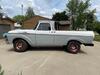
Pictures to follow...Ida fallout is sucking up my free time.
I got the doors done over the weekend. I've never done this before, so it was a long slog on the driver's side door that went somewhat smoother on the passenger's door.
NOBODY has instructions or good directions for this. Not Ford, not the kit-sellers, nor any of the other parts folks, sites, forums, YouTube...
First off: the window channel fuzzy kit comes with these clips that are supposed to hold them in the channels. As noted, they were impossible to get 'snapped' in to the base of the channel. But that was nothing compared to trying to figure out how to attach them to the channel inserts. (the sill fuzzies were fine; they had their clips pre-installed)
In short: they can't. The only way to securely fasten the clips to the back side of the insert would be with silicone adhesive caulk. Or Gorilla Glue. Considering how much movement you have to have to assemble the whole thing, I don't like the odds that the snap would line up with all 6 holes in the door channel.
The driver's door had no remnants whatsoever, so it wasn't until I got to the other side that I had a chance to see how Ford did it. First off, the clips that are sold today look exactly like what Ford made, except for two things: 1) Ford swaged the clips straight into the metal of the back side of the insert. - they have six tiny points driven in to the metal body of the insert; 2) The ones you get today have two enormous points - there is no way that's happening without destroying both parts...
An upholstery shop I know suggested #4 or #6 flush-head sheet-metal screws...and that you shouldn't concern yourself with fastening it to the door just yet: install the insert in the channel- it'll stay there - and reassemble the rest of it. We also batted around just using silicone adhesive - sparingly; you only need to hold it a bit, it largely stays put on its own. As I write this, I have no fasteners at all in mine, yet, and the windows operate fine. So I suggest binning the clips entirely if you run into the problems I did. You can roll the window down & literally pull the insert down to apply adhesive, or just leave them in & use a couple of the screws. No rush.
I was blissfully unaware that the new divider channel (between the vent window & the main) had no brackets. You have to drill off the ones you have (mine were in great shape - surface rust only - considering the years of abuse) and figure out a method for attaching them to the new one. I wound up using 2-sided brass rivets from Michael's which are really for clothing & upholstery, but they seem to hold fine.
The rubber vent window backing insert came with its own rivets: I used a nail set, clamped into my vise as the anvil, to spread them & finished them with a small drift/large flush nail set. These have to be riveted as the metal backing slips over the new channel. In case the Michael's rivets (which I used to hold the vent window seal bracket as well as the mounting brackets on the driver's side) fail at some point, I picked up a dozen or so 3/32" (or 3mm) DuBro machine screws and nylon nuts at an R/C hobby store: these are used for R/C aircraft construction, and they work great in place of rivets if one side doesn't have to be flush. These have flush heads that take a hex, and they buried nicely into the fuzz. I used them on the passenger side - and found that you may have to find some way to flush rivet the bottom of the vent window strip as the threads of the bolt seem to interfere with the rubber seal. (I'll post a photo. Really)
Once the divider is rebuilt, it's the first thing to go back in. It can take some messing around to be sure it fits right - the distance between the top bracket and the middle bracket is critical, as neither bracket has any play north-south. On both I somehow measured it short, so when the middle bracket was up against its mounting point, the top bracket was 1/2" or so south of the top edge of the door. drilling new holes and shifting it was a lot easier with bolts...
Once in, put the sill fuzzies on. Why? Because those little metal stringy bits at the end of the curved end are supposed to wrap back around the back edge of the channel at the sill, and the window channel insert is installed over them.
Then install the channel, making sure to get it up in the corner pocket for the glass. And this is where not fixing them is important: The next thing is to install the glass and set the divider channel to hold the glass. It sorta sticks to the fuzzies; the glass didn't move much. Mine might have been stunned by the sensation of actual felt rather than banging around in metal like it had been for years.
In any event, once the channels are fixed, shove the glass all the way up and slap the glass up a couple of times to seat it up there good. Then get your regulator installed.
Essentially, you're done at this point - let it sit and let the parts all get used to each other, then see if the channel insert moves around. I'm probably going to countersink a couple #4s just to fix it in place - I marked off where the solid metal is adjacent to the clip holes, so I know where to drill through.
I wasn't quite done. The window crank and door lever shaft ends were severely beaten up. I'd been kvetching about how to deal with this - the (NLA) regulators for Econolines have really long shafts, and the Mustang/Falcon regulators are way too short. There's no easy solution.
When I recall where I watched or read this - and it may have been here - I will post attribution. But my memory fails right now.
Late one night was found an article about stripped regulator ends and what to do. This one dude said he'd never replaced them, he always filed out the grooves. Yes, it reduces the teeth somewhat, and may eliminate some entirely, but the main issue with getting levers & cranks to grip is that the stripping prevents them from seating completely on the shaft, and that getting the handle all the way on as far as it can go, and set with the screw, is the key to getting them snug again.
And he was right! Forget the file, though; life is too short. I used a Dremel with the thinnest cutting blade I could find. Damn; all four shafts restored, all nice 'n' snug.
Then the door seals were installed. Nice seals, they work just great if you don't install the wrong side out. They were marked left and right - I got that sorted - but somehow I got the driver's side one...inside out. And the gasket gets real thick at some points, such points not being anywhere on the striker side of the door. I got away with whittling it down using a boxcutter, but I may need to replace that one at some point.
The 3M trim adhesive in the black/green tube is amazing. You might want to use surgical gloves. I spent most of my time taping the seals in place dry. Use this stuff, you won't need any tape to hold it. It reminds me of formica countertop adhesive: lay down your bead, let it sit 20-seconds, and mount the gasket. For those weird tight corners down by the beltine: lay a bead, immediately press the gasket into it, pull it back off, count to five, and stick it back on. It ain't going anywhere. One tube did both doors. Have fun slamming the doors, too. The driver's side was completely lacking it's gasket - there wasn't a single soft part left on this door - and it was fun getting it to close. I slammed it so hard once I popped the regulator arm off of the pulley and the window dropped to the bottom. Oops. Well, Dennis Carpenter warned about this, that the doors would be tough to close, and that the door hinges might have to be adjusted (nope; mine's got perfect shut-lines, not messing with it), so the truck's parked, with real windows and door locks, and will sit for a few days until the gaskets bed in. The vent window rubbers were a bit finicky - they keep catching on the bottom frame of the vent window itself and pulling out of the door channel - may have to look at them again, but they are mounted correctly, and they are sealing.
So it's about time to get tires. Still have to secure the wiring harness and do something about the grille. Then tires & a front end alignment to help me figure out why it wanders all over the road.
Mountain Pass
Joined: Mar 2010
Posts: 176
Likes: 21
From: GR, MI
I don't know if anyone has said anything about the radiator shroud or not and don't know if yours came with one ( I haven't seen it in your pictures). There is suppose to be a piece of sheet metal that goes under the cab from the lower grill opening to the bottom of the radiator to form a tunnel to direct air into the radiator. If you don't have one you are going to need to fab one in order to keep your engine cool at speed. Good times, I had a '62 that I built up from '62 ( body ) and '65 ( front axle ) E100 trucks and a '78 Mercury Zephyr ( engine and trans ) and a '66 E100 motor home ( 9"rear axle ). One more thing, if you care to change your seats, what I used in my truck was a set of Kia Sephia buckets. I imagin it would be hard to find a set these days. I used those because they hug your back nicely, another good seat would be from a second gen Ford Probe GT ( I'm dating myself here) I'm sure those would be equally hard to find.
Good luck with your build but be very careful, there is not much between you and the vehicle in front of you. My wife would never let my kids go anywhere with me when I drove my truck.
Good luck with your build but be very careful, there is not much between you and the vehicle in front of you. My wife would never let my kids go anywhere with me when I drove my truck.
Thread Starter
|
5th Wheeling
Joined: Jul 2021
Posts: 38
Likes: 11
From: New Jersey
I have been looking at the shroud situation (mine was long, long gone by the time I got this thing) and can get a repro for about $450 shipped from California. I haven't been driving mine much, at least until I get seatbelts into it. I plan on installing a standard 3-point type, which I may pull from a yard car. Where to set the anchoring points has been on my mind. I figure the bottom ones can go on the seat base bolts, with extra-beefy fender washers, and there's a frame section on the door that appears ideal for mounting a piece of thick steel stock & a bolt for shoulder harness
I am thinking hard about replacing the seats. With all of the room in the cab behind the seats, it blows my mind that they weren't just hinged, like in an Austin Mini (original, not modern) for access. Getting to the battery is impossible without completely removing the driver's seat.
Thank you for the recommendations - which appear to be based on comfort.
SO
Is there any limitation to what I can put in? A pair of high-back seats from a coupe, that can both tilt forward & pull ahead on the rails for access, would be my bet.I'd have to fabricate some kind of frame for the fender mount...Thinking on it, it seems that I can drill holes where needed in the baseplate of the (modern) seat track to fit the existing holes in the inner pipe base (I'm hesitant to drill any more holes in the pipes themselves, for fear of weakening them) but it depends on the width of the seat tracks matching the width of the pipe base/holes in the fenders..The other idea to address that concern was to install a steel plate across the pipe/fender, eliminating any mounting dimension issues. I am not finding a great deal of information online about retro-fitting seats. One of the yard vans in Winslow had high-back buckets, screwed in with 2x4s. Nope.
This weekend, I plan on going back to the yard in Winslow, NJ to try & score a front bumper & brackets as well as some other small odds & ends (such as the correct rounded screws for the instrument cluster), and maybe another speedometer head, since mine is acting insane. The bumper will give me a tiny bit of peace of mind, although yes, I am uncomfortably aware that there's nothing up there but 18-ga and a prayer.
I am also trying to fabricate a defroster vent register out of a wet-vac head, since two of the three paper ones I had dissolved.
Once I get the full complement of 'safety features' installed, I'll likely be driving it more, so we can see if/when overheat at speed becomes an issue. Based on WAZE, I've had her up to 60-65, and that may be about it - it needs to be able to stay up to highway speeds to get me to Philadelphia & back.
The last major annoying problem involves venting of the gas tank. I can't fill it, it overflows at the neck. I put a new hose for the tank-top vent, but it may not have been spaced correctly & could be pinched between the tank & the counterweight. The fill neck vent I did not replace, and since it was a giant PITA to connect back to the neck on the reinstall, it is probably the culprit. The tube runs up into that box at the left rear corner and terminates at 180, and as far as I can tell, the only access to that box is from underneath, reaching up through the bed and around the fill neck somehow. If there is some way to open that corner can, I'm all ears.
I am thinking hard about replacing the seats. With all of the room in the cab behind the seats, it blows my mind that they weren't just hinged, like in an Austin Mini (original, not modern) for access. Getting to the battery is impossible without completely removing the driver's seat.
Thank you for the recommendations - which appear to be based on comfort.
SO
Is there any limitation to what I can put in? A pair of high-back seats from a coupe, that can both tilt forward & pull ahead on the rails for access, would be my bet.I'd have to fabricate some kind of frame for the fender mount...Thinking on it, it seems that I can drill holes where needed in the baseplate of the (modern) seat track to fit the existing holes in the inner pipe base (I'm hesitant to drill any more holes in the pipes themselves, for fear of weakening them) but it depends on the width of the seat tracks matching the width of the pipe base/holes in the fenders..The other idea to address that concern was to install a steel plate across the pipe/fender, eliminating any mounting dimension issues. I am not finding a great deal of information online about retro-fitting seats. One of the yard vans in Winslow had high-back buckets, screwed in with 2x4s. Nope.
This weekend, I plan on going back to the yard in Winslow, NJ to try & score a front bumper & brackets as well as some other small odds & ends (such as the correct rounded screws for the instrument cluster), and maybe another speedometer head, since mine is acting insane. The bumper will give me a tiny bit of peace of mind, although yes, I am uncomfortably aware that there's nothing up there but 18-ga and a prayer.
I am also trying to fabricate a defroster vent register out of a wet-vac head, since two of the three paper ones I had dissolved.
Once I get the full complement of 'safety features' installed, I'll likely be driving it more, so we can see if/when overheat at speed becomes an issue. Based on WAZE, I've had her up to 60-65, and that may be about it - it needs to be able to stay up to highway speeds to get me to Philadelphia & back.
The last major annoying problem involves venting of the gas tank. I can't fill it, it overflows at the neck. I put a new hose for the tank-top vent, but it may not have been spaced correctly & could be pinched between the tank & the counterweight. The fill neck vent I did not replace, and since it was a giant PITA to connect back to the neck on the reinstall, it is probably the culprit. The tube runs up into that box at the left rear corner and terminates at 180, and as far as I can tell, the only access to that box is from underneath, reaching up through the bed and around the fill neck somehow. If there is some way to open that corner can, I'm all ears.
Mountain Pass
Joined: Mar 2010
Posts: 176
Likes: 21
From: GR, MI
There should be holes in the floor for the seat belts from the factory. I bolted my lap belts there. My truck had rubber plugs in the seat belt bolt holes. The Kia seats I used were high back buckets. Other than comfort, I looked for a set of seats that didn't have real thick bottoms so the seats don't make you sit to high. Basically there is no rules, just don't jump into the first thing you see, keep a level head and buy the best you can afford. Don't cut corners. You will be much happier when its finished.
Mountain Pass
Joined: Mar 2010
Posts: 176
Likes: 21
From: GR, MI
One more thing, do some investigating on what the shroud looks like, you seem to have the skills necessary to fab your own shroud. For the most part I think its just a flat piece of metal with some sides on it.Good luck, have fun and definitely don't pick your nose while driving your truck cause I guarantee somebody will always be watching you.
Thread Starter
|
5th Wheeling
Joined: Jul 2021
Posts: 38
Likes: 11
From: New Jersey
It's winter and the truck slumbers.
Seat belts and new tires were installed.
I have two problems remaining that are preventing regular operation:
1) the gas tank will not fill. There's some kind of venting issue. I had the tank out in September and rinsed it it. Also replaced all of the vent lines, except for the overflow loop that rises above the bed level in a little welded corner box that also protects the fuel filler neck since it was very difficult to get to and also seemed to be intact.. I didn't have a sending unit yet, and didn't want to remove it since I didn't have a new O-ring. The sending unit did work, though - I was getting a reading on the gas gauge. The issue arose after I reassembled everything & took it to fill the tank & it wouldn't flow - gas literally backed up & overflowed. It eventually went down in, but it can't handle gas-station nozzle flow rates. I figured there might be a blockage from sitting (spiders, etc) so detached the vent from the filler neck & blew compressed air. My error was not lowering the pressure, so, briefly, I blew 120psi into the tank. Gas shot out of the neck nipple for the vent. The sending unit no longer worked after that, and fuel began leaking around the O-ring at the sending unit. My penance will be to pull the tank, check all of the vent lines again, blow out the loop, and install the new sending unit & seal. Hopefully, that'll resolve the gauge read, leaking, and fill issues.
2) I can't get the automatic choke to set right. When it's adjusted properly for cold start, it won't hop off of the cam once it's warmed up. When I adjust it at operating temp to unload the choke, it won't reset all the way up the cam for high idle at cold start. I am seriously thinking of reinstalling a manual choke.
[***************]
 [/color]
Seat belts and new tires were installed.
I have two problems remaining that are preventing regular operation:
1) the gas tank will not fill. There's some kind of venting issue. I had the tank out in September and rinsed it it. Also replaced all of the vent lines, except for the overflow loop that rises above the bed level in a little welded corner box that also protects the fuel filler neck since it was very difficult to get to and also seemed to be intact.. I didn't have a sending unit yet, and didn't want to remove it since I didn't have a new O-ring. The sending unit did work, though - I was getting a reading on the gas gauge. The issue arose after I reassembled everything & took it to fill the tank & it wouldn't flow - gas literally backed up & overflowed. It eventually went down in, but it can't handle gas-station nozzle flow rates. I figured there might be a blockage from sitting (spiders, etc) so detached the vent from the filler neck & blew compressed air. My error was not lowering the pressure, so, briefly, I blew 120psi into the tank. Gas shot out of the neck nipple for the vent. The sending unit no longer worked after that, and fuel began leaking around the O-ring at the sending unit. My penance will be to pull the tank, check all of the vent lines again, blow out the loop, and install the new sending unit & seal. Hopefully, that'll resolve the gauge read, leaking, and fill issues.
2) I can't get the automatic choke to set right. When it's adjusted properly for cold start, it won't hop off of the cam once it's warmed up. When I adjust it at operating temp to unload the choke, it won't reset all the way up the cam for high idle at cold start. I am seriously thinking of reinstalling a manual choke.
[***************]