When you click on links to various merchants on this site and make a purchase, this can result in this site earning a commission. Affiliate programs and affiliations include, but are not limited to, the eBay Partner Network.
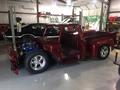
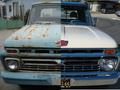
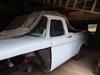
As you can see from these pictures, the hood hinges were cut off in order to get them out. Now I need to decide to either cut the area out behind the bolts holes and nut cage behind them and weld it back in after repairing the nut cages or figure out a different process to achieve the end game; new hood hinges installed. The last picture shows the area I would cut out.
Anyone attempted this before? If so, any advice you can give me?
With my limited welding skills/capabilities, my approach would be to cutout areas surrounding cage nuts separately. Square hole (maybe 1-1/2" square) and welding new nut to back of repair/patch piece. I don't think I would even try repairing the cages. In my view it's easier and will be mostly hidden by the hinge.
FWIW, I've never done said repair, just my 2¢
I would weld nuts to what's left of the cut off bolts. The heat from welding ought to be enough to break the corrosion from the threads both inside the nut and what is exposed behind the nut. Weld a nut on, and after the cherry red fades from the pool apply candle or bees wax, it will wick into the threads and help lubricate.
What 62SY4 said.
Plus tack weld those crimp nuts to the cowl. You should be able to remove the remains of the bolt.
I would not start doing surgery on that cowl until I had exhausted all other means.
As you can see from these pictures, the hood hinges were cut off in order to get them out. Now I need to decide to either cut the area out behind the bolts holes and nut cage behind them and weld it back in after repairing the nut cages or figure out a different process to achieve the end game; new hood hinges installed. The last picture shows the area I would cut out.
Anyone attempted this before? If so, any advice you can give me?
Not in a million years would I cut out that area to fix it.
easy enough to find exact center then drill them to 5/16 then retap if you have to. A bit of Kroil and heat will do wonders to get them out. Others have suggested welding a nut on them which will also work.
Heat is your friend there though. make sure nothing in behind and even try with propane torch get the nut/threaded portion hot a few times and even pliers or vise grips if you can get at them.
Drill them out long before cutting out the area just drill them dead center maybe a 1/8-3/16 bit first
The other thing you could try ... use a rotary cutting wheel, and make a slot in what's left of the bolt. Sometimes the remnant will screw into the nut, but not out because there is generally heavy corrosion on the exposed threads. A little heat does wonders.
On the welding a nut, if there is enough stub left, thread the same size nut (IIRC 3/8-24) on and weld. If there is little to no stud protruding, I recommend the next smaller size nut so you don't accidentally weld the stud to the cage, it can happen especially with a wire feed machine.
The suggestions above are your best bet. At worst, if you had to drill out the weld nuts and weld new ones in, your welding work would be hidden behind the new hinge, so the work wouldn't show. In addition the position of the new nuts would be accurately placed. If you cut sheet metal, neither of those things would be true. Lots of lubrication and heat, in addition to the heat created when you weld through the center of a new nut onto the broken stud, should free them up. If you can't weld in that small space, get someone who can, as it will save you a ton of work. Sandblast the inside (threads) of the nut so you can get a good weld. Another way to approach this is to weld a bead onto the center of the broken stud and keep on building it out until you can place a nut on the end...weld it in place...or get a vise grip on the stud. Be careful not to weld the stud to the existing nut! Thankfully the po apparently left you adequate material to work with...should be a jiffy....
I also had a couple do the same thing, I welded the nut insert to the firewall and applied a little heat with a torch and the came right out, My last option would be cut the fire wall
Does anyone know if the bolts he's showing us are hardened bolts? Drilling bolts is never as easy as it sounds. Usually the surface isn't flat, the drill want's to walk off center, and seldom will the drill work it's way straight down the center of the bolt.
I like the idea of welding a nut to what's left if possible but I would be sure to wait until everything has cooled before trying to turn the bolt out. The bolt will expand from the welding.
Is it possible to weld the cage nuts from the front? I figured the nut was welded to the back side of the firewall before it was all assembled, but I never explored the issue before. Way back 35-40 years ago, I was taking off hinges in a junk yard, the nut broke loose and I had a heck of a time removing one of the bolts. I think I chiseled it off or something. One of the workers gave me he**, saying I ruined the firewall. The truck was really pretty much junk even back then, being a construction truck it was used and abused.
Does anyone know if the bolts he's showing us are hardened bolts? Drilling bolts is never as easy as it sounds. Usually the surface isn't flat, the drill want's to walk off center, and seldom will the drill work it's way straight down the center of the bolt.
I like the idea of welding a nut to what's left if possible but I would be sure to wait until everything has cooled before trying to turn the bolt out. The bolt will expand from the welding.
Good luck on the project for sure.
So if my bolts are spinning because the nut has broken loose from the nut cage, I don't understand how welding a nut or cutting a slot in the remaining bolt will help get it out. Either way the bolt will still be spinning.
Did you weld the nut cages from the outside? Did you drill a hole first?
I ground down the exposed flange of the nutsert with a die grinder with a rotary burr to make the flange a little thinner and weaker. Then I just punched the nutsert into the cowl. Then made a 10ga. or 12ga. plate the size of the red sharpie marks with a 3/8" hole in it. I bolted a 3/8 -16 nut to the plate and welded the nut to the plate. Next drill two 3/8" plug weld holes in the cowl sheet metal. Insert the nut plate into the cowl via the large oval cutout below the hinge bolt holes. With the nut facing to the backside, center the nut hole with the cowl hole you are repairing and screw a 3/8 bolt and flat washer into the plate. Visually center the bolt and plate in the nutsert hole and tighten the bolt to hold the plate in posistion. Be sure the plate is also behind the plug weld holes. Weld up the plug welds to permanently secure the nut plate in posistion. Now remove the bolt and washer and you are done. I was hoping the picture alone would be worth at least a few hundred words. Hope this helps.
Jones...I believe we were assuming that the bolt was "frozen" in the nut which was not spinning. In the latter case, just spot weld the edges of the nut so that it doesn't turn. At that point, your bolts may come out easily. These aren't "caged" nuts they are crimped to the sheet metal. That's why they often come loose. They get corrosion and the force of trying to undo the bolts causes the crimp nuts to loose their grip on the sheet metal.
Unibody....always easier to work from the front. Even if you have to drill holes to weld through as shown just above.
Rezvani's Latest Post-Apocalytic Monster Is a Ford F-150 Raptor Underneath
Slideshow: Called the Fortress, the 850-horsepower pickup combines Raptor underpinnings with military-inspired features, survival equipment, and a starting price of $285,000.