When you click on links to various merchants on this site and make a purchase, this can result in this site earning a commission. Affiliate programs and affiliations include, but are not limited to, the eBay Partner Network.
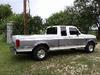
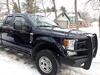
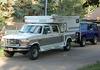
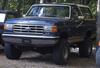
Okay guys my brain is on over load tryin to find wheels for my truck. I found the wheels I want. They are volk racing TE37 SL black edition 3 wheels, but my bolt pattern doesn’t match up, but neither does the offset. So I was thinking I would get an adapter to solve both those issues. But I don’t know anything about off set. The wheels I wanna buy are 10 inch wide 18 inches in diameter and a bolt pattern of 5x114.3. The offset comes in two options, 29mm and 39mm. I don’t know anything about offset but I know my truck is at 0 I believe. Can someone give me a clue on what to do. I’ll post a picture of my truck and what I want my truck to look like and the rims I’m talking about This is the wheel look I’m going for after I lower my truck This what my truck looks like now with a 1.5 lift on the front. These are the wheels I’m desperately trying to put on
Alright I did some more thinkin. So if the rims I want are 39mm offset, then my 1.5inch thich adapter Is a little over 38mm which means I should be close to flush with the finders. Someone please correct me if I’m wrong
One more thing, the bore on these rims is 73.1.
87.1 is what my bore is now I believe. Correct me if I’m wrong but I think these will work because after my 1.5 adapter, my wheel should clear the grease cap in the center of the hub?
I've never seen someone discuss this here before. Usually people just get a wheel that fits and that's it. Maybe your idea would work fine. Only issue I can think of is that you probably don't want to have a net zero offset if going to a wider than stock wheel & tire. Maintaining factory back spacing would prevent rubbing on the radius arm.
I don't see why your idea wouldn't work. Only hang up would be if the spacers you choose to use have some kind of centering hub on the end that is bigger than the bore of the wheel you're going to use. If the wheel side of the spacer is lug centric with no centering hub or a very small one, it shouldn't make a difference. And you're not going to be able to turn full lock without rubbing at least the radius arms. You'll net close to a 5" back spacing which is quite a bit more than factory, pushing the inside of the tire even closer to the radius arms. You're going to want to push the tire out at least another 1/2". It's going to stick out of the fender, but at least you aren't making the truck less capable.
Alright I did some more thinkin. So if the rims I want are 39mm offset, then my 1.5inch thich adapter Is a little over 38mm which means I should be close to flush with the finders. Someone please correct me if I’m wrong
If the rims are 39mm offset, that means the centerline of the rim is 39mm inside of the wheel mounting surface (-39mm would be 39mm outside of the wheel mounting surface).
Adding a 38mm spacer will push the rims 38mm to the outside, so yes, the net result should be the centerline of the rim being 1mm (almost nothing) inside of the wheel mounting surface, which is very close to the stock 0 offset these trucks had.
Will that put you close to flush with the fenders? That depends on how wide the tires are. The center of the tire will be pretty much in the same place, but if you get a tire that's 2" wider than stock it will stick 1" farther in and 1" farther out than the stock tire. Or a narrower tire will stick in and out less than stock, both by the same amount (but no one ever wants to go to narrower tires than stock!).
.... You'll net close to a 5" back spacing which is quite a bit more than factory, pushing the inside of the tire even closer to the radius arms. You're going to want to push the tire out at least another 1/2". It's going to stick out of the fender, but at least you aren't making the truck less capable.
As I noted above, staying close to 0 offset will keep the centerline in the same place. But as Davey noted, the 10" wide wheel will stick in about 5" (actually closer to 5.25" when the thickness of the rim is included). Will that make the tire rub? Again, it depends on tire width. If you stay with stock width tires the tire won't stick in any more than normal (but given that the stock tires are 9.25" wide they wouldn't be ideal on 10" rims). If you add tire width you will stick in (and out) farther. And in that case Davey is probably right, and you might want to go to negative offset (a thicker spacer) to push the tire out more.
If the rims are 39mm offset, that means the centerline of the rim is 39mm inside of the wheel mounting surface (-39mm would be 39mm outside of the wheel mounting surface).
Adding a 38mm spacer will push the rims 38mm to the outside, so yes, the net result should be the centerline of the rim being 1mm (almost nothing) inside of the wheel mounting surface, which is very close to the stock 0 offset these trucks had.
Will that put you close to flush with the fenders? That depends on how wide the tires are. The center of the tire will be pretty much in the same place, but if you get a tire that's 2" wider than stock it will stick 1" farther in and 1" farther out than the stock tire. Or a narrower tire will stick in and out less than stock, both by the same amount (but no one ever wants to go to narrower tires than stock!).
Since the wheels are hub centric the spacer would have to 73.1 so that it would center the wheel?
"Have to" is a strong term. As long as the wheels are countersunk for tapered lug nuts they will center up on the lugs, so they don't HAVE TO center on the hub. Still, they are designed to center on the hub so it would certainly be better to mount them as intended.
Originally Posted by Nmaykdm
i plan to put 10 inch wide Toyos on
So they'll stick in about a half inch more than the stock tires and out by the same amount.
What diameter tires? If they're smaller than stock the width and offset are almost certainly fine. Even at the same diameter they're probably OK. Get much larger and you are more likely to rub.
"Have to" is a strong term. As long as the wheels are countersunk for tapered lug nuts they will center up on the lugs, so they don't HAVE TO center on the hub. Still, they are designed to center on the hub so it would certainly be better to mount them as intended.
If the wheels are countersunk for tapered lug nuts wouldn’t that make them lug centric wheels? Since they are metric I’m assuming that they are hub centric and use flat lug nuts which would require the spacer to center the wheel. Please correct me if I’m wrong.
If the wheels are countersunk for tapered lug nuts wouldn’t that make them lug centric wheels? Since they are metric I’m assuming that they are hub centric and use flat lug nuts which would require the spacer to center the wheel. Please correct me if I’m wrong.
A lot of wheels seem to be tight fits over the hub which DOES makes then hub-centric, AND have countersunk holes for conical lug nuts, which would SEEM to make them lug-centric. I can't say that I completely understand it, I just know that it's true (even on my '97 F-250HD). To the limited extent that I do understand, it would seem that the manufacturers fully intend for the wheel to be a snug fit on the hub, and if you don't do that you aren't using the wheels as intended. And any time you're using a piece of safety equipment (which a wheel is) in a way other than intended you are introducing risks. However, the conical lug nuts are going to hold it in place pretty solidly on their own, so how big can the risk be?
To me it's similar to a vehicles tow rating. In order to be safe you're not supposed to exceed it. But a lot of people do exceed it and don't get in trouble. Does that make it right? No. But it's not categorically unsafe either.
On the other hand, there are hub-centric rims that do NOT have countersunk holes or conical lug nuts. My dually motorhome is an example. If I were to mount wheels on it that were not a snug fit over the hubs I wouldn't be able to center the wheel on the axle and I'd be doomed to a lot of vibration and unsafe handling.
This setup also doesn't hold the wheel as securely against the torque of accelerating and braking as conical lug nuts, so it's a lot more important to retorque the lug nuts a couple of times a few miles after changing a tire. With conical lug nuts I've never found a nut loose when I've retorqued so I pretty much never bother anymore. But on my motorhome I usually do, at least the first time (so far never the second time I retorque).
This is probably why on single wheels even many hub-centric rims have countersunk holes (although it doesn't explain why they are over-constrained and aren't just lug-centric to begin with). But dually wheels are mounted with positive offset on the front and with negative offset on the outer rear. So unless there were specialized rims for each location, conical lug nuts would require both sides of the wheel to be countersunk. So I get why dually wheels are purely hub-centric.
This Hennessey Takes the Expedition Tremor's Off-Roading Capability to the Next Level
Slideshow: The VelociRaptor Expedition gains a lift, upgraded suspension, Brembo brakes, and trail-ready equipment while retaining the stock 440-horsepower EcoBoost V6.
Rezvani's Latest Post-Apocalyptic Monster Is a Ford F-150 Raptor Underneath
Slideshow: Called the Fortress, the 850-horsepower pickup combines Raptor underpinnings with military-inspired features, survival equipment, and a starting price of $285,000.