When you click on links to various merchants on this site and make a purchase, this can result in this site earning a commission. Affiliate programs and affiliations include, but are not limited to, the eBay Partner Network.
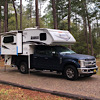
Just got a new truck camper. They said the alternator will only trickle charge at best to my battery bank (Two Grp 31 AGM's). Camper plugs into the seven pin at the rear bumper. I'm dumb as a stump when it comes to electrical issues. Can anyone direct me to some alternatives to be able to put a decent charge into my battery bank while driving? I have a 2020 F-350 6.2 with the upgraded alternator. Also have the upfitter switches if that matters. Roof mounted solar is too expensive. May get portable solar panels for the camp site, but that ain't going to help while driving. Also have a Honda EU2200 generator, but again no help while driving.
I recommend you test your truck and camper before looking for a solution that you may not need.
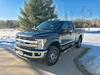
First things first: Your truck appears to be an XL; please confirm. Also, The trailer brake controller is optional on the XL; does your truck have this feature?
We’ll get you through this. Our F350’s 240A alternator charges our camper batteries and runs the 3-way fridge on DC, all via (mostly) OEM wiring and connectors. We also have 200W of rooftop solar, which, IMHO, wasn’t too expensive.
Your truck doesn’t have the “smart” trailer power controller, so the 7-pin trailer connector‘s +12 battery charging circuit should be active when you start the engine. You should be able to charge a pair of batteries, run a 3-way fridge, or perhaps even do both via the trailer connector and harness.
However, charging voltage from the alternator when the engine is idling seems to be low, IMHO. My experience with our truck is that the charging voltage improves as engine speed rises over 1,000 rpm. With higher voltage come higher battery charging current.
I’d suggest you try charging your camper batteries from the alternator while driving. If this works, then you should be good to go.
Yes, XL. As I mentioned above, my knowledge of anything electrical is very low. I'm going to take my multimeter and see what volts/amps I'm getting in the seven pin. No brake controller. It was a special order, I only got a few options to the base model. If that does not work out, I'll hook up my boat and see if the brake/turn signals work on the boat.
You should be able to easily measure voltage at the 7-pin. Measuring current is more complicated. You may need to enlist an assistant to gently run the engine idle up to 1000 to 1200 rpm while measuring the +12 trailer battery charging circuit.
I gave up on the multi meter. It's registering 140 volts while without even touching anything. I put the probes together to get to zero and soon as I let go, it goes back to crazy numbers.
I plugged in the boat. Brake lights and turn signal works, running lights do not. Same results with both seven pin and four pin. The camper installer said I should be seeing their running lights on the camper and we didn't. He plugged into something else to prove they worked. So I think my running lights are not working for some reason. Going in for my 10,000 mile service tomorrow. I'll ask the dealership to check it out.
I think you are creating a problem in your mind. Leave with fully charged batteries. The truck will easily maintain them. Ours runs a residential refrigerator and we still arrive with totally full batteries. Even at idle, our truck puts 4 amps into the trailer. We are running two Group 27 AGMs. No problem.
If you’re not getting enough power from the 7 pin connector, you can always add a battery isolator under the hood, and run heavier wire to the camper. Very simple installation.
I'm thinking I am getting zero power to the camper since my running lights are not working on the boat. I'm fine with the current setup if I'm charging the batteries some during driving. Plus I would like to have the camper running lights work as well. We'll see what the dealerships says tomorrow.
If you’re not getting enough power from the 7 pin connector, you can always add a battery isolator under the hood, and run heavier wire to the camper. Very simple installation.
If something other than “stock” is required, then the upfitter switch solution would be better as it avoids the voltage drop in the isolator. U/S relays 5 and 6 are each fused at 40 A.
I'm thinking I am getting zero power to the camper since my running lights are not working on the boat. I'm fine with the current setup if I'm charging the batteries some during driving. Plus I would like to have the camper running lights work as well. We'll see what the dealerships says tomorrow.
They’ll probably start with checking the engine compartment fuse (#10, 30 A) for the “trailer tow park lamps”.
I think this is the max that the truck can give your trailer through the 7 pin. But it there are many considerations regarding this, and while 30 amps is significant, your trailer can likely only get that from the 7 pin in a perfect scenario. Points to consider are:
The voltage drop in the wire and system connections can cost you a few tenths of a volt, which isn’t a big deal when running an accessory, but it’s a lot when it comes to battery charging. The battery charge rate (current) is dependent on how much higher the charge voltage is above the battery voltage itself (the greater the difference, the more current will flow). In other words, if your trailer batteries are down to 12.2 volts, and if your truck batteries are getting 13.8 from your alternator, by the time that voltage gets all the way back to the trailer batteries it can be down to 13 volts, a difference of only .8 volts. In this case not much current will flow, but the batteries will charge slowly. Now what if you could get the entire 13.8 to the trailer batteries? You would then have double the voltage difference, which will approximately double the current flow at that point. The closer the trailer batteries get in voltage to the truck batteries, the less the amount of current will flow.
An often overlooked consideration is the fact that ALL current going through 6 of the wires/connections in the 7 pin have to return through the single ground terminal and wire. You can easily improve this system by adding another ground from the truck frame to trailer frame.
I beefed up my truck to trailer charging system by running a 2 gauge wire all the way from the truck batteries to the trailer batteries (using a 150 amp breaker on each end, a relay powered by up fitter switch, connected with an Anderson SB175. The 2 gauge wire may seem extreme, but again, for maximum charge ability, 10ths of a volt matter. I’m running 5 batteries in the trailer and a residential fridge. I want my fridge inverter to be able to operate fully (even while defrosting) and not rob power from the trailer batteries (I want them to be 100% full every time I stop). This system will also allow me to quick charge the batteries off the truck when boondocking if required (can charge quicker than generator powering trailer charger/inverter. I should add that my truck has dual alternators (357 amp max output).
Rezvani's Latest Post-Apocalyptic Monster Is a Ford F-150 Raptor Underneath
Slideshow: Called the Fortress, the 850-horsepower pickup combines Raptor underpinnings with military-inspired features, survival equipment, and a starting price of $285,000.