When you click on links to various merchants on this site and make a purchase, this can result in this site earning a commission. Affiliate programs and affiliations include, but are not limited to, the eBay Partner Network.
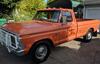
Just started digging into a project truck that sat for 8 years. Pulled the carb, which was locked up, and found that the throttle plates were rusted shut. There’s obvious rust in the intake manifold, likely from running water in the radiator. It’s a 302 which I managed to un-seize using an ATF/acetone mix. I’m extremely inexperienced, but part of why I got this truck was to learn. I think I’ll remove the intake manifold and valve covers next and see how things look inside. I’m open to any and all tips / words of wisdom and will keep everyone posted.
I think that is a good plan so far but if the motor was locked up I wonder what the cly walls look like?
You may also see where the water went down in to what cly. so you can look closer at them with a bore scope.
At least with the intake off you can clean it out or go with a new one.
Dave ----
I wouldn't re-use that intake manifold, no matter the condition. But if you do plan to use it, you definitely need to get all the rust out of the inside.
As to how water got in there, the radiator has no link to the intake manifold's plenum. That rust is probably a result of years of exposure to the elements. Water has probably gotten into the plenum, and it's a good assumption that it has pitted the cylinder heads, valves, cylinders walls, pistons, rings, rods, crankshaft, and bearing journals.
Serving suggestion: The SBF is an easy engine to work with. No life-threatening weight involved, other than the block itself. Fairly straightforward design, etc etc.
So, take it apart, clean it up, and put it back together. See if you can make it run.
If you run into obviously broken parts like cracked pistons, broken rings, seized bearings, well.....
Back to taking it apart. You can learn the basics doing that, and what to look for, and what you are looking at. Feel free to post a picture with a question here.
Be carefull with valve springs as the keepers will put an eye out. Maybe just set the heads aside, see if the valves will hold water, etc.
You can use the block if it's servicable. Check the bore, check everywhere for cracks etc. Like so:
If you had to soak it to free it, the rings have probably left pits and grooves in the cylinder walls wherever they were sitting. If it does run, which it could, it'll probably have low compression and burn oil. Still worth trying. If it's free and turning, maybe try priming the oil or at least pull the valve covers and pour some fresh oil over the rockers and down to the cam, then shoot some starting fluid down the intake to see if it'll fire off. I doubt it'll hurt anything at this point.
Thanks for all the input. I removed the valve covers and will get the intake manifold off tomorrow. First time pulling things off of an engine, so I’m doing a lot of YouTubing to make sure I don’t jack something up. Need to figure out how to get the distributor off and need to get a few vacuum hoses off of the back, then I should be able to get it off. I’ll post more pictures when I do.
So I pulled the valve covers and intake manifold, and this is what I’ve got. My goal for this truck is just to get it running so I can move it back and forth until I get another engine in it a few years down the road. Is that doable with this one? Thanks for all the help!
Looking at those intake ports I'm surprised you got it to turn over.
I would expect trashed valves, seats , and rough cylinder walls. if the valves all move and it turns over I suppose you could get it running sort of. but that seems like a lot of work for an engine that's not going anywhere.
I've seen some pretty cheap running small blocks around from time to time if it were me that's the direction I'd go if you don't want to do the full meal deal at the moment. there's a fair chance you're going to need a core anyway.
I'll throw in my opinion, being a novice as well, with hopes of engine building in my future. I get the idea of a practice engine, and had this been the state of my first project I would have been inclined to try to get it to run as well. If that's what you want to do, you'll learn a lot and value the experience. But with a little patience you can find an engine that when you're done installing will probably cost less, be less work, and will actually run. The amount of effort, time, and money you will throw at your truck to get an engine this dead running again might feel anticlimactic when the best you can get is an engine that burns oil faster than gas and barely makes enough power to move itself across the yard. Ya know? I mean that's not the best case scenario, but it's probably the best you should hope for at this point. Maybe you luck out and the cylinders aren't that bad and somehow the pistons and rings are serviceable enough to at least make it move. Take it apart and take a look. But if it's as bad as it looks already, really think about getting a used motor. Anything that will fit would be better, if you keep your eye out for a fresh kill donor, maybe a tree fell on a farm truck and they just want it gone, stuff happens. Have your first engine project actually have a chance to live! Just swapping in a motor that doesn't need rebuilt right off the bat will help you learn a ton.
Just my 2 cents. Either way you go, you're on the right track because you're getting greasy and figuring it out as you go! I'm not experienced at rescuing dead motors, I just know that these types of projects can suck your wallet dry when you don't know how deep the rabbit hole will go. In for a penny, in for a pound!
It's ridiculous that my advice is "swap a motor" because I'm a die hard salvager. I never give up on my projects, I always want to prove I can fix it. But when I'm done, I usually have to admit it was only worth it for the satisfaction. Practically speaking, it rarely is, but restoring trucks is more about how it makes you feel. So if that's what drives you, make it run!! Just make your apologies to your wallet and wife now and get keep wrenching!
Clean the intake as best you can, have it hot tanked if its feasable, and stick it back together. Maybe rotate it a few times with the intake and covers off to make sure everything in the vavle train is moving as its supposed to. Worst case, it dies a horrible death in front of you and you're out a set of intake gaskets. Best case you get a few more (possibly smokey) miles out of the old girl while you come up with a plan "B" motor.
If he can't pull those heads, IMO he's got to use a shop vac and compressed air to clean out the ports and the cylinders. I'd pull the heads. Serving suggestion.
And good point Fort Ford, these are easy enough to work on that you can practice on something that's a "guaranteed" runner and end up with a pretty decent motor.
I'll throw in my opinion, being a novice as well, with hopes of engine building in my future. I get the idea of a practice engine, and had this been the state of my first project I would have been inclined to try to get it to run as well. If that's what you want to do, you'll learn a lot and value the experience. But with a little patience you can find an engine that when you're done installing will probably cost less, be less work, and will actually run. The amount of effort, time, and money you will throw at your truck to get an engine this dead running again might feel anticlimactic when the best you can get is an engine that burns oil faster than gas and barely makes enough power to move itself across the yard. Ya know? I mean that's not the best case scenario, but it's probably the best you should hope for at this point. Maybe you luck out and the cylinders aren't that bad and somehow the pistons and rings are serviceable enough to at least make it move. Take it apart and take a look. But if it's as bad as it looks already, really think about getting a used motor. Anything that will fit would be better, if you keep your eye out for a fresh kill donor, maybe a tree fell on a farm truck and they just want it gone, stuff happens. Have your first engine project actually have a chance to live! Just swapping in a motor that doesn't need rebuilt right off the bat will help you learn a ton.
Just my 2 cents. Either way you go, you're on the right track because you're getting greasy and figuring it out as you go! I'm not experienced at rescuing dead motors, I just know that these types of projects can suck your wallet dry when you don't know how deep the rabbit hole will go. In for a penny, in for a pound!
Great advice. Thanks for everyone’s input. This is definitely a practice motor and I figure I have nothing to lose and a lot to gain by exploring and tinkering within a confined budget. I have a 460 in another truck that I plan to use on a long term project. I got this truck as a donor mainly for the cab, and figured I’d play around with the engine to see what I can do before I “graduate” to working on the 460. I’ll keep chugging along and will post updates.
Rezvani's Latest Post-Apocalytic Monster Is a Ford F-150 Raptor Underneath
Slideshow: Called the Fortress, the 850-horsepower pickup combines Raptor underpinnings with military-inspired features, survival equipment, and a starting price of $285,000.