


hesitation, surging

Thread Starter
|
Senior User
Joined: Feb 2020
Posts: 147
Likes: 3
hesitation, surging
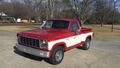
Ok, 1984 f250, 6.9idi T19. When cruising around town, or hiway, run s good, no issues, however if I step on it for full throttle, like coming out of a 35mph to a 55 mph, I will get some hesitation, and surging.. Happens on both tanks. Fuel lift pump, or IP. What does the consensus say? Thx for the replies!!!
Edit.... New filters, new front tank and sending unit. Switch valve blown out with air, works properly.
Edit.... New filters, new front tank and sending unit. Switch valve blown out with air, works properly.

Post Fiend
Joined: Feb 2008
Posts: 5,831
Likes: 121
From: St Albert, Alberta
Ok, 1984 f250, 6.9idi T19. When cruising around town, or hiway, run s good, no issues, however if I step on it for full throttle, like coming out of a 35mph to a 55 mph, I will get some hesitation, and surging.. Happens on both tanks. Fuel lift pump, or IP. What does the consensus say? Thx for the replies!!!
Edit.... New filters, new front tank and sending unit. Switch valve blown out with air, works properly.
Edit.... New filters, new front tank and sending unit. Switch valve blown out with air, works properly.
Thread Starter
|
Senior User
Joined: Feb 2020
Posts: 147
Likes: 3
Cool beans...not sure of the age of the IP...this is jist an around town to the dump truck. Will swap o0ut the lift pump...if that doesn't solve the issue, I'll just let it go for what I have in it...IP will cost me a grand...

Moderator


Joined: Jan 2001
Posts: 56,999
Likes: 2,746
From: Virginia

People say change the IP at 100k. But my truck has the original IP and I have 148K on the original IP and injectors. It just runs too good to change all that out. It does sound like you have a fuel delivery problem. Why don't you rig a fuel pressure gauge on it? Take the guts out of the schrader valve on the filter head, and slip a rubber hose with a hose clamp over it. Run it out through the back of the hood and tape it to the windshield. Then go for a test ride. I think it's supposed to maintain around 5 to 6 psi. I have heard it''s important to maintain that pressure, the IP uses it inside to make important things work like the timing advance. I don't understand it fully, but just heard other guys talking that keeping the IP supplied with fuel is important.
Some people abandon the original mechanical pump and just run a electric pump.
Some people abandon the original mechanical pump and just run a electric pump.
Post Fiend
Joined: Feb 2008
Posts: 5,831
Likes: 121
From: St Albert, Alberta
Reman IP's can be had for as little as $400 but $500-600 is the average. On today's ULSD the Stanadyne DB2 pumps have a life span of about 100K miles. They relied on the high sulfur content in older fuels for lubrication so they tend to tear themselves up on ULSD. This can be avoided by making sure to use an additive it will add back the missing lubricity in ULSD and help mitigate the corrosion and microbial growth that is more inherent with ULSD.
FTE Legend


Joined: Nov 2015
Posts: 30,940
Likes: 4,126
From: Angier, NC
I would say the same IP pump and the miles.
When I owned a diesel (6.2 GM) I was told 75K - 80K and I got 100K but some of that was with a Gail Banks turbo.
For me why I rebuilt it was the throttle seals started to weep.
At 230K I think the pump was starting to loose prim because you had to crank it a lot before it would start to burn oil (run) but I sold the truck.
You can try the lift pump and see what that gets you.
Dave ----
When I owned a diesel (6.2 GM) I was told 75K - 80K and I got 100K but some of that was with a Gail Banks turbo.
For me why I rebuilt it was the throttle seals started to weep.
At 230K I think the pump was starting to loose prim because you had to crank it a lot before it would start to burn oil (run) but I sold the truck.
You can try the lift pump and see what that gets you.
Dave ----
Thread Starter
|
Senior User
Joined: Feb 2020
Posts: 147
Likes: 3
Here's where I'm at...new fuel (lift) pump...now, both tanks are working ok...I ran on the front tank to make sure all the air was out of the system...that's why it was surging on the front tank...still got surging on rear tank after replacing pump...but out and about today, she ran just fine on either tank, thinking there mayn have till been a bit of air in the system... Eventually, I'm going to replace the rear tank...will post on results... Oh, ULSD...I use powerserve and or lucas, it's all I know from years of trucking...anyone have a better one for these old diesels? I'm old enought to remember when Calif mandated that USLD and said it would not make any difference....a lot of those Calif based local truckers with older engines, especially Cummins, wound up replacing fuel pumps and entire fuel systems (and sometimes complete engines) because the seals and other critical components dried out and rotted soon as they were exposed to the "new" diesel formulation...thanks to those unelected, unaccountable bureaucrats...
Trending Topics
Moderator
Joined: Jan 2001
Posts: 56,999
Likes: 2,746
From: Virginia
People have all kinds of different things they throw in the tank. Some even pour in 2 cycle oil. Your favorite diesel additive will probably work fine.
FTE Stories
Ford Trucks for Ford Truck Enthusiasts

Top 10 Fords at 2026 Carlisle Ford Nationals
Joe Kucinski
3 Best / 3 Worst Parts of Modern Ford Ownership
Brett Foote
10 Amazing Upgrades That Solve Common Ford Truck Owner Headaches
Pouria Savadkouei
Every 2026 Ford Engine Explained
Brett Foote
10 Ugly Ford Trucks That We Still Kinda Love
Joe Kucinski
10 Things Every Truck Owner NEEDS (2026 Edition)
Michael S. Palmer
Rezvani's Latest Post-Apocalyptic Monster Is a Ford F-150 Raptor Underneath
Verdad Gallardo
Top 10 Most Expensive Ford Trucks Ever Sold on Bring a Trailer
Joe Kucinski
2027 Ford Super Duty Buyer's Guide (Every Model, Engine, & Package)
Brett Foote
Post Fiend
Joined: Feb 2008
Posts: 5,831
Likes: 121
From: St Albert, Alberta
Here's where I'm at...new fuel (lift) pump...now, both tanks are working ok...I ran on the front tank to make sure all the air was out of the system...that's why it was surging on the front tank...still got surging on rear tank after replacing pump...but out and about today, she ran just fine on either tank, thinking there mayn have till been a bit of air in the system... Eventually, I'm going to replace the rear tank...will post on results... Oh, ULSD...I use powerserve and or lucas, it's all I know from years of trucking...anyone have a better one for these old diesels? I'm old enought to remember when Calif mandated that USLD and said it would not make any difference....a lot of those Calif based local truckers with older engines, especially Cummins, wound up replacing fuel pumps and entire fuel systems (and sometimes complete engines) because the seals and other critical components dried out and rotted soon as they were exposed to the "new" diesel formulation...thanks to those unelected, unaccountable bureaucrats...
The Rotary pumps in our trucks are not what you call long-life pumps unlike the Bosch P style pumps that can hundreds of thousands of miles, but the Stanadyne rotary pumps are also much cheaper to manufacture than the P style pumps. So these older style rotary pumps need all the help they can get in the lubricity dept with ULSD.
I have found Stanadyne to be just about the best for our trucks, no surprise considering the pump and injectors are supplied by/are Stanadyne products.
I use the performance all season and seems to be more than adequate even on the Arctic diesel we get here in the winter.
https://promo.parker.com/parkerimage...-Additives.pdf
And the new diesel formulation has advantages no more rotted out exhaust system every few years from sulphuric acid corrosion, longer turbo life (no more exhaust turbine vane erosion) And with EGR systems no more corroded intake systems. So losing the lubricity sucks for older vehicles but it can be mitigated with a few cents worth of additive in the tank, I'll trade that off for the extended life on a pile of other components.
Thread Starter
|
Senior User
Joined: Feb 2020
Posts: 147
Likes: 3
Ja, and as a new/rebuilt Stanadyne is about half of what I originally paid for the truck...I want it to last as long as possible... Not too much left...soon as the rear sending units are available, the rear tank and sending unit gets swapped out..Boneyard hood, steering gear box, and a coat of primer and she's done...
Thread Starter
|
Senior User
Joined: Feb 2020
Posts: 147
Likes: 3
Update...so, I get hesitation and surging on both tanks when I really step on it...New lift pump, front tank and sending unit. FSV works, can hear/see it "clunk" when the dash switch is hit. Seems to run ok so long as I do not floor it. Lose prime overnite when on rear tank, both filter and water separator are tight, will see if the same thing happens on front tank in the am... Suggestions appreciated. Have email into Pollack for a FSV that won't cost hundreds...(NAPA...$524.99)
Post Fiend
Joined: Feb 2008
Posts: 5,831
Likes: 121
From: St Albert, Alberta
injection pumps require specialized test equipment that runs $3- 6K for a cheap Chinese unit and 2 to 3 times that for a quality new unit and take up the floor space of a 12" lathe
And the pump needs to be removed from the engine to be checked.
An injector tester or pop-off tester can be had for under $200 and again the injectors need to be removed from the engine.
There are no "cheap" fixes to the fuel injection system on a Diesel.
You could rebuild the injectors your self and replace the nozzles but to be honest, the cost of the nozzles and the tester is within dollars of brand new (not reman) injectors.
So you will have to decide if the truck is worth spending the money on it to fix it, If not, then sell it.