When you click on links to various merchants on this site and make a purchase, this can result in this site earning a commission. Affiliate programs and affiliations include, but are not limited to, the eBay Partner Network.
I'm wondering if anyone has a complete testing procedure on the eec 4 for each component for a breakout box. I have 1990 F250 with the 460 and it runs extremely rich and something is telling the pcm to run rich and I need to figure out what it is. Heres the link to me previous thread which goes more in-depth on what I have done so far. Anyways I bought a bob and I need to know what all to test for in regards to the engine and what numbers I should be getting. I do have multiple meters and oscilloscope so you can go as in detail as you want. Thanks
this could help, loaded with a lot of info, and what values should be, I would start by cleaning every ground under the hood, 3 for sure to clean, 1-by battery on fender, 1-by radiator support/radiator cap, 1-by EEC self test port. Fuel Injection Technical Library » Home
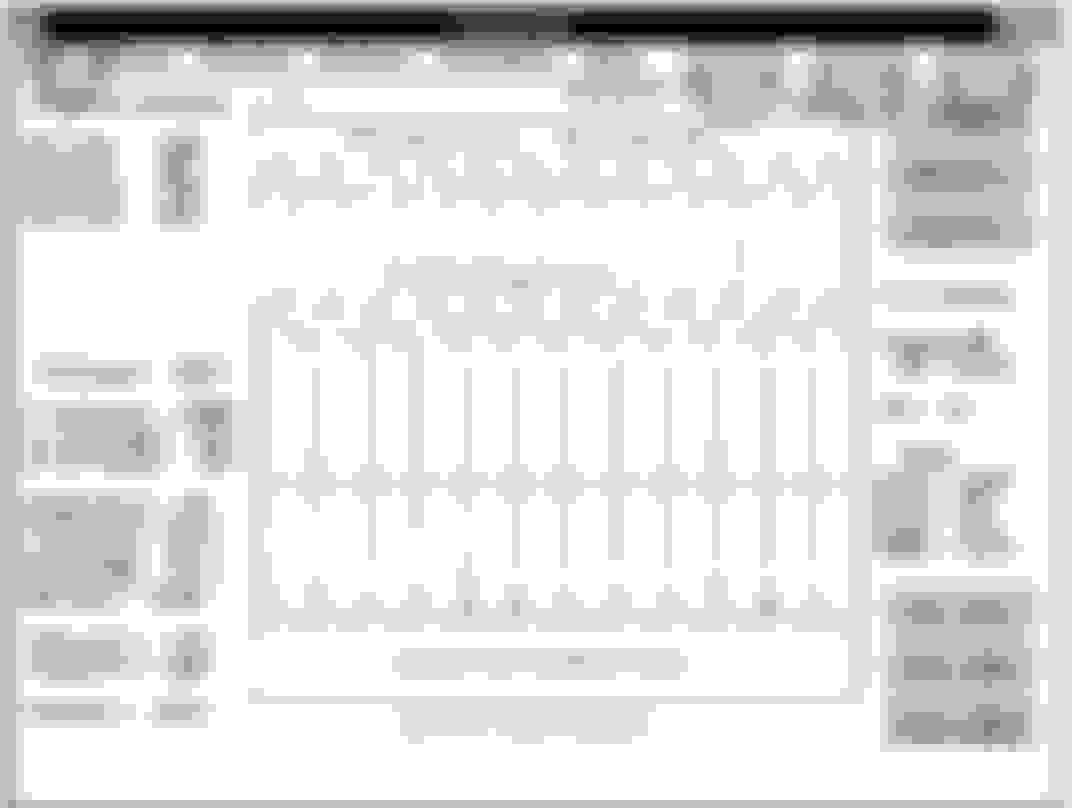
You would need the sample below for your truck. You did not state what Transmission you have.
The sample below is for a 1992 7.5L with a E4OD from the 1992 Ford Shop Manual.
NOTES:
(1) -- A/C on.
(2) -- Brake pedal applied.
(3) -- Monitor in DCV Manual Mode, Reference Pin to PWR GND (40/60).
(4) -- HEGO should switch from rich (red LED) to lean (green LED), or lean to rich, at least once every 3 seconds. HEGO voltage should toggle above and below .450 DCV and should never be a negative value.
Reference values shown may vary ± 20% depending on operating conditions and other factors. RPM values are axle and tire dependent.
Alright, thanks for the info and the trans is the e4do. I just got done testing all of it and here are the things not within specs (all of the tests were performed hot while idling). The pip was showing 0 rpm (supposed to read 650-750 rpm), both injector banks were reading 13.56 DCV (supposed to read 6-6.8 DCV), and the spout was showing 0 rpm (supposed to read 650-750 rpm). So if I understand correctly the bad pip single is causing the injector banks and spout values to be off. It also will cause the engine to run rich since the injectors are getting full voltage. However, if there is no single from the pip, shouldn't the engine not be able to run. I also read somewhere that you're supposed to measure the voltage at the pip and spout which I got 5.8 DCV at the pip (supposed to be 5-7 DCV) and 6.2 DCV at the spout (supposed to be 5-7 DVC). The distributor pickup and tfi module are new also. Anyone have any thoughts on what could cause this. Thanks
The injectors were in milliseconds and not DCV.
What were you reading the pip RPMs with?
Also note that the reading above are for use with the EEC-IV Monitor.
And maybe having a EEC-IV Recorder hooked to the Monitor.
But they should be about the closes values you can find for your BOB.
It will depend also on what you are using with your BOB.
Okay, that makes more sense for the injectors. I was using an aftermarket rpm gauge that mounts to a steering column and just repurposed it to read the rpm (which it was working when I measured the IDM). And I was using a digital Milwaukee multimeter with the BOB along with the rpm gauge. I heard that over the years the distributor shafts could become magnetized, not sure if that true or could affect it in that way.
I do not think the PIP signal is strong enough to operate your RPM gauge.
Your RPM gauge is looking for 12+ DCV for operation at the coil.
The PIP signal is about 5.3VDC and may drop with the RPM gauge hooked to it.
Alright so instead of measuring the rpm I measured the waveform of the pip and spout which was identical to the figure. If that is right and all my measurement were correct when I went down the list on the testing procedure that subford provide, my PCM should not be the reason why it is running rich. However, if the timing is correct, the compression is good, and the fuel delivery is good the only possible reason for it to run rich is if the PCM is demanding more fuel. However, it shouldn't be since the hego is around .89-1 VDC. Is there something that I am missing any thoughts are welcome since I'm pretty close to swapping it for a non-efi 460 or 6.9 idi now haha
If the fuel pressure is too high it will run rich.
A 460 should idle about 30 to 31psi and 39-40psi at WOT or going up a hill.
Any fuel pressure higher than 31psi at idle or 40psi will cause it to run rich.
Note fuel pressure depends on vacuum. Low vacuum (a vacuum leak, low compression) will cause a higher idle fuel pressure.
Your injectors, could be leaking (ever so slightly), I had 3 that were leaking(on pass. side) never got code from O2 saying rich, but my A/F gauge went from 14.6-14.9, to 13.1-14.3, so I started looking at my fuel pressure gauge, and it was slowly going down ,faster than it use to, and I wouldn't have known, if I didn't have the A/F gauge, so I cleaned mine and waiting on gaskets, and filter, to get it back together.
1. Does it prime fuel pump for 2-5 seconds every time you turn the key "ON" without starting?
2. Does it give you codes 10, 111, or any codes at all?
3. Does it accurately display intentional codes? Ex. Pull EGR solenoid or O2, or intentionally fail to cycle OD switch when KOER test. If it does not reliably throw expected codes it could be bad.
5. KOEF test: Does it cycle all solenoids?
4. Do the capacitors look bloated or oozing electrolyte?
5. Are you getting 5V references at the sensors, is the PCM grounding solenoids/sensors as expected?
6. Does it run better with SPOUT removed? This jumper removes PCM from ignition control.
1. Does it prime fuel pump for 2-5 seconds every time you turn the key "ON" without starting?
This would be bad as it is on a one second timer.
Running for more than one second the PCM would be bad.
Note that one second is longer than you would think.
This Hennessey Takes the Expedition Tremor's Off-Roading Capability to the Next Level
Slideshow: The VelociRaptor Expedition gains a lift, upgraded suspension, Brembo brakes, and trail-ready equipment while retaining the stock 440-horsepower EcoBoost V6.
Rezvani's Latest Post-Apocalyptic Monster Is a Ford F-150 Raptor Underneath
Slideshow: Called the Fortress, the 850-horsepower pickup combines Raptor underpinnings with military-inspired features, survival equipment, and a starting price of $285,000.