When you click on links to various merchants on this site and make a purchase, this can result in this site earning a commission. Affiliate programs and affiliations include, but are not limited to, the eBay Partner Network.
I think you're on to source of the problem...fuel stuck in the vent tube from topping off that gets burped out when refueling. This may be more of an issue on the flare siders where you may have a longer horizontal section of filler tube up to the cap? Any sag in the vent tube might hold fuel after a top off. You might try fueling till the pump clicks off the first time without topping off. If on the next fueling it takes fuel without the initial burp it probably indicates a saggy vent tube.
Its not really that big of an issues for me as I think it has only happed 1 time.
As for stopping at the first click if I did that my 19 gallon rear tank would only be half full.
I know when the needle is on "E" I have 5 gallons left, and it will click off at about 10 gallons.
I know when I was putting the fill / vent lines together I made sure the plastic lines were more than long enough not to fall out of the holders at the ends.
So others know what we are talking about. This is the rear tank setup on my flare side.
Dave ----
Its not really that big of an issues for me as I think it has only happed 1 time.
As for stopping at the first click if I did that my 19 gallon rear tank would only be half full.
I know when the needle is on "E" I have 5 gallons left, and it will click off at about 10 gallons.
I know when I was putting the fill / vent lines together I made sure the plastic lines were more than long enough not to fall out of the holders at the ends.
So others know what we are talking about. This is the rear tank setup on my flare side.
Dave ----
I'm noticing that you are coupling your vent tube. Mine are continuous. There's a slight constriction there plus the opportunity for an angle change, although slight, and a place where fuel could catch. The pex idea might be good. Double check that pex isn't fuel soluble. Wouldn't want it to go soft. Or maybe you could find an OEM tube?
Yours clicks off quick when fueling too. I can get maybe 1/2 gallon more per tank by topping off after it clicks off.
PEX is fine, up to a specific temperature. My post about using it has links to some data sheets. They use it for everything. Stuff can handle MEK, so I wouldn't worry about a lil' corn syrup.
PEX is fine, up to a specific temperature. My post about using it has links to some data sheets. They use it for everything. Stuff can handle MEK, so I wouldn't worry about a lil' corn syrup.
Good to know. What is the maximum temperature? What about unrefined jet fuel?
Good to know. What is the maximum temperature? What about unrefined jet fuel?
Found references that say pex is ok for diesel oil and natural gas. Nothing about gasoline so far. You'd expect that if it was good for MEK it might be good with gasoline. I'd get confirmation from a pex manufacturer first.
Did a quick search for replacement inner vent tube for fuel filler hose for the 80-86 F-series and so far haven't found any available parts. Word to the wise when dropping your tanks for replacement or working on pumps and or sending units treat your existing vent tube kindly so you can reuse it. I'm not sure how pex would work. Might be a bear to reassemble the filler and vent tubes.I think the OD of the vent tube is 3/4" dia. IIRC.
I'm noticing that you are coupling your vent tube. Mine are continuous. There's a slight constriction there plus the opportunity for an angle change, although slight, and a place where fuel could catch. The pex idea might be good. Double check that pex isn't fuel soluble. Wouldn't want it to go soft. Or maybe you could find an OEM tube?
Yours clicks off quick when fueling too. I can get maybe 1/2 gallon more per tank by topping off after it clicks off.
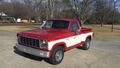
That is my rear (2nd tank) on my flare side. You should note that the factory never had a rear tank or 2nd tank on the 80 - 86 flare side trucks. .
I had to use some parts from a fare side front tank and some from a style side front & rear tank to get a working rear filler.
That 1 of a few custom touches I added to the truck when I rebuilt it.
Dave ----
There is a soft copper tubing available that might take the bends required without the kinking issue. I think you want as much of the diameter open as possible.
It is meant as the inside tube on filler hoses, but it might be the type of internal hose used to fill the tank through used on later models. It's 1" diameter so some modifications at the ends might be needed to fit the keeper ring at the tank and neck. The biggest complaint in the reviews was the cost.
Edit...yes is meant as the fuel filler line. If you're using a phone to view the web page switch to desktop view to see the details. Could likely be modified as the vent tube, or go for the complete Change out for the internal tube fill.
That is my rear (2nd tank) on my flare side. You should note that the factory never had a rear tank or 2nd tank on the 80 - 86 flare side trucks. .
I had to use some parts from a fare side front tank and some from a style side front & rear tank to get a working rear filler.
That 1 of a few custom touches I added to the truck when I rebuilt it.
Dave ----
Yes I do remember that you added the rear tank and modified your flare fender for the second fuel door. A one of a kind custom modification.
Yes I do remember that you added the rear tank and modified your flare fender for the second fuel door. A one of a kind custom modification.
I don't know about "one of a kind" as I have seen this done on a few others and I liked how they came out.
I can also tell you now that the truck is on the road I am really happy I did that rear 19 gallon tank as the factory 16 gallon just would not be enough and have to fuel up twice a week.
Dave ----
There is a soft copper tubing available that might take the bends required without the kinking issue. I think you want as much of the diameter open as possible.
It is meant as the inside tube on filler hoses, but it might be the type of internal hose used to fill the tank through used on later models. It's 1" diameter so some modifications at the ends might be needed to fit the keeper ring at the tank and neck. The biggest complaint in the reviews was the cost.
Edit...yes is meant as the fuel filler line. If you're using a phone to view the web page switch to desktop view to see the details. Could likely be modified as the vent tube, or go for the complete Change out for the internal tube fill.
I don't understand why everyone has in their heads that the vent line on these tanks has to be bigger than the fill opening. It's just air. You could knock a quarter inch hole in the top of the tank and it would fill just fine. I don't have any fueling issues. I didn't need to use copper to PEX to make a vent hose, I have a stock setup, filler neck, fuel hose, vent tube in good shape off my donor, but I wanted to test a cheap alternative. And pex is the cheap way.
I don't understand why everyone has in their heads that the vent line on these tanks has to be bigger than the fill opening. It's just air. You could knock a quarter inch hole in the top of the tank and it would fill just fine. I don't have any fueling issues. I didn't need to use copper to PEX to make a vent hose, I have a stock setup, filler neck, fuel hose, vent tube in good shape off my donor, but I wanted to test a cheap alternative. And pex is the cheap way.
I'm not sure 1/4" hole would be adequate. The engineers decided, probably based on calculations or experience, that 3/4" dia vent tube was required to safely vent to the top of the filler tube. Air is considered a "fluid" and is subject to friction losses when being moved through a conduit or even a hole. You can easily breath through a 24 inch long swim snorkel, but try breathing through a 50 foot garden hose of the same diameter. You'll be worn out in three minutes.
It seems to be consensus here that the amount of venting on our trucks is adequate for slow speed fueling. So a 2" dia filler hose with a 3/4" dia inside vent works. It appears that in later years with the fuel going down a 1" dia interior tube with the air coming out the remaining area of a 2" dia filler hose was an improvement. Apparently the flow from the pump being directed through the small diameter inner tube develops laminar flow without the turbulence that develops when a directed fuel stream is allowed to expand in the larger outer tube. Especially over and through the horizontal portion of the run. Different hydraulics in each case. It would be interesting to hear from owners of the 87+ plus trucks on how fast they can fuel up.
An important point of this system; The venting air has to be kept separate from the fuel going in. The large pipe is plenty big enough for the volume of fuel going in and the volume of air going out. But the fuel is going in one direction, the air is going the opposite direction. When they collide it gulps, spits, sputters and clicks the station filler off.
My 99 tahoe has such a simple system. It has a plain large filler hose. The tank has a separate nipple soldered in the end of the tank up high. A 1/2" hose goes on this nipple, and then it hooks to another nipple welded to the side of the metal filler where you put the fuel in. This nipple is up high so when you put the station fill gun in the filler, the tip is past this nipple and the air doesn't mess with the fuel going in. Not sure why Ford never did it that way.
We are seeing more elaborate fueling systems, with separate tubes for fuel and air that are not concentric. Definitely a hydraulic improvement by getting the full diameter for fuel flows in and air out but at an added cost. Something that saves 20 bucks on one vehicle saves 20 million dollars on a million vehicles built.