



Running Board Broken Mounting Stud

Thread Starter
|
New User
Joined: Feb 2020
Posts: 1
Likes: 0
 Running Board Broken Mounting Stud
I was installing running boards on my new to me 2019 Lariat and sheared off one of the mounting studs while trying to tighten to the recommended 16 ft/lb's.
Has anyone else run into this and if so, how did you fix it?
Has anyone else run into this and if so, how did you fix it?

Super Moderator


Joined: Dec 2011
Posts: 13,354
Likes: 6,144

Here are some photos of the studs and their location, if that will help.


Moderator


Joined: May 2005
Posts: 8,237
Likes: 1,248
From: San Antonio, TX
I should have gone to look at mine before my suggestion. This is a little more challenging. A picture of the broken stud would help, that way we can get a better idea on how to approach it.
Super Moderator
Joined: Dec 2011
Posts: 13,354
Likes: 6,144
I'm not the "Official Wet Blanket"
 , but I do see Two problems with this approach...
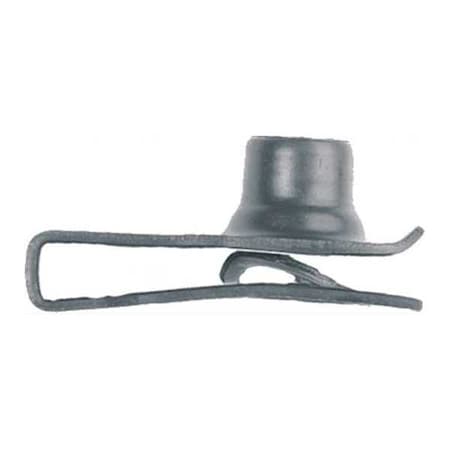
1. Body nuts, aka speed nuts, as illustrated in the photo above, rely on a pawl and spring tension to hold them in place. The pawl means that they will scratch through the paint into the parent metal of the body part that they are clipped into, and the spring tension means that these body nuts are all made of spring steel. And the body is aluminum. Now scratched aluminum. In direct contact with steel. In the constant path of tire flung water and road salt spray. Dissimilar metal galvanic corrosion. Not good. This could be why Ford stopped mounting running boards using bolts and speed nuts when Ford transitioned to the aluminum body. Previously, with steel bodies, Ford did use speed nuts and bolts, instead of studs, but Ford stamped the holes for the speed nuts above the bottom of the pinch flange, because...
2. There may not be enough space in the drain divot to fit the throat of the speed nut. For purposes of explanation, the "drain divot" is that hollow of space afforded by the intentionally gapped separation between the inner and outer aluminum sheet metal of the pinch flange, where the circular flange of the stud is nested. The inner panel has the undulations that form what I have called "drain divots" for lack of a better term, and not every undulation has a stud. But the gap created by the undulation of the inner panel may not be deep enough to accommodate the threaded throat of any steel body nut forced up in there, and then there is the question of the bolt itself... how short will the bolt have to be in order to not poke through the outer panel, and if a body bolt is used, the first three threads are tapered in order to start in the body nut, as the body nut threads are often ovalized or distorted in order to "lock" the body bolt into place. A certain number of threads must be engaged at the prevailing torque designed into the body nut's "distortion" in order for the bolt to stay put in a vibrating road shock environment.
I'm not seeing a simple slam dunk solution here, which is why I am so interested in this OP's problem. I keep thinking about solutions, but end up nixing each one as I think it through. It would help if @PeteD44 would post a photo of the broken stud, because upper studs may be easier to solve than lower studs.
Trending Topics
Moderator
Joined: May 2005
Posts: 8,237
Likes: 1,248
From: San Antonio, TX
I was thinking of grinding off the stud, then a slot next to it on the sloped side. Then slide a new stainless bolt and washer in. Use an RTV or epoxy adhesive on the washer so that it wont slide off afterward. But once it's tightened it should stay.
FTE Stories
Ford Trucks for Ford Truck Enthusiasts

Top 6 Best Deals Available on New Fords & Lincolns Right Now
Brett Foote
This Hennessey Takes the Expedition Tremor's Off-Roading Capability to the Next Level
Verdad Gallardo
Top 10 Fords at 2026 Carlisle Ford Nationals
Joe Kucinski
3 Best / 3 Worst Parts of Modern Ford Ownership
Brett Foote
10 Amazing Upgrades That Solve Common Ford Truck Owner Headaches
Pouria Savadkouei
Every 2026 Ford Engine Explained
Brett Foote
10 Ugly Ford Trucks That We Still Kinda Love
Joe Kucinski
10 Things Every Truck Owner NEEDS (2026 Edition)
Michael S. Palmer
Rezvani's Latest Post-Apocalyptic Monster Is a Ford F-150 Raptor Underneath
Verdad Gallardo
Lead Driver


Joined: Jul 2004
Posts: 5,947
Likes: 63
From: in the woods of MA


1. Body nuts, aka speed nuts, as illustrated in the photo above, rely on a pawl and spring tension to hold them in place. The pawl means that they will scratch through the paint into the parent metal of the body part that they are clipped into, and the spring tension means that these body nuts are all made of spring steel. And the body is aluminum. Now scratched aluminum. In direct contact with steel. In the constant path of tire flung water and road salt spray. Dissimilar metal galvanic corrosion. Not good. This could be why Ford stopped mounting running boards using bolts and speed nuts when Ford transitioned to the aluminum body. Previously, with steel bodies, Ford did use speed nuts and bolts, instead of studs, but Ford stamped the holes for the speed nuts above the bottom of the pinch flange, because...

Super Moderator
Joined: Dec 2011
Posts: 13,354
Likes: 6,144
So far, no one with the problem has posted any photos of actual damaged studs. Some photos would provide viewers with an idea about where and how exactly the studs are breaking, so that our collective experience can suggest potential solutions.
I'm the only member who has posted any photos at all, and that was of a brand new truck without any running boards attached. (I later installed a set of take offs).
It would be useful to have an idea of where and how the studs are breaking. Mid-span in the threads? At the flat head? At the intersection between bolt and body? How much stud remains? Are the studs corroding at the intersection from dissimilar metal combined with road salt? What does the cross section of the stud look like? Are only the lower studs breaking, or are any upper studs breaking also? Upper and lower studs present very different problems.
I'm the only member who has posted any photos at all, and that was of a brand new truck without any running boards attached. (I later installed a set of take offs).
It would be useful to have an idea of where and how the studs are breaking. Mid-span in the threads? At the flat head? At the intersection between bolt and body? How much stud remains? Are the studs corroding at the intersection from dissimilar metal combined with road salt? What does the cross section of the stud look like? Are only the lower studs breaking, or are any upper studs breaking also? Upper and lower studs present very different problems.



More Turbo

Joined: Jun 2021
Posts: 663
Likes: 352
I'm gonna bring this thread back instead of starting a new one. Anyone with the problem studs find a solution? I was removing the running boards today on my 2021 with 1100 miles and one of the studs tack weld that holds the head on the back side broke loose. I was still able to get the factory steps off, but now i'm wondering how to get the AMP's back on when it comes to tightening that one bolt. Suggestions?