



Welding vs Lead

Thread Starter
|
Tuned

Joined: Mar 2014
Posts: 319
Likes: 18
Welding vs Lead
I would like to eliminate the big body seam on the roof of my 1949 Ford F-1. Has anyone done this before ? I don't know whether to Mig Weld or get one of those lead kits and do it with real lead. Which would hold up better IF the cab does move around, vibrate etc.... Thanks for any input.

Hotshot


Joined: Oct 2009
Posts: 16,192
Likes: 4,805
From: Burbank, WA
If you've never worked with lead, it's a lot harder than it looks to do it right. It would be a difficult job to lead that entire seam, and if there's any rust or contamination left behind, your lead will fail. Far better and easier, imho, to weld it up, and even that won't be a fun job. My 2c.

Hotshot


Joined: Jan 2001
Posts: 16,894
Likes: 3,135
From: SE Wisc. (the Rust Belt)
Weld will hold better than lead.
The two edges don’t perfectly match up so you’ll have to work the top to meet the back of cab.
like Wayne said, lead isn’t the easiest thing to master. Many years ago I tried using one of the kits sold at swapmeets, the kits the sellershow how easy it is. Well I never could get it to work. Later I met an old timer that could spread lead like it was peanut butter. He leaded every kind of vehicle, even newer cars with paper thin sheet metal. He made look so easy. A few years back I decided to try again but I used the lead old timers have used for decades, 70/30. For some reason I was able get it to work and was able to lead three different projects without a problem. I think a lot of it was I have gotten older and have a little more patience, it also helped to watch a master do it. Not so easy to find some One who can show you now.
The two edges don’t perfectly match up so you’ll have to work the top to meet the back of cab.
like Wayne said, lead isn’t the easiest thing to master. Many years ago I tried using one of the kits sold at swapmeets, the kits the sellershow how easy it is. Well I never could get it to work. Later I met an old timer that could spread lead like it was peanut butter. He leaded every kind of vehicle, even newer cars with paper thin sheet metal. He made look so easy. A few years back I decided to try again but I used the lead old timers have used for decades, 70/30. For some reason I was able get it to work and was able to lead three different projects without a problem. I think a lot of it was I have gotten older and have a little more patience, it also helped to watch a master do it. Not so easy to find some One who can show you now.
Hotshot
Joined: Oct 2009
Posts: 16,192
Likes: 4,805
From: Burbank, WA
You could, but it would not be a permanent repair. Eventually the bondo would crack, absorb moisture from the backside, rust and fall out. If you just want to fill the seam, they make a seam sealer product just for that, and that would have been applied at the factory. It could be made to look very good with seam sealer at a fraction of the cost or labor. Seam welding is a time-honored custom trick, but it's a ton of work to weld, grind and finish the width of the cab.
Hotshot
Joined: Jan 2001
Posts: 16,894
Likes: 3,135
From: SE Wisc. (the Rust Belt)
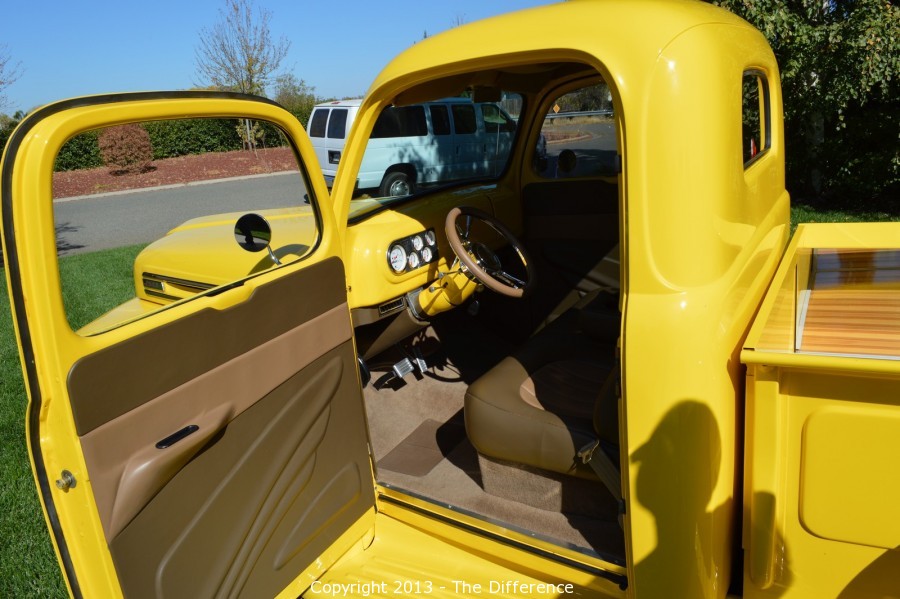
You have to realize there is some flex in that area, not much but some. You either have to use a produce like a seam sealer that will allow some flex or something that is going to physically join the two pieces of metal like a metal weld. Plastic filler will eventually fail, maybe not for a year or two but it will crack. I blasted the seam to clean it out, sprayed with epoxy primer and then sealed it with a paintable siliconized sealer. Key word "paintable". If you use a silicone sealer you will end up with a nightmare when you paint it.
Thread Starter
|
Tuned
Joined: Mar 2014
Posts: 319
Likes: 18
Beautiful truck !!! One more quick question . Can typical joint and seam sealer be sanded ? Any applications I've ever seen from the factory look real ugly !
Trending Topics
Hotshot
Joined: Oct 2009
Posts: 16,192
Likes: 4,805
From: Burbank, WA
Sure, if you use the right stuff. I'd recommend a 2 part, catalyzed urethane seam sealer, applied over epoxy or urethane primer. The sealer can be laid out nice and smooth, sanded, primed and finished to the point you'd hardly know it wasn't welded. The factory doesn't do it to build show cars, but a half-talented tech certainly could.
FTE Stories
Ford Trucks for Ford Truck Enthusiasts

Top 10 Fords at 2026 Carlisle Ford Nationals
Joe Kucinski
3 Best / 3 Worst Parts of Modern Ford Ownership
Brett Foote
10 Amazing Upgrades That Solve Common Ford Truck Owner Headaches
Pouria Savadkouei
Every 2026 Ford Engine Explained
Brett Foote
10 Ugly Ford Trucks That We Still Kinda Love
Joe Kucinski
10 Things Every Truck Owner NEEDS (2026 Edition)
Michael S. Palmer
Rezvani's Latest Post-Apocalyptic Monster Is a Ford F-150 Raptor Underneath
Verdad Gallardo
Top 10 Most Expensive Ford Trucks Ever Sold on Bring a Trailer
Joe Kucinski
2027 Ford Super Duty Buyer's Guide (Every Model, Engine, & Package)
Brett Foote
Hotshot
Joined: Jan 2001
Posts: 16,894
Likes: 3,135
From: SE Wisc. (the Rust Belt)
I personally wouldn't want to mess around doing it. When I did my cab, and others, I used the stuff that comes in a long tube you install in a caulk gun. Cut the tip so I had a small hole and laid it into the seam, smoothing it out with my finger, wiping the excess with a cloth.
Lead Driver

Joined: Aug 2006
Posts: 8,095
Likes: 655
From: Brentwood, TN

I have had good success with "stitch welding" the seam and then filling the gap with panel adhesive prior to smoothing it over with a skim coat of body filler. The stitch welds only need to be about every couple of inches to ensure that the seam will remain stable. The biggest issue with this job is cleaning out the factory goop that is down in the seam to make it waterproof. That stuff will really make a TIG arc spit.

Thread
Thread Starter
Forum
Replies
Last Post
CharlieLed
1948 - 1956 F1, F100 & Larger F-Series Trucks
9
Mar 12, 2010 12:30 AM
ironmine
1980 - 1986 Bullnose F100, F150 & Larger F-Series Trucks
15
Apr 29, 2008 08:09 PM
65fordguy
1961 - 1966 F-100 & Larger F-Series Trucks
13
Mar 21, 2008 06:17 AM
WillyB
1948 - 1956 F1, F100 & Larger F-Series Trucks
182
Dec 22, 2006 04:27 AM
F250Rob
1948 - 1956 F1, F100 & Larger F-Series Trucks
20
Aug 28, 2004 09:41 PM