When you click on links to various merchants on this site and make a purchase, this can result in this site earning a commission. Affiliate programs and affiliations include, but are not limited to, the eBay Partner Network.
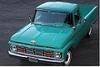
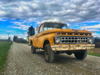
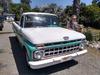
Can anyone tell me why the older pickup trucks standard truck tire in the front and what looks like a mud tire I wish I've been told as a Traction Tire in the rear what is have anything to do with having no power steering I'm looking to get the tires replaced and curious as to why other than looks I should go with a similar pattern front and rear. I'm assuming I'll be better off to have the spare as a Traction Tire.
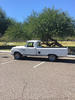
I bought this truck from the 92yr old original owner and I asked him the same thing. His reply was that's how it's always done. All the tires are E rated 10 ply, street tires in the front and all terrains out back. Come to think of it logging trucks are set up like that.
In the old days (50's and 60's, in my case), that's how they did it. It would've probably seemed silly to them to put extra tread on the front of a 2WD vehicle. For the winter, the people I knew would buy two snow tires - my dad called them all 'mud grips', regardless of the actual purpose - for the rear, use them all winter, then put the original tires back on.
These days, people seem to use the same tire all the way around. I doubt that having snow tires on the front of a 2WD vehicle does much, if anything, for the drivability in the snow, mud, or off road. The only advantage I can see is that all 4 tires are alike, so you can rotate them front to back. I guess it makes it look a bit like you have 4WD, too : )
I’d say higher traction tires on the front would make steering less responsive with manual steering; particularly on pavement. I put aggressive tread AT tires on a 66 2WD all around prior to adding power steering and found the steering effort increased dramatically. Upon adding power steering from a 75 all was good. I wanted to be able to rotate tires AND receive enhanced traction from the limited slip differential.
Just the way it was done then. Traction tires were generally about 5 to 6 dollars more money to buy so people didn't buy 4 unless they had a 4wd.. when rotated all you did was left to right. When I worked in the service station we felt anyone who had a set of snow tires to put on the rear for winter driving were rich and if they had them mounted on an extra set of wheels they were filthy rich. Regardless of the tire the rubber in those old bias ply tires was so hard they really weren't any good for traction in snow. Radials have made a world of difference in the tire world
Manufacturers and truck buyers years ago were very practical and used the mud tires for improved traction instead of opting for 4wd which really isn't necessary unless you're into specialized work or hobbies. Today, most new trucks are 4wd and most often with all season tires..which often require 4wd just to move on wet grass or minimal snow. For most people, 2wd and good tires is sufficient but many people today believe 4wd is needed or at least better to have and not need than need and not have.
As for having a "steering" tire in the front...I had a somewhat aggressive tire on the front of my '65 for a short while and the truck tended to wander back and forth. Now, with a steering tire it stays straight.
In many ways, today's trucks have bypassed practicality for coolness, perceived needs, or just because. For example, trucks of yesterday had plenty of ground clearance and yet had beds closer to the ground for easier loading while todays truck beds keep getting higher and higher off the ground to the point where guys haul step ladders to reach items in the bed or ladders are built into the tailgate. Speaking of tailgate, Ford recently had recalls for electric tailgates that due to electrical shorts open themselves while driving (not sure why electric tailgates were created in the first place). Or how about new trucks with 1000+ lbft of torque where the engine is computer detuned when the tranny is in low gear to keep the obscenely powered engine from breaking the rest of the driveline? Sometimes practicality just gets forgotten.
Well I'm in New England and I've only had a couple of 2wd pickups. Come winter I would put as much weight as I could find in them. I'll take 4wd. Summer is regular tread all around, and winter is a M&S all around.
Growing up in the sandy pines of NW Fl, we always ran street treads on the front. We didn't use really aggressive murders on the rear, they would dig into the bottomless sand and bury you, unless you were really careful. We ran the widest, tallest, tire we could get on the back. The fronts were generally L78-15 street radials, if we could get them cheap
Growing up in the sandy pines of NW Fl, we always ran street treads on the front. We didn't use really aggressive murders on the rear, they would dig into the bottomless sand and bury you, unless you were really careful. We ran the widest, tallest, tire we could get on the back. The fronts were generally L78-15 street radials, if we could get them cheap
Yep, gotta adjust to your environment.
Well I'm in New England and I've only had a couple of 2wd pickups. Come winter I would put as much weight as I could find in them. I'll take 4wd. Summer is regular tread all around, and winter is a M&D all around.
Hard to compare different regions of the country. All I can say is where I live we average 60 inches snow/year. With proper tires, my open differential mustang was more than adequate for daily commutes to school and work for over 10 years followed by around 16 years with an open differential 2wd ranger...never needed help or wanted for more. Honestly, a lot of it is personal preference and experience.
by https://www.flickr.com/photos/156406623@N02/, on Flickr
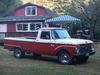
Way back when....With Mud Grips that 64 Ford would go anywhere. In my mind I can still hear that 223 singing as that truck bounced from rut to rut. Rough places, really rough places. Those trucks were driven everywhere before we knew we had to have 4x4s. Many many night I rode in that truck with my daddy, coon hunting. Most of those places are malls and subdivisions now.
Growing up in the sandy pines of NW Fl, we always ran street treads on the front. We didn't use really aggressive murders on the rear, they would dig into the bottomless sand and bury you, unless you were really careful.
I've noticed that mud, rocks, snow are manageable.
The only reason I would use aggressive tread on the front would be to give it any advantage of more traction against side slipping while turning in very bad conditions. I grew up in CT and used to drive up to VT in the winters in any vehicle we could, station wagons, sedans etc. everything was 2 wheel drive (VWs were the bomb). We rarely needed to get towed out and ended up making it pretty much everywhere but we did have chains. Traction tread actually only improved traction a little bit until the advent of specialized rubbers and tread designs like nokians that actually have better grip on slippery surfaces (remember the old blizzak commercials on the hockey rinks?). I use good tread like on my Kelly ATs all the way around. I put them on the rims for my ford and now my GMC with goodyears swims around on the snow and I need the chains a whole lot faster, it makes a difference. Best advice is go to a mall parking lot when it snows and learn how to power glide that baby.
Oh, Thunderkiss, big fatttys with low pressure is what you want on sand.
The only reason I would use aggressive tread on the front would be to give it any advantage of more traction against side slipping while turning in very bad conditions. I grew up in CT and used to drive up to VT in the winters in any vehicle we could, station wagons, sedans etc. everything was 2 wheel drive (VWs were the bomb). We rarely needed to get towed out and ended up making it pretty much everywhere but we did have chains. Traction tread actually only improved traction a little bit until the advent of specialized rubbers and tread designs like nokians that actually have better grip on slippery surfaces (remember the old blizzak commercials on the hockey rinks?). I use good tread like on my Kelly ATs all the way around. I put them on the rims for my ford and now my GMC with goodyears swims around on the snow and I need the chains a whole lot faster, it makes a difference. Best advice is go to a mall parking lot when it snows and learn how to power glide that baby.
Oh, Thunderkiss, big fatttys with low pressure is what you want on sand.
Somebody call my name? I go by Rubberband Man now!
I've noticed that mud, rocks, snow are manageable.
Sand - is ... Something Else. Do. Not. Like.
Any other tips?
We always aired down, to give a wider contact patch.
For our old beach Jeeps, we scrounged old aircraft tires from Eglin AFB's dump. These had straight tread grooves, and were round in cross section profile. Mounted them up on widened out Jeep wheels, screwed the tires to the wheels with as many screws as we could put through the rim into the tire bead. These tires were 16 to 24 ply, so we ran with no air in them. If you were going to park it for a few days, you set it up on blocks. If you didn't, you had wicked flat spots to deal with for a few miles. Those tires worked great, floated over the sand, and wouldn't dig holes. Of course, they road like a wagon, really rough. We didn't care. An old Jeep would last about 4 years on the beach, before it dissolved into a heap of rust.