


Need help with 300 acceleration issue

Moderator


Joined: Jan 2001
Posts: 57,025
Likes: 2,756
From: Virginia

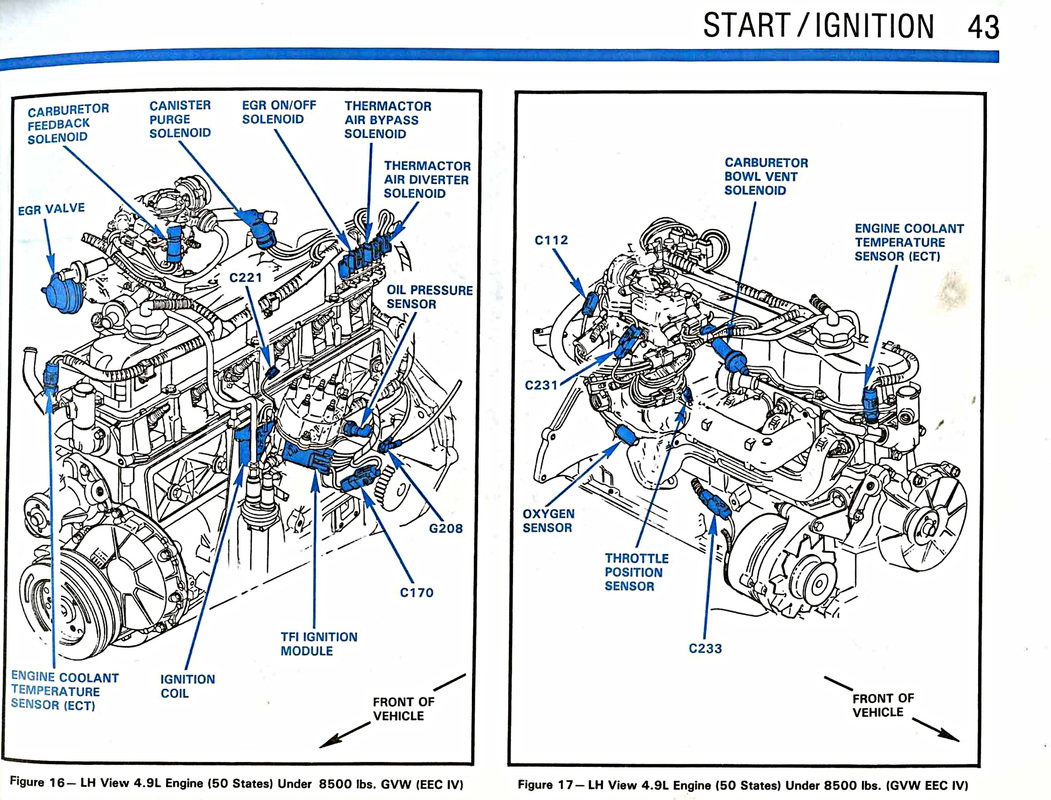
Here is how I did it. I designed and built a variable frequency and pulse width generator which could replace the missing computer supplied voltage signal to the feedback solenoid on the carburetor. The idea was to be able to dial in the mixture at cruise based on the O2 sensor.
https://www.ford-trucks.com/forums/1...l#post14503806
https://www.ford-trucks.com/forums/1...ml#post9672141
good info in all the posts
For now, just connect a DVM to the O2 sensor. See if it goes lean at freeway speeds or during acceleration.
https://www.ford-trucks.com/forums/1...l#post14503806
https://www.ford-trucks.com/forums/1...ml#post9672141
good info in all the posts
For now, just connect a DVM to the O2 sensor. See if it goes lean at freeway speeds or during acceleration.
Cargo Master


Joined: Mar 2008
Posts: 2,587
Likes: 211
From: Washington
I saw in some of the posts that energizing the carter 1bbl feedback carb leans the mixture. That is the way it works also on the 2150 feedback carb. On the 2150 they say the solenoid controls "air bleeds" which I take as another way of saying they are controlling "air leaks" to let more air into the engine, bypassing the venturi and leaning the mixture. Do you know if that is the way they are controlling the carter 1bbl? I am also assuming since they added this air bleed control, that is carb would be jetted a little richer than the normal non feedback carb, so they have control on either side, rich or lean. I am thinking if you could figure it out, you could install the proper sized jets, and block the solenoid passage entirely and convert it back to a regular carb.
My understanding is there are 2 circuits, Idle and Cruise. If you take off the feedback solenoid (1 barrel carb) there are 2 openings on the top half and one larger one on the bottom half. I believe opening up the ports allows vacuum to be applied somewhere inside the carb to lean the mixture. True is I never did figure out how it goes lean,
On your carb try messing with the idle mixture screw, I bet you have a hard time getting it to go lean, I did. It is like the computer does this, not the idle screw.
My gut feeling is a feedback carb has a adjustment range of 70% to 110%, meaning most adjustment is on the lean side, for better emissions test results.
I would be surprised if you end up having to change the jets (smaller). Reading the output of the O2 sensor during a week or two of normal driving will tell.
The voltage output of the O2 will not "cross over" the .5 volt like it should, so by that standard it is on the rich side. I just don't think the MPG improvement ( if any) will justify the work involved.
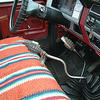
It is common to see a blocker plate installed on new carbs like the one in the photo below.
.

Thread Starter
|
Cross-Country

Joined: Oct 2014
Posts: 76
Likes: 0
From: Canton
I'm not clear on where the SPOUT connector is, or what it looks like. One of the wires coming from the harness, and going to the connector for the distributor circuit board has a connector in the middle of it- is that it?
I really would like to leave my emissions system intact if at all possible- this is unusual for the truck to not run well, and I'm loathe to change a good thing.
-James Huston
I really would like to leave my emissions system intact if at all possible- this is unusual for the truck to not run well, and I'm loathe to change a good thing.
-James Huston
Moderator
Joined: Jan 2001
Posts: 57,025
Likes: 2,756
From: Virginia
I'm not clear on where the SPOUT connector is, or what it looks like. One of the wires coming from the harness, and going to the connector for the distributor circuit board has a connector in the middle of it- is that it?
I really would like to leave my emissions system intact if at all possible- this is unusual for the truck to not run well, and I'm loathe to change a good thing.
-James Huston
I really would like to leave my emissions system intact if at all possible- this is unusual for the truck to not run well, and I'm loathe to change a good thing.
-James Huston
Thread Starter
|
Cross-Country
Joined: Oct 2014
Posts: 76
Likes: 0
From: Canton
Well, it was connected, but the terminals were very dirty, so I cleaned everything thoroughly and will see how I do on the drive home from work. I'll clear the codes first, and see what develops.
-James Huston
-James Huston
Thread Starter
|
Cross-Country
Joined: Oct 2014
Posts: 76
Likes: 0
From: Canton
The SPOUT code was at least part of the issue ; the truck has been accelerating like her old self again, and climbs hills with aplomb. I still need to sort out the other codes ( and check to see if any reoccur), but I think I can safely say that was the problem.
The truck is semi-retired ( I've moved a lot of heavy machinery in the course of building my shop) , and I'm slowly amending things to improve it for truck camping. I need to do some research into the best measures to make it as reliable as possible, as fuel economy and power are, in my opinion, adequate. I may ultimately swap the 4 speed out for a five speed to better attain highway speeds, but that's a subject for another time.
Thanks, everyone, you saved my bacon.
-James Huston
The truck is semi-retired ( I've moved a lot of heavy machinery in the course of building my shop) , and I'm slowly amending things to improve it for truck camping. I need to do some research into the best measures to make it as reliable as possible, as fuel economy and power are, in my opinion, adequate. I may ultimately swap the 4 speed out for a five speed to better attain highway speeds, but that's a subject for another time.
Thanks, everyone, you saved my bacon.
-James Huston

Post Fiend
Joined: Apr 2002
Posts: 19,311
Likes: 97
From: Waterloo, Iowa
+1 for using the word aplomb which, I really didn't know exactly. Sounds like your pickup was negotiating the grade with great élan.  Test is a week from today. Bring a #2 pencil.
►
Test is a week from today. Bring a #2 pencil.
a•plomb ə-plŏm′, ə-plŭm′
►- n.
Self-confident assurance; poise. - n.
Self-possession springing from perfect confidence in one's self; assurance. - n.
Assurance of manner or of action; self-possession.
Thread Starter
|
Cross-Country
Joined: Oct 2014
Posts: 76
Likes: 0
From: Canton
FTE Stories
Ford Trucks for Ford Truck Enthusiasts

Top 6 Best Deals Available on New Fords & Lincolns Right Now
Brett Foote
This Hennessey Takes the Expedition Tremor's Off-Roading Capability to the Next Level
Verdad Gallardo
Top 10 Fords at 2026 Carlisle Ford Nationals
Joe Kucinski
3 Best / 3 Worst Parts of Modern Ford Ownership
Brett Foote
10 Amazing Upgrades That Solve Common Ford Truck Owner Headaches
Pouria Savadkouei
Every 2026 Ford Engine Explained
Brett Foote
10 Ugly Ford Trucks That We Still Kinda Love
Joe Kucinski
10 Things Every Truck Owner NEEDS (2026 Edition)
Michael S. Palmer
Rezvani's Latest Post-Apocalyptic Monster Is a Ford F-150 Raptor Underneath
Verdad Gallardo

Thread
Thread Starter
Forum
Replies
Last Post
kuri
Modular V10 (6.8l)
46
Oct 17, 2019 09:10 PM
Traderjoe28
Ford Inline Six, 200, 250, 4.9L / 300
26
Dec 10, 2006 08:08 AM