



Running 37's

Thread Starter
|
Cross-Country


Joined: Mar 2019
Posts: 57
Likes: 4
Running 37's
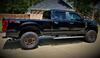
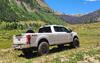
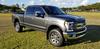
I have seen a lot of pictures on here of trucks running 37's with 17" wheels. I really like the look of this setup. Just have a few questions for those of you with this set up.
What does it do to:
1. Fuel mileage
2. Towing (staying in the specs of F250 capabilities)
3. Quality of ride
What does it do to:
1. Fuel mileage
2. Towing (staying in the specs of F250 capabilities)
3. Quality of ride
Fleet Mechanic


Joined: Dec 2012
Posts: 1,567
Likes: 539
From: DFW
You still feel it with the 6.7L - the sheer added weight of the tire will affect any truck. 37’s side by side with 35’s are noticeably bigger. 37’s side by side an OEM tire are mammoth. You will notice it in both acceleration and braking. Side to side handling gets alittle sloppy too - just a product of the taller sidewall.

Senior User
Joined: Feb 2018
Posts: 361
Likes: 1
For those that have 37s and fixed the speedometer, what are you guys getting in MPGs.

Posting Guru
Joined: Mar 2018
Posts: 1,055
Likes: 9
You still feel it with the 6.7L - the sheer added weight of the tire will affect any truck. 37’s side by side with 35’s are noticeably bigger. 37’s side by side an OEM tire are mammoth. You will notice it in both acceleration and braking. Side to side handling gets alittle sloppy too - just a product of the taller sidewall.
ive had 37’s since 1500 miles. Everything you say is not true, at least for my truck and setup.
Trending Topics

Tuned
Joined: Feb 2019
Posts: 279
Likes: 14
I have seen a lot of pictures on here of trucks running 37's with 17" wheels. I really like the look of this setup. Just have a few questions for those of you with this set up.
What does it do to:
1. Fuel mileage
2. Towing (staying in the specs of F250 capabilities)
3. Quality of ride
What does it do to:
1. Fuel mileage
2. Towing (staying in the specs of F250 capabilities)
3. Quality of ride
FTE Stories
Ford Trucks for Ford Truck Enthusiasts

Top 10 Fords at 2026 Carlisle Ford Nationals
Joe Kucinski
3 Best / 3 Worst Parts of Modern Ford Ownership
Brett Foote
10 Amazing Upgrades That Solve Common Ford Truck Owner Headaches
Pouria Savadkouei
Every 2026 Ford Engine Explained
Brett Foote
10 Ugly Ford Trucks That We Still Kinda Love
Joe Kucinski
10 Things Every Truck Owner NEEDS (2026 Edition)
Michael S. Palmer
Rezvani's Latest Post-Apocalyptic Monster Is a Ford F-150 Raptor Underneath
Verdad Gallardo
Top 10 Most Expensive Ford Trucks Ever Sold on Bring a Trailer
Joe Kucinski
2027 Ford Super Duty Buyer's Guide (Every Model, Engine, & Package)
Brett Foote
Posting Guru
Joined: Mar 2018
Posts: 1,055
Likes: 9
Besides your fuel mileage and acceleration taking a hit, you will stress out the brakes, hubs, trans and front end unless you build them to take the added stress (ask me how I know). If using as a tow rig you will also struggle with goosenecks and 5th wheels due to bed height which will essentially make it a good looking mall crawler. It all depends on your intended use. For me, it was fun for a while but impractical as hell easpecially using the truck for it's intended use.
I tow my equipment with a gooseneck and have zero issues or looking like a mall crawler. I guess by your comment anyone who levels and toes with a gooseneck or any heavy load this happens to.
there is such thing as a factory diesel with 3.31. My 3.55 on 37’s is essentially that. So I have zero issues with tow ( GN or conventional) or acceleration.
I have almost 30k on my 37’s. I just rotated tires and my brakes, front end and hubs are fine. That said I put on a proper lift.
Tuned


Joined: Jun 2018
Posts: 341
Likes: 87
From: DFW
A heavier tire/wheel package just adds stress to parts. Front-end components (hubs, brakes, ball joints, shocks, etc.) are wear items and have a life span -- running a significantly heavier wheel/tire accelerates wear on these items. Everyone is going to have different experiences with how long stock parts last with a unmodified truck AND everyone is going to have different experiences with how long they last on a mod'ed truck. If you search long enough, you'll find a unit bearing that needed to be replaced at 50,000 miles on a truck that has never been taken off the pavement and is still running the OEM tires, you can also find a guy that jumps his truck, on 38's, that is still running the original UB and has 200K miles on it.
37's look awesome. They just require a large commitment: Potentially larger lift (which brings it's own problems -- not fitting in your garage!); fender trimming; decreased stopping distance; slower acceleration from a stop (even with 3.55's and the 6.7); accelerated wear on front-end parts; less MPG's; tire whine; wider tires follow ruts in the roads more; a taller sidewall DOES tend to make the truck "wallow" more; the list goes on and on.....
37's look awesome. They just require a large commitment: Potentially larger lift (which brings it's own problems -- not fitting in your garage!); fender trimming; decreased stopping distance; slower acceleration from a stop (even with 3.55's and the 6.7); accelerated wear on front-end parts; less MPG's; tire whine; wider tires follow ruts in the roads more; a taller sidewall DOES tend to make the truck "wallow" more; the list goes on and on.....
Tuned
Joined: Feb 2019
Posts: 279
Likes: 14
No problem and I do not believe slapping on a leveling kit and 37's is automatically a pavement princes as I have offroaded several diesels in this configuration for a couple decades. However, the point is modifications will affect the end use depending on whether it is a tow rig, toy or daily driver. The fact remains that going from a vehicle designed for a 31" tire to 37"s will shorten the life of such things as brakes, transmissions, tie rods and other front end components due to weight and rotational force to start, stop and steer. Any change from factory specs such as a small tire to a large flotation tire DOES affect the vehicle performace regardless or not of whether it is felt by the operator. These self proclaimed performance judgments are subjective at best and do not align with what the auto industry has known for years. I have personal had premature wear on such things as hubs and brakes on my Ford, GMC trucks and Jeeps just like many others. You could conduct a survey of Jeep owners on the topic of parts wear (lifted or factory) and you will likely see the same results as I just stated.
As I mentioned, my last F-350 w/2.5in level and 37's tires saw both factory front hubs gone by 60K miles and the brake rotors warped and pads were down to the tabs by 30K miles. My track bar was also replaced as the joint was shot from the weight of the tires and bump steer. Their replacements also saw a similar life span with these same set ups. Having said that, I had similar results with the couple Wranglers I owned and the two D-max's. However, with 37's, these same trucks put my goosenecks and 5th wheel in a tongue raised position due to the bed height. Even with the factory height, you can see this a little and is one of the reasons the 2020's have been lowered (also for gas mileage). Pulling a tractor or skidsteer nose up on a commercial trailer is no fun and outright dangerous. There is also a huge decline in performance while towing.
Could the premature wear that I experienced be attributed to my driving style or the fact that I traverse the mountains roads often? Sure thing as my opinion is subjective as well. However, the auto industry as a whole along with the law of physics does solidify with data that such modifications does and will rob performance and attributes to increased/premature wear regardless of what the driver feels.
As I mentioned, my last F-350 w/2.5in level and 37's tires saw both factory front hubs gone by 60K miles and the brake rotors warped and pads were down to the tabs by 30K miles. My track bar was also replaced as the joint was shot from the weight of the tires and bump steer. Their replacements also saw a similar life span with these same set ups. Having said that, I had similar results with the couple Wranglers I owned and the two D-max's. However, with 37's, these same trucks put my goosenecks and 5th wheel in a tongue raised position due to the bed height. Even with the factory height, you can see this a little and is one of the reasons the 2020's have been lowered (also for gas mileage). Pulling a tractor or skidsteer nose up on a commercial trailer is no fun and outright dangerous. There is also a huge decline in performance while towing.
Could the premature wear that I experienced be attributed to my driving style or the fact that I traverse the mountains roads often? Sure thing as my opinion is subjective as well. However, the auto industry as a whole along with the law of physics does solidify with data that such modifications does and will rob performance and attributes to increased/premature wear regardless of what the driver feels.
Senior User
Joined: Oct 2018
Posts: 129
Likes: 2
However, the point is modifications will affect the end use depending on whether it is a tow rig, toy or daily driver. The fact remains that going from a vehicle designed for a 31" tire to 37"s will shorten the life of such things as brakes, transmissions, tie rods and other front end components due to weight and rotational force to start, stop and steer.
Also, to be clear these trucks were designed for 34's (2017-2019's w/ 20's) and 35's (2020 w/ Tremor), so... there's that. It is not like jumping to 37's on a half ton.
That said, I have been battling this decision for a while now.

Freshman User
Joined: Mar 2019
Posts: 32
Likes: 0
37s on Mine with 6.2 and 3.73

I love my setup, 2017 F250 XLT 6.2 GAS (still 3.73s for now) 4 inch superlift with rancho 5000 shocks, forescan corrected speedo. (exactly perfect mpg) with no codes. 12 MPG city and 13-14 highway if i stick to speed limits. If i hit 75 mph then its 12 again.
TIRES mud terrain Coopers 37x12.50 on 17 inch rims (Next tires will be the pricier BFG All terrains because the MUDS are pretty loud especially the more they wear in)
Dual steering stabilizers up front and Tires FORCE balanced with Caster at 4.8-4.9 (drives beautiful, with almost no bump steer. )
The 3.73 ratio is way low but still tows and drives fine. I actually am a little hesitant to change ratios because most of my time is spent in the city at 45 mph which i get 13.5 mpg which i think is great for this setup.
Quality of Ride : very nice but could be softer with an adjustable shock like the Rancho 9000. I also keep my tires at 48-50 psi. (chalk tested and limit also changed in forescan for TPM)
Discount tire filled them up to stock 75 psi when new and it sucked. way too hard (Tire max was 50 anyways since it was a D rated tire)
another member has my exact setup with 4.88s and loves it but his mileage is in the 10s.
RIMS also do not rub at all. here is what they are : Set 4 17" American Racing AR172 Black Wheels 17x9 8x170 -12mm
Senior User
Joined: Oct 2018
Posts: 129
Likes: 2
I love my setup, 2017 F250 XLT 6.2 GAS (still 3.73s for now) 4 inch superlift with rancho 5000 shocks, forescan corrected speedo. (exactly perfect mpg) with no codes. 12 MPG city and 13-14 highway if i stick to speed limits. If i hit 75 mph then its 12 again.
TIRES mud terrain Coopers 37x12.50 on 17 inch rims (Next tires will be the pricier BFG All terrains because the MUDS are pretty loud especially the more they wear in)
Dual steering stabilizers up front and Tires FORCE balanced with Caster at 4.8-4.9 (drives beautiful, with almost no bump steer. )
The 3.73 ratio is way low but still tows and drives fine. I actually am a little hesitant to change ratios because most of my time is spent in the city at 45 mph which i get 13.5 mpg which i think is great for this setup.
Quality of Ride : very nice but could be softer with an adjustable shock like the Rancho 9000. I also keep my tires at 48-50 psi. (chalk tested and limit also changed in forescan for TPM)
Discount tire filled them up to stock 75 psi when new and it sucked. way too hard (Tire max was 50 anyways since it was a D rated tire)
another member has my exact setup with 4.88s and loves it but his mileage is in the 10s.

Cargo Master


Joined: Jan 2017
Posts: 2,251
Likes: 563
A heavier tire/wheel package just adds stress to parts. Front-end components (hubs, brakes, ball joints, shocks, etc.) are wear items and have a life span -- running a significantly heavier wheel/tire accelerates wear on these items. Everyone is going to have different experiences with how long stock parts last with a unmodified truck AND everyone is going to have different experiences with how long they last on a mod'ed truck. If you search long enough, you'll find a unit bearing that needed to be replaced at 50,000 miles on a truck that has never been taken off the pavement and is still running the OEM tires, you can also find a guy that jumps his truck, on 38's, that is still running the original UB and has 200K miles on it.
37's look awesome. They just require a large commitment: Potentially larger lift (which brings it's own problems -- not fitting in your garage!); fender trimming; decreased stopping distance; slower acceleration from a stop (even with 3.55's and the 6.7); accelerated wear on front-end parts; less MPG's; tire whine; wider tires follow ruts in the roads more; a taller sidewall DOES tend to make the truck "wallow" more; the list goes on and on.....
37's look awesome. They just require a large commitment: Potentially larger lift (which brings it's own problems -- not fitting in your garage!); fender trimming; decreased stopping distance; slower acceleration from a stop (even with 3.55's and the 6.7); accelerated wear on front-end parts; less MPG's; tire whine; wider tires follow ruts in the roads more; a taller sidewall DOES tend to make the truck "wallow" more; the list goes on and on.....
people dont normally experience problems right away. so they figure theres no side affects of larger tires and lifts and offset wheels. but physics will always have the final word