



Holley Carb guys
Thread Starter
|
Lead Driver


Joined: Mar 2008
Posts: 7,182
Likes: 380
From: Near Los Angeles
Holley Carb guys
I am running a small Holley 1848, 465 cfm, on a 307 ci engine. It is a 4160 that I have added a metering block to the secondary side. It runs great, but I'm at about 13.5 to 1 A/F/ratio when cruising at 60 mph. I'd like to see that a tad leaner, maybe 15.5 to 1. Would enlarging an air bleed orifice be the way to go? Thoughts? Article links?

Grumpy goat


Joined: May 2017
Posts: 3,058
Likes: 594

440's right, changing afr at cruise is simply a primary jet change. With a low to medium compression engine, you can get away with 15 or 15.5 at cruise, just make sure you've got a power valve that kicks in at the slightest vacuum drop. And be prepared to re-jet as soon as temps drop in fall, cause you're gonna go really lean.

Post Fiend
Joined: Apr 2002
Posts: 19,311
Likes: 97
From: Waterloo, Iowa
First jet up or down till you reach your target cruise AFR. 15 to 16 is not "too lean" for an OHV carbureted engine at steady cruise, even Flatheads run 15.5 to 16 AFR very well I'm told. The whole point of jetting in a street driven engine is to go as lean as possible without surge or misfire. Racing engines is a different deal and doesn't apply. I'm not sure to what extent compression limits this. Seems to me it should work well. Modern computer controlled fuel injection runs considerably more, around 18-1! No carbed engine will be able to do this. Anyway 14.7 is a theoretical thing, it needs to be way richer than that under load, though can be leaned out under no load conditions. The ignition needs a good hot spark and plenty of ignition advance including vacuum advance. If the ignition and/or timing is defective it won't tune worth a damn. Still need to look at the plugs, maybe step down in heat range, check for surge or engine running hot. Every engine is slightly different.
Then, and this is important, once you've settled on the cruise jet AFR now need to check the AFR at wide open throttle. Droppin down or increasing the power valve # won't change the wide open throttle AFR, at least not very much, though you can experiment. The problem is, underneath the power valve are the channel restrictors, this is what determines the wide open throttle AFR, which are basically fixed jets.
If the wide open throttle AFR is now too lean they can be carefully enlarged slightly with a pin vise and numbered drill bits. This works slick as hell. I run around 16-1 on the highway at level cruise and 12.5 to 1 at full throttle. The key thing is to never run lean under load, under acceleration. Think of what an acetylene torch does when you crack open the O2.
Here's a great link on general calibration:
Holley Tuning
"If you want a very economical cruise, and still have the correct A/F ratio at WOT, increasing the size of the PVCR's, and dropping the size of the primary jets a few sizes is a good option."
Then, and this is important, once you've settled on the cruise jet AFR now need to check the AFR at wide open throttle. Droppin down or increasing the power valve # won't change the wide open throttle AFR, at least not very much, though you can experiment. The problem is, underneath the power valve are the channel restrictors, this is what determines the wide open throttle AFR, which are basically fixed jets.
If the wide open throttle AFR is now too lean they can be carefully enlarged slightly with a pin vise and numbered drill bits. This works slick as hell. I run around 16-1 on the highway at level cruise and 12.5 to 1 at full throttle. The key thing is to never run lean under load, under acceleration. Think of what an acetylene torch does when you crack open the O2.
Here's a great link on general calibration:
Holley Tuning
"If you want a very economical cruise, and still have the correct A/F ratio at WOT, increasing the size of the PVCR's, and dropping the size of the primary jets a few sizes is a good option."
Post Fiend
Joined: Apr 2002
Posts: 19,311
Likes: 97
From: Waterloo, Iowa
Absolutely True, but ya gotta know the right questions to ask. It's really tough to read plugs and modern gasoline without some experience.
Trending Topics
Thread Starter
|
Lead Driver
Joined: Mar 2008
Posts: 7,182
Likes: 380
From: Near Los Angeles
First jet up or down till you reach your target cruise AFR. 15 to 16 is not "too lean" for an OHV carbureted engine at steady cruise, even Flatheads run 15.5 to 16 AFR very well I'm told. The whole point of jetting in a street driven engine is to go as lean as possible without surge or misfire. Racing engines is a different deal and doesn't apply. I'm not sure to what extent compression limits this. Seems to me it should work well. Modern computer controlled fuel injection runs considerably more, around 18-1! No carbed engine will be able to do this. Anyway 14.7 is a theoretical thing, it needs to be way richer than that under load, though can be leaned out under no load conditions. The ignition needs a good hot spark and plenty of ignition advance including vacuum advance. If the ignition and/or timing is defective it won't tune worth a damn. Still need to look at the plugs, maybe step down in heat range, check for surge or engine running hot. Every engine is slightly different.
Then, and this is important, once you've settled on the cruise jet AFR now need to check the AFR at wide open throttle. Droppin down or increasing the power valve # won't change the wide open throttle AFR, at least not very much, though you can experiment. The problem is, underneath the power valve are the channel restrictors, this is what determines the wide open throttle AFR, which are basically fixed jets.
If the wide open throttle AFR is now too lean they can be carefully enlarged slightly with a pin vise and numbered drill bits. This works slick as hell. I run around 16-1 on the highway at level cruise and 12.5 to 1 at full throttle. The key thing is to never run lean under load, under acceleration. Think of what an acetylene torch does when you crack open the O2.
Here's a great link on general calibration:
Holley Tuning
"If you want a very economical cruise, and still have the correct A/F ratio at WOT, increasing the size of the PVCR's, and dropping the size of the primary jets a few sizes is a good option."
Then, and this is important, once you've settled on the cruise jet AFR now need to check the AFR at wide open throttle. Droppin down or increasing the power valve # won't change the wide open throttle AFR, at least not very much, though you can experiment. The problem is, underneath the power valve are the channel restrictors, this is what determines the wide open throttle AFR, which are basically fixed jets.
If the wide open throttle AFR is now too lean they can be carefully enlarged slightly with a pin vise and numbered drill bits. This works slick as hell. I run around 16-1 on the highway at level cruise and 12.5 to 1 at full throttle. The key thing is to never run lean under load, under acceleration. Think of what an acetylene torch does when you crack open the O2.
Here's a great link on general calibration:
Holley Tuning
"If you want a very economical cruise, and still have the correct A/F ratio at WOT, increasing the size of the PVCR's, and dropping the size of the primary jets a few sizes is a good option."
FTE Stories
Ford Trucks for Ford Truck Enthusiasts

2027 Ford Super Duty Buyer's Guide (Every Model, Engine, & Package)
Brett Foote
Top 10 Ford Truck Tragedies
Joe Kucinski
AEV FXL Super Duty - the Super Duty Raptor Ford Doesn't Make
Brett Foote
Lobo Vs Lobo: Proof the F-150 Lobo Should Be Even Lower!
Michael S. Palmer
Ford's 2001 Explorer Sportsman Concept Looks For a New Home
Verdad Gallardo
10 Best Ford Truck Engines We Miss the Most!
Joe Kucinski
2026 Shelby F-150 Off-Road: Better Than a Raptor R?
Brett Foote
2027 Super Duty Carhartt Package First Look: 12 Things You NEED to Know!
Michael S. Palmer
10 Most Surprising 2026 Ford Truck Features!
Joe Kucinski
Grumpy goat
Joined: May 2017
Posts: 3,058
Likes: 594
A point I failed to mention: Cruise is not where you're at highest AFR. With a manual transmission at least, you'll peak AFR at transition from cruise to part throttle acceleration, going up slight grades at cruise, and while accelerating from stop to normal driving speed. Having extra load in the bed, or pulling a trailer will cause that peak to get worse.
That said, it's probably best to tune for those peaks. I do. If you tune for highest AFR at cruise, you'll have to have a power valve that opens at the slightest hint of vacuum drop, or you'll lean out badly. And if you're going to split hairs like this, you should have a vacuum gauge right next to your AFR gauge. I do.
An example: Lets say you cruise at 14" vacuum, and you're at 15/1 AFR. On the slightest up grade, you'll need a power valve that opens up between 14"-13" vacuum. That power valve is going to open and close A LOT, and will surely result in poor fuel mileage. Other things to consider...If you develop the slightest vacuum leak anywhere, you're power valve will stay open much more than it should, causing a really rich condition. And sooner or later we all get a vacuum leak. At your tune, I doubt you could even limp the truck home.
That said, it's probably best to tune for those peaks. I do. If you tune for highest AFR at cruise, you'll have to have a power valve that opens at the slightest hint of vacuum drop, or you'll lean out badly. And if you're going to split hairs like this, you should have a vacuum gauge right next to your AFR gauge. I do.
An example: Lets say you cruise at 14" vacuum, and you're at 15/1 AFR. On the slightest up grade, you'll need a power valve that opens up between 14"-13" vacuum. That power valve is going to open and close A LOT, and will surely result in poor fuel mileage. Other things to consider...If you develop the slightest vacuum leak anywhere, you're power valve will stay open much more than it should, causing a really rich condition. And sooner or later we all get a vacuum leak. At your tune, I doubt you could even limp the truck home.
Thread Starter
|
Lead Driver
Joined: Mar 2008
Posts: 7,182
Likes: 380
From: Near Los Angeles
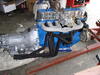
I am perplexed with my lack of performance. I recently installed a new engine with a ported head, a cam with more duration, and larger exhaust. At the same time I went from a super-tricked out c6, to a slow shifting zf5. Now, after a shift, I have a flat spot where I have to wait for the rpms to climb before I have power. After so many changes I am confused about where to begin with eliminating the flat spot. I have checked timing and advance, and all is good, 32* all in at 2k rpm. I did change the acc. squirter nozzle size from .034 to .031 with the manual, so I will begin there, and try to bump it back up to the .034.
Grumpy goat
Joined: May 2017
Posts: 3,058
Likes: 594
That's a lot of unknowns for us. With only that, I'm thinking differential ratio, camshaft, and cylinder heads. If you built this engine with a bunch of race stuff, it may be making peak torque at much higher rpm than a typical street engine. Typically, you give up some low rpm torque with a strip build. That would probably give you sluggish acceleration at normal street driving shift points.
Can you give us your camshaft specs, and gear ratio. Also, do you know specs on intake ports, before and after the porting job? Opening up the intake runners actually slows air down at lower rpm's and doesn't start showing dividends until engine reaches high rpm.
Can you give us your camshaft specs, and gear ratio. Also, do you know specs on intake ports, before and after the porting job? Opening up the intake runners actually slows air down at lower rpm's and doesn't start showing dividends until engine reaches high rpm.
Thread Starter
|
Lead Driver
Joined: Mar 2008
Posts: 7,182
Likes: 380
From: Near Los Angeles
Thanks for the help. I hesitate, and please don't take this badly, but my engine is an inline six with different characteristics than a v8, longer stroke, 4.030 bore. Typically 300 inlines behave like a tractor engine, a ton of torque down down, and not much up top. 300's do well with 600 cfm carbs. Mine has over-size valves, and did great with a 600 cfm Summit carb, but the vapor lock caused by the header right below it, made me go to a smaller 1848 holley, 465 cfm, which certainly was a step down, performance wise. I do run it with an AFR gauge. At freeway speeds I'm showing what I have read should be normal afr, 13.5 to low 14's, depending on speed. On every cfm calculator, this engine should do well with a small cfm carb. Experience, however, has shown that it loves carbs with around 300 cfm primary side.
My rear ratio is 3.31:1, with oe tire size. The cam is 280* adv., 220* @ .050, .475" lift, with 112* LSA.
My rear ratio is 3.31:1, with oe tire size. The cam is 280* adv., 220* @ .050, .475" lift, with 112* LSA.
Grumpy goat
Joined: May 2017
Posts: 3,058
Likes: 594
No insult taken. Yep, I caught that it's an inline 6 by your stated CID and "head" instead of "heads". I did think it was a 302 at first though. But principles are the same for air flow on V8 or I6.
I'm pointing my finger at the camshaft. Comparing the specs to a Comp RV type cam, yours has a lot more lift. Typical of a high rpm camshaft. That, and the addition of larger intake ports in the cylinder head, is probably bumping peaks quit a bit to the right. If I was building this engine, I'd estimate it wouldn't start making good power and throttle response until 2300 rpm.
I'm pointing my finger at the camshaft. Comparing the specs to a Comp RV type cam, yours has a lot more lift. Typical of a high rpm camshaft. That, and the addition of larger intake ports in the cylinder head, is probably bumping peaks quit a bit to the right. If I was building this engine, I'd estimate it wouldn't start making good power and throttle response until 2300 rpm.

Laughing Gas


Joined: Jul 2003
Posts: 765
Likes: 13
From: Edmond, OK
If you still have the 600 carb, look at a phenolic spacer and maybe make an aluminum heat sheild out of a piece of aluminum. With the lift you have the spacer will help (I think) a little on the velocity, but it does help on the linkage clearance.