When you click on links to various merchants on this site and make a purchase, this can result in this site earning a commission. Affiliate programs and affiliations include, but are not limited to, the eBay Partner Network.
So I am trying to track down my excessive ECT issue. How much coolant should I expect to see flow from return line that runs from the intake to the side of the degas bottle? I just removed it and at idle its very little. If I rev it the flow increases but I'm curious how much I should be seeing. I know this isn't a very accurate test but should it shoot a couple feet or just dribble out. It is a steady stream at idle but it's just clearing the hose end.
If that makes any sense does that sound about right?
I have flushed the system with restore & restore + , replaced my T-stat , and filled with Rotella ELC. Normal driving I'm 188 - 195 typically but when towing I'm getting ECT averaging 215-220. Even a few degrees higher when I push her. Short of the pump I'm at a loss as to what it could be. Radiator fins are clean as well. When I was flushing it I had the block drains out and a hose in the degas bottle. With the engine running I didn't see and increase in flow out the drains when I reved the motor like I see in the video. That's why I am curious about the pump output.
Any suggestions or advise is greatly appreciated. I am treading in unfamiliar territory here.
The way I understand it, is that that small line is for removing gas bubbles that develop in the coolant around the cooling jackets of the pistons. I'm not sure how much constant flow it really has, or how much it increases or decreases with increased RPM's. I can tell you that the 03 engines have a slightly smaller pump (90mm) than engines from 9/22/03 and up engines. The pump impellers have also been known to slip on the shaft (more common). The pump cavity in the front cover has also been known to erode internally and cause cavitation leading to less or no flow (less common). All that being said, you don't say how much you're towing and what kind of terrain you're towing on. I don't consider those temperatures to be that extreme for a diesel fairly large tires.
The way I understand it, is that that small line is for removing gas bubbles that develop in the coolant around the cooling jackets of the pistons. I'm not sure how much constant flow it really has, or how much it increases or decreases with increased RPM's. I can tell you that the 03 engines have a slightly smaller pump (90mm) than engines from 9/22/03 and up engines. The pump impellers have also been known to slip on the shaft (more common). The pump cavity in the front cover has also been known to erode internally and cause cavitation leading to less or no flow (less common). All that being said, you don't say how much you're towing and what kind of terrain you're towing on. I don't consider those temperatures to be that extreme for a diesel fairly large tires.
Towing a travel trailer somewhere around 7500lbs through the eastern part of VA running 60mph. Flat ground pretty much except the occasional small hills.
Think I am going to pull the pump and inspect it anyway. Doesn't cost me anything but time and takes it out of the equation.
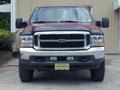
Something else I recently thought of...the PO bought and installed one of those ugly *** "Lincoln" style grills. Think that could actually be restricting air flow? After looking at it I don't really think it should but then again I don't know.
This Hennessey Takes the Expedition Tremor's Off-Roading Capability to the Next Level
Slideshow: The VelociRaptor Expedition gains a lift, upgraded suspension, Brembo brakes, and trail-ready equipment while retaining the stock 440-horsepower EcoBoost V6.
Rezvani's Latest Post-Apocalyptic Monster Is a Ford F-150 Raptor Underneath
Slideshow: Called the Fortress, the 850-horsepower pickup combines Raptor underpinnings with military-inspired features, survival equipment, and a starting price of $285,000.