When you click on links to various merchants on this site and make a purchase, this can result in this site earning a commission. Affiliate programs and affiliations include, but are not limited to, the eBay Partner Network.
I have installed new front disc brake calipers, rotors, and pads. My truck is a converted over to disc brakes from a 1975 truck. The calipers were already gone when I bought the I beams and front disc brake set up. I now have new brake lines to connect to the calipers, but I did not see how they were installed on the old ones, and I am not sure how they connect to the calipers. The new brake lines have a lip that sticks up on the surface of the metal connection and I am not sure if that has some special way it is to be installed on to the caliper. I not real sure which caliper goes to which side either. These do it your self parts books you buy at the auto parts stores and really useless in my opinion but that is just my opinion. thanks for any light that someone can shed on this.
Your brake line should be one end is a rubber line with a threaded connection to the frame point on it and then changes over to metal where it connects to the caliper. See 2078 in the last diagram? See the metal line on the end of your (rubber to steel) line, see that metal block? Has a hole in it right? Use a Banjo bolt with copper crush washer. As far as what caliper goes on what side, position where the bleed screw is on the upper part. L/H and R/H different part #'s. 1/2 ton 2wd and 4wd single piston caliper, F250 2wd 4wd duel piston caliper.
I have installed new front disc brake calipers, rotors, and pads. My truck is a converted over to disc brakes from a 1975 truck. The calipers were already gone when I bought the I beams and front disc brake set up. I now have new brake lines to connect to the calipers, but I did not see how they were installed on the old ones, and I am not sure how they connect to the calipers. The new brake lines have a lip that sticks up on the surface of the metal connection and I am not sure if that has some special way it is to be installed on to the caliper. I not real sure which caliper goes to which side either. These do it your self parts books you buy at the auto parts stores and really useless in my opinion but that is just my opinion. thanks for any light that someone can shed on this.
I have a 1975 F 250 with disc front brakes. The calipers sit on the front side of the rotor, the side closest to the radiator. It should be fairly simple to kind of hold them up and judging by putting them in a position so that the bleeder screw is up, you should be able to figure out which side each caliper sits on. As far as how the brake line attaches to the caliper, it does not. There is actually a rubber line that goes from the end of the break line and the other end is held onto the caliper with what is called a banjo bolt, a hollow bolt that allows brake fluid to pass from the line into the caliper. If you didn't have disc brakes on your truck from the factory, there should still be a small "arm" attached to the frame that holds the end of the rubber line where the brake line attaches to it. The flexible line is held to that arm with a small clip so that it doesn't flop around. You should be able to use the existing arm, but I don't know what that looks like since I've never seen a 1975 truck without front discs. You may have to go to the junkyard and remove a set of those arms, drill a hole through your frame and put a bolt through the hold it in place, and then run a line to it. I don't know.
In case you do need to purchase the rubber lines, the best place I found to do so is RockAuto dot com. If your calipers have two pistons, then make sure the ones you purchase specified dual piston calipers, since those are designed to handle more pressure or breaking power. LMC truck will have the original brake lines, bent exactly how they were from the factory on that truck. However, if you want to build the lines your self, the hardlines, that I recommend purchasing the copper nickel brake line. It is worlds easier to work with than the steel line. You can go to Harbor freight and by a double flaring tool and with a little practice become very proficient at making proper double flares for your brake lines. By the way, rock auto should also have all the clips, banjo bolts, brake pads, bleeder screws, and rebuild kits that you would need. I also wanted to say that I have found gravity bleeding to be a much better system for bleeding brakes than the old style where one guy said in the cabin pump the petal while the other was out and cracked open the bleeder screw. Good luck with your brakes.
Use anti-seize on the one bolt (key retaining screw) that holds the caliper T bar (caliper support) and spring (caliper support spring) in place. Spring curve up, ends down and yes it is a PITA to get the spring on the T bar and hold the caliper and then get it sort of started and then rubber mallet/tapped in place. The 2 notches on the T bar go down. ONE bolt with a curved washer line edge under it. DO NOT OVER tighten.
Well that spring and T Bar were a pain but all is in now and they look correct. Thanks for all yall's help. Now with that problem solved a new has occurred. When doing the swap to disc brakes from drum brakes on this 69 truck the brake lines are now to short. I have got to find longer ones. These are 19 1/2" long and are at least 8" to short. They don't even reach the bracket to secure them to the frame much less have any travel for the I Beams to go up and down. Now for the search for brake lines.
Well that spring and T Bar were a pain but all is in now and they look correct. Thanks for all yall's help. Now with that problem solved a new has occurred. When doing the swap to disc brakes from drum brakes on this 69 truck the brake lines are now to short. I have got to find longer ones. These are 19 1/2" long and are at least 8" to short. They don't even reach the bracket to secure them to the frame much less have any travel for the I Beams to go up and down. Now for the search for brake lines.
I think you are calling parts by the wrong names and this can lead to issues.
Lines are metal and do not move and bolted to the frame or across the rear axle. Think this is why some have pointed you to Inline Tube? They sell pre-bent metal lines.
Hoses are rubber and move. You should have 3 rubber hoses on a 4x2 truck, 1 at each front wheel (2) and 1 out back from frame to rear axle.
If the disc parts came from a 75 truck look up hoses for that year truck. If that is what they are for then you sure you have the calipers on right?
Can you take any pictures of your setup?
The rubber hoses up front, see pictures in earlier post, go from a bracket on the frame where the metal line stops and connects to the rubber hose.
This hose then goes to the calipers and uses the banjo bolt & 2 copper washes 1 on either side of the block the bolt goes thru.
Being you are in the brake system I would replace the rear rubber hose unless you did this a few years ago. When they go bad you can not see it as it is from the inside out.
Now is the time to go thru the rear brakes too.
Dave ----
Nope, but I do put grease around the end of the tube when I bleed the brakes with my vacuum pump. Makes it a lot easier. Looks like I forgot to wipe the bleeder valve off afterwards on this one.
Rezvani's Latest Post-Apocalyptic Monster Is a Ford F-150 Raptor Underneath
Slideshow: Called the Fortress, the 850-horsepower pickup combines Raptor underpinnings with military-inspired features, survival equipment, and a starting price of $285,000.




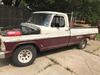
 1975 Brake line install