When you click on links to various merchants on this site and make a purchase, this can result in this site earning a commission. Affiliate programs and affiliations include, but are not limited to, the eBay Partner Network.
I'm in the process of getting my truck running again and it would appear my starter (cable) is preventing me from making progress. Lights work, battery is new, checked/cleaned the lugs, grounds, etc. I had the dreaded "click" of the solenoid when bumping the key. Upon further investigation my positive lead from the solenoid to the starter itself is bad. Very bad. No insulation and about 10 strands of heavily corroded copper left. So I tried to bust the cable loose and discovered even more woes. The whole lug appears to be corroded and not much of a nut is left - nothing I can find in my toolbox will even engage on the nasty oxidized remains.
So, after some searching on the Goolag and here, I've found nothing specific to my issue but a whole lot of confusing information. The most common replacement starters appear to be listed as 351M/400/460 etc. which apparently isn't exactly correct. Also, many of the new style mini-torques have a solenoid attached to the starter body? Not sure how that jives with a stock solenoid setup.
Any advice from the demigods of dentside?
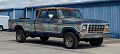
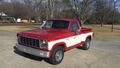
Pictures related. 351M corroded starter lead 351M corroded starter lead
I have recently replaced the starter on my 351M. If you end up removing the starter (which migh help you with this situation) note that the bottom bolt faces the rear of the truck but the top one goes in through the back and faces forward.
And if you do get it all out (I would recommend removing the starter first too) you can run a modern PMGR starter with the piggybacked solenoid with no trouble.
If it fits, and is proper for the engine/trans, it can be wired to work.
Keeping the starter relay/solenoid on the fender is the best way to do it in fact. Keeping the old relay not only gives you a convenient spot to mount all the extra wires out of harm's way, and takes some of the additional load off of the ignition switch (a real solenoid pulls a few more amps than even a big relay like we have on the fender), but also serves to isolate the starter motor from the electrical system so it can't backfeed and keep the starter running longer after you let off the key.
It does not do that every time, but it's still better to retain the relay. And yes, Ford calls it a "relay" and not a solenoid like most of the rest of the world has learned.
The method of connecting it then goes like this:
1. Battery cable stays where it is on the fender mounted relay.
2. Starter cable (a NEW one in your case!) is relocated to the battery side.
3. The new wire that you make yourself, or that might come with a starter if you buy a retrofit kit from one of the vendors, runs from the (now empty) starter side of the relay, down to the starter's "S" post on the solenoid.
Assuming that the solenoid was wired complete out of the box, you're done and working.
Or you can keep the old starter style if you prefer, and leave it connected the old way.
Either way works.
I forgot to mention the size of the cables.
Looks like yours are decently sized (maybe 4ga?) but changing one is always a good opportunity to up-size them again. I like 2ga because they're readily available at most parts stores, reasonably priced (just a couple of bucks more than 4ga I think) and heavier duty is better up to a point of overkill.
And for me, overkill is just enough!
Anyway, I consider larger battery cables to be cheap insurance against melt-downs and other mischievous things.
I actually use 1ga and 1/0ga on my trucks, but would gladly use 2ga any day if I had to. I just have lots of heavy welding cable and like to make my own cables sometimes.
But unlike many, I actually like the parts store cheapies too. I always "customize" them by putting some shrink tubing (preferably the sealed type) over the junctions between the outer jacket and the end terminals. Seals them off and lets them live longer lives.
I have recently replaced the starter on my 351M. If you end up removing the starter (which migh help you with this situation) note that the bottom bolt faces the rear of the truck but the top one goes in through the back and faces forward.
Good luck!
I'll pick up a set, I've had decent luck with the WD-40 "Specialist" penetrating oil but you never know...
Originally Posted by 1TonBasecamp
And if you do get it all out (I would recommend removing the starter first too) you can run a modern PMGR starter with the piggybacked solenoid with no trouble.
If it fits, and is proper for the engine/trans, it can be wired to work.
Keeping the starter relay/solenoid on the fender is the best way to do it in fact. Keeping the old relay not only gives you a convenient spot to mount all the extra wires out of harm's way, and takes some of the additional load off of the ignition switch (a real solenoid pulls a few more amps than even a big relay like we have on the fender), but also serves to isolate the starter motor from the electrical system so it can't backfeed and keep the starter running longer after you let off the key.
It does not do that every time, but it's still better to retain the relay. And yes, Ford calls it a "relay" and not a solenoid like most of the rest of the world has learned.
The method of connecting it then goes like this:
1. Battery cable stays where it is on the fender mounted relay.
2. Starter cable (a NEW one in your case!) is relocated to the battery side.
3. The new wire that you make yourself, or that might come with a starter if you buy a retrofit kit from one of the vendors, runs from the (now empty) starter side of the relay, down to the starter's "S" post on the solenoid.
Assuming that the solenoid was wired complete out of the box, you're done and working.
Or you can keep the old starter style if you prefer, and leave it connected the old way.
Either way works.
Paul
I ordered an old style starter without the piggy-back solenoid, but I'll definitely be making a new cable!
Originally Posted by 1TonBasecamp
I forgot to mention the size of the cables.
Looks like yours are decently sized (maybe 4ga?) but changing one is always a good opportunity to up-size them again. I like 2ga because they're readily available at most parts stores, reasonably priced (just a couple of bucks more than 4ga I think) and heavier duty is better up to a point of overkill.
And for me, overkill is just enough!
Anyway, I consider larger battery cables to be cheap insurance against melt-downs and other mischievous things.
I actually use 1ga and 1/0ga on my trucks, but would gladly use 2ga any day if I had to. I just have lots of heavy welding cable and like to make my own cables sometimes.
But unlike many, I actually like the parts store cheapies too. I always "customize" them by putting some shrink tubing (preferably the sealed type) over the junctions between the outer jacket and the end terminals. Seals them off and lets them live longer lives.
Paul
I think the old cable was 4ga, but I'll be upsizing to 2ga. The old cable was probably about 20ga with the three strands of green copper I saw...
Got the old starter out with a 24" and 18" extension and generous amounts of WD-40 penetrating oil. The old wire was definitely not coming off as it was.
Replaced the cable and solenoid while I as at it. Should last a few years, with luck!
Nice! Way to keep at it!
Man, that old wire was never going anywhere again. It was already under-sized for the normal world, but add some stress and it really shows it's weakness.
The new one should be a huge upgrade.
Nice! Way to keep at it!
Man, that old wire was never going anywhere again. It was already under-sized for the normal world, but add some stress and it really shows it's weakness.
The new one should be a huge upgrade.
Glad it's cranking. Is it up and running too?
Paul
Definitely needed. Lots of bad wiring everywhere under the hood. Unfortunately the mice and heat did damage along with 40 years of Texas sunshine.
I'm almost done with the essential wiring (ignition system) and will be happy once she's running. My punch list includes dropping the gas tanks (using a boat tank for now) and running new lines, sending units, and switching valve. Brakes and tires as well as new soft goods and shocks. I'll also need a new power steering pump as the old one leaks badly. I've been eyeing the Saginaw upgrade kit for my 351M but I'm also considering a total serpentine setup to ditch the triple stack V-belt setup on my rig.
Definitely needed. Lots of bad wiring everywhere under the hood. Unfortunately the mice and heat did damage along with 40 years of Texas sunshine.
I'm almost done with the essential wiring (ignition system) and will be happy once she's running. My punch list includes dropping the gas tanks (using a boat tank for now) and running new lines, sending units, and switching valve. Brakes and tires as well as new soft goods and shocks. I'll also need a new power steering pump as the old one leaks badly. I've been eyeing the Saginaw upgrade kit for my 351M but I'm also considering a total serpentine setup to ditch the triple stack V-belt setup on my rig.
Then there's the interior...
Does someone make a serp kit for the 351M / 400M motor?
I can see a 351W motor as it is a bigger 302 and share the same parts most of the time but from what I know the 351M & 351C are different motors from the 351W motor.
I could also be wrong as I am not up on the 351M & 351C motors.
Dave ----
A member here pieced one together recently that has worked out pretty well, but I think in that discussion someone mentioned an off-the-shelf version somewhere.
Most of those from the aftermarket for other engines are prohibitively expensive for most of us however, so I keep looking for junkyard donors that could be made to fit with the least amount of fuss.
My go-to for the 5.0/5.8 engines is the Explorer, which I have in boxes now, but have not had time to see what trickery would be involved in getting it to work on a 335 engine.
Ok - after some delays due to life (shocking!) I am in a position to make it run. I have tried cranking but I'm not sure if I'm getting enough speed to make compression. My tach is reading out about 120-130 rpm with 8.5-9.5Vdc during cranking. Is this enough speed for a start?
Only when everything else is perfect. Otherwise, you're better off at 300-400 rpm I'd say.
Does it sound slow to you? Or does it sound kind of normal, and just not firing up?
Even with some of the new parts perhaps being suspect, after all this time I would expect the battery is probably just low.
Can you throw it on a charger overnight? Or did you already do that?
Even though this is a little bit of old business and some has been dealt with already, I thought I'd touch on some details left out from previous discussions. Just to clear a few things up and it seems like as good a thread as any.
Originally Posted by rotating_equipment
So, after some searching on the Goolag and here, I've found nothing specific to my issue but a whole lot of confusing information. The most common replacement starters appear to be listed as 351M/400/460 etc. which apparently isn't exactly correct.
I can believe the confusing information part! As far as your particular problem though, as bad as they get most people probably just pull the starter and tossed it along with the wire, without ever taking pics or talking about it online. Hence not much confirmation.
But regarding the starter applications, what's not correct about that? The 460 does in fact use the same starter as the 335 series at least overlapping several years.
From engines built in Dec of '76 until the end in '82 the 351M and 400 engines used the same starter as the '77-'92 460's did. (at least in trucks).
Originally Posted by rotating_equipment
Also, many of the new style mini-torques have a solenoid attached to the starter body? Not sure how that jives with a stock solenoid setup.
That's the basic design of the new starters. They include a solenoid, where the old Ford starters did not use a solenoid at all, in spite of wording to the contrary. The fender mounted thingy is actually a "starter relay" as listed in all Ford tech documentation. People just got hung up on calling it a solenoid because they understood it, and didn't know why there would not be a solenoid if it worked with a starter.
A "solenoid" by definition does some mechanical work, whereas a relay simply closes electrical contacts (it's just an electromagnetic switch). So the piggyback thing is a solenoid because it physically moves a lever that kicks the drive gear into the ring gear. It also happens to close a switch contact, but it's no longer just a relay because of the lever arm and gear function.
Many people choose to upgrade to the newer style (called PMGR for "permanent magnet, gear reduction) because they use less energy to turn the engine over slightly faster. And they sometimes sound more like a modern car, and some of us think that's cool too. Nothing scientific, just a feeling of hanging with the cool kids.
Originally Posted by FuzzFace2
Does someone make a serp kit for the 351M / 400M motor?
It's been touched on of course, but so you know there is no such thing as a 400M engine. Only the 351's have letter designations to differentiate between the three common versions (W, C & M).
Ford didn't do us any favors on that account by always listing them as 351M/400 because it seems putting them together like that almost guaranteed we think of them with the same letter. But it was just that they were the same engine except for the crank and rods (and maybe pistons) so they did not separate them often.
Correcting someone is definitely a nit-picky kind of thing, but some of us just want to make sure to keep the knowledge alive.
Originally Posted by FuzzFace2
I can see a 351W motor as it is a bigger 302 and share the same parts most of the time but from what I know the 351M & 351C are different motors from the 351W motor.
I could also be wrong as I am not up on the 351M & 351C motors.
Regarding similarities that might help in sourcing a serpentine setup, you're right about the 302 and 351W and it's even very likely that anything made for either one of the three other engines (C, M, or 400) would fit the other with little to no modification. It's just that there never was a factory serpentine setup for them. And few aftermarket units at all.
Only the Windsor lasted long enough into the modern era to have Ford design serpentine setups around them. And like the others, they use the same cylinder heads (virtually) and same block architecture, so lots of parts interchange among the 289, 302 and 351W.
The C, the M and the 400 are all members of the "335 Series Engine Family" and use the same cylinder heads and some other engineering characteristics. Other than that though, the Cleveland is narrower, shorter, has smaller main bearings and a shorter stroke and was probably designed mostly for performance cars and for higher rpm work in a more compact package. The M's were in big cars that needed more low-rpm torque and strong bottom ends. The Cleveland and Windsor and 400 were released within just one or two years of each other too, with the M coming along a little bit later from basically de-stroking a 400 and creating yet another Ford engine with the 351ci displacement. So things were happening fast in the '68/'69/'70 era.
Basically then, the M and the 400 are literally both the exact same engine block and heads, and the only thing that makes one larger than the other is the length of the stroke and (I think) the connecting rods. They are both physically larger than the Cleveland sibliing (even though of similar design), but were still used in passenger cars as well as in later years, the trucks to '82/'83 or so. The Cleveland died relatively quickly though, in what, maybe '73 or so? I still remember the first time I saw an M engine and told the guy, "hey, you've got a Cleveland in your truck!" not knowing any better at the time.
All the differences aside, you can actually bolt up Windsor heads to 335 engines. Bore spacing and bolt patterns are the same. Somewhat like what Ford did with the Boss 302, which had a variant of the Cleveland heads on it.
For this reason when people start using "small block" and "big block" designations for Fords, the 335's get wedged into both categories. They look big, and in fact kind of are, but with Windsor bore spacing, they're more small than big. Just heavy-small...
Other small variances were 351W's had larger bottom end and main bearings and larger diameter head bolts. And even headers and intake manifolds would directly swap over between a 302 and 351W depending on which block they were mounted to. Lots of people swapped Windsor heads back and forth over 289, 302 and 351W engines over the years. Same for 351C engines, where someone might want the smaller ported and valved "2bbl" heads, vs the more race-ready "4bbl" heads from the factory. Most modern heads are based off the smaller 2bbl version though, because few people run their 335's to 8,000 rpm except for someone with a Pantera or whatever. Anything on the street benefits from the smaller ports of the 2bbl "Cleveland" heads.
Sorry, lots of fluff for little benefit. But I was bored and it's Saturday and I like talking about this stuff!
If I made any mistakes in the details, sorry 'bout that.
If you made it this far... THANKS!!!
Only when everything else is perfect. Otherwise, you're better off at 300-400 rpm I'd say.
Does it sound slow to you? Or does it sound kind of normal, and just not firing up?
Paul
Originally Posted by 1TonBasecamp
Even with some of the new parts perhaps being suspect, after all this time I would expect the battery is probably just low.
Can you throw it on a charger overnight? Or did you already do that?
Paul
It does seem a little weak. The engine hasn't run since '08 but I primed the oil system and tossed some Marvel down all the plug holes before cranking on her. It bars over with a 24" cheater and one arm on it.
I've got the battery on a charger and I'll see if it can top off around 12.5-13Vdc. Might pull some jumper cables out if I have to.
I'm not sure if I might have my timing off? I can hear the clicking as the coil discharges to fire the plugs, and my timing light blinks around 15° (ish!) but I haven't even got a pop or backfire to show for things.
Rezvani's Latest Post-Apocalytic Monster Is a Ford F-150 Raptor Underneath
Slideshow: Called the Fortress, the 850-horsepower pickup combines Raptor underpinnings with military-inspired features, survival equipment, and a starting price of $285,000.