


Power Valve Question
Thread Starter
|
Fleet Mechanic
Joined: May 2017
Posts: 1,295
Likes: 29
From: Southern CA
Power Valve Question
I want to make sure that I have things straight on how a power valve works. As an example lets say my truck has a idle vacuum reading of 16" and a 60 mph vacuum reading of 8".
If I have a 8.5 PV in the carb it will open when the vacuum falls to 8.5" or below. Correct?
If I have a 6.5 PV in the carb it will open when the vacuum falls to 6.5" or below. Correct?
On acceleration a 8.5 PV will open earlier and feed extra fuel to the carb than a 6.5 PV will
under the same conditions?
If I have a 8.5 PV in the carb it will open when the vacuum falls to 8.5" or below. Correct?
If I have a 6.5 PV in the carb it will open when the vacuum falls to 6.5" or below. Correct?
On acceleration a 8.5 PV will open earlier and feed extra fuel to the carb than a 6.5 PV will
under the same conditions?
Thread Starter
|
Fleet Mechanic
Joined: May 2017
Posts: 1,295
Likes: 29
From: Southern CA
mrpotatohead & ford390gashog -- Thanks guys, just trying to get my head on straight on this PV stuff. Did not know there were two stage PV.
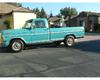
As my F250 300/C4 is just a daily cruiser truck and most all trips are short & around town in the 25 - 45 mph range I feel from past setup that a 6.5 or even a 5.5 PV would be a better fit for my driving style.
Truck has a basic stock 300 motor, Holley 2V 350cfm carb, headers, dual 21/2" exhaust & mufflers. Just a real nice runner.
As my F250 300/C4 is just a daily cruiser truck and most all trips are short & around town in the 25 - 45 mph range I feel from past setup that a 6.5 or even a 5.5 PV would be a better fit for my driving style.
Truck has a basic stock 300 motor, Holley 2V 350cfm carb, headers, dual 21/2" exhaust & mufflers. Just a real nice runner.

Post Fiend
Joined: Apr 2002
Posts: 19,311
Likes: 97
From: Waterloo, Iowa
It looks to me, and this is pretty common, people get led down the wrong path in our hobby because much of the generic tuning advice and documentation for carburetors especially is geared directly for drag racing and/or high performance engines. They run flat out most of the time. Owners of stock trucks or those trying to wrest at least some fuel economy aren't usually part of the equation so you have to read through the lines sometimes. The power valve selection advice most often heard is "Idle vacuum divided by 2" for example. This makes perfect sense when a performance cam with lots of overlap sends the manifold vacuum down into the single digits. The idle vacuum is a steady 20" in my Y-block. This does not mean I necessarily want to use a 10.5" power valve. Maybe, it might be fun, though not for my wallet.
They aren't very expensive, can experiment. The Shop Manual will list what PV # is stock, that's the one to use, at least to start with. If you already know the steady level ground cruising manifold vacuum # for your engine it's possible to select a power valve just a point or two lower for quick response. Or, maybe select a bit lower # power valve than stock, sacrificing some power for a bit better economy. I wouldn't want to do that though without measuring the actual AFR afterwards. It's OK to go lean when cruising, but lean fuel mixtures under power, under load demand is going to burn a valve or two. Think what a lit acetylene torch flame does the second you crack the O2 in.
The situation to avoid generally is a power valve # too high, if it starts to open under low load cruise conditions it will suck gas like no tomorrow, wash rings out, oil contamination, foul plugs, etc. For all that most carburetor rebuild kits include a 6.5" power valve, and this is a good choice for a stock healthy engine with normal manifold vacuum of 18" to 20" Hg. The exception would be folks who live at altitude. For example my slick specified 7.5", 6.5", or a 5.5" depending on the average operating altitude from Sea level to 15,000' If power valve is cut too close to engine manifold vacuum at steady cruise, a pretty good headwind out on the highway will cause the power valve to dribble gas or even open full time. $$$
They aren't very expensive, can experiment. The Shop Manual will list what PV # is stock, that's the one to use, at least to start with. If you already know the steady level ground cruising manifold vacuum # for your engine it's possible to select a power valve just a point or two lower for quick response. Or, maybe select a bit lower # power valve than stock, sacrificing some power for a bit better economy. I wouldn't want to do that though without measuring the actual AFR afterwards. It's OK to go lean when cruising, but lean fuel mixtures under power, under load demand is going to burn a valve or two. Think what a lit acetylene torch flame does the second you crack the O2 in.
The situation to avoid generally is a power valve # too high, if it starts to open under low load cruise conditions it will suck gas like no tomorrow, wash rings out, oil contamination, foul plugs, etc. For all that most carburetor rebuild kits include a 6.5" power valve, and this is a good choice for a stock healthy engine with normal manifold vacuum of 18" to 20" Hg. The exception would be folks who live at altitude. For example my slick specified 7.5", 6.5", or a 5.5" depending on the average operating altitude from Sea level to 15,000' If power valve is cut too close to engine manifold vacuum at steady cruise, a pretty good headwind out on the highway will cause the power valve to dribble gas or even open full time. $$$

Posting Guru
Joined: Apr 2006
Posts: 1,477
Likes: 7
From: NAMPA, ID.
It looks to me, and this is pretty common, people get led down the wrong path in our hobby because much of the generic tuning advice and documentation for carburetors especially is geared directly for drag racing and/or high performance engines. They run flat out most of the time. Owners of stock trucks or those trying to wrest at least some fuel economy aren't usually part of the equation so you have to read through the lines sometimes. The power valve selection advice most often heard is "Idle vacuum divided by 2" for example. This makes perfect sense when a performance cam with lots of overlap sends the manifold vacuum down into the single digits. The idle vacuum is a steady 20" in my Y-block. This does not mean I necessarily want to use a 10.5" power valve. Maybe, it might be fun, though not for my wallet.
They aren't very expensive, can experiment. The Shop Manual will list what PV # is stock, that's the one to use, at least to start with. If you already know the steady level ground cruising manifold vacuum # for your engine it's possible to select a power valve just a point or two lower for quick response. Or, maybe select a bit lower # power valve than stock, sacrificing some power for a bit better economy. I wouldn't want to do that though without measuring the actual AFR afterwards. It's OK to go lean when cruising, but lean fuel mixtures under power, under load demand is going to burn a valve or two. Think what a lit acetylene torch flame does the second you crack the O2 in.
The situation to avoid generally is a power valve # too high, if it starts to open under low load cruise conditions it will suck gas like no tomorrow, wash rings out, oil contamination, foul plugs, etc. For all that most carburetor rebuild kits include a 6.5" power valve, and this is a good choice for a stock healthy engine with normal manifold vacuum of 18" to 20" Hg. The exception would be folks who live at altitude. For example my slick specified 7.5", 6.5", or a 5.5" depending on the average operating altitude from Sea level to 15,000' If power valve is cut too close to manifold vacuum, even just a pretty good headwind out on the highway will cause the power valve to dribble gas or even open full time. $$$
They aren't very expensive, can experiment. The Shop Manual will list what PV # is stock, that's the one to use, at least to start with. If you already know the steady level ground cruising manifold vacuum # for your engine it's possible to select a power valve just a point or two lower for quick response. Or, maybe select a bit lower # power valve than stock, sacrificing some power for a bit better economy. I wouldn't want to do that though without measuring the actual AFR afterwards. It's OK to go lean when cruising, but lean fuel mixtures under power, under load demand is going to burn a valve or two. Think what a lit acetylene torch flame does the second you crack the O2 in.
The situation to avoid generally is a power valve # too high, if it starts to open under low load cruise conditions it will suck gas like no tomorrow, wash rings out, oil contamination, foul plugs, etc. For all that most carburetor rebuild kits include a 6.5" power valve, and this is a good choice for a stock healthy engine with normal manifold vacuum of 18" to 20" Hg. The exception would be folks who live at altitude. For example my slick specified 7.5", 6.5", or a 5.5" depending on the average operating altitude from Sea level to 15,000' If power valve is cut too close to manifold vacuum, even just a pretty good headwind out on the highway will cause the power valve to dribble gas or even open full time. $$$
Thread Starter
|
Fleet Mechanic
Joined: May 2017
Posts: 1,295
Likes: 29
From: Southern CA
Tedster9 & MPH -- Thanks for the information & heads up. I will post my vacuum readings in the next few days at idle, 35, 45, 55, 65 mph and maybe going up a steep grade we have outside of town that I can normally pull at 45-50. I live less than 100' above sea level.
Tomorrow I hope to check idle vacuum, read all 6 plugs, check timing, replace distributor cap & rotor with new ones, install new plugs & plug wires.
Tomorrow I hope to check idle vacuum, read all 6 plugs, check timing, replace distributor cap & rotor with new ones, install new plugs & plug wires.
Trending Topics
Post Fiend
Joined: Apr 2002
Posts: 19,311
Likes: 97
From: Waterloo, Iowa
Thanks for the kind words!
Yep, that's exactly how to go about it, otherwise it's just guessing. One thing that I never did that I should have is keep a notebook or logbook and write everything down, keep track of what your vacuum findings are, jet size, power valve, timing, adjustments made it's useful later on. Sometimes the ole memory module gets flaky over time with CRS.
What I found is changing anything somewhere else can have an outsize effect, everything works together. Ignition timing, and exhaust flow especially. Engine is just a big air pump basically. Carburetors don't really provide fuel to the engine, they provide it to the intake plenum, it's all about venturi air flow as a matched unit to the intake plenum, and a strong crisp manifold vacuum signal. It's a "tuned" system for smooth running over a very wide range of operating conditions, so some compromises have to be made compared to say a stationary fixed RPM engine. Once folks start swapping intakes around, different carb sizes around and the rest of it, it gets very tricky.
Hardly any air goes through the carb at idle and just off idle where practically all street driving is done, the carb gets around this by utilizing a special idle circuit and manifold engine vacuum. It is calibrated on this signal. If the ignition timing is off spec for example, the carb won't flow as designed and it won't respond in the way it was calibrated. When cruising on level ground, the carb butterflies are almost closed and high manifold vacuum returns. This is what "pulls" fuel out of the well due to siphon action.
So someone can setup and tune an engine to run smooth and powerful at 6,000 wide open throttle but it won't be very driveable around town or low RPM and it won't idle. It's not "tuned" for that in terms of air flow. Those engineers was smart, I don't begin to think I can do better, except maybe tighten up the tolerances that sometimes stack up wrong. This can be surprising how far off they can get. For most of us we want the carb and intake combination tuned for smooth running at about 50 or 60 mph on level ground, in high gear.
The basic carb settings, float bowl fuel level, jet size, everything was calibrated at the factory for a very specific application based on weight, gearing, differential, tire size, elevation, etc. The stock 292 by '64 was pretty much a dog, so instead of trying to hop it up I decided just to get it running as factory smooth as possible. Also, gasoline is quite a bit different than 50 years ago and this affects how things need setup, the plugs will not "color" the way they did with leaded gasoline. Give your specific engine whatever it needs based on intended use, not what it "should" need or what your other brother Daryl thinks it needs, or even the specifications in the manual necessarily, though that's the place to start. Some people say that's an EFI system, what's the fun in that, ha ha.
Yep, that's exactly how to go about it, otherwise it's just guessing. One thing that I never did that I should have is keep a notebook or logbook and write everything down, keep track of what your vacuum findings are, jet size, power valve, timing, adjustments made it's useful later on. Sometimes the ole memory module gets flaky over time with CRS.
What I found is changing anything somewhere else can have an outsize effect, everything works together. Ignition timing, and exhaust flow especially. Engine is just a big air pump basically. Carburetors don't really provide fuel to the engine, they provide it to the intake plenum, it's all about venturi air flow as a matched unit to the intake plenum, and a strong crisp manifold vacuum signal. It's a "tuned" system for smooth running over a very wide range of operating conditions, so some compromises have to be made compared to say a stationary fixed RPM engine. Once folks start swapping intakes around, different carb sizes around and the rest of it, it gets very tricky.
Hardly any air goes through the carb at idle and just off idle where practically all street driving is done, the carb gets around this by utilizing a special idle circuit and manifold engine vacuum. It is calibrated on this signal. If the ignition timing is off spec for example, the carb won't flow as designed and it won't respond in the way it was calibrated. When cruising on level ground, the carb butterflies are almost closed and high manifold vacuum returns. This is what "pulls" fuel out of the well due to siphon action.
So someone can setup and tune an engine to run smooth and powerful at 6,000 wide open throttle but it won't be very driveable around town or low RPM and it won't idle. It's not "tuned" for that in terms of air flow. Those engineers was smart, I don't begin to think I can do better, except maybe tighten up the tolerances that sometimes stack up wrong. This can be surprising how far off they can get. For most of us we want the carb and intake combination tuned for smooth running at about 50 or 60 mph on level ground, in high gear.
The basic carb settings, float bowl fuel level, jet size, everything was calibrated at the factory for a very specific application based on weight, gearing, differential, tire size, elevation, etc. The stock 292 by '64 was pretty much a dog, so instead of trying to hop it up I decided just to get it running as factory smooth as possible. Also, gasoline is quite a bit different than 50 years ago and this affects how things need setup, the plugs will not "color" the way they did with leaded gasoline. Give your specific engine whatever it needs based on intended use, not what it "should" need or what your other brother Daryl thinks it needs, or even the specifications in the manual necessarily, though that's the place to start. Some people say that's an EFI system, what's the fun in that, ha ha.
FTE Stories
Ford Trucks for Ford Truck Enthusiasts

AEV FXL Super Duty - the Super Duty Raptor Ford Doesn't Make
Brett Foote
Lobo Vs Lobo: Proof the F-150 Lobo Should Be Even Lower!
Michael S. Palmer
Ford's 2001 Explorer Sportsman Concept Looks For a New Home
Verdad Gallardo
10 Best Ford Truck Engines We Miss the Most!
Joe Kucinski
2026 Shelby F-150 Off-Road: Better Than a Raptor R?
Brett Foote
2027 Super Duty Carhartt Package First Look: 12 Things You NEED to Know!
Michael S. Palmer
10 Most Surprising 2026 Ford Truck Features!
Joe Kucinski
Top 10 Ford Trucks Coming to Mecum Indy 2026
Brett Foote
5 Best / 5 Worst Ford Truck Wheels of All Time
Joe Kucinski
Thread Starter
|
Fleet Mechanic
Joined: May 2017
Posts: 1,295
Likes: 29
From: Southern CA
Was able to get some real time vacuum readings at Idle & with gauge taped to the front windshield.
Also pulled all the plugs to read them. I don't think you could have found a nicer set of used plugs. Plugs where dry, no oil, porcelain was a nice tan. I have no way of knowing how long they have been in motor. Will install new plugs, plug wires, distributor cap & rotor next week.
Vacuum Readings where as follows:
Idle in park----------- 20"
Idle in gear----------- 18"
35 mph cruise-------- 18"
45 mph cruise-------- 17"
55 mph cruise-------- 15"
55-60 Freeway------- 14"
45-50 up grade------- 9"
When accelerating from a stop sign the vacuum would drop to 4-5" and then raise back up to 15 - 18" cruise range.
Have not opened the carb to see what power vale is in it. Factory says they put 8.5 PV in the Holley 350 cfm 2V units. From my results a 8.5 PV would be open when cruising 45 mph or more, on most all grades & when accelerating from a stop light. Power valve should not open when cruising. If it does it will heart gas mileage.
From the results I think a 6.5 PV would be better as it would only open on steep grade and when accelerating from a stop.
Bad Day Racing Is Better Than A Day In The Stands
Also pulled all the plugs to read them. I don't think you could have found a nicer set of used plugs. Plugs where dry, no oil, porcelain was a nice tan. I have no way of knowing how long they have been in motor. Will install new plugs, plug wires, distributor cap & rotor next week.
Vacuum Readings where as follows:
Idle in park----------- 20"
Idle in gear----------- 18"
35 mph cruise-------- 18"
45 mph cruise-------- 17"
55 mph cruise-------- 15"
55-60 Freeway------- 14"
45-50 up grade------- 9"
When accelerating from a stop sign the vacuum would drop to 4-5" and then raise back up to 15 - 18" cruise range.
Have not opened the carb to see what power vale is in it. Factory says they put 8.5 PV in the Holley 350 cfm 2V units. From my results a 8.5 PV would be open when cruising 45 mph or more, on most all grades & when accelerating from a stop light. Power valve should not open when cruising. If it does it will heart gas mileage.
From the results I think a 6.5 PV would be better as it would only open on steep grade and when accelerating from a stop.
Bad Day Racing Is Better Than A Day In The Stands

Mountain Pass

Joined: Apr 2019
Posts: 151
Likes: 1
I’m not sure why you think it would be open at 45 and above.
It doesn’t open until you get to its opening point.
With 9-inches at 45-50 going upgrade, the 8.5 sounds right. You might install a 2-stage if your really concerned. It would open a small amount at 10-inches, and the enrichment will help with power, and may result in you not loosing enough vacuum to fully open the power valve.
Holley has an information sheet on the two stage units, here:https://documents.holley.com/199r7903-2rev1.pdf
It doesn’t open until you get to its opening point.
With 9-inches at 45-50 going upgrade, the 8.5 sounds right. You might install a 2-stage if your really concerned. It would open a small amount at 10-inches, and the enrichment will help with power, and may result in you not loosing enough vacuum to fully open the power valve.
Holley has an information sheet on the two stage units, here:https://documents.holley.com/199r7903-2rev1.pdf
Post Fiend
Joined: Apr 2002
Posts: 19,311
Likes: 97
From: Waterloo, Iowa
It's my understanding the 2 stage units were developed as an attempt at improving economy, such as it was, for tow vehicles and campers. Very heavy vehicles. They don't even make them anymore do they? I wouldn't bother with them. I will say that after using an O2 sensor for carb tuning, plug color on the ceramic is pretty much useless with modern gas. There won't be much color on the ceramic when it's dialed in right, it simply isn't used for tuning. It's important to use stock heat range plugs when tuning, to set a baseline. For example, an overly rich condition observed on the spark plugs is not remedied by running a hotter plug, it's done by getting the air/fuel ratio corrected.
For the power valve/power circuit you want to look deep inside the plug, where the plug ceramic transitions to the outer shell. Called the "Fire Ring". Different parts of the plug will show excessive ignition timing, jetting, and other important clues, particularly the ground strap, and especially the base ring up to the first few threads of the plug (Jetting)
For the power valve/power circuit you want to look deep inside the plug, where the plug ceramic transitions to the outer shell. Called the "Fire Ring". Different parts of the plug will show excessive ignition timing, jetting, and other important clues, particularly the ground strap, and especially the base ring up to the first few threads of the plug (Jetting)
Thread Starter
|
Fleet Mechanic
Joined: May 2017
Posts: 1,295
Likes: 29
From: Southern CA
Jigs n Fixtures --- Thanks for the reply and helping get me get straight on vacuum inches & PV opening. I stand corrected on my 45 mph and above. I still think that because 95% of my driving is on flat land with 85% around town that I could drop down to a 6.5 PV and mileage wise it might help a bit.
Mountain Pass
Joined: Apr 2019
Posts: 151
Likes: 1
A power valve that opens too late will actually hurt fuel economy and throttle response. YOu need the enrichment early enough to keep the engine operating well. If you wait too late for it to come in the engine is already bogged down, and it will take more fuel to keep it chugging along, than if you enriched the mixture earlier.
That is why I said you might want a two stage power valve. The truck is relatively heavy in relation to the engines output, and if you haul anything it gets worse. You are obviously concerned with fuel economy, and the two stage power valve was designed to increase fuel economy. You would want the 125-208.
But as Tedster said, they have quit producing them, and they are getting hard to find. They do show up on eBay but are costly.
I’d recommend you stick with the 8.5 that your carb came stock with. It was designed for the application, and unless you have made mods to the engine such as headers, or a nonstick cam or exhaust, which would change the engine enough to change what the carb is seeing, it will perform well.
If youre really concerned with economy, you could track down a Redline Weber metering plate, or Holley “Dial-a-Mile” kit, and install the new plate along with the an O2 sensor, and start serious tuning. But I doubt you could recover the cost involved unless youre putting lots of miles on the truck. If you’re doing it because you find it fun to devote hours to tweaking your vehicle, it is probably a better hobby than drinking beer and/or bowling.
That is why I said you might want a two stage power valve. The truck is relatively heavy in relation to the engines output, and if you haul anything it gets worse. You are obviously concerned with fuel economy, and the two stage power valve was designed to increase fuel economy. You would want the 125-208.
But as Tedster said, they have quit producing them, and they are getting hard to find. They do show up on eBay but are costly.
I’d recommend you stick with the 8.5 that your carb came stock with. It was designed for the application, and unless you have made mods to the engine such as headers, or a nonstick cam or exhaust, which would change the engine enough to change what the carb is seeing, it will perform well.
If youre really concerned with economy, you could track down a Redline Weber metering plate, or Holley “Dial-a-Mile” kit, and install the new plate along with the an O2 sensor, and start serious tuning. But I doubt you could recover the cost involved unless youre putting lots of miles on the truck. If you’re doing it because you find it fun to devote hours to tweaking your vehicle, it is probably a better hobby than drinking beer and/or bowling.
Thread Starter
|
Fleet Mechanic
Joined: May 2017
Posts: 1,295
Likes: 29
From: Southern CA
tedster9 -- Thanks for the additional information & the PM you sent today.
Jigs n Fixtures -- Thanks again for the information. I found one two stage power valve & you were right, pricey at $52, I wont be using them or mileage plate / O2 unit. At 1000 miles a year it would take me 20 years of gas savings to pay it back.
I will get inside the carb next week & see what needle settings are, jet & PV sizes. I also need to get under motor to find & mark timing notch on the balancer as I can not see it as it is today. Want the timing on my 300 to be 12 degree base & 34 degree at 2400 rpm.
My motor is basely stock inside but does have a full 2 1/2" dual exhaust system along with headman headers. The Holley 2V 350 cfm carb sits on a 1x2 adapter mounted to a opened up 300 log intake.
Any other out there running a 2V Holley or a Autolite 2100/2150? What jet size are you running?
Jigs n Fixtures -- Thanks again for the information. I found one two stage power valve & you were right, pricey at $52, I wont be using them or mileage plate / O2 unit. At 1000 miles a year it would take me 20 years of gas savings to pay it back.
I will get inside the carb next week & see what needle settings are, jet & PV sizes. I also need to get under motor to find & mark timing notch on the balancer as I can not see it as it is today. Want the timing on my 300 to be 12 degree base & 34 degree at 2400 rpm.
My motor is basely stock inside but does have a full 2 1/2" dual exhaust system along with headman headers. The Holley 2V 350 cfm carb sits on a 1x2 adapter mounted to a opened up 300 log intake.
Any other out there running a 2V Holley or a Autolite 2100/2150? What jet size are you running?

Thread
Thread Starter
Forum
Replies
Last Post
bhain
FE & FT Big Block V8 (332, 352, 360, 390, 406, 410, 427, 428)
18
Oct 15, 2018 12:37 PM
dirtbikersa
335 Series- 5.8/351M, 6.6/400, 351 Cleveland
2
Dec 13, 2008 03:42 PM
GeneStoner
Ford Inline Six, 200, 250, 4.9L / 300
2
Apr 18, 2003 02:48 AM
GeneStoner
Fuel Injection, Carburetion & Fuel System
2
Apr 17, 2003 06:28 PM