


Is Lead Replacement Necessary?

Thread Starter
|
New User
Joined: May 2019
Posts: 6
Likes: 0
 Is Lead Replacement Necessary?
I really did search for an answer to this, but...
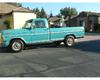
I have just bought a 1969 F100 with the 360 CID engine. I haven't driven a pre-unleaded engine in decades -- do we need to add a lead-replacement product to our fuel to avoid harming the valve seats, etc in these older engines?
Also, any 'heads-up' issues I ought to have firmly in view with the 360 engine? Special care? Specific weaknesses to protect against? Any particular benefits?
TIA,
Dennis
I have just bought a 1969 F100 with the 360 CID engine. I haven't driven a pre-unleaded engine in decades -- do we need to add a lead-replacement product to our fuel to avoid harming the valve seats, etc in these older engines?
Also, any 'heads-up' issues I ought to have firmly in view with the 360 engine? Special care? Specific weaknesses to protect against? Any particular benefits?
TIA,
Dennis

Mountain Pass


Joined: Apr 2011
Posts: 247
Likes: 18
From: Central Ohio
I have a 69 F250 w/ a 360 that I believe has never been opened up and use lead additive every fill-up. For peace of mind I guess. I only drive her once or twice a week. I think it was 1972 that they started putting hardened valve seats in them.

Laughing Gas
Joined: May 2007
Posts: 960
Likes: 10
From: Victoria (North Saanich)
Valve seats will absolutely sink without lead or a substitute. My 410 when we took it apart had clear loss of surface as some of the valves and it only had a few thousand miles on it.
Hardened seats eliminate the need.
Hardened seats eliminate the need.
Laughing Gas
Joined: May 2007
Posts: 960
Likes: 10
From: Victoria (North Saanich)
Clearly I didn't use an additive because my seats sunk! Changed to aluminum heads with hardened seats. An expensive option but I did it for other reasons.

Lead Driver


Joined: Jul 2017
Posts: 9,591
Likes: 1,171
From: San Jose, CA
I used to use a Sta-Lube product that was great. Dispenser bottle and one bottle did many tankfuls of gas. Unfortunately the last time we looked for it (I think it was a discussion here in fact) nobody could find it available.
Most stuff now is a per-tank bottle, which to my mind gets expensive quickly. However, not so expensive as a valve job!
I have not had to use it in years due to having modern heads, but like the others have said, it's a fairly important item.
Not sure how hard you drove yours Yellow Truck, but I had always heard that if you just putted around town you would get a lot more miles out of the seats than if you were revving up all the time. So if traveling on the highways is your thing, you could be good for awhile.
But they will eventually all do the same thing.
Paul
Most stuff now is a per-tank bottle, which to my mind gets expensive quickly. However, not so expensive as a valve job!
I have not had to use it in years due to having modern heads, but like the others have said, it's a fairly important item.
Not sure how hard you drove yours Yellow Truck, but I had always heard that if you just putted around town you would get a lot more miles out of the seats than if you were revving up all the time. So if traveling on the highways is your thing, you could be good for awhile.
But they will eventually all do the same thing.
Paul

Freshman User
Joined: Mar 2019
Posts: 33
Likes: 0
If you've got the spare cash, why not? Seems to be in the same vein of thinking as using ZDDP oils.
I've been a little too keen to believe what I have read online in the past and have bought into the doom and gloom that seems to be on the internet. I'm more inclined now to try things & see what the results leave me with in my own experience.
That being said, I drove a '69 302 Ranchero quite a bit between my junior & senior years of high school on 89 octane ethanol fuel with 14* of initial timing. You better believe I didn't have the money for ZDDP oil, lead additive or octane booster. I had to turn the idle up fairly high in gear to 'cover up' the low compression from cylinders 6 & 7 where the head gasket was blown out. Did I suffer catastrophic engine failure or instantly plug up my fuel system? No, not at all. In fact, it ran great, always started and was happy to run out at 70mph on the highway, day in day on in no matter the temperature.
Later when I tore into the engine to address the low compression, I found I had two or three valves with varying amounts of burn-age on them. The seats weren't hammered into the head like some guarantee will happen. They were sunken about how you'd expect for a 50 year old engine that had been used all its life. The short block hadn't been opened, but the guides had been replaced in the heads at some point and they were worn out again by the time I got to them. The main, rod and cam bearings looked worn but not wiped out by any means. The cam & lifters were perfect.
I do now use either Brad Penn, Joe Gibbs or Valvoline racing oils for the extra protection and I also use the highest octane ethanol free fuel I can find (this I do recommend, I'm sure we're all aware how poor quality gasoline is nowadays). I do not use octane booster or lead additive. I sleep just fine at night this way. Even if I do develop a problem, I won't sweat it. I don't rely on my 50 year old vehicles to get me to work everyday and it's only nuts, bolts & money to fix these old rigs. I don't beat on my original engines as I think this is just silly...
Not trying to change any minds, just offering my perspective for others to consider.
Good luck with your truck & be safe!
-Mike
I've been a little too keen to believe what I have read online in the past and have bought into the doom and gloom that seems to be on the internet. I'm more inclined now to try things & see what the results leave me with in my own experience.
That being said, I drove a '69 302 Ranchero quite a bit between my junior & senior years of high school on 89 octane ethanol fuel with 14* of initial timing. You better believe I didn't have the money for ZDDP oil, lead additive or octane booster. I had to turn the idle up fairly high in gear to 'cover up' the low compression from cylinders 6 & 7 where the head gasket was blown out. Did I suffer catastrophic engine failure or instantly plug up my fuel system? No, not at all. In fact, it ran great, always started and was happy to run out at 70mph on the highway, day in day on in no matter the temperature.
Later when I tore into the engine to address the low compression, I found I had two or three valves with varying amounts of burn-age on them. The seats weren't hammered into the head like some guarantee will happen. They were sunken about how you'd expect for a 50 year old engine that had been used all its life. The short block hadn't been opened, but the guides had been replaced in the heads at some point and they were worn out again by the time I got to them. The main, rod and cam bearings looked worn but not wiped out by any means. The cam & lifters were perfect.
I do now use either Brad Penn, Joe Gibbs or Valvoline racing oils for the extra protection and I also use the highest octane ethanol free fuel I can find (this I do recommend, I'm sure we're all aware how poor quality gasoline is nowadays). I do not use octane booster or lead additive. I sleep just fine at night this way. Even if I do develop a problem, I won't sweat it. I don't rely on my 50 year old vehicles to get me to work everyday and it's only nuts, bolts & money to fix these old rigs. I don't beat on my original engines as I think this is just silly...
Not trying to change any minds, just offering my perspective for others to consider.
Good luck with your truck & be safe!
-Mike
Last edited by 1968Mike; May 10, 2019 at 09:03 PM. Reason: Typing Errors
Trending Topics
Lead Driver
Joined: Jul 2017
Posts: 9,591
Likes: 1,171
From: San Jose, CA
Do you know for sure that they were '69 heads though Mike? Maybe they were later model, or perhaps had some induction-hardening done to them when they'd had their valve job.
And actually, I may be incorrect on this next point, but I don't expect even a 50 year old engine to have recessed valve seats from normal use. None of mine ever had valve seat issues back in the day, whether they were sixties engines, or had been refurbed. Burned and busted valves, yes. But no recessions.
I had heard that Ford had used induction-hardened seats before '72, but I can't confirm that. I was told by the machinist that did the valve job on my '71 that they were hardened seats. But that's close enough to '72 as to be a possible running change I suppose.
Then again, it did need that valve job at only 100k miles too. Apparently not from seat recession though, from what I was told. So hard to say what was going on. Was it my additives at work, but the prior few years of abuse without it to blame? A hard life by the commercial (a Montana hunting club) previous owner? No way to tell.
Montana may have had leaded fuel all that time too?
Anyway, not saying for sure that your information and experiences are incorrect. Just that we've been dealing with valve recession from lack of lead in the gasoline from a time LONG before the internet was a thing.
Yep, magazines, machinists and other experts could be wrong too, and maybe it was all Y2K-ish gloom-n-doom thinking. But a lot of heads were trashed after lead went away and a lot of cams were thrashed after zinc was reduced in oil. So it might have been total coincidence (I do actually believe in coincidences by the way), but the old info has worked for me.
Paul
And actually, I may be incorrect on this next point, but I don't expect even a 50 year old engine to have recessed valve seats from normal use. None of mine ever had valve seat issues back in the day, whether they were sixties engines, or had been refurbed. Burned and busted valves, yes. But no recessions.
I had heard that Ford had used induction-hardened seats before '72, but I can't confirm that. I was told by the machinist that did the valve job on my '71 that they were hardened seats. But that's close enough to '72 as to be a possible running change I suppose.
Then again, it did need that valve job at only 100k miles too. Apparently not from seat recession though, from what I was told. So hard to say what was going on. Was it my additives at work, but the prior few years of abuse without it to blame? A hard life by the commercial (a Montana hunting club) previous owner? No way to tell.
Montana may have had leaded fuel all that time too?
Anyway, not saying for sure that your information and experiences are incorrect. Just that we've been dealing with valve recession from lack of lead in the gasoline from a time LONG before the internet was a thing.
Yep, magazines, machinists and other experts could be wrong too, and maybe it was all Y2K-ish gloom-n-doom thinking. But a lot of heads were trashed after lead went away and a lot of cams were thrashed after zinc was reduced in oil. So it might have been total coincidence (I do actually believe in coincidences by the way), but the old info has worked for me.
Paul
FTE Stories
Ford Trucks for Ford Truck Enthusiasts

2027 Ford Super Duty Buyer's Guide (Every Model, Engine, & Package)
Brett Foote
Top 10 Ford Truck Tragedies
Joe Kucinski
AEV FXL Super Duty - the Super Duty Raptor Ford Doesn't Make
Brett Foote
Lobo Vs Lobo: Proof the F-150 Lobo Should Be Even Lower!
Michael S. Palmer
Ford's 2001 Explorer Sportsman Concept Looks For a New Home
Verdad Gallardo
10 Best Ford Truck Engines We Miss the Most!
Joe Kucinski
2026 Shelby F-150 Off-Road: Better Than a Raptor R?
Brett Foote
2027 Super Duty Carhartt Package First Look: 12 Things You NEED to Know!
Michael S. Palmer
10 Most Surprising 2026 Ford Truck Features!
Joe Kucinski
Freshman User
Joined: Mar 2019
Posts: 33
Likes: 0
Do you know for sure that they were '69 heads though Mike? Maybe they were later model, or perhaps had some induction-hardening done to them when they'd had their valve job.
And actually, I may be incorrect on this next point, but I don't expect even a 50 year old engine to have recessed valve seats from normal use. None of mine ever had valve seat issues back in the day, whether they were sixties engines, or had been refurbed. Burned and busted valves, yes. But no recessions.
...
Paul
And actually, I may be incorrect on this next point, but I don't expect even a 50 year old engine to have recessed valve seats from normal use. None of mine ever had valve seat issues back in the day, whether they were sixties engines, or had been refurbed. Burned and busted valves, yes. But no recessions.
...
Paul
Great input by 1TonBasecamp!
Fleet Mechanic
Joined: May 2017
Posts: 1,295
Likes: 29
From: Southern CA
Well on my 1971 f250 that I picked up a few months ago I was told that the motor was rebuilt 600-800 miles ago. I can not confirm this information so I have no real way of knowing if the stock 300 head has new hardened valve seats. As for gas in Southern CA we have no straight ethanol but all three grades have some amount of ethanol added.
With this said, what grade octane would you run in my 1971 F250 that is used for light / empty load drives around town with a few 3-5 freeway trips of 10 miles or less. Only put 1550 miles on the truck last year.
With this said, what grade octane would you run in my 1971 F250 that is used for light / empty load drives around town with a few 3-5 freeway trips of 10 miles or less. Only put 1550 miles on the truck last year.
Laughing Gas
Joined: May 2007
Posts: 960
Likes: 10
From: Victoria (North Saanich)
I used to use a Sta-Lube product that was great. Dispenser bottle and one bottle did many tankfuls of gas. Unfortunately the last time we looked for it (I think it was a discussion here in fact) nobody could find it available.
Most stuff now is a per-tank bottle, which to my mind gets expensive quickly. However, not so expensive as a valve job!
I have not had to use it in years due to having modern heads, but like the others have said, it's a fairly important item.
Not sure how hard you drove yours Yellow Truck, but I had always heard that if you just putted around town you would get a lot more miles out of the seats than if you were revving up all the time. So if traveling on the highways is your thing, you could be good for awhile.
But they will eventually all do the same thing.
Paul
Most stuff now is a per-tank bottle, which to my mind gets expensive quickly. However, not so expensive as a valve job!
I have not had to use it in years due to having modern heads, but like the others have said, it's a fairly important item.
Not sure how hard you drove yours Yellow Truck, but I had always heard that if you just putted around town you would get a lot more miles out of the seats than if you were revving up all the time. So if traveling on the highways is your thing, you could be good for awhile.
But they will eventually all do the same thing.
Paul

Fleet Mechanic
Joined: May 2017
Posts: 1,295
Likes: 29
From: Southern CA
Well on my 1971 f250 that I picked up a few months ago I was told that the motor was rebuilt 600-800 miles ago. I can not confirm this information so I have no real way of knowing if the stock 300 head has new hardened valve seats. As for gas in Southern CA we have no straight ethanol but all three grades have some amount of ethanol added.
With this said, what grade octane would you run in my 1971 F250 that is used for light / empty load drives around town with a few 3-5 freeway trips of 10 miles or less. Only put 1550 miles on the truck last year.
With this said, what grade octane would you run in my 1971 F250 that is used for light / empty load drives around town with a few 3-5 freeway trips of 10 miles or less. Only put 1550 miles on the truck last year.
Laughing Gas
Joined: May 2007
Posts: 960
Likes: 10
From: Victoria (North Saanich)
Octane has nothing to do with lubricating the valve seats or energy contained in the gasoline. It is important in high compression engines and boosted engines (lower static compression but high dynamic compression from elevated air pressure in the intake) due to their tendency to detonate. Octane makes gasoline less volatile and therefor more stable in an engine that is creating high internal pressure (and resulting temperatures - think of a diesel that doesn't use a spark but detonates the fuel due to heat generated by compression).
Your motor may prefer pure gasoline for reasons related to the seals, fuel lines, and gaskets used, but if it is an I-6 it shouldn't care about octane. The fact it was just rebuild doesn't indicate hardened seats - that is a more expensive option that many people don't choose.
Your motor may prefer pure gasoline for reasons related to the seals, fuel lines, and gaskets used, but if it is an I-6 it shouldn't care about octane. The fact it was just rebuild doesn't indicate hardened seats - that is a more expensive option that many people don't choose.

Super Moderator

Joined: Apr 2004
Posts: 34,481
Likes: 2,801

I really did search for an answer to this, but...
I have just bought a 1969 F100 with the 360 CID engine. I haven't driven a pre-unleaded engine in decades -- do we need to add a lead-replacement product to our fuel to avoid harming the valve seats, etc in these older engines?
Also, any 'heads-up' issues I ought to have firmly in view with the 360 engine? Special care? Specific weaknesses to protect against? Any particular benefits?
TIA,
Dennis
I have just bought a 1969 F100 with the 360 CID engine. I haven't driven a pre-unleaded engine in decades -- do we need to add a lead-replacement product to our fuel to avoid harming the valve seats, etc in these older engines?
Also, any 'heads-up' issues I ought to have firmly in view with the 360 engine? Special care? Specific weaknesses to protect against? Any particular benefits?
TIA,
Dennis
Lots of these engines run fine for years on unleaded. Are you going to work yours hard? Tow, haul etc? The harder the engine works, the greater the chance you will have valve issues due to the lack of lead.
Even "in the day" a burned valve was not a surprise, even under 100,000 miles. (our '66, 41000 miles for a burned valve)
As to the 360, it is a low compression, sunken piston engine that lasts a long time, burns a lot of gas, and makes modest power.
As an added feature, Ford neoprene umbrella valve seals start to crack and break on the drive home from the new vehicle dealer. So, you might be getting a touch of valve and upper cylinder lube already. Do you get a blue puff or cloud on start up?