When you click on links to various merchants on this site and make a purchase, this can result in this site earning a commission. Affiliate programs and affiliations include, but are not limited to, the eBay Partner Network.
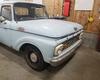
I've got a loose wire with a ring terminal hanging out of the harness going to the generator on my truck. Between the Truck Shop Manual and Truck Parts Catalog, I cant find any drawings or references to where the wires should go. Where does the loose wire connect to? I've got an idea but not completely sure and dont want to make the wrong call. Thanks.
So I've been doing some research on my generator as well. For me the best route to go is to bite the bullet and buy the 110 dollar aluminum mounting bracket with an alternator. Much more cost effective than the old generators and autozone has a lifetime warranty on them so buy it once and don't worry about it. Expensive up front for peace of mind down the road.
So I've been doing some research on my generator as well. For me the best route to go is to bite the bullet and buy the 110 dollar aluminum mounting bracket with an alternator. Much more cost effective than the old generators and autozone has a lifetime warranty on them so buy it once and don't worry about it. Expensive up front for peace of mind down the road.
That's something I may consider, I'll do some looking into it. I was originally planning on doing a full restoration back to everything stock, but may be willing to budge on a couple things. Then again, even though I did just completely rebuild all 4 brake drums, I was considering switching to discs down the road so I guess an alternator wouldn't be that big of a jump in comparison.
Generators are easy to repair and maintain, though not nearly as trouble free as an alternator. They do require periodic cleaning of the voltage regulator vibrating contacts. Nobody does this, and they will roast when the cutout relay sticks. This is a certainty without preventive maintenance.
For me it's partly aesthetics and partly stubborness. If the power plant was supplied with a generator an alternator just doesn't look right. This is especially true with a Flathead. So it's just kind of fun to make it work. It worked for them back then, I can make it work for me today. Always couple a rebuilt generator with a good used or NOS Autolite regulator. They have to be run in together and the voltage and current checked out. I'd say they are damn reliable when setup right. If the truck isn't a daily driver it should be about as permanent as an alternator.
If running a generator and external point regulator system we need to have a set of spoon or riffler files on hand. It's tricky, just running a fingernail file will likely ruin the points. It will get you back on the road, so there's that. A crisp dollar bill soaked in non-residue solvent dragged through the regulator contacts keeps them happy too, though sooner or later the crud will need cut with a file. Brushes will sometimes stick in the spring holders. I'm not anti-alternator, just that the OEM equipment can be made to work and there is a learning curve involved with old school, obsolete systems.
When I first started working on the truck, I noticed the previous owner had electrical tape wrapped around the vent holes on the back side of the generator. Would this have been there for any sort of functional reason? Or did the previous owner just possibly put that there for storage purposes?
Probably trying to keep road spray and grime out of the innards. Ford had a rubber boot to cover that area. Reproductions available. When they moved generators from up top to the side, that caused some problems.
Get yourself an extra backing plate, the brushes are pre-loaded and it pops on and off with two screws, takes about 5 minutes. The brushes have to conform to the commutator curve, also they will sometimes stick in the holders as they wear, carefully jamming them tight against the rotating generator will get charging going again.
New brushes have to be sanded at installation. See pic.
Probably trying to keep road spray and grime out of the innards. Ford had a rubber boot to cover that area. Reproductions available. When they moved generators from up top to the side, that caused some problems.
Get yourself an extra backing plate, the brushes are pre-loaded and it pops on and off with two screws, takes about 5 minutes. The brushes have to conform to the commutator curve, also they will sometimes stick in the holders as they wear, carefully jamming them tight against the rotating generator will get charging going again.
New brushes have to be sanded at installation. See pic.
Great info! Thanks for that. Somehow I never got a notification of a new reply and just saw this now. Is there anywhere youd reccomend to get the rubber boot at?
I don't know who makes the boots, but lots of people sell them. Mac's, Dennis Carpenter, etc. They are kind of spendy for what they are. Keep fresh tight brushes, just a few swipes with a garnet paper will hollow out the faces so they conform closely to the commutator shape. This is a picture of cleaning a commutator. The brushes are sanded in a similar way, kinda have to figure out a way to sand them with a long strip of sandpaper. If this isn't done the new brushes will burn in just a few hundred miles. It only takes a few
seconds. Then keep the voltage regulator serviced once in a while and they are a pretty trouble free system.
Perfect, thanks alot. I'm definitely going to do that, especially since I got the truck after it sat in a garage for the past 30 some years, so I'm sure it needs it.
This Hennessey Takes the Expedition Tremor's Off-Roading Capability to the Next Level
Slideshow: The VelociRaptor Expedition gains a lift, upgraded suspension, Brembo brakes, and trail-ready equipment while retaining the stock 440-horsepower EcoBoost V6.
Rezvani's Latest Post-Apocalyptic Monster Is a Ford F-150 Raptor Underneath
Slideshow: Called the Fortress, the 850-horsepower pickup combines Raptor underpinnings with military-inspired features, survival equipment, and a starting price of $285,000.