


7.3L details are out; interview with Ford engineer


More Turbo

Joined: Dec 2012
Posts: 564
Likes: 33
From: Newcastle & Gillette WY

It is interesting that Ford is releasing the information on this engine now and will soon allow people to order the 2020's, Obviously that will slow sales of the '19's, but it looks like the intent is to cut the demand the new engines from GM and Dodge might otherwise create and prevent them from taking market share to their brands. Makes you wonder if retooling is nearly complete at least at one plant and they will soon be limited to existing stock for the 19's when the second plant is converted....



Hotshot


Joined: Apr 2013
Posts: 10,081
Likes: 636
From: NH
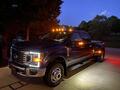
Those tail pipe tips don't quite look the same as the diesel pipes, but it is hard to tell from that photo. It could be a "styling thing," intended to differentiate the 7.3 from the 6.2 and reinforce the impression that this is intended as a heavy duty truck engine like the diesel is. There is no question that Godzilla engine is coming to the SD's. That was the whole point of yesterday's announcement.
I'm not doubting the 7.3L engine is a beast, but it is still going to be quite a ways off the diesel performance.
When the 6.7L came out in 2011, the 6.2L gas V8 debuted at the same time. The gas V8 had 385HP and the diesel V8 had 390HP. Extremely close. Even torque was closer than you'd expect: 405lb-ft for the gas V8, 735lb-ft for the diesel V8. So in 2011, the gap was 5HP and 330lb-ft. Right now, the gap is 65HP and 505lb-ft.
Realistically, I think the 7.3L gas engine will make nearly the same horsepower as the diesel again, but it will maintain a 500lb-ft disadvantage to the Powerstroke.
More Turbo
Joined: Dec 2012
Posts: 564
Likes: 33
From: Newcastle & Gillette WY
Like others, I expect to see a revision in a couple of years that will bring both numbers up (like Ford did the PI version of the Triton series.) It will be hard to wait! I would also like to know what potential there is for different (as in even bigger) displacements on this engine series....
Even looking at the cutaways in the video, it looks like some fundamental, old-school hot rodding tricks like port matching the headers and intake manifold to the heads would decrease turbulence and gain 5-10 HP. The pushrods and valve stems appear to be quite long and heavy as well. so there may be some parasitic HP loss that could be recovered with lighter, high strength components.
Hotshot
Joined: Apr 2013
Posts: 10,081
Likes: 636
From: NH
Even looking at the cutaways in the video, it looks like some fundamental, old-school hot rodding tricks like port matching the headers and intake manifold to the heads would decrease turbulence and gain 5-10 HP. The pushrods and valve stems appear to be quite long and heavy as well. so there may be some parasitic HP loss that could be recovered with lighter, high strength components.

Mountain Pass
Joined: Apr 2018
Posts: 140
Likes: 0
From: Houston
Lots of development money tied up in the 7.3 it sounds like.
Fleet Mechanic
Joined: Aug 2017
Posts: 1,274
Likes: 26
From: St Louis Suburbs
I bet there is a bigger boost to low rpm torque on the 7.3...everything else being equal..pushrods make more low torque typically over overhead cam engines.
This motor will be a torque beast especially considering it will be in something like a 750. Curious what redline will be also.
This motor will be a torque beast especially considering it will be in something like a 750. Curious what redline will be also.
Hotshot
Joined: Apr 2013
Posts: 10,081
Likes: 636
From: NH
I bet there is a bigger boost to low rpm torque on the 7.3...everything else being equal..pushrods make more low torque typically over overhead cam engines.
This motor will be a torque beast especially considering it will be in something like a 750. Curious what redline will be also.
This motor will be a torque beast especially considering it will be in something like a 750. Curious what redline will be also.

Fleet Mechanic
Joined: Feb 2004
Posts: 1,379
Likes: 9
From: midwest
man that thing looks sexy
2019 6.2l standard alt is 157A, extra 200A and an extra extra 240A. i prefer single over dual, less is more. why dual alternators?
if it wasnt for diesels, the gassers would have even more power and torque. prolly why they didnt go with DI right off the bat
i could see the CC and medium class trucks detuned from the pickup version
2019 6.2l standard alt is 157A, extra 200A and an extra extra 240A. i prefer single over dual, less is more. why dual alternators?
if it wasnt for diesels, the gassers would have even more power and torque. prolly why they didnt go with DI right off the bat
i could see the CC and medium class trucks detuned from the pickup version

Senior User
Joined: Jan 2008
Posts: 339
Likes: 2
From: Upstate NY
Your numbers match those I've seen on other sites. However, after watching the video, I believe there is a lot more potential in this engine, especially on the torque side of the slash mark. Ford does have a history of introducing these engines with output somewhat below their potential, then upgrading them.
Like others, I expect to see a revision in a couple of years that will bring both numbers up (like Ford did the PI version of the Triton series.) It will be hard to wait! I would also like to know what potential there is for different (as in even bigger) displacements on this engine series....
Even looking at the cutaways in the video, it looks like some fundamental, old-school hot rodding tricks like port matching the headers and intake manifold to the heads would decrease turbulence and gain 5-10 HP. The pushrods and valve stems appear to be quite long and heavy as well. so there may be some parasitic HP loss that could be recovered with lighter, high strength components.
Like others, I expect to see a revision in a couple of years that will bring both numbers up (like Ford did the PI version of the Triton series.) It will be hard to wait! I would also like to know what potential there is for different (as in even bigger) displacements on this engine series....
Even looking at the cutaways in the video, it looks like some fundamental, old-school hot rodding tricks like port matching the headers and intake manifold to the heads would decrease turbulence and gain 5-10 HP. The pushrods and valve stems appear to be quite long and heavy as well. so there may be some parasitic HP loss that could be recovered with lighter, high strength components.
More Turbo
Joined: Dec 2012
Posts: 564
Likes: 33
From: Newcastle & Gillette WY
I totally agree with your point on the valve train, especially in the heavy trucks. I was thinking more of the guys who want a crate-engine version for their Mustangs and resto-mods. If this engine were to be developed to the same 96 HP/liter as the 5.0 Coyote we would be looking at 700 normally aspirated HP with similar torque! I'm not saying it is practical, but the Godzilla engine has a lot of features common to the Boss 9's and they made well north of 500 HP with carburation, mechanical distributers and without variable cam timing. Of course, that wasn't the "factory" HP rating; they were severely "de-rated" for insurance purposes.
Port matching an engine has no appreciable effect on its longevity or bottom-end torque but yields essentially "free" horsepower at higher RPM's.

Laughing Gas
Joined: Jun 2018
Posts: 939
Likes: 8
From: DFW
I bet there is a BUNCH more power than that in just a tune. Listen carefully to what the engineer said.... he said it's made to run at STOICH under full load at their power target.... which is how they got to the 7.3 displacement... STOICH is 14.7:1 .... during power enrichment typically you'd probably want to see mid 12s and can then add a solid bump in timing.... If this engine really doesn't ever go into power enrichment i could see 50+hp on the table tune only.
