



Carb tuning help
Thread Starter
|
Tuned


Joined: Aug 2014
Posts: 292
Likes: 6
From: Florida
Carb tuning help
Edit:
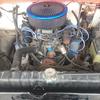
I've read here on the forum but still have my own questions. What I have: '79 351m, holley 650. It will only start up using the choke and then as soon as it's running I open the choke and everything runs fine for at most two or three minutes. I was trying to use my vacuum gauge but I'm not sure where exactly to connect it. I used a port on the bottom of the carb and it was bouncing like crazy between *13-16*. Next I checked the timing. With the vacuum line off the distributor it was about 12BTDC. With the vacuum attached to the distributor it was over 35, but sounded happy. Also, when the engine started to run like crap before shutting off I noticed the timing light was not firing as often as it was while the engine sounded happy. It's starting to sound like two different problems, but I don't know. Any help is greatly appreciated.
-Matt
I've read here on the forum but still have my own questions. What I have: '79 351m, holley 650. It will only start up using the choke and then as soon as it's running I open the choke and everything runs fine for at most two or three minutes. I was trying to use my vacuum gauge but I'm not sure where exactly to connect it. I used a port on the bottom of the carb and it was bouncing like crazy between *13-16*. Next I checked the timing. With the vacuum line off the distributor it was about 12BTDC. With the vacuum attached to the distributor it was over 35, but sounded happy. Also, when the engine started to run like crap before shutting off I noticed the timing light was not firing as often as it was while the engine sounded happy. It's starting to sound like two different problems, but I don't know. Any help is greatly appreciated.
-Matt

Senior User
Joined: Dec 2018
Posts: 152
Likes: 3
From: NEPA
Where exactly does your vacuum advance hose go to? Your timing shouldn't move hardly at all if you plug it back into the vacuum advance pot as long as the engine is at operating temp and idling around 700rpm. Me thinks you got a vacuum line routing problem.
Thread Starter
|
Tuned
Joined: Aug 2014
Posts: 292
Likes: 6
From: Florida
The vacuum line that runs to the distributor comes from the port at the bottom of the carb (the same port I attached the vacuum gauge to). Would you, or anyone, happen to have a vacuum diagram or list? The truck definitely ran better with the vacuum attached which caused the time to be above 35 degrees.

Post Fiend
Joined: Apr 2002
Posts: 19,311
Likes: 97
From: Waterloo, Iowa
A mechanic's vacuum gauge is always connected to the manifold, or, a source of constant manifold vacuum. That means somewhere on the manifold of course or, somewhere under the throttle plates on a carburetor. Depending on the particular carburetor this can be tricky if you're not sure, because the connection port may actually exit below the throttle plates. As a practical matter it's going to hiss at idle when hose is pulled. That's the one you want for the gauge.
The "ported" or spark connection on the carburetor typically used for the distributor will not have any vacuum present at the port at a factory idle - 550 RPM say, because the actual opening is still open to the atmosphere above the throttle plates in the bore. If you happen to like a high idle though, it will start to pull in vacuum. In fact that's probably why people like a high idle. It does run smoother, and cooler, with lots of advance at idle. You will bust a smog test though. This is one reason though when actually tuning or adjusting a carburetor and other tasks, set the idle RPM back to factory spec or it will tend to interfere with getting it set correctly. Set it where you want RPM wise after the tuning is complete.
The reason you're seeing all that ignition advance or timing with a light at idle is because either A. Distributor is connected to a source of manifold vacuum, or B. Idle RPM is pretty high and it's starting to pull in vacuum anyway. That's how it works.
It doesn't really matter. If you like it there, you can keep it there, but I would suggest connecting the distributor to the ported connection for now. Start with everything at factory spec, according to Hoyle, verify everything works as advertised for troubleshooting purposes, and then go from there if you want later. First thing though, get everything dialed in where you know that the settings and baseline they are correct.
When setting or checking ignition timing on a "new" old engine it is wise to verify the timing marks haven't slipped off the index. Use a tool called a piston stop. Defective vibration absorbers are VERY common, the heavy outer steel inertia weight moves over the years because the rubber sandwich it is bonded to is dry rotted. SO, somebody tries to time it, and consequently it's 10°, 20° off (or more) and runs like ***. See this all the time. Sorry for the lecture but this may help someone else.
When checking or setting ignition timing it is also important that the distributor connection is disconnected and plugged, and idle is slow, factory RPM, for accurate base timing results.
A vacuum gauge hanging on a stockish, healthy engine in good condition and proper tune should indicate a steady needle of 18"-20" at a slow factory idle RPM when connected to manifold vacuum.
There are a gazillion other engine defects that can be detected with a vacuum gauge and quite a few engine and carburetor tuning techniques that a vacuum gauge will help you with, but that's the main one to look for. If you live high above sea level the corrected number will be quite a bit lower.
Usually when I hear someone talk about ignition timing puzzlers and crappy performance and/or low steady engine vacuum on the gauge at idle defective vibration absorber comes to mind.
Average manifold vacuum pulled at idle is very closely related to the base ignition timing, carburetor depends on a good strong crisp signal through the idle circuit. Low engine manifold vacuum is very often simply a matter of a combination of retarded ignition timing and misadjusted idle mixture screws.
The "ported" or spark connection on the carburetor typically used for the distributor will not have any vacuum present at the port at a factory idle - 550 RPM say, because the actual opening is still open to the atmosphere above the throttle plates in the bore. If you happen to like a high idle though, it will start to pull in vacuum. In fact that's probably why people like a high idle. It does run smoother, and cooler, with lots of advance at idle. You will bust a smog test though. This is one reason though when actually tuning or adjusting a carburetor and other tasks, set the idle RPM back to factory spec or it will tend to interfere with getting it set correctly. Set it where you want RPM wise after the tuning is complete.
The reason you're seeing all that ignition advance or timing with a light at idle is because either A. Distributor is connected to a source of manifold vacuum, or B. Idle RPM is pretty high and it's starting to pull in vacuum anyway. That's how it works.
It doesn't really matter. If you like it there, you can keep it there, but I would suggest connecting the distributor to the ported connection for now. Start with everything at factory spec, according to Hoyle, verify everything works as advertised for troubleshooting purposes, and then go from there if you want later. First thing though, get everything dialed in where you know that the settings and baseline they are correct.
When setting or checking ignition timing on a "new" old engine it is wise to verify the timing marks haven't slipped off the index. Use a tool called a piston stop. Defective vibration absorbers are VERY common, the heavy outer steel inertia weight moves over the years because the rubber sandwich it is bonded to is dry rotted. SO, somebody tries to time it, and consequently it's 10°, 20° off (or more) and runs like ***. See this all the time. Sorry for the lecture but this may help someone else.
When checking or setting ignition timing it is also important that the distributor connection is disconnected and plugged, and idle is slow, factory RPM, for accurate base timing results.
A vacuum gauge hanging on a stockish, healthy engine in good condition and proper tune should indicate a steady needle of 18"-20" at a slow factory idle RPM when connected to manifold vacuum.
There are a gazillion other engine defects that can be detected with a vacuum gauge and quite a few engine and carburetor tuning techniques that a vacuum gauge will help you with, but that's the main one to look for. If you live high above sea level the corrected number will be quite a bit lower.
Usually when I hear someone talk about ignition timing puzzlers and crappy performance and/or low steady engine vacuum on the gauge at idle defective vibration absorber comes to mind.
Average manifold vacuum pulled at idle is very closely related to the base ignition timing, carburetor depends on a good strong crisp signal through the idle circuit. Low engine manifold vacuum is very often simply a matter of a combination of retarded ignition timing and misadjusted idle mixture screws.
Thread Starter
|
Tuned
Joined: Aug 2014
Posts: 292
Likes: 6
From: Florida
Thanks for all the info Ted. After watching a few videos on holleys website, i'm 99% sure my distributor was hooked up to manifold vacuum. I fixed that, I hope. Kids are asleep so I'll have to wait till tomorrow to test that. While doing that I messed with the #1 spark plug wire and discovered it "clicks" onto the plug but is very loose once it's on. I might need new wires ... I think they're 15 years old, so I guess it's time. Does any of this explain why the vacuum gauge was so jumpy?

Lead Driver


Joined: Oct 2018
Posts: 7,845
Likes: 2,353
Some ignitions were set up to run manifold vacuum on the advance. almost everything was before the smog era. but if you're stock you'd want the ported.
Your timing will greatly change your vacuum reading. get your timing right before you worry too much about your vacuum. then set your idle mixture for peak.
Your timing will greatly change your vacuum reading. get your timing right before you worry too much about your vacuum. then set your idle mixture for peak.
Trending Topics
Post Fiend
Joined: Apr 2002
Posts: 19,311
Likes: 97
From: Waterloo, Iowa
If the vacuum gauge needle is erratic or vibrates it generally indicates a defect that affects only one cylinder. There are quite a few vacuum gauge charts available online, take the time to study them. It could be a bad wire (misfire) or arcing to ground, fouled plug or ignition defect of some kind for sure. Or, maybe a burned valve. What's nice about a gauge is it will tell you exactly what's wrong if you know what to look for. Might try backing up a bit and perform a compression test.
Engine starting w/ choke. That's what it's for, of course, we've gotten spoiled with fuel injection. Anytime the engine is "cold" even in the summer, at least a little choke and accelerator pumping is required. In fact, if an engine starts in the wintertime without needing the choke that actually indicates a problem, in that the carburetor is running way too rich. A carburetor/engine can be tuned pretty far off the beam and it will still seem to run OK. Fuel mileage is the tell, though.
FTE Stories
Ford Trucks for Ford Truck Enthusiasts

AEV FXL Super Duty - the Super Duty Raptor Ford Doesn't Make
Brett Foote
Lobo Vs Lobo: Proof the F-150 Lobo Should Be Even Lower!
Michael S. Palmer
Ford's 2001 Explorer Sportsman Concept Looks For a New Home
Verdad Gallardo
10 Best Ford Truck Engines We Miss the Most!
Joe Kucinski
2026 Shelby F-150 Off-Road: Better Than a Raptor R?
Brett Foote
2027 Super Duty Carhartt Package First Look: 12 Things You NEED to Know!
Michael S. Palmer
10 Most Surprising 2026 Ford Truck Features!
Joe Kucinski
Top 10 Ford Trucks Coming to Mecum Indy 2026
Brett Foote
5 Best / 5 Worst Ford Truck Wheels of All Time
Joe Kucinski
More Turbo
Joined: Feb 2018
Posts: 710
Likes: 3
From: Oregon
I don't think your timing should jump to 35 degrees even with manifold vacuum connected to the dizzy? That seems excessive. I would expect the timing to not reach that until you hit around 3000RPM, certainly not at idle. I'm not an expert though.
Post Fiend
Joined: Apr 2002
Posts: 19,311
Likes: 97
From: Waterloo, Iowa
In the 60s and 70s they found that all that additional advance, while very efficient and cool-running, contributed to smog emissions aka NOX.
Consequently they spent a lot of time and contortions detuning the engine, changing compression, camshaft duration, and other fun stuff. Clean air is important however they weren't very smart about how they went about it!
Even if distributor is conncted to a timed or ported connection it will very quickly start to pull in vacuum advance timing at anything much above factory idle and smooths idle out nicely. You can see this with a timing light when checking the vacuum advance. Keep in mind vaccum advance is completely load dependent. It's working as advertised.
More Turbo
Joined: Feb 2018
Posts: 710
Likes: 3
From: Oregon
It absolutely will, engine manifold vacuum will always be at its very highest at idle in neutral, because there is no load on the engine. This additional advance won't hurt the engine, but it is sometimes difficult to achieve a steady idle RPM. That's why "ported" distributor connections were invented, the ignition timing advance stays solid at idle.
In the 60s and 70s they found that all that additional advance, while very efficient and cool-running, contributed to smog emissions aka NOX.
Consequently they spent a lot of time and contortions detuning the engine, changing compression, camshaft duration, and other fun stuff. Clean air is important however they weren't very smart about how they went about it!
Even if distributor is conncted to a timed or ported connection it will very quickly start to pull in vacuum advance timing at anything much above factory idle and smooths idle out nicely. You can see this with a timing light when checking the vacuum advance. Keep in mind vaccum advance is completely load dependent. It's working as advertised.
Ya so basically the vacuum advance and the mechanical advance form two opposing curves it would seem. And together they kind of work to level out the spark advance to always occur roughly at the required time at any engine RPM. Ok.
Post Fiend
Joined: Apr 2002
Posts: 19,311
Likes: 97
From: Waterloo, Iowa

Thread
Thread Starter
Forum
Replies
Last Post
clhart426
1973 - 1979 F-100 & Larger F-Series Trucks
8
Jul 26, 2011 04:29 PM
Superred2
Ford Inline Six, 200, 250, 4.9L / 300
5
Dec 15, 2010 11:43 AM
grandads76
Big Block V8 - 385 Series (6.1/370, 7.0/429, 7.5/460)
19
Oct 10, 2010 08:23 AM
66ford400
1967 - 1972 F-100 & Larger F-Series Trucks
7
Dec 13, 2005 10:38 PM
Flatpik
1973 - 1979 F-100 & Larger F-Series Trucks
9
Sep 13, 2004 03:43 PM