



Winter Front
More Turbo
Joined: Apr 2011
Posts: 543
Likes: 33
From: Extreme NW Ohio
Winter covers are a bad idea on a modern truck. Concentrated cold on a small area opening of a modern ultra thin heat exchanger can damage them. Hardly anyone needs them, unless you live in an area that may reach a high of -25 where you need a full cover. In the lower 48? Never a need.

Fleet Mechanic
Joined: Jan 2005
Posts: 1,784
Likes: 8
From: Tomball, Tx
my 2017 6.7L ramps up the idle automatically (same as my 2004 6.0L) if the temperature is below something like 40* (f)
More Turbo
Joined: Apr 2011
Posts: 543
Likes: 33
From: Extreme NW Ohio
It can idle all day long, even at an increased idle speed & at colder temps, say 30* or below & it most likely won’t get warm enough to open the thermostat.

Postmaster
Joined: Jan 2005
Posts: 4,424
Likes: 12
From: BC Canada
I use an all season front on mine. (CloudRider is the make) When I had my 6 OH, I ran a true winter front, it was necessary because warm ups took so long with all that air going over all the heat exchangers. I do drive at times with sustained days of -25 C or less. Whilst a winter front can help with warm up it by nature prevents cooling when towing, loaded, slow moving like plowing. So a full cover is not advised. Remember, behind there is the coolant systems(2), Air to air cooler, transmission cooler and engine oil cooler. So, sustained working the truck, a flat block of all coolers, even 1/2, or with a piece cut out may be preventing as much cooling as needed when working, and could cause overheating. Monitoring temps would be very important. Engine air temp, coolant and oil temps, transmission temps if doing so.
I have noticed my truck does warm up nicely to the full operating temp without more blocking of cooling, I am still hitting full operating temp of 195 f on the coolant.
Mike
I have noticed my truck does warm up nicely to the full operating temp without more blocking of cooling, I am still hitting full operating temp of 195 f on the coolant.
Mike
More Turbo


Joined: Jan 2009
Posts: 701
Likes: 17
From: Alberta, Canada

I would not suggest using that corrugated plastic or similar against the rad or aux coolers, that’s asking for trouble. Sitting up behind the grill still gives it space for air movement while being effective, same theory as the guys running something outside the grill.
More Turbo
Joined: Apr 2011
Posts: 543
Likes: 33
From: Extreme NW Ohio
I use an all season front on mine. (CloudRider is the make) When I had my 6 OH, I ran a true winter front, it was necessary because warm ups took so long with all that air going over all the heat exchangers. I do drive at times with sustained days of -25 C or less. Whilst a winter front can help with warm up it by nature prevents cooling when towing, loaded, slow moving like plowing. So a full cover is not advised. Remember, behind there is the coolant systems(2), Air to air cooler, transmission cooler and engine oil cooler. So, sustained working the truck, a flat block of all coolers, even 1/2, or with a piece cut out may be preventing as much cooling as needed when working, and could cause overheating. Monitoring temps would be very important. Engine air temp, coolant and oil temps, transmission temps if doing so.
I have noticed my truck does warm up nicely to the full operating temp without more blocking of cooling, I am still hitting full operating temp of 195 f on the coolant.
Mike
I have noticed my truck does warm up nicely to the full operating temp without more blocking of cooling, I am still hitting full operating temp of 195 f on the coolant.
Mike
Exactly. I still have my remote start to run at 2x 15 minute intervals and an up fitter wired for SEIC when needed, but I can start driving and still have my oil and coolant temp fall at a stop light. I know this because it kicks my MiniMaxx off hot tuning due to low temps haha. The winterfront significantly improved temperature control and stopped the drop out.
I would not suggest using that corrugated plastic or similar against the rad or aux coolers, that’s asking for trouble. Sitting up behind the grill still gives it space for air movement while being effective, same theory as the guys running something outside the grill.

Cargo Master
Joined: Oct 2005
Posts: 2,866
Likes: 515
From: WNY
Is there any science to back up that a winter front is needed on a modern thermostatically controlled cooling system that is designed specifically and correctly for the application? Are small Diesel engines in your neighbors trucks failing to maintain proper running temperatures during winter and failing from wet stacking or a lack of heat? Will Ford deny a warranty claim due the failure to install a winter front? Will Ford deny a warranty claim of a blown head gasket because of a winter front overheated your engine? Yes.
To answer your question, during the advent of inter cooled engines (which will aid heat by passing supplemental heat onto the radiator), makers of class 8 air to air aftercoolers we’re having failures due to winter fronts that were mounted, but allowing air in small open snapped areas of the winter front during cold temps. Those concentrated areas were experiencing failure due to extreme temp differences in those small exposed areas subjected to open air..
If you look at old style trucks of the past needing a winter fronts, it was more due to archaic, oversized radiators cooling faster than a thermostat could maintain block heat.
its your truck, and obviously your choice, but it’s overthinking a problem that no longer exists.
FTE Stories
Ford Trucks for Ford Truck Enthusiasts

Top 10 Fords at 2026 Carlisle Ford Nationals
Joe Kucinski
3 Best / 3 Worst Parts of Modern Ford Ownership
Brett Foote
10 Amazing Upgrades That Solve Common Ford Truck Owner Headaches
Pouria Savadkouei
Every 2026 Ford Engine Explained
Brett Foote
10 Ugly Ford Trucks That We Still Kinda Love
Joe Kucinski
10 Things Every Truck Owner NEEDS (2026 Edition)
Michael S. Palmer
Rezvani's Latest Post-Apocalyptic Monster Is a Ford F-150 Raptor Underneath
Verdad Gallardo
Top 10 Most Expensive Ford Trucks Ever Sold on Bring a Trailer
Joe Kucinski
2027 Ford Super Duty Buyer's Guide (Every Model, Engine, & Package)
Brett Foote
More Turbo
Joined: Apr 2011
Posts: 543
Likes: 33
From: Extreme NW Ohio
Science? I doubt anyone has funded a science study on this topic...possibly thinking common sense would prevail..
Is there any science to back up that a winter front is needed on a modern thermostatically controlled cooling system that is designed specifically and correctly for the application? Are small Diesel engines in your neighbors trucks failing to maintain proper running temperatures during winter? Will Ford deny a warranty claim due the failure to install a winter front? Will Ford deny a warranty claim of a blown head gasket because of a winter front? Yeah..
To answer your question, during the advent of inter cooled engines (which pass supplemental heat onto the radiator), makers of class 8 air to air aftercoolers we’re having failures due to winter fronts that were mounted, but allowing air in small areas during cold temps. Those concentrated areas were experiencing failure due to extreme temp differences in those very small areas subjected to open air..
If you look at old style trucks of the past needing a winter fronts, it was more due to archaic, oversized radiators cooling faster than a thermostat could maintain block heat.
More Turbo
Joined: Apr 2011
Posts: 543
Likes: 33
From: Extreme NW Ohio
I did. Ran it all last winter, ran the bug screen all summer & just switched back to the winter front about a week ago. I'll let you know when the truck spontaneously vaporizes.
Cargo Master
Joined: Oct 2005
Posts: 2,866
Likes: 515
From: WNY
Kinda weird, but I’m considering the source.
Just trying to help.

Mountain Pass


Joined: Jul 2019
Posts: 175
Likes: 7
From: NW Suburban Chicago
Ok, old thread but......1st winter with the new truck with a 6.7
I see the need for a winter front as it was 20 °F this morning and it took over 30 mins of drive time before the water temp hit 200° and opened up the t'sat. At least 10 mins was at 70+ mph speeds. This include starting the truck 10 mins before I hit the road.
I'm betting that the water temp never reaches operating temps during the winter at temps below 0° hardly ever, if at all, especially in normal suburban/city traffic.
Knowing wet stacking is an issue I have no problem installing a winter front to help get the temp up faster and to keep the temp up. Yes, monitoring the water temp will be critical when to open up the winter front for additional cooling.
I've already lost nearly a 1/2 MPG with the cooler weather due to the slow heating of the engine. The MPG is only going to get worse as the avg high starts to nose dive come December/January. The avg high temp in January in the Chicago area is in the high 20's
I know my 02 7.3 would bump up the idle 300-400 RPM at certain winter conditions.
Who's running a winter front and who's do you have? Pictures would be helpful too.
I see the need for a winter front as it was 20 °F this morning and it took over 30 mins of drive time before the water temp hit 200° and opened up the t'sat. At least 10 mins was at 70+ mph speeds. This include starting the truck 10 mins before I hit the road.
I'm betting that the water temp never reaches operating temps during the winter at temps below 0° hardly ever, if at all, especially in normal suburban/city traffic.
Knowing wet stacking is an issue I have no problem installing a winter front to help get the temp up faster and to keep the temp up. Yes, monitoring the water temp will be critical when to open up the winter front for additional cooling.
I've already lost nearly a 1/2 MPG with the cooler weather due to the slow heating of the engine. The MPG is only going to get worse as the avg high starts to nose dive come December/January. The avg high temp in January in the Chicago area is in the high 20's
I know my 02 7.3 would bump up the idle 300-400 RPM at certain winter conditions.
Who's running a winter front and who's do you have? Pictures would be helpful too.
More Turbo
Joined: Apr 2011
Posts: 543
Likes: 33
From: Extreme NW Ohio
Ok, old thread but......1st winter with the new truck with a 6.7
I see the need for a winter front as it was 20 °F this morning and it took over 30 mins of drive time before the water temp hit 200° and opened up the t'sat. At least 10 mins was at 70+ mph speeds. This include starring the truck 10 mins before I hit the road.
I'm betting that the water temp never reaches operating temps during the winter at temps below 0° hardly ever, if at all, especially in normal suburban/city traffic.
Knowing wet stacking is an issue I have no problem installing a winter front to help get the temp up faster and to keep the temp up. Yes, monitoring the water temp will be critical when to open up the winter front for additional cooling.
I've already lost nearly a 1/2 MPG with the cooler weather due to the slow heating of the engine. The MPG is only going to get worse as the avg high starts to nose dive come December/January. The avg high temp in January in the Chicago area is in the high 20's
I know my 02 7.3 would bump up the idle 300-400 RPM at certain winter conditions.
Who's running a winter front and who's do you have? Pictures would be helpful too.
I see the need for a winter front as it was 20 °F this morning and it took over 30 mins of drive time before the water temp hit 200° and opened up the t'sat. At least 10 mins was at 70+ mph speeds. This include starring the truck 10 mins before I hit the road.
I'm betting that the water temp never reaches operating temps during the winter at temps below 0° hardly ever, if at all, especially in normal suburban/city traffic.
Knowing wet stacking is an issue I have no problem installing a winter front to help get the temp up faster and to keep the temp up. Yes, monitoring the water temp will be critical when to open up the winter front for additional cooling.
I've already lost nearly a 1/2 MPG with the cooler weather due to the slow heating of the engine. The MPG is only going to get worse as the avg high starts to nose dive come December/January. The avg high temp in January in the Chicago area is in the high 20's
I know my 02 7.3 would bump up the idle 300-400 RPM at certain winter conditions.
Who's running a winter front and who's do you have? Pictures would be helpful too.

Laughing Gas

Joined: Feb 2012
Posts: 1,210
Likes: 11
From: California Mountains
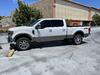
HI Nice truck
hello everyone.
this is my first post.
I just purchased my first Ford vehicle. A 2019 F250 Platinum crew sb. Coming from a decade of Rams
and before that 2 decades of GM's. I was wondering if there is a weather front available for the
diesel? I saw that fia makes a weather front/bug screen but it requires drilling or double sided taping
for installation. I am looking for an application that is behind the grill and temporary in nature.
Any ideas?
thanks.
this is my first post.
I just purchased my first Ford vehicle. A 2019 F250 Platinum crew sb. Coming from a decade of Rams
and before that 2 decades of GM's. I was wondering if there is a weather front available for the
diesel? I saw that fia makes a weather front/bug screen but it requires drilling or double sided taping
for installation. I am looking for an application that is behind the grill and temporary in nature.
Any ideas?
thanks.