





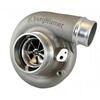
KC s300 turbine / T4 S366 testing

FTE Leadership Emeritus


Joined: May 2014
Posts: 27,344
Likes: 5,941
From: Lake Hartwell, GA

Bluemax65 is right that the middle/digital gauge is boost. You can just make out the letters in white under the indicated boost level.
The other gauges are a hot mess though. Hopefully brokestroke will be back soon to help us see what we are seeing.
The other gauges are a hot mess though. Hopefully brokestroke will be back soon to help us see what we are seeing.
Thread Starter
|
Cargo Master


Joined: May 2018
Posts: 2,442
Likes: 993
Should have clarified a little more. The video quality is awful also.
The top gauge is my Transmission temp gauge but it isn't hooked up at the moment.
Middle is boost, bottom is Pyro. Boost needed to maintain was about 10psi and I sped up a little towards the end.
The top gauge is my Transmission temp gauge but it isn't hooked up at the moment.
Middle is boost, bottom is Pyro. Boost needed to maintain was about 10psi and I sped up a little towards the end.
Thread Starter
|
Cargo Master
Joined: May 2018
Posts: 2,442
Likes: 993

Thread Starter
|
Cargo Master
Joined: May 2018
Posts: 2,442
Likes: 993
Unloaded. Im guessing that I will be able to hit 1300* towing if I drive it aggressively on the "street" tune. Towing 6000lb it had a hard time breaking 1250* but I ended up running out of road. My old man saw 1200* on the tow tune pulling the same load over some decent grades.
Junior User
Joined: Dec 2018
Posts: 89
Likes: 1
From: Columbia, SC
FTE Stories
Ford Trucks for Ford Truck Enthusiasts

10 Best Ford Truck Engines We Miss the Most!
Joe Kucinski
2026 Shelby F-150 Off-Road: Better Than a Raptor R?
Brett Foote
2027 Super Duty Carhartt Package First Look: 12 Things You NEED to Know!
Michael S. Palmer
10 Most Surprising 2026 Ford Truck Features!
Joe Kucinski
Top 10 Ford Trucks Coming to Mecum Indy 2026
Brett Foote
5 Best / 5 Worst Ford Truck Wheels of All Time
Joe Kucinski
Ford Super Duty: 5 Things Owners LOVE, 5 Things They LOATHE!
Joe Kucinski
Every 2026 Ford Truck Engine RANKED from WORST to FIRST!
Michael S. Palmer
The Best F-150 Deal of Every Trim Level (XL through Raptor)
Joe Kucinski
Thread Starter
|
Cargo Master
Joined: May 2018
Posts: 2,442
Likes: 993
I would say Yes, it helps with towing even on a stock tuned truck.
Does it help EGTs? Good question. It is recommended to run this turbine with a billet compressor. There is always the claim that billet wheels lower EGTs, so there is that to take into consideration. My take on it is this. You can only push a certain amount of air out of a 68mm or 70mm turbine. Same goes with the compressor wheel, only so much can be drawn through a 60mm inlet. No matter design on either intake or exhaust side there will be a point that it looses efficiency and becomes hot. This is where you can play with housing sizes to manage heat to a point. Though it will never overcome the physical size limitations that the stock charger has. That being said, this charger keeps the EGTs in a range that on an equal tune the stock charger would be 1400 degrees. Keep in mind though, this turbo has; 1.15 housing/70mm turbine (2mm bigger than stock), 9+0 ETT billet compressor, and ATS ported housing. I had that in mind when putting this charger together because I knew it had the best chance of being a cool running setup.
Does it help EGTs? Good question. It is recommended to run this turbine with a billet compressor. There is always the claim that billet wheels lower EGTs, so there is that to take into consideration. My take on it is this. You can only push a certain amount of air out of a 68mm or 70mm turbine. Same goes with the compressor wheel, only so much can be drawn through a 60mm inlet. No matter design on either intake or exhaust side there will be a point that it looses efficiency and becomes hot. This is where you can play with housing sizes to manage heat to a point. Though it will never overcome the physical size limitations that the stock charger has. That being said, this charger keeps the EGTs in a range that on an equal tune the stock charger would be 1400 degrees. Keep in mind though, this turbo has; 1.15 housing/70mm turbine (2mm bigger than stock), 9+0 ETT billet compressor, and ATS ported housing. I had that in mind when putting this charger together because I knew it had the best chance of being a cool running setup.
Logistics Pro


Joined: Mar 2007
Posts: 4,571
Likes: 836
From: knoxville, tn
It has been interesting reading this thread. I recently picked up a turbine for my OBS. I am now considering which compressor wheel to pair with the turbine for optimal performance. In looking at the normal SXE turbos, they seem to run a 7 blade wheel. I am looking at the 7 blade from spturbo. I would post a link, but they are closed for the holidays and have pulled down the website. Why did you choose a 9 over a 7?
I dont plan to change housing, as I think the 1.15 will be fine for my needs, and keep me from fighting EGTs.
Any help down this path would be greatly appreciated
I dont plan to change housing, as I think the 1.15 will be fine for my needs, and keep me from fighting EGTs.
Any help down this path would be greatly appreciated
Thread Starter
|
Cargo Master
Joined: May 2018
Posts: 2,442
Likes: 993
It has been interesting reading this thread. I recently picked up a turbine for my OBS. I am now considering which compressor wheel to pair with the turbine for optimal performance. In looking at the normal SXE turbos, they seem to run a 7 blade wheel. I am looking at the 7 blade from spturbo. I would post a link, but they are closed for the holidays and have pulled down the website. Why did you choose a 9 over a 7?
I dont plan to change housing, as I think the 1.15 will be fine for my needs, and keep me from fighting EGTs.
Any help down this path would be greatly appreciated
I dont plan to change housing, as I think the 1.15 will be fine for my needs, and keep me from fighting EGTs.
Any help down this path would be greatly appreciated
I will explain my choice the best I can. Go back in time a little bit when SX-E was the SX-3. They came with cast wheels before FMW compressors. The cast wheels were almost identical to the cast 7+7 wheels minus some small features. 7+7 is pretty moderate in sound levels and claims to have a good split on low end and top. I was on the fence between the 7+7 and 9+0 as they cost the same. Simple math will tell you the 7+7 has 14 blades total and the 9+0 has 9. Although the 7+7 has different length blades the lower blades are still about 3/4 the total height of the main blades. 9+0 has equal length blades and 5 less blades than the 7+7. 5 less blades is quite a bit of material in regards of weight of the compressor wheel. Have to dig around for some specs but I believe the 9+0 is lightest next to the RR 4+4 billet. The next reason I chose the 9+0 is because of the noise. The stock SD turbo is noted for being a pretty quiet with the stock cast 9+0 wheel. So in similar sequence of how the SX-E kept the same profile wheel as the SX-3, I did the same. Back to the noise factor. The turbo I am running has the ATS ported housing. These housings have Map Enhancement Grooves/ aka bleed off ring around the compressor inlet. Staggered compressor wheels like 5+5, 6+6, 7+7 are often much louder. This is because the lower blades on staggered wheels comes right up to the edge of the bleed off ring. This creates more of a cutting force of the air making more noise. The 9+0 equal length blades come up over the MEG (map enhancement groove) instead of below the edge of it. This eliminates the aggressive cutting force of the blades in relation to the MEG. Resulting in a much quieter turbo. Stock 3" inlet turbo (non ported) does not make the same noise with a 5+5, 6+6, 7+7 as ported housing do. Although they still make more noise than a 9+0 or 11+0. 11+0 is a heavier wheel than the 9+0 but is claimed to be quieter. A lot of BIG turbos, even SX-E come with an 11+0 and a MEG housing. I have ran an S366 with a MEG housing, 6+6 wheel, and it was a pretty loud combination. Personally I like the a more mellow tone instead of a screamer.
Example here, 5+5 and ported housing.

Logistics Pro
Joined: May 2017
Posts: 4,666
Likes: 1,455
From: Muskogee, Ok
Those are actually 7+7 wheels on SPTturboost website for the GTP38
Logistics Pro
Joined: Mar 2007
Posts: 4,571
Likes: 836
From: knoxville, tn
Correct. I looked at the SXE as it seems to a very efficient unit. Then I started looking for wheels that were similar in design, but would work in a stock turbo. That is how I found the 7 blade for the TP38 at spturbo.
Intersting info on what drove you to a 9+0
Intersting info on what drove you to a 9+0
Thread Starter
|
Cargo Master
Joined: May 2018
Posts: 2,442
Likes: 993


Found this picture that makes an interesting point. The turbine on the left is an SXE. Although the stock SD turbine is does not have a totally flat inlet tip it is noticeably less "cupped" than the SXE turbine.

Stock SD turbine for better reference.
