



Adding OEM Skid Plates?

Senior User
Joined: Jan 2018
Posts: 118
Likes: 2
From: Spokane, WA
Just had the OEM skid plates put on my truck last Friday at a dealer. Cost was $960.00 for the shields and install (long bed with 48 gallon tank). It was the first one they did on a 2017 (they said) and it turned into more of a job they thought. They had to drop the fuel tank to get some of the hanging brackets attached. Transfer case shield is no big deal. But when they order in the parts for the install --each bolt and bracket has a part number and is not sold "as a kit". So it is a pain to order the required parts for the install. The fuel tank shield for the long box is very long!

More Turbo


Joined: Apr 2017
Posts: 628
Likes: 12
From: Madison WI
I already have the fuel tank skid plate from another member who had upgraded their fuel tank.
What I 'd like to know is, what fasteners are required when adding the transfer case skid plate? Part number(s) are what I'm looking for.
Thanks in advance.
What I 'd like to know is, what fasteners are required when adding the transfer case skid plate? Part number(s) are what I'm looking for.
Thanks in advance.

Thread Starter
|
Senior User
Joined: Aug 2015
Posts: 209
Likes: 1
From: Taos
Just had the OEM skid plates put on my truck last Friday at a dealer. Cost was $960.00 for the shields and install (long bed with 48 gallon tank). It was the first one they did on a 2017 (they said) and it turned into more of a job they thought. They had to drop the fuel tank to get some of the hanging brackets attached. Transfer case shield is no big deal. But when they order in the parts for the install --each bolt and bracket has a part number and is not sold "as a kit". So it is a pain to order the required parts for the install. The fuel tank shield for the long box is very long!
By chance do you remember what the labor and parts charges were?
Thread Starter
|
Senior User
Joined: Aug 2015
Posts: 209
Likes: 1
From: Taos
In post #11 I attached the parts diagrams for both long bed tank and x-fer case skid plate. It's minimal (x-fer case).
Thread Starter
|
Senior User
Joined: Aug 2015
Posts: 209
Likes: 1
From: Taos
Were you able to access the bracket bolts without dropping the tank? If so, I wonder if there's a difference between 34 and 48 G tanks. Were all the bolts attached to the frame? Disker wrote Ford had to drop his tank on a 48G.

Laughing Gas
Joined: Dec 2017
Posts: 1,077
Likes: 8
When ordering the truck the skid plates were a $100 option while the wheel well liners were $325. For that price I expected the skid plates to be plastic but they actually look pretty stout. Seems they’re worth the dough.
Hotshot


Joined: Apr 2013
Posts: 10,118
Likes: 650
From: NH
Unless you plan on taking the truck off-road in rocky terrain, I cannot see how these skid plates are that valuable. My first 2017 did not have them and my second one (FX4) does have them. I will say the $100 option price is a bargain if you want them.

Elder User
Joined: Mar 2017
Posts: 764
Likes: 30
"Skid Plates" as Ford calls them are not really what many folks think they should be. I just think some folks expect too much.
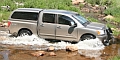
Small rocks, branches, etc will be stopped by the "skid plates". They are not, repeat NOT, bash plates. They will not stop damage from your vehicle bashing down upon an object and puncturing a hole in something. If you are in 4x4 and crawling over small tree branches, or scuffing the underside of your truck while going up a creek bank, they work fine. The Ford skid plates are essentially a good way to keep small debris from kicking up and harming something. If you think that they will stop damage when the full weight of your truck heaves down as the front tires slip off some rock ledge, and the t-case or tank meets another boulder, you're mistaken. They were never intended or designed to stop all damage; just light forces.
I do see that they have value; road debris can often be stopped, or at least damage reduced, with the OEM skid plates. For an order option of $100 in stand-alone pricing; they're a good buy. Over the parts counter, they are a tad too pricey.
I am going to make my own plate for the t-case; I can fab one up far cheaper, and stronger, than OEM. The tank is a bit more of a challenge; odd angles and mounting make it more cumbersome. However for the crazy pricing of the tank plate and all it's little parts, I can be motivated to make my own. Buying a "used" tank plate is tenable; buying a Ford over-the-parts-counter is not.
Small rocks, branches, etc will be stopped by the "skid plates". They are not, repeat NOT, bash plates. They will not stop damage from your vehicle bashing down upon an object and puncturing a hole in something. If you are in 4x4 and crawling over small tree branches, or scuffing the underside of your truck while going up a creek bank, they work fine. The Ford skid plates are essentially a good way to keep small debris from kicking up and harming something. If you think that they will stop damage when the full weight of your truck heaves down as the front tires slip off some rock ledge, and the t-case or tank meets another boulder, you're mistaken. They were never intended or designed to stop all damage; just light forces.
I do see that they have value; road debris can often be stopped, or at least damage reduced, with the OEM skid plates. For an order option of $100 in stand-alone pricing; they're a good buy. Over the parts counter, they are a tad too pricey.
I am going to make my own plate for the t-case; I can fab one up far cheaper, and stronger, than OEM. The tank is a bit more of a challenge; odd angles and mounting make it more cumbersome. However for the crazy pricing of the tank plate and all it's little parts, I can be motivated to make my own. Buying a "used" tank plate is tenable; buying a Ford over-the-parts-counter is not.
FTE Stories
Ford Trucks for Ford Truck Enthusiasts

2027 Ford Super Duty Buyer's Guide (Every Model, Engine, & Package)
Brett Foote
Top 10 Ford Truck Tragedies
Joe Kucinski
AEV FXL Super Duty - the Super Duty Raptor Ford Doesn't Make
Brett Foote
Lobo Vs Lobo: Proof the F-150 Lobo Should Be Even Lower!
Michael S. Palmer
Ford's 2001 Explorer Sportsman Concept Looks For a New Home
Verdad Gallardo
10 Best Ford Truck Engines We Miss the Most!
Joe Kucinski
2026 Shelby F-150 Off-Road: Better Than a Raptor R?
Brett Foote
2027 Super Duty Carhartt Package First Look: 12 Things You NEED to Know!
Michael S. Palmer
10 Most Surprising 2026 Ford Truck Features!
Joe Kucinski
Hotshot
Joined: Apr 2013
Posts: 10,118
Likes: 650
From: NH
"Skid Plates" as Ford calls them are not really what many folks think they should be. I just think some folks expect too much.
Small rocks, branches, etc will be stopped by the "skid plates". They are not, repeat NOT, bash plates. They will not stop damage from your vehicle bashing down upon an object and puncturing a hole in something. If you are in 4x4 and crawling over small tree branches, or scuffing the underside of your truck while going up a creek bank, they work fine. The Ford skid plates are essentially a good way to keep small debris from kicking up and harming something. If you think that they will stop damage when the full weight of your truck heaves down as the front tires slip off some rock ledge, and the t-case or tank meets another boulder, you're mistaken. They were never intended or designed to stop all damage; just light forces.
Small rocks, branches, etc will be stopped by the "skid plates". They are not, repeat NOT, bash plates. They will not stop damage from your vehicle bashing down upon an object and puncturing a hole in something. If you are in 4x4 and crawling over small tree branches, or scuffing the underside of your truck while going up a creek bank, they work fine. The Ford skid plates are essentially a good way to keep small debris from kicking up and harming something. If you think that they will stop damage when the full weight of your truck heaves down as the front tires slip off some rock ledge, and the t-case or tank meets another boulder, you're mistaken. They were never intended or designed to stop all damage; just light forces.
Elder User
Joined: Mar 2017
Posts: 764
Likes: 30
Skid plates are what you put on a Jeep, etc. to protect vulnerable underside components from damage while driving off-road. This means scraping over a rock or having at least a good portion of the vehicle's weight on them. If Ford's "skid plates" don't do this, they should be called something else. The plastic fuel tank is designed to deform in a collision, and realistically plenty of other things will break first besides the transfer case if you're off-roading. Light road debris is not going to damage the tank or the transfer case anyway.
It would be more appropriate for Ford to call them shields, but they don't. They call them "skid plates". And they certainly are not bash plates.
They are good at preventing some forms of damage; they are not going to stop all of it.
Hotshot
Joined: Oct 2015
Posts: 19,693
Likes: 12,818
From: Wyoming


I specifically chose to not add the "skid" plates to my truck. I didn't want the extra weight or the expense. Sure, they're a steal if you order them from the factory. But I don't plan to be far off the beaten path with my truck.
Hotshot
Joined: Apr 2013
Posts: 10,118
Likes: 650
From: NH
In reality, a Super Duty is not a great choice for off-road driving, anyway...given it's size and expensive aluminum bodywork. But they are surprisingly capable if you have the room to maneuver. Good ground clearance, very heavy duty axles, optional rear selectable locker, plenty of torque, and good suspension flex are combine to provide good capability.

Laughing Gas
Joined: Oct 2017
Posts: 787
Likes: 72
From: Lansing MI
I went with them as a 100 dollar add on, just for the bit of protection form road debris. Lots of tire remains on the roads around here.