



Oil change based on hours

Thread Starter
|
Elder User
Joined: Sep 2008
Posts: 996
Likes: 0
From: TALLAHASSEE FL
Oil change based on hours
Guys
Looking to start changing my oil based on engine hours intervals.
Dose this sound crazy ? We do this with our service trucks at work and was thinking about doing the same. I idle mine for roughly 10 or 15 min in the morning expecally if its cold outside. Then roughly 30 to 40 min at lunch every day mon - fri.
Im religious about changing @ every 5k mi. Just thinking about the added idle time the engine is running.
Im sure im not the first to ask this but kinda curious on the input the brotherhood has.
Looking to start changing my oil based on engine hours intervals.
Dose this sound crazy ? We do this with our service trucks at work and was thinking about doing the same. I idle mine for roughly 10 or 15 min in the morning expecally if its cold outside. Then roughly 30 to 40 min at lunch every day mon - fri.
Im religious about changing @ every 5k mi. Just thinking about the added idle time the engine is running.
Im sure im not the first to ask this but kinda curious on the input the brotherhood has.

Lead Driver
Joined: Sep 2010
Posts: 7,793
Likes: 50
I was bs'ing with a guy at a gas station about our trucks. He uses 5.9 cummins when building boats. One thing v he said was, who cares about mileage or hours..(pertaining to our trucks when venturing out to buy one), if they towed alot...etc but HOW MUCH FUEL was ran through the motor. That there would tell you if it was a workhorse or not

More Turbo
Joined: May 2016
Posts: 717
Likes: 9
Since retiring a couple years back, my Truck literally sits. It "may" get 5,000 miles annually. So, I change my Oil once a year in January and send a Sample off.
All the Samples say everything is good and run it for another 3,000 miles.But, I never do.(Rotella T6 and a FoMoCo #1995 Filter).
Back in the early 90's when HEUI Injector Systems were all the rage in Caterpillar, Those were serviced on Hours: I did Service after work on those. Every ticket was basically the same: "Hard to Start when Cold - Must use Ether".
All I ever did was Change the Oil and Filter and turn the tickets in every couple weeks. It there was a Mechanical Problem, I needed another Ticket with Approval to Repair. The interesting thing was 99.9% of those Hard Starts went away with new oil and filters.
During the days for Ford when a HEUI had a similar issue, unless the Oil was just changed, we changed it and problems went away.
The same exact issues i experienced then I experience now. So, based solely on that, Oil seems to be affected by time once in the Engine. I read an Article in a Trade Magazine board one day, and it said to inform customers that if the Trucks weren't driven 5,000 miles in a four month period to suggest an Oil Change prior to Diagnosing.
Someone may have a difference of opinion. And, I don't use Synthetic so i have no idea how that type would be affected. I neither drive nor Tow anymore. So, IMO it would be an added expense I don't need. If, for some reason, i would start driving and hauling again, i would revert back to 4 Months or 5,000 Miles which I did for eons and 250,000 miles with no ill effects whatsoever on my 99.5 DIT.
All the Samples say everything is good and run it for another 3,000 miles.But, I never do.(Rotella T6 and a FoMoCo #1995 Filter).
Back in the early 90's when HEUI Injector Systems were all the rage in Caterpillar, Those were serviced on Hours: I did Service after work on those. Every ticket was basically the same: "Hard to Start when Cold - Must use Ether".
All I ever did was Change the Oil and Filter and turn the tickets in every couple weeks. It there was a Mechanical Problem, I needed another Ticket with Approval to Repair. The interesting thing was 99.9% of those Hard Starts went away with new oil and filters.
During the days for Ford when a HEUI had a similar issue, unless the Oil was just changed, we changed it and problems went away.
The same exact issues i experienced then I experience now. So, based solely on that, Oil seems to be affected by time once in the Engine. I read an Article in a Trade Magazine board one day, and it said to inform customers that if the Trucks weren't driven 5,000 miles in a four month period to suggest an Oil Change prior to Diagnosing.
Someone may have a difference of opinion. And, I don't use Synthetic so i have no idea how that type would be affected. I neither drive nor Tow anymore. So, IMO it would be an added expense I don't need. If, for some reason, i would start driving and hauling again, i would revert back to 4 Months or 5,000 Miles which I did for eons and 250,000 miles with no ill effects whatsoever on my 99.5 DIT.

Cargo Master
Joined: Aug 2009
Posts: 2,137
Likes: 13
From: Glendive, MT
Back when I was turning wrenches on construction equipment the factory equated hours to miles to help techs understand service intervals. Their equation was 50 miles per hour. So a 5000 mile service interval would be every 100 hours.
Last edited by HD Rider; Mar 17, 2018 at 08:49 PM. Reason: Spelling
Thread Starter
|
Elder User
Joined: Sep 2008
Posts: 996
Likes: 0
From: TALLAHASSEE FL
Sorry guys i typed my first post incorrect. I said " based on engine oil intervals " i ment based on engine hours for those of you who red that.
Looking to see if any one changes there oil based on hours instead of miles.
Like i mentioned in my orignal post. I have roughly 1 to 2 hours idle per day. That could be 10 hours a week. So if 5000k mi is roughly 100 hours i would exceed that bench mark.
Looking to see if any one changes there oil based on hours instead of miles.
Like i mentioned in my orignal post. I have roughly 1 to 2 hours idle per day. That could be 10 hours a week. So if 5000k mi is roughly 100 hours i would exceed that bench mark.

Logistics Pro

Joined: Dec 2010
Posts: 4,738
Likes: 15
From: Temperance, MI
Trending Topics
Cargo Master
Joined: Aug 2009
Posts: 2,137
Likes: 13
From: Glendive, MT
FTE Stories
Ford Trucks for Ford Truck Enthusiasts

10 Things Every Truck Owner NEEDS (2026 Edition)
Michael S. Palmer
Rezvani's Latest Post-Apocalyptic Monster Is a Ford F-150 Raptor Underneath
Verdad Gallardo
Top 10 Most Expensive Ford Trucks Ever Sold on Bring a Trailer
Joe Kucinski
2027 Ford Super Duty Buyer's Guide (Every Model, Engine, & Package)
Brett Foote
Top 10 Ford Truck Tragedies
Joe Kucinski
AEV FXL Super Duty - the Super Duty Raptor Ford Doesn't Make
Brett Foote
Lobo Vs Lobo: Proof the F-150 Lobo Should Be Even Lower!
Michael S. Palmer
Ford's 2001 Explorer Sportsman Concept Looks For a New Home
Verdad Gallardo
10 Best Ford Truck Engines We Miss the Most!
Joe Kucinski
Hotshot


Joined: Jan 2011
Posts: 18,849
Likes: 179
From: Puget Sound
I remember reading an article on how the big boys (heavy equipment manufacturers) consider oil changes, and put computer sensor in the vehicle to know the best time to change oil, perform other maintenance, and how to determine an engine warranty. Fuel was the answer. HEUI injectors notwithstanding (good point, pirschwagon), the quantity of fuel passed through the engine determined the actual work of the engine, Idling is no great strain on the engine and doesn't use a lot of fuel, so an hour of idling (as well as an hour at cruise at 60 MPH) does not equal an hour of towing heavy up a grade. Fuel consumption is the biggest consideration (with time sitting being second)... just like timmyboy76 mentioned. Funny how our own diesel maker came up with fuel being the answer.
Oh... one other consideration on the life span of an engine is the total number of revolutions it has conducted.
Oh... one other consideration on the life span of an engine is the total number of revolutions it has conducted.

Fleet Mechanic
Joined: Jan 2014
Posts: 1,506
Likes: 73
From: Staunton, VA
At work we go by miles for our road tractors. No matter how much idling is done, OTR tractors get 40k intervals and locals get 8k-15k dependent on their distance traveled. There have been points where our trucks haven't shut down for a week or so straight. Our loaders and what not are done by hours though - for instance our largest front end loader gets serviced every 250hrs.
I'd say you'd be fine with the usual mileage based interval - this past winter I had quite a few eight-hour straight days in the fields with the truck idling or creeping along to build fence. All my UOA have come back well even with the idle time.
I'd say you'd be fine with the usual mileage based interval - this past winter I had quite a few eight-hour straight days in the fields with the truck idling or creeping along to build fence. All my UOA have come back well even with the idle time.

Tuned


Joined: Aug 2008
Posts: 276
Likes: 9
From: Alaska (not Anchorage)

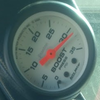
I installed a Hobbs meter in 2010 and have been using it as the basis for 200 hour oil and filter changes since then. Checking my logbook, this works out to about 6,200 miles between changes. While, "nearly" all of my driving is with insignificant loads on flat ground in non-extreme temps...this seems to me like a long time to go between changes. Oil is Chevron Delo LE 400 10-30.

Hotshot
Joined: Nov 2006
Posts: 11,287
Likes: 265
From: North of Greenville
I was bs'ing with a guy at a gas station about our trucks. He uses 5.9 cummins when building boats. One thing v he said was, who cares about mileage or hours..(pertaining to our trucks when venturing out to buy one), if they towed alot...etc but HOW MUCH FUEL was ran through the motor. That there would tell you if it was a workhorse or not
There are lots of trucks which work in city environments which have a higher percentage of idling time than those which are used in longer runs of OTR type driving conditions. In that scenario, the idling time, stop and go traffic, etc., all create a harsher condition for the vehicle's engine and drive train. That's why we've almost always seen the OTR rigs getting significantly higher mileage runs on their engines with longer (in comparison) OCI's. Here is where the comparison to his "boat engine" philosophy of using fuel consumption falls away from the truck scenario because boat engines typically run under load almost all the time and therefore don't have a significant amount of "idling time". In this "city" scenario for our trucks, I would say that using hours is better than miles for obvious reasons, but that fuel consumption would not necessarily be a better approach. You see, even if the engine is idling and using less fuel, that low fuel consumption time gets offset by the harsher conditions of taking off from stops or accelerating from lower speeds (in my opinion).
Having said the above, if the truck is used for primarily long run times with minimal idling time, fuel consumption would be roughly equivalent to hours in terms of representing how the engine was run, but fuel consumption might end of being a better choice if the truck is not loaded 100% of the time. What I mean by "100% of the time" is running loaded in all travel directions - going and coming. If the truck is running loaded in one direction and unloaded in the return trip, fuel consumption would better represent the actual "load" on the engine.
I guess where I end up on this is, "it depends". If you're running a lot of low/no speed idling on your truck, changing based on hours would be better than based on fuel consumption.
Perhaps using avg gallons fuel/hr as a "tempering value" in comparison to total gallons or total hours... in other words, have either total gallons or total hours as a target, and modulate sooner or later depending on the gallons/hour value -- higher gallons per hour encouraging an earlier drain cycle, and lower gallons/hr allowing an extended drain cycle....capture the benefits of both issues??
The total number of revs is an interesting thought, Rich!
Just a quick think through, and I'm sure there will be other perspectives which may catch some weaknesses in my own thought process.
Fleet Mechanic
Joined: Dec 2008
Posts: 1,787
Likes: 31
From: Northern Illinois
I think it would be interesting to record engine running hours, gallons of fuel used, and miles driven. I will look into my oil change and fuel records to try and get an approximate amount of fuel used during my past few oil changes to see what I can come up with as an approximation as I did not always fill up on the same day as I changed oil. No clue on hours here.
I could see having a number for miles, hours, and gallons of fuel that tells you when to change oil. Either change it when you hit 1 of the 3 or 2 of the 3. hmm
I could see having a number for miles, hours, and gallons of fuel that tells you when to change oil. Either change it when you hit 1 of the 3 or 2 of the 3. hmm
Tuned
Joined: Aug 2008
Posts: 276
Likes: 9
From: Alaska (not Anchorage)
I think it would be interesting to record engine running hours, gallons of fuel used, and miles driven. I will look into my oil change and fuel records to try and get an approximate amount of fuel used during my past few oil changes to see what I can come up with as an approximation as I did not always fill up on the same day as I changed oil. No clue on hours here.
I could see having a number for miles, hours, and gallons of fuel that tells you when to change oil. Either change it when you hit 1 of the 3 or 2 of the 3. hmm
I could see having a number for miles, hours, and gallons of fuel that tells you when to change oil. Either change it when you hit 1 of the 3 or 2 of the 3. hmm

Figure 1.-Miles per gallon (mpg) and gallons per hour (gph) for 7.3 F350, 2008-2018.
Last edited by portsample; Jun 27, 2018 at 10:27 AM. Reason: ...Oxford comma