



Vibration OCD

Thread Starter
|
Senior User
Joined: Nov 2016
Posts: 124
Likes: 0
Vibration OCD
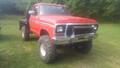
1974/f100/302/c4/9" rear 3.25 gearing/one piece driveshaft /short wheel base. Running the steel wheels that came on it, tires on the front have about 4000 miles on them, rears are new, balance is good on all 4. New drag link/tie rod ends, new I beam bushings, radius arm bushings, had it aligned, it's not cutting the front tires.The passenger side kingpin has a little play but it aligned and no unusual front tire wear. Had the drive shaft balanced, new u joints. I have gone through the brakes, rotors turned, new pads, drums turned and put new slave cylinders in it. I have good gas shocks at all 4 corners.
The OCD part..........I "want" this thing slick smooth at all speeds and I've gotten it there all except right at 70mph I feel a very rapid vibration start, not bone jarring but I feel it. The motor is turning right at 2900 rpm.
I believe it being at that speed it's driveline, I would think a problem at the wheels would be felt sooner.
Anybody ever chased something like this down or have any suggestions? Maybe something at the slip joint on the driveshaft. I've read of a bushing on the output shaft of the trans but not sure if that's with the c4.
Thanks in advance.
The OCD part..........I "want" this thing slick smooth at all speeds and I've gotten it there all except right at 70mph I feel a very rapid vibration start, not bone jarring but I feel it. The motor is turning right at 2900 rpm.
I believe it being at that speed it's driveline, I would think a problem at the wheels would be felt sooner.
Anybody ever chased something like this down or have any suggestions? Maybe something at the slip joint on the driveshaft. I've read of a bushing on the output shaft of the trans but not sure if that's with the c4.
Thanks in advance.

Mountain Pass
Joined: Feb 2003
Posts: 229
Likes: 4

I chased vibrations on a 79 F150 4x4 lwb for years. Never found it until I got ready to sell truck and replaced driveshaft. I felt stupid cause I replaced tires, rims, and even bushings to no avail. I was young. But you’ve done all that and then some. I would check pinion angle. I think its supposed to be equal to your t-case output, unless you have a cv joint, then I don’t think it matters. Just something to check since you’ve seemed to check everything else.
Thread Starter
|
Senior User
Joined: Nov 2016
Posts: 124
Likes: 0
What would be the best way to check the splines in the slip joint?
Moderator & parts slinger


Joined: Feb 2007
Posts: 50,247
Likes: 5,815
From: S/W Missouri, Polk county
I would think that with the d/s balanced/new u joints put in, that the shop would of inspected that area? And during the balancing they would of identified a worn area.
1. Take apart and insp the splines on both pieces for excessive wear.
2. Position the d/s and slip yoke in a normal amount of compression or extension and ck for and excessive amount of radial play, between the 2 pieces.
Swap the wheels/tires from front to rear and see if the vibration "moves", like checking for a bent rim.
1. Take apart and insp the splines on both pieces for excessive wear.
2. Position the d/s and slip yoke in a normal amount of compression or extension and ck for and excessive amount of radial play, between the 2 pieces.
Swap the wheels/tires from front to rear and see if the vibration "moves", like checking for a bent rim.

Post Fiend
Joined: Jun 2003
Posts: 8,209
Likes: 12
From: Black Hills of SD
Here's a thought. Most often, the tire shop just closes the lid on the balancer and then hammer the weights on where it tells them to. They rarely look at the tire spinning to see if there is run out on the tire, a bent rim ect. You can balance a square tire.
I once bought a brand new set of steel wheels and had over 1/4" of run out on the best of them. The place that sold them said up to 3/8" was acceptable. I was working in a gas station/garage and had access to the tire machine and balancer. Brand new BFG all terrains. I marked each one on 90 degree increments. And checked the balance on all 4 positions with no weights. Surprisingly, the same tire could take less than an ounce in the "sweet" spot and 3-4 in the worst position, same tire and same wheel. Now I realize you are not going to get a tire shop to do that but I just say it to show how much of a crap shoot mounting and balancing can be.
I once bought a brand new set of steel wheels and had over 1/4" of run out on the best of them. The place that sold them said up to 3/8" was acceptable. I was working in a gas station/garage and had access to the tire machine and balancer. Brand new BFG all terrains. I marked each one on 90 degree increments. And checked the balance on all 4 positions with no weights. Surprisingly, the same tire could take less than an ounce in the "sweet" spot and 3-4 in the worst position, same tire and same wheel. Now I realize you are not going to get a tire shop to do that but I just say it to show how much of a crap shoot mounting and balancing can be.
Trending Topics

Posting Guru
Joined: Nov 2011
Posts: 1,302
Likes: 5
From: Burlington, WI
Does your truck have a limited slip rear end? If so it may be ready for a rebuild or at least a fluid change. Mine vibrates on the highway only after I change lanes, then it'll even back out.
FTE Stories
Ford Trucks for Ford Truck Enthusiasts

3 Best / 3 Worst Parts of Modern Ford Ownership
Brett Foote
10 Amazing Upgrades That Solve Common Ford Truck Owner Headaches
Pouria Savadkouei
Every 2026 Ford Engine Explained
Brett Foote
10 Ugly Ford Trucks That We Still Kinda Love
Joe Kucinski
10 Things Every Truck Owner NEEDS (2026 Edition)
Michael S. Palmer
Rezvani's Latest Post-Apocalyptic Monster Is a Ford F-150 Raptor Underneath
Verdad Gallardo
Top 10 Most Expensive Ford Trucks Ever Sold on Bring a Trailer
Joe Kucinski
2027 Ford Super Duty Buyer's Guide (Every Model, Engine, & Package)
Brett Foote
Top 10 Ford Truck Tragedies
Joe Kucinski
Fleet Owner
Joined: Dec 2009
Posts: 20,678
Likes: 83
From: NorCal
Pull it apart and look at it... wiggle it, check for deflection with a dial indicator.
I'd swap on a different set of wheels and tires and see it it goes away.
I'd swap on a different set of wheels and tires and see it it goes away.
Thread Starter
|
Senior User
Joined: Nov 2016
Posts: 124
Likes: 0
I took the driveshaft to the shop without the truck but they were able to mount it in the machine and spin it for the balance without issue, a bad slip joint did not jump out at them. Im going to look more closely at the slip joint.
Rear end is open differential.
On the tire/wheel run out......I understand that and watch the guy when they are mounting and balancing. I do have one that some excess run-out could be seen on the balance machine. Not much, but didn't measure it.
I guess that's some of my wonderment, it's without vibration until I get to right at 70 mph. I would think if it was something at a wheel, the vibration would build as speed increased. Maybe I'm wrong on that.
Rear end is open differential.
On the tire/wheel run out......I understand that and watch the guy when they are mounting and balancing. I do have one that some excess run-out could be seen on the balance machine. Not much, but didn't measure it.
I guess that's some of my wonderment, it's without vibration until I get to right at 70 mph. I would think if it was something at a wheel, the vibration would build as speed increased. Maybe I'm wrong on that.
Post Fiend
Joined: Jun 2003
Posts: 8,209
Likes: 12
From: Black Hills of SD
I have had several instances of tire shake that didn't manifest until highway speed, and often could drive through it. A lot of harmonics come into play and I won't pretend to understand or explain them all. But working in garages and gas ststions I've seen a lot of weird issues that were tire related. Late model cars that wouldn't behave with one brand of tire but would with other brands, certain road conditions, Stuff like that.
Thread Starter
|
Senior User
Joined: Nov 2016
Posts: 124
Likes: 0
Follow up in case this thread is found later.
It was the motor mounts, the transmission mount had been changed when cleaning up the transmission sometime ago.
I do have slack in the slip joint, felt laterally, not a lot but it can be felt.
I did kind of backhand diagnose the motor mounts. Stopped to get feed for the critters. This errand usually does not take me on the interstate but this time it did. 150 pounds right at the gate changed the pinion angles just enough to almost eliminate the vibration, or so I guessed. New motor mounts eliminated it.
i had unbolted the mounts to change the oil pan gasket last summer. Comparing the old mounts to the new they appeared to be greater "height" to the new ones. Maybe the rubber had shrunk or had collapsed allowing the motor to lower slightly, raising the end of the transmission. All the other things I had done had reduced vibration, the new mounts fixed the last of it.
Thanks again for the help.
It was the motor mounts, the transmission mount had been changed when cleaning up the transmission sometime ago.
I do have slack in the slip joint, felt laterally, not a lot but it can be felt.
I did kind of backhand diagnose the motor mounts. Stopped to get feed for the critters. This errand usually does not take me on the interstate but this time it did. 150 pounds right at the gate changed the pinion angles just enough to almost eliminate the vibration, or so I guessed. New motor mounts eliminated it.
i had unbolted the mounts to change the oil pan gasket last summer. Comparing the old mounts to the new they appeared to be greater "height" to the new ones. Maybe the rubber had shrunk or had collapsed allowing the motor to lower slightly, raising the end of the transmission. All the other things I had done had reduced vibration, the new mounts fixed the last of it.
Thanks again for the help.



Moderator & parts slinger
Joined: Feb 2007
Posts: 50,247
Likes: 5,815
From: S/W Missouri, Polk county
I love is when one of my guess's is the problem. A Coors's light is fine, a glass of cold sweet iced tea with a shot of Hot Dame is even better. 
Thanks for the follow up.
Thanks for the follow up.

Thread
Thread Starter
Forum
Replies
Last Post