



360 misfire troubleshooting

Thread Starter
|
Mountain Pass
Joined: Mar 2017
Posts: 134
Likes: 1
360 misfire troubleshooting
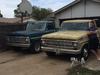
I have a 1971 ford f100 with a 360, I got it running finally, but it greeted be one day with a knocking motor. I had heard if your timing is off (which I know it is) then your engine will knock, but being this is in the bottom end I doubted that was my case, but I'm not sure.

Post Fiend
Joined: Jun 2003
Posts: 8,209
Likes: 12
From: Black Hills of SD
Too much timing would be more of a ping and generally doesn't just manifest all of the sudden. If it's knock at idle or no load, there's a lot of mechanical things it might be and all anyone on here can do is make a good guess.
If it has a misfire situation, you can pull plug wires out of the cap, one at a time and listen to the change in rpm to isolate which hole it is. Then go from there.
If it has a misfire situation, you can pull plug wires out of the cap, one at a time and listen to the change in rpm to isolate which hole it is. Then go from there.
Thread Starter
|
Mountain Pass
Joined: Mar 2017
Posts: 134
Likes: 1
Too much timing would be more of a ping and generally doesn't just manifest all of the sudden. If it's knock at idle or no load, there's a lot of mechanical things it might be and all anyone on here can do is make a good guess.
If it has a misfire situation, you can pull plug wires out of the cap, one at a time and listen to the change in rpm to isolate which hole it is. Then go from there.
If it has a misfire situation, you can pull plug wires out of the cap, one at a time and listen to the change in rpm to isolate which hole it is. Then go from there.
Thread Starter
|
Mountain Pass
Joined: Mar 2017
Posts: 134
Likes: 1
[QUOTE=TeachNlive4ever;17208132]I've seen wrist pins make a knocking noise one would think the lower end and run for years. (Was that a run on sentence?)[/QUOTE
Lol, a bit yeah. The knocking noise is in the bottom end. I also put 20W oil into it (was running 10W) and I actually didn't hear the knocking for the 2-3 minutes I left it running and revved it up a bit.
If I fix the timing to help it run smoother then I think that will help give me an answer.
Lol, a bit yeah. The knocking noise is in the bottom end. I also put 20W oil into it (was running 10W) and I actually didn't hear the knocking for the 2-3 minutes I left it running and revved it up a bit.
If I fix the timing to help it run smoother then I think that will help give me an answer.
Thread Starter
|
Mountain Pass
Joined: Mar 2017
Posts: 134
Likes: 1
Would that give it any lasting life? I used normal gasoline type 20W50, I guess I could try that, makes sense that it'd work.
Trending Topics
Tuned

Joined: May 2017
Posts: 414
Likes: 40
From: C-town,MD
It's a band aid. It will probably run for years like that. Older engines,that aren't controlled by a computer, will continue to run longer with more wrong with them.
FTE Stories
Ford Trucks for Ford Truck Enthusiasts

Top 10 Most Expensive Ford Trucks Ever Sold on Bring a Trailer
Joe Kucinski
2027 Ford Super Duty Buyer's Guide (Every Model, Engine, & Package)
Brett Foote
Top 10 Ford Truck Tragedies
Joe Kucinski
AEV FXL Super Duty - the Super Duty Raptor Ford Doesn't Make
Brett Foote
Lobo Vs Lobo: Proof the F-150 Lobo Should Be Even Lower!
Michael S. Palmer
Ford's 2001 Explorer Sportsman Concept Looks For a New Home
Verdad Gallardo
10 Best Ford Truck Engines We Miss the Most!
Joe Kucinski
2026 Shelby F-150 Off-Road: Better Than a Raptor R?
Brett Foote
2027 Super Duty Carhartt Package First Look: 12 Things You NEED to Know!
Michael S. Palmer
Thread Starter
|
Mountain Pass
Joined: Mar 2017
Posts: 134
Likes: 1
Yeah, makes sense. I'll try that. My 4th oil change on it in 2 months lol. My uncles are convinced it's timing is the only mechanical flaw and therefore don't see why I neglect it, but I wanna see this thing driving again and be my daily (I hope)
Thread Starter
|
Mountain Pass
Joined: Mar 2017
Posts: 134
Likes: 1
That works, anything to get around pulling the engine for a bottom end rebuild. I don't trust myself at this young age to do that, and do it right especially for a first, and for a daily car.

Lead Driver


Joined: Apr 2011
Posts: 6,399
Likes: 40
From: El Dorado, Arkansas
If you have a computer-controlled engine that's running really poorly, it's because the processor has done all it can do to try and make the engine run at its best performance and it simply has no more tweaks or room for adjustment left to get it to operate smoothly.
I agree that anything short of fixing the actual problem (likely to require a rebuild of the engine) is a stop gap, band-aid fix at best.
Thread Starter
|
Mountain Pass
Joined: Mar 2017
Posts: 134
Likes: 1
It's really a situation of being the other way around. Computer-controlled engine processors are like having a full time mechanic under the hood constantly trying to adjust the engine to run at optimum performance, on-the-fly, all the time. A typical Ford EEC-IV ECU operates at 15 Mega Hertz and can carry out 80 tasks per second.
If you have a computer-controlled engine that's running really poorly, it's because the processor has done all it can do to try and make the engine run at its best performance and it simply has no more tweaks or room for adjustment left to get it to operate smoothly.
I agree that anything short of fixing the actual problem (likely to require a rebuild of the engine) is a stop gap, band-aid fix at best.
If you have a computer-controlled engine that's running really poorly, it's because the processor has done all it can do to try and make the engine run at its best performance and it simply has no more tweaks or room for adjustment left to get it to operate smoothly.
I agree that anything short of fixing the actual problem (likely to require a rebuild of the engine) is a stop gap, band-aid fix at best.
If the truck lasts at least 2-3 years with doing just these things, that's fine, I just wasn't planning on rebuilding the engine on my first car, and I already put $700 into it and want to get some life out of it for the time being. I'll rebuild it soon if I keep the truck for more than a couple years which I probably will.
Thread Starter
|
Mountain Pass
Joined: Mar 2017
Posts: 134
Likes: 1
Speaking of which, where can I get one of those? This truck could probably use a new oil pump anyways as it's probably on the original one still.
Tuned
Joined: May 2017
Posts: 414
Likes: 40
From: C-town,MD
If, when you drop the pan, you find little pieces of black plastic, those are your 45yo valve guide seals. If you find little bits of white plastic, you need a new timing set.
Here's a good pump.
https://www.summitracing.com/parts/m...view/make/ford
And you'll need the shaft too. Make sure the little ring goes on the top when you put it in. It keeps you from pulling the shaft out if you pull the dizzy.
https://www.summitracing.com/parts/mel-is-60/overview/
Here's a good pump.
https://www.summitracing.com/parts/m...view/make/ford
And you'll need the shaft too. Make sure the little ring goes on the top when you put it in. It keeps you from pulling the shaft out if you pull the dizzy.
https://www.summitracing.com/parts/mel-is-60/overview/