




Charcoal canister
Cargo Master


Joined: Oct 2013
Posts: 2,580
Likes: 29
From: in a barn


I would drill and tap a 1/4 NPT hole near the top of the filler tube and run a rubber hose from there to the canister. You want it high so that gas cannot get into it when putting gas in and so gas cannot get into it from the tank. The gas station nozzle should go into the filler tube lower than the vent connections. If liquid gas gets in that line it will trash the canister, you only want gas fumes in it.
I am running modern sending units that already have the vent connection built in so I didnt need to add the extra vent line to my filler tube. Mine runs right from the tank (small 1/4" line in the picture). Ignore the 2nd fuel pump, that was a boost pump for the supercharger, my pump is inside the tank.


Thread Starter
|
Elder User
Joined: Jan 2015
Posts: 508
Likes: 1
The tube to the right of the filler neck is the vent for filling gas, you need to make a vent line from there ( I use 1/2" EMT conduit) and tie that in to the top of the filler neck. That allows air in the tank to be pushed out while putting gas in. Without it the gas will spit back at you if you fill the tank too quickly. If you are running a large factory style open gas filler then you don't need it, but with a modern filler opening that is just big enough for the gas pump nozzle and a sealed cap then you would need it. This is the one from my truck #2 build
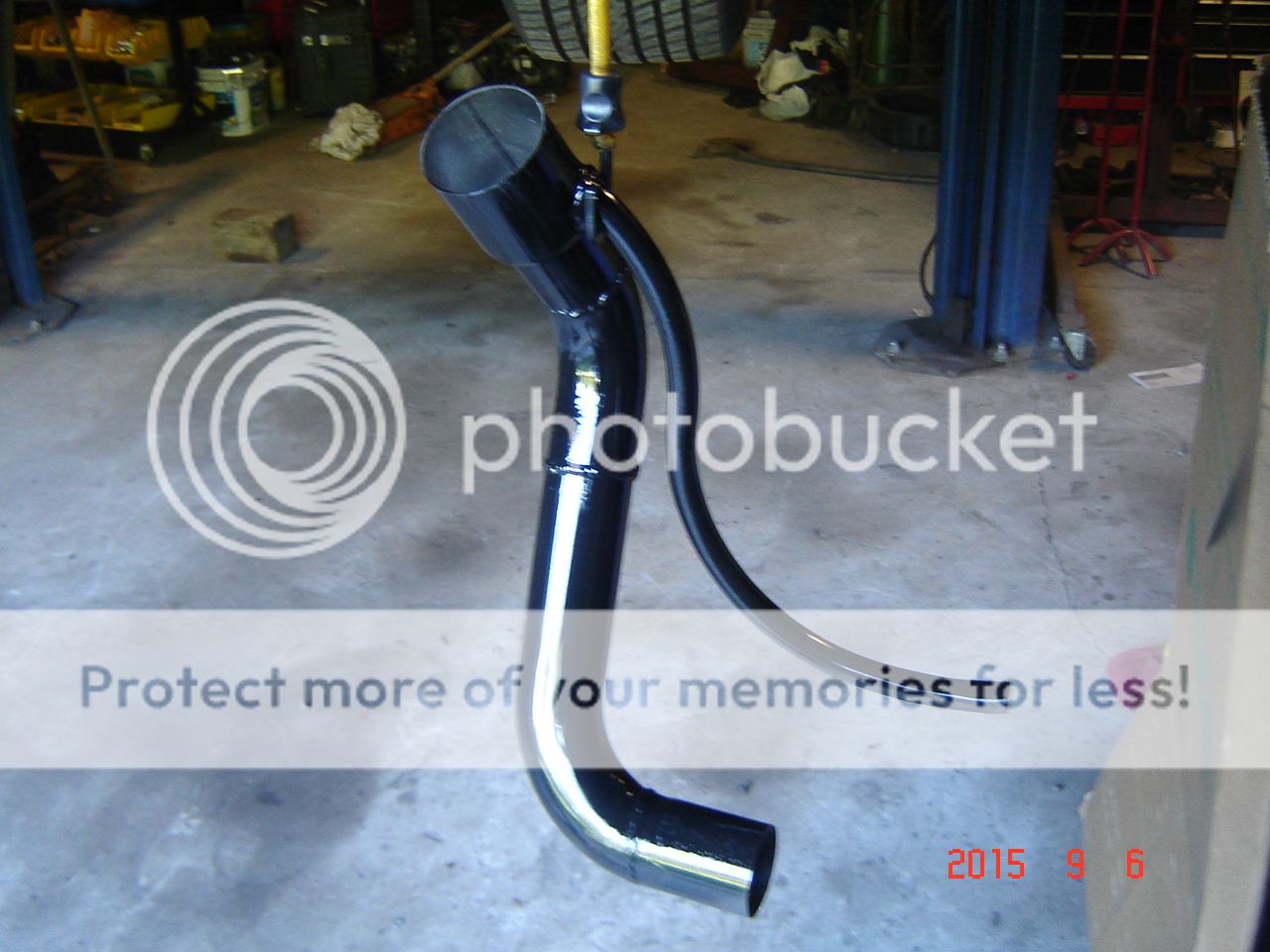
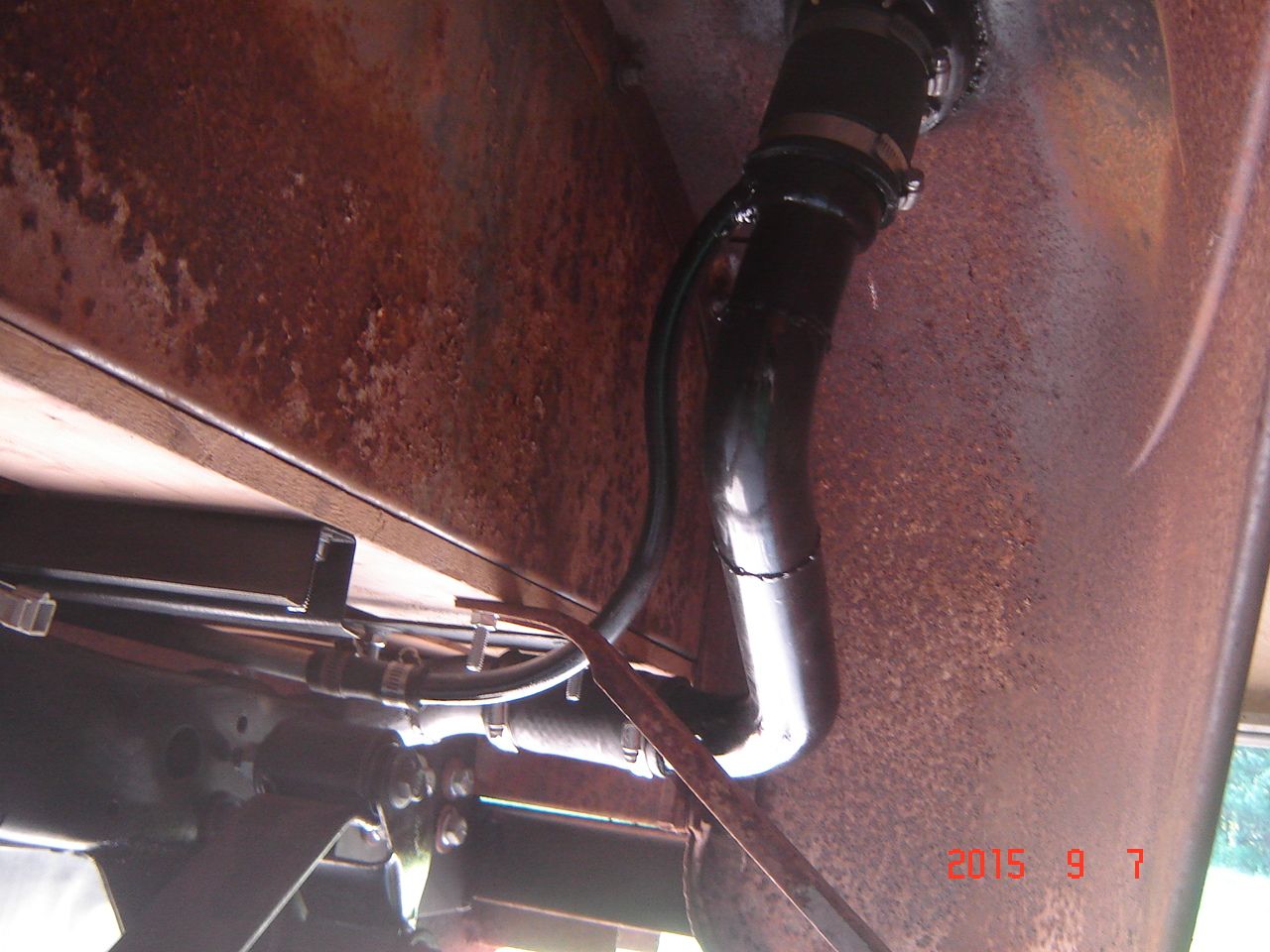
I would drill and tap a 1/4 NPT hole near the top of the filler tube and run a rubber hose from there to the canister. You want it high so that gas cannot get into it when putting gas in and so gas cannot get into it from the tank. The gas station nozzle should go into the filler tube lower than the vent connections. If liquid gas gets in that line it will trash the canister, you only want gas fumes in it.
I am running modern sending units that already have the vent connection built in so I didnt need to add the extra vent line to my filler tube. Mine runs right from the tank (small 1/4" line in the picture). Ignore the 2nd fuel pump, that was a boost pump for the supercharger, my pump is inside the tank.
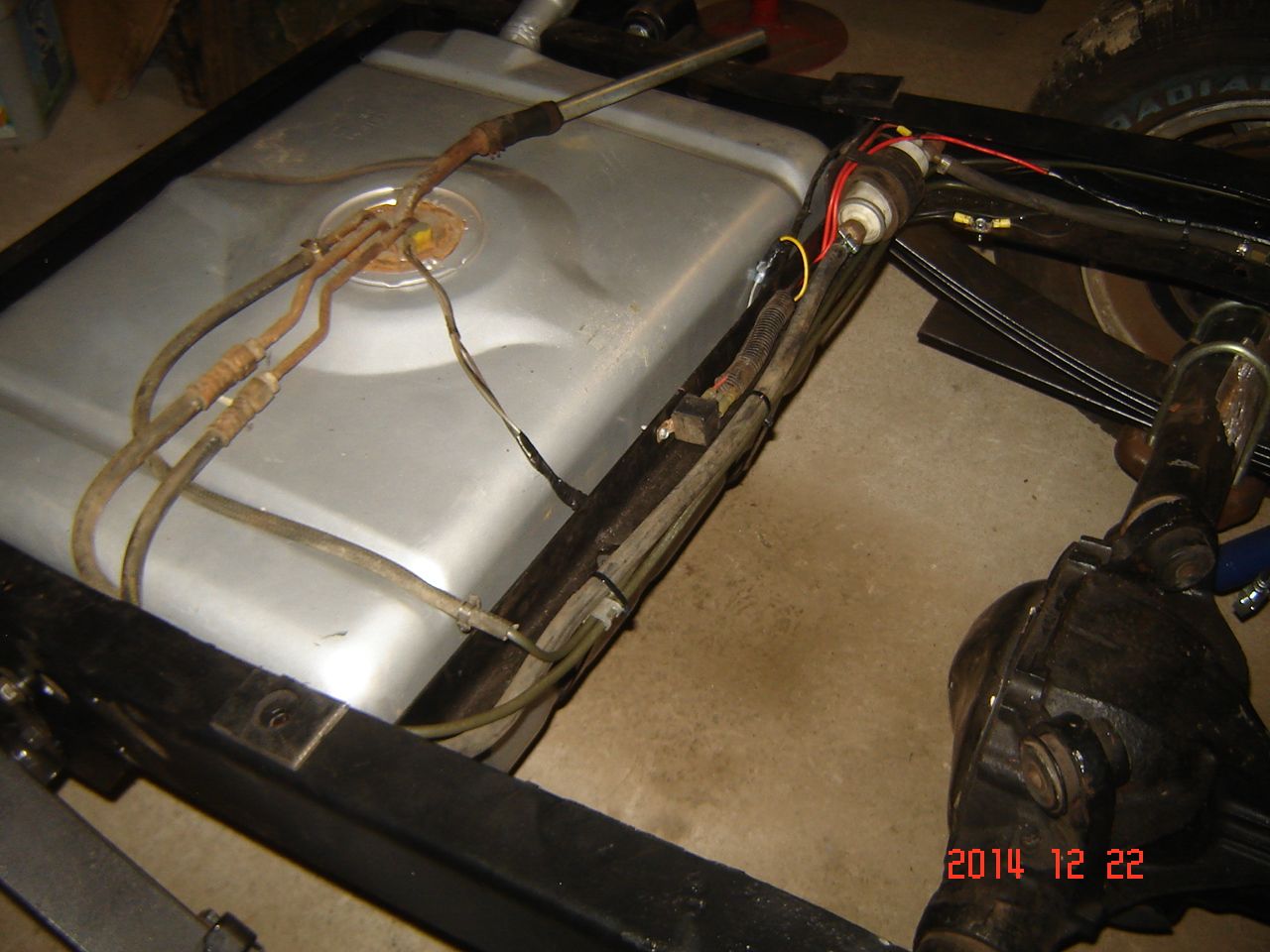
I would drill and tap a 1/4 NPT hole near the top of the filler tube and run a rubber hose from there to the canister. You want it high so that gas cannot get into it when putting gas in and so gas cannot get into it from the tank. The gas station nozzle should go into the filler tube lower than the vent connections. If liquid gas gets in that line it will trash the canister, you only want gas fumes in it.
I am running modern sending units that already have the vent connection built in so I didnt need to add the extra vent line to my filler tube. Mine runs right from the tank (small 1/4" line in the picture). Ignore the 2nd fuel pump, that was a boost pump for the supercharger, my pump is inside the tank.
Can I add it to the same tube for filler vent? Then run 1/4 hose to canister and so on ?
Fleet Mechanic
Joined: Sep 2002
Posts: 1,622
Likes: 3
From: okla

I have the same cap [not off of a factory production car, sold by Hagan] on my 40 coupe with a vented Tanks gas tank. Never any fumes. My 53F100 does have a gas fume problem because I did not get the roll over vent high enough on the inner fender panel. In my plans to redo that soon. If I don't fill the tank over 3/4 I don't have the problem.

Logistics Pro


Joined: Nov 2011
Posts: 4,684
Likes: 79
From: Northville, MI

Just make sure that when you mount the charcoal canister that it is not lower than the gas tank. We almost burned down Virginia City, NV years ago when a prototype Jeep mule caught on fire because of that during off-road testing. 

Cargo Master
Joined: Oct 2013
Posts: 2,580
Likes: 29
From: in a barn
IMO based on the OEM stuff I copy the canister can be below the tank as long as the fumes are scavenged above the highest point of the fuel In the tank..my LT1 donor cars all have the canisters below the top of the gas tanks from the factory. Idea is to make sure raw gas cannot get in the canister.
The FI tanks I use have a "vapor dome" to trap fumes when the tank is full, and then if someone kept filling the tank the sending unit has a check valve of some sort on the vent line to keep raw fuel from going out the vent port. When I use an old style carb tank and sending unit I just pull the fumes from high on hhe filler neck and don't over fill the tank.
The FI tanks I use have a "vapor dome" to trap fumes when the tank is full, and then if someone kept filling the tank the sending unit has a check valve of some sort on the vent line to keep raw fuel from going out the vent port. When I use an old style carb tank and sending unit I just pull the fumes from high on hhe filler neck and don't over fill the tank.
Logistics Pro
Joined: Nov 2011
Posts: 4,684
Likes: 79
From: Northville, MI
IMO based on the OEM stuff I copy the canister can be below the tank as long as the fumes are scavenged above the highest point of the fuel In the tank..my LT1 donor cars all have the canisters below the top of the gas tanks from the factory. Idea is to make sure raw gas cannot get in the canister.
The FI tanks I use have a "vapor dome" to trap fumes when the tank is full, and then if someone kept filling the tank the sending unit has a check valve of some sort on the vent line to keep raw fuel from going out the vent port. When I use an old style carb tank and sending unit I just pull the fumes from high on hhe filler neck and don't over fill the tank.
The FI tanks I use have a "vapor dome" to trap fumes when the tank is full, and then if someone kept filling the tank the sending unit has a check valve of some sort on the vent line to keep raw fuel from going out the vent port. When I use an old style carb tank and sending unit I just pull the fumes from high on hhe filler neck and don't over fill the tank.
FTE Stories
Ford Trucks for Ford Truck Enthusiasts

10 Best Ford Truck Engines We Miss the Most!
Joe Kucinski
2026 Shelby F-150 Off-Road: Better Than a Raptor R?
Brett Foote
2027 Super Duty Carhartt Package First Look: 12 Things You NEED to Know!
Michael S. Palmer
10 Most Surprising 2026 Ford Truck Features!
Joe Kucinski
Top 10 Ford Trucks Coming to Mecum Indy 2026
Brett Foote
5 Best / 5 Worst Ford Truck Wheels of All Time
Joe Kucinski
Ford Super Duty: 5 Things Owners LOVE, 5 Things They LOATHE!
Joe Kucinski
Every 2026 Ford Truck Engine RANKED from WORST to FIRST!
Michael S. Palmer
The Best F-150 Deal of Every Trim Level (XL through Raptor)
Joe Kucinski
Thread Starter
|
Elder User
Joined: Jan 2015
Posts: 508
Likes: 1

Cargo Master
Joined: Oct 2013
Posts: 2,580
Likes: 29
From: in a barn
Not sure, what is the OEM application? Are the ports labeled? All I have used are my GM ones which are pretty standard but I have no idea what port is what on that canister. If it is from a production car you need to find the EVAP schematic.
Thread Starter
|
Elder User
Joined: Jan 2015
Posts: 508
Likes: 1
https://www.amazon.ca/dp/B000C7ZA5G/ref=pe_386430_126088100_TE_item
Thread Starter
|
Elder User
Joined: Jan 2015
Posts: 508
Likes: 1
Says it fits a 1990 ford mustang

Thread Starter
|
Elder User
Joined: Jan 2015
Posts: 508
Likes: 1
Thanks alot. I will have to find the caps. Or Jimmy rig some up
Thread Starter
|
Elder User
Joined: Jan 2015
Posts: 508
Likes: 1
Does the canister have to be mounted in the engine bay or can I do it on the beside behind the fender up high?