




Steering Wheel Repairs - Does and don't!
Thread Starter
|
Cargo Master


Joined: Sep 2010
Posts: 3,426
Likes: 48
From: Hot AZ (Phoenix Valley)

Steering Wheel Repairs - Does and don't!

Here is my cracked old steering wheel.
Well like many others, my steering wheel (bakelite) has cracks and missing small pieces, so it need some repair. I'm looking for help from others to see what they used and did. I've heard of people using PC-7, JB Weld, and many other kinds of 2 parts epoxies. What year is your steering wheel from? What did you use as a filler (epoxy)? How long ago did you do yours? What kind of paint did you spray afterwards? How is yours holding up? If there is something you would do different this time?

Logistics Pro


Joined: Jun 2011
Posts: 4,992
Likes: 420
From: u-rah-rah Wisconsin
I used POR 15 putty and painted with POR 15 paint. The paint adhered well to the 'chalky' wheel surface and has held up well for 5 years. It is showing some wear and will need a recoat next year.
Mountain Pass
Joined: Aug 2012
Posts: 116
Likes: 11
From: Queen Creek
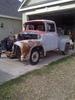
I repaired mine with PC7 and painted with Topcoat by POR15. I dries rock hard, doesn't soften in the AZ sun and is UV resistant.
Here's a before and after that I completed this past February.
Ernie
Here's a before and after that I completed this past February.
Ernie

Cargo Master

Joined: Apr 2005
Posts: 3,337
Likes: 165
From: Harpswell Maine
I have done 2 wheels over time, a 1938 Woodie Banjo wheel in the 80's and an antique boat wheel last year. I used PC-7 both times. I used acrylic enamel and on the banjo wheel used a flexible additive. Not sure that the additive was required.

Fleet Mechanic

Joined: Sep 2015
Posts: 1,412
Likes: 123
From: Nebraska

Thanks for bringing this topic to the top Moe. This is one thing I can work on during these cold and snowy days this winter. I will be following closely. By the way, yours looks awesome EFranzen!

Junior User
Joined: Sep 2016
Posts: 76
Likes: 1
From: High Springs, Fl
Any step by step's on this method? That looks amazing btw.
Trending Topics
Lead Driver

Joined: Dec 2012
Posts: 9,688
Likes: 814
From: Wentzville, MO
Most of the threads I read said be sure to groove all cracks  down to the metal to get good adhesion. Many advised to use plastic adhesion promoter which I did. I had planned to use JB Weld but read some disappointing threads about it separating and swelling. Since this is not a science it could be that the bad JB Weld threads were bad preperation
 .
.
My wheel is a 64 Galaxie, whatever it's made of is very soft (or decomposed). I've just got it in primer and am planning on using rustoleum rattle cans to match my interior.
down to the metal to get good adhesion. Many advised to use plastic adhesion promoter which I did. I had planned to use JB Weld but read some disappointing threads about it separating and swelling. Since this is not a science it could be that the bad JB Weld threads were bad preperation.My wheel is a 64 Galaxie, whatever it's made of is very soft (or decomposed). I've just got it in primer and am planning on using rustoleum rattle cans to match my interior.
FTE Stories
Ford Trucks for Ford Truck Enthusiasts

10 Best Ford Truck Engines We Miss the Most!
Joe Kucinski
2026 Shelby F-150 Off-Road: Better Than a Raptor R?
Brett Foote
2027 Super Duty Carhartt Package First Look: 12 Things You NEED to Know!
Michael S. Palmer
10 Most Surprising 2026 Ford Truck Features!
Joe Kucinski
Top 10 Ford Trucks Coming to Mecum Indy 2026
Brett Foote
5 Best / 5 Worst Ford Truck Wheels of All Time
Joe Kucinski
Ford Super Duty: 5 Things Owners LOVE, 5 Things They LOATHE!
Joe Kucinski
Every 2026 Ford Truck Engine RANKED from WORST to FIRST!
Michael S. Palmer
The Best F-150 Deal of Every Trim Level (XL through Raptor)
Joe Kucinski
Mountain Pass
Joined: Aug 2012
Posts: 116
Likes: 11
From: Queen Creek
I used a die grinder to open the cracks a little bit and then sandblasted the rusty bits. I then applied PC-7 to the cracks being careful not to gob on, as that just means more sanding.
Once the epoxy dried (several days to make sure it wasn't going to shrink), I filed and sanded. This was a longest hardest part.
Once sanded I sprayed with TopCoat \ Black Coat by POR15.
Here's a photo of the wheel after applying the PC-7, but before sanding.
Ernie
Once the epoxy dried (several days to make sure it wasn't going to shrink), I filed and sanded. This was a longest hardest part.
Once sanded I sprayed with TopCoat \ Black Coat by POR15.
Here's a photo of the wheel after applying the PC-7, but before sanding.
Ernie
Lead Driver
Joined: Aug 2006
Posts: 8,093
Likes: 652
From: Brentwood, TN
I use silicone putty for many of my projects when I need to capture a contour to copy to another section. In the case of a steering wheel, the putty can be used to make a mold of a good section of the wheel and then the mold is used when the PC-7 is applied to hold the repair epoxy in the exact shape of the wheel. Sanding and reapplication of epoxy is kept to a minimum.



Thread Starter
|
Cargo Master
Joined: Sep 2010
Posts: 3,426
Likes: 48
From: Hot AZ (Phoenix Valley)
At first I only heard of people using JB weld and then heard of people using POR 15 Putty. But now I been finding more and more using the PC-7. I have an extra wheels (thanks Tyler S) to play with... Anyone have a failure (DON'Ts) store to tell use to steer clear of?
CharlieLED,
What kind of silicone putty are you using? Is it the really soft molding putty? How are you securing it to the wheel (binding or wrapping it)?
CharlieLED,
What kind of silicone putty are you using? Is it the really soft molding putty? How are you securing it to the wheel (binding or wrapping it)?
Lead Driver
Joined: Aug 2006
Posts: 8,093
Likes: 652
From: Brentwood, TN
Here is one of many silicone putties available EasyMold® Silicone Putty The putty has a consistency of soft bubble gum and needs no support to hold it in place. On a steering wheel rim I would mold the putty around the rim and then make a cut in it when it has cured (20 mins) to remove it. When using it on a repaired area all that you need to do is prep the damaged area, apply your repair epoxy to fill the void, and then place the silicone mold over the repair to "mold" the epoxy to shape. At best you might need a strip of masking tape to hold the mold closed...this depends on how thick you made your mold. Nothing sticks to cured silicone so there is no need to prep your mold, it will peel right off the cured epoxy.