When you click on links to various merchants on this site and make a purchase, this can result in this site earning a commission. Affiliate programs and affiliations include, but are not limited to, the eBay Partner Network.
The pad goes between the radiator support and the frame crossmember. The carriage bolts go in from the top and the springs go on first from the bottom followed by the washers and nuts. The idea is basically to have the radiator support and its associated weight carried by the frame, but the springs underneath will allow some flex and movement in the frame and chassis over rough roads without tweaking the body. The frames in these trucks are an integral and active part of the suspension and were intended to flex and twist a certain amount.
I'm not sure that there is a torque spec since you are compressing a spring. I just compressed both springs until the castellated nut cleared the cotter pin hole.
any recollection how much the springs compressed (a little or a lot)? my original bolts were tweaked, so i'm using standard carriage bolts/nuts with lock washers.
Originally Posted by petemcl
I'm not sure that there is a torque spec since you are compressing a spring. I just compressed both springs until the castellated nut cleared the cotter pin hole.
If you replaced them with the same length bolts then you will need to drill a hole in them for a cotter key so they will not come loose. Hopefully you kept the castellated nuts but if not the just tighten until you can see the hole that you drilled (maybe ¼" from end) so you can get the cotter key in. All the front sheet metal is attached to that radiator mount so it needs to flex slightly as the frame flexes or bad things will happen to your bodywork upstream. Your cab is on rubber mounts so it flexes. If your fenders do not flex . . . well you can imagine the consequences. Paint cracks will be your first indicator.
If you replaced them with the same length bolts then you will need to drill a hole in them for a cotter key so they will not come loose. Hopefully you kept the castellated nuts but if not the just tighten until you can see the hole that you drilled (maybe ¼" from end) so you can get the cotter key in. All the front sheet metal is attached to that radiator mount so it needs to flex slightly as the frame flexes or bad things will happen to your bodywork upstream. Your cab is on rubber mounts so it flexes. If your fenders do not flex . . . well you can imagine the consequences. Paint cracks will be your first indicator.
this is a point that has not been a topic talked about in some time the cab, radiator support and tying them to the frame though the inner fender and the movement of all those not in the same direction, some on rubber some not
it was hard enough finding 7/16" carriage bolts (non-standard size)-- no luck at ace hardware, lowes, home depot, etc. fastenal and grainger could special order them for me, but in packs of 20. finally lucked out yesterday at an industrial specialty fastener place in denver -- best of all, the guy just gave them to me.
originals are also actually 4 1/4" long, whereas replacements available in either 4 or 4 1/2" (so i erred on the side of going longer).
the old bolts are bent, but i suppose i could set it all back up and get a sense of how much the spring is compressed once the cotter hole is clear.
it was hard enough finding 7/16" carriage bolts (non-standard size)-- no luck at ace hardware, lowes, home depot, etc. fastenal and grainger could special order them for me, but in packs of 20. finally lucked out yesterday at an industrial specialty fastener place in denver -- best of all, the guy just gave them to me.
originals are also actually 4 1/4" long, whereas replacements available in either 4 or 4 1/2" (so i erred on the side of going longer).
the old bolts are bent, but i suppose i could set it all back up and get a sense of how much the spring is compressed once the cotter hole is clear.
Double nut would work OK. I might choose a nylok instead but cotter key is the old reliable.
Just adjust the nut(s) up to match the spot on the original bolt.
Found the old hw... no cotter key on these?
Maybe an F3 difference?
No cotter pins because the nuts in the picture are locking nuts. Like was previously mention use nylocks and never worry about them loosening up from vibration etc.
It looks like you could reuse those nuts. The difference may be '50 vs '52 but it could be assembly plant to plant difference. Even today plants sometimes run out of "just in time" parts so they do a TSO (temporary substitution order) approved by engineering which lets them buy parts locally in order to keep the assembly line moving. Whatever solution you use those nuts just need some sort of positive lock. Based upon the witness marks on those bolts it is obvious that there is a lot of vibration in that area.
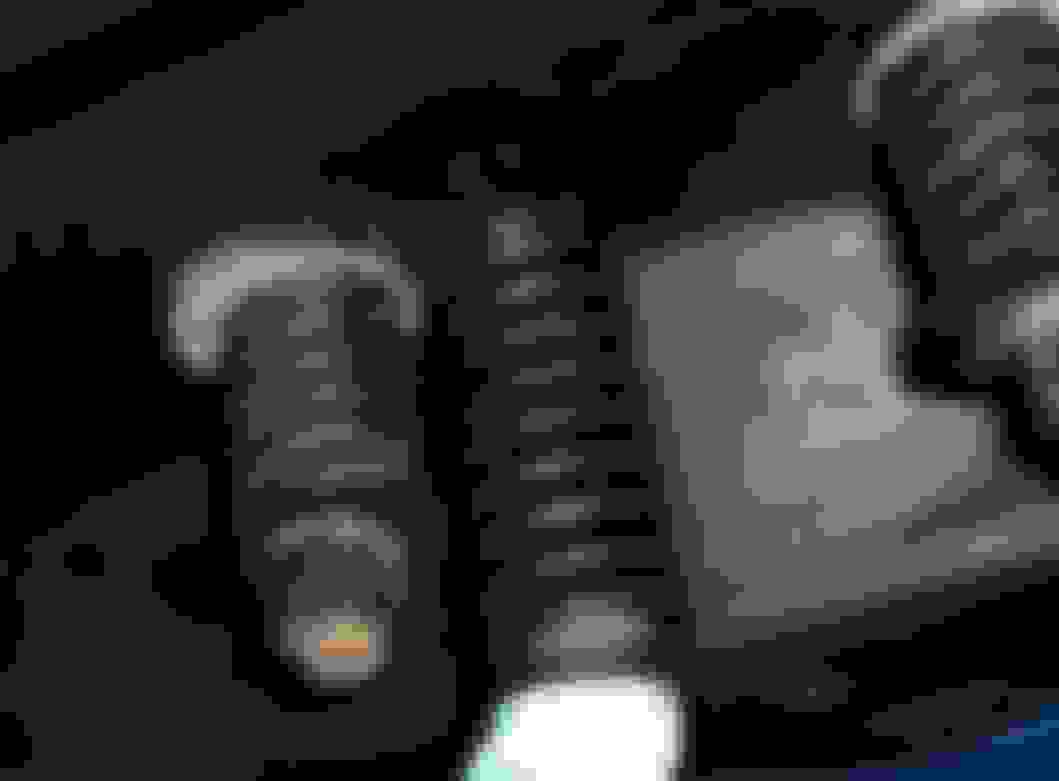
Also the rust marks on the bottom should give you a guide to how much those springs need to be compressed.
No cotter pins because the nuts in the picture are locking nuts. Like was previously mention use nylocks and never worry about them loosening up from vibration etc.
The evidence on the original bolts shows that there is significant movement in that area, thanks for the picture. There is a reason for correct installation. but I was planning something different, every time I come on here I learn something.
Mine also has self-locking nuts, prevailing torque type instead of split nuts. Re-used and no issues after 10+ years. Ignore the spring alongside the saddle spring, it was for a different thread. You can see how much I tightened the nuts down.
This Hennessey Takes the Expedition Tremor's Off-Roading Capability to the Next Level
Slideshow: The VelociRaptor Expedition gains a lift, upgraded suspension, Brembo brakes, and trail-ready equipment while retaining the stock 440-horsepower EcoBoost V6.
Rezvani's Latest Post-Apocalyptic Monster Is a Ford F-150 Raptor Underneath
Slideshow: Called the Fortress, the 850-horsepower pickup combines Raptor underpinnings with military-inspired features, survival equipment, and a starting price of $285,000.



 radiator support hardware