




Electrical Ignition Problems

Thread Starter
|
New User
Joined: Nov 2016
Posts: 4
Likes: 0
 Electrical Ignition Problems
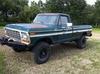
Hi all... My father and I are trying to get his 1978 Ford F-150 to start. The engine is a 351 modified (400) with an electronic ignition. We have replaced the pickup coil, distributor cap and button, electronic ignition box, starter "it just needed it", solenoid, ignition coil and condenser, positive battery cable and ignition switch. This was done part by part starting with the pickup coil to get the truck started. We are not getting fire at from the coil "We are using a spark tester plugged into the coil wire "which was replaced". We have confirmed using a multi-meter that there is 12V coming into the ignition coil on the tach side - and the battery side +, from what I have read that is correct. We cannot find what is causing the issue with the vehicle. Anybody got a clue of where else we can look?

Mountain Pass


Joined: Mar 2016
Posts: 189
Likes: 20
From: 06804 / 38583
Timing chain jumped.
Well, that was my experience with - as it turned out - nylon covered timing gears in the 360 I had in my 72 Dodge B300.
Troubleshot it just as you did, all electrics checked out as they should. Nylon coating just wore out and gave enough slack that the chain jumped a couple teeth, just enough to effect cam timing such that the old girl wouldn't fire.
*EDIT* Whoops, reread your post. Did you say you put the spark tester in the coil wire? Would that even work like that? What happens when you put the spark tester in-line in a spark plug wire?
Well, that was my experience with - as it turned out - nylon covered timing gears in the 360 I had in my 72 Dodge B300.
Troubleshot it just as you did, all electrics checked out as they should. Nylon coating just wore out and gave enough slack that the chain jumped a couple teeth, just enough to effect cam timing such that the old girl wouldn't fire.
*EDIT* Whoops, reread your post. Did you say you put the spark tester in the coil wire? Would that even work like that? What happens when you put the spark tester in-line in a spark plug wire?
Thread Starter
|
New User
Joined: Nov 2016
Posts: 4
Likes: 0
Sorry for the delay on posting.
We have checked the rotation of the distributor and it is turning when the engine is cranked.
We set the #1 piston on TDC and confirmed that the rotary button is pointing to the correct location on the cap.
We are getting the proper voltage to the coil and have checked the coil to see if it would spark through the ignition switch and bypassing the switch and powering it from the battery, all of this works fine.
Filthy Beast, we are getting 12V across the terminals with the key on.
We have also taken jumper cables and grounded the battery to the frame and the engine to the frame after cleaning off the grounding area to see if that was the issue. Still no spark. We are going to replace the distributor and see what that does, the voltage across everything tested is fine. Will update everyone when complete.
We have checked the rotation of the distributor and it is turning when the engine is cranked.
We set the #1 piston on TDC and confirmed that the rotary button is pointing to the correct location on the cap.
We are getting the proper voltage to the coil and have checked the coil to see if it would spark through the ignition switch and bypassing the switch and powering it from the battery, all of this works fine.
Filthy Beast, we are getting 12V across the terminals with the key on.
We have also taken jumper cables and grounded the battery to the frame and the engine to the frame after cleaning off the grounding area to see if that was the issue. Still no spark. We are going to replace the distributor and see what that does, the voltage across everything tested is fine. Will update everyone when complete.

Postmaster
Joined: Mar 2011
Posts: 2,698
Likes: 7
From: Taxachusetts
Ok..So you're getting 12VDC from the (+) coil terminal to engine ground - not to the coil's (-).... with the key on RUN and with the engine OFF, correct?
I just want to be sure before offering a cause of this illness.
And, I fergot my Emily Post....welcome to FTE.
I just want to be sure before offering a cause of this illness.
And, I fergot my Emily Post....welcome to FTE.
Thread Starter
|
New User
Joined: Nov 2016
Posts: 4
Likes: 0
Filthy Beast, thanks for the welcome...
Checked the coil positive (+) terminal again and do have 12VDC with the switch on. Checked the negative (-) terminal and also have 12VDC on that terminal with the switch on.
Checked the coil positive (+) terminal again and do have 12VDC with the switch on. Checked the negative (-) terminal and also have 12VDC on that terminal with the switch on.
Trending Topics
Postmaster
Joined: Mar 2011
Posts: 2,698
Likes: 7
From: Taxachusetts
Ok. I can only suppose you're testing the (+) coil terminal to engine ground with the key in RUN and engine OFF and getting 12 VDC because you haven't stated that you did just that.
Not to beat you up, but this test, and you're answer, has to be complete as asked.
Don't worry about having 12 VDC at the tach test terminal for now....we'll keep that in mind.
Another test....to clear up things: Hook up a test light to the (-) terminal of the coil - the "tach test" - and the other end to a good engine ground. Crank her over and watch the test light.
What does it do? Blink? No blink? Stayed on? Light stayed on and no blink?
Not to beat you up, but this test, and you're answer, has to be complete as asked.
Don't worry about having 12 VDC at the tach test terminal for now....we'll keep that in mind.
Another test....to clear up things: Hook up a test light to the (-) terminal of the coil - the "tach test" - and the other end to a good engine ground. Crank her over and watch the test light.
What does it do? Blink? No blink? Stayed on? Light stayed on and no blink?
FTE Stories
Ford Trucks for Ford Truck Enthusiasts

10 Best Ford Truck Engines We Miss the Most!
Joe Kucinski
2026 Shelby F-150 Off-Road: Better Than a Raptor R?
Brett Foote
2027 Super Duty Carhartt Package First Look: 12 Things You NEED to Know!
Michael S. Palmer
10 Most Surprising 2026 Ford Truck Features!
Joe Kucinski
Top 10 Ford Trucks Coming to Mecum Indy 2026
Brett Foote
5 Best / 5 Worst Ford Truck Wheels of All Time
Joe Kucinski
Ford Super Duty: 5 Things Owners LOVE, 5 Things They LOATHE!
Joe Kucinski
Every 2026 Ford Truck Engine RANKED from WORST to FIRST!
Michael S. Palmer
The Best F-150 Deal of Every Trim Level (XL through Raptor)
Joe Kucinski
Thread Starter
|
New User
Joined: Nov 2016
Posts: 4
Likes: 0
I'm testing on the positive terminal of the coil with my positive multi-meter lead "with the wiring connected connected to the coil" and the negative lead grounding to the negative post of my battery. I'll have to pick up a test light and check what you mentioned before.
Postmaster
Joined: Mar 2011
Posts: 2,698
Likes: 7
From: Taxachusetts
Ok, good....thank you for the clarification. I have/had a solution to your problem when I first read about you having 12 VDC on the positive and negative side of the coil.
I wanted you to do more troubleshooting first, though.
In addition the the "Blink" test - Thanks to fmc400 on that one - would you ohm out the primary and secondary resistance on the coil? Coil wire disconnected of course. Primary (+ to - on coil) resistance should be between 0.8 - 1.6 ohms. Secondary ( + on coil to coil wire tower) resistance should be between 7.7K - 10.5K ohms.
Let us know your results, please. If the resistance turns out to be what I think it is, this will be a symptom of the illness, not the actual cause itself.
Trust me, I'm not trying to keep you in the dark here....it's just the results of the tests that will confirm the "diagnosis."
I wanted you to do more troubleshooting first, though.
In addition the the "Blink" test - Thanks to fmc400 on that one - would you ohm out the primary and secondary resistance on the coil? Coil wire disconnected of course. Primary (+ to - on coil) resistance should be between 0.8 - 1.6 ohms. Secondary ( + on coil to coil wire tower) resistance should be between 7.7K - 10.5K ohms.
Let us know your results, please. If the resistance turns out to be what I think it is, this will be a symptom of the illness, not the actual cause itself.
Trust me, I'm not trying to keep you in the dark here....it's just the results of the tests that will confirm the "diagnosis."
Postmaster
Joined: Mar 2011
Posts: 2,698
Likes: 7
From: Taxachusetts
I won't be around today so here's the problem as I see it:
It's your ballast resistor wire, part #D7AZ-12250-A...., Motorcraft DY-213, 49" long, R/g, ~ 1.4 ohms. When this bad boy shorts out, fries, gets brittle, goes South, it allows 12 VDC continuously to the coil, and frying it. (Hence the coil resistance check).
When the coil's (+) to ground check, with KOnEOff, one should read ~ 6-8 VDC. Any less or more, it's the wire. (Hence the KOn,EOff voltage check) The OEM coils have an internal resistance of ~ 1.5 ohms. The ballast resistor wire also has ~ 1.5 ohms. 12 VDC - 3 VDC = ~9VDC, = running voltage for the coil.
Blink Test: If the test light blinks it means the coil is getting switched from the ICM and the voltage and connections from it to the coil is good. No blink/light stays on means the coil is not getting switched from the ICM because it's bad, not getting the info or not getting voltage. This means troubleshooting the voltage, etc at the ICM and connections.....more tests. Coil to ground continuity test should be done at the least.
Coil primary/secondary resistance checks: Pretty self explanatory. If it's not within the parameters, it's bad and need s replacing.
This is why I asked for the individual tests - If you don't know what's failed, you don't know what to replace...and end up throwing parts at her.
Your neutral safety switch (NSS), if you have one could be checked as a precaution/peace of mind.
To replace the ballast resistor wire: There's a few ways to do it. When you changed out the ignition switch you should have seen two R/g wires connected to one terminal. One goes to the START by-pass circuit - it allows 12 VDC to be directly connected to the coil via the brown wire on the starter solenoid. The other R/g wire is the ballast resistor wire, comes into play in RUN. It's inside the wire loom, under the dash. Should say on it, "RESISTOR WIRE DO NOT CUT OR SPLICE." When you find it, cut/fold/tape it and splice in the new wire. Pain in butt to do.
Another way is to again, find it, cut it and run a new 16 gauge wire from the ignition switch to a new ballast resistor. One can be had at the parts store...just like the OEM one....but this one is a Chrysler product, ceramic, ~ 1.5 ohms and mounted on the firewall.
I'm runnin' late here and didn't cover every thing.... but there's good people here to help...and they'll be around.
Good luck and....Happy Motoring!
It's your ballast resistor wire, part #D7AZ-12250-A...., Motorcraft DY-213, 49" long, R/g, ~ 1.4 ohms. When this bad boy shorts out, fries, gets brittle, goes South, it allows 12 VDC continuously to the coil, and frying it. (Hence the coil resistance check).
When the coil's (+) to ground check, with KOnEOff, one should read ~ 6-8 VDC. Any less or more, it's the wire. (Hence the KOn,EOff voltage check) The OEM coils have an internal resistance of ~ 1.5 ohms. The ballast resistor wire also has ~ 1.5 ohms. 12 VDC - 3 VDC = ~9VDC, = running voltage for the coil.
Blink Test: If the test light blinks it means the coil is getting switched from the ICM and the voltage and connections from it to the coil is good. No blink/light stays on means the coil is not getting switched from the ICM because it's bad, not getting the info or not getting voltage. This means troubleshooting the voltage, etc at the ICM and connections.....more tests. Coil to ground continuity test should be done at the least.
Coil primary/secondary resistance checks: Pretty self explanatory. If it's not within the parameters, it's bad and need s replacing.
This is why I asked for the individual tests - If you don't know what's failed, you don't know what to replace...and end up throwing parts at her.
Your neutral safety switch (NSS), if you have one could be checked as a precaution/peace of mind.
To replace the ballast resistor wire: There's a few ways to do it. When you changed out the ignition switch you should have seen two R/g wires connected to one terminal. One goes to the START by-pass circuit - it allows 12 VDC to be directly connected to the coil via the brown wire on the starter solenoid. The other R/g wire is the ballast resistor wire, comes into play in RUN. It's inside the wire loom, under the dash. Should say on it, "RESISTOR WIRE DO NOT CUT OR SPLICE." When you find it, cut/fold/tape it and splice in the new wire. Pain in butt to do.
Another way is to again, find it, cut it and run a new 16 gauge wire from the ignition switch to a new ballast resistor. One can be had at the parts store...just like the OEM one....but this one is a Chrysler product, ceramic, ~ 1.5 ohms and mounted on the firewall.
I'm runnin' late here and didn't cover every thing.... but there's good people here to help...and they'll be around.
Good luck and....Happy Motoring!

Thread
Thread Starter
Forum
Replies
Last Post
Montana Workhorse
1973 - 1979 F-100 & Larger F-Series Trucks
21
Dec 31, 2016 04:27 AM
wndrhmr
1980 - 1986 Bullnose F100, F150 & Larger F-Series Trucks
3
May 4, 2004 09:07 PM
mmford24
1973 - 1979 F-100 & Larger F-Series Trucks
6
Apr 27, 2004 08:59 AM