When you click on links to various merchants on this site and make a purchase, this can result in this site earning a commission. Affiliate programs and affiliations include, but are not limited to, the eBay Partner Network.
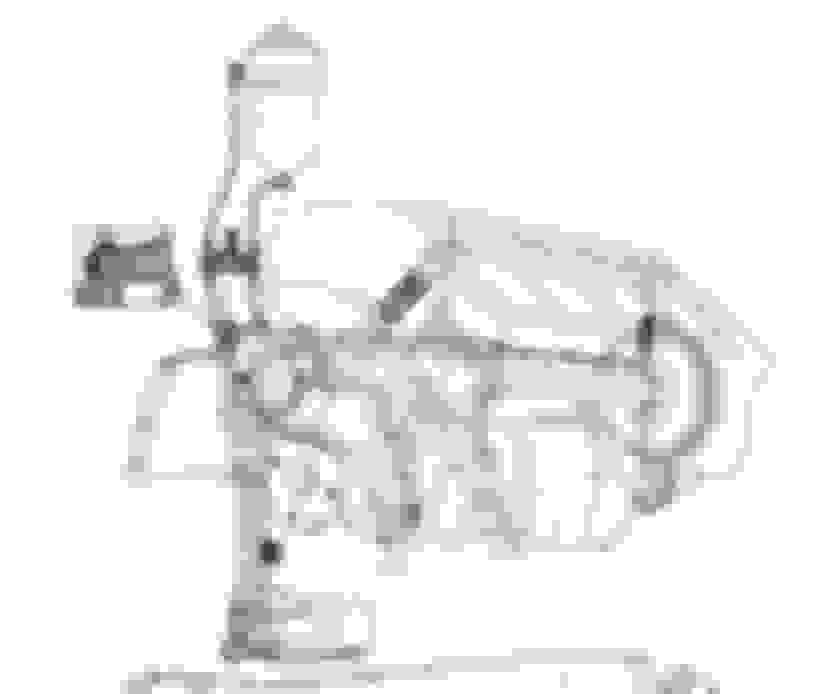
It's a Canadian thing. If we can get a picture of the lines to/from it, we can confirm whether it is a factory full-flow system or not. I don't think it is, but there is also a Canadian bypass filter that is taller than the typical US type. I believe it was a Canadian military thing, to standardize on filter elements.
I'll take some more pics of the truck today sometime and post them.
What's that green plug between the #5 and #6 plugs? Some sort of block heater (I don't see how) or a sender unit?
Yeah it's a block heater. It must be a farmer thing. Another neat thing I found in the glove box was this old school tire inflater. You pull a spark plug out and put this in place of the plug and pump up your tire. I think it has some sort of check valve in it.
Yeah it's a block heater. It must be a farmer thing. Another neat thing I found in the glove box was this old school tire inflater. You pull a spark plug out and put this in place of the plug and pump up your tire. I think it has some sort of check valve in it.
That's pretty cool. It has some value. Here's one for $50 on ebay.
It's a Canadian thing. If we can get a picture of the lines to/from it, we can confirm whether it is a factory full-flow system or not. I don't think it is, but there is also a Canadian bypass filter that is taller than the typical US type. I believe it was a Canadian military thing, to standardize on filter elements.
This is the best pic I could get. Hopefully it helps.
Not really, the spark plug is over the valves. Even doing it from the bottom (pan off) is kind of difficult. Merc crankshafts have some markings but in typical Ford fashion there are enough exceptions that direct measurement is the only sure way.
From what I see in the pictures, I'd be surprised if it's a Merc. I'd be curious to know what's marked on the dipstick, see below. Also, does the oil pan have the large (truck-style) cleanout?
Here's a couple pics of the oil pan clean out and the dipstick. It turns out my grandpa bought the truck in the early to mid fifties so it was slightly used when he got it. It may have been swapped out in the early years. My uncle said today that as far as he is aware it was never rebuilt or swapped out. But there are this 5 or 6 years before they got it.
Thanks for the pics. You have a standard Canadian bypass oil filter, not a full-flow system, as far as I can see. Does the line from the bottom of the filter canister go down to the bottom of the block, just above the oil pan?
I guess even dipsticks are different on Canadian engines. You do have a truck oil pan. So it's likely that at some point at least the heads were swapped on it, maybe the whole block, but without tearing it open, no way of knowing.
If the truck hasn't been in regular use, personally I think it's real instructive to take the intake manifold off to see what kind of crud is in the engine. It isn't that hard, don't even need to drain the coolant. The only hassle is removing the fan and generator, and to a lesser degree the fuel pump. The lifter valleys tended to collect a lot of sludge back in the days of leaded gas and non-detergent oil. If it's really bad, it definitely is worth cleaning out. No amount of running detergent oil, Marvel Mystery Oil, diesel, etc. will clean it out. There also may be a mouse nest in there! I took one apart recently that was full of acorns and the stuffing from the seat cushions.
Thanks for the pics. You have a standard Canadian bypass oil filter, not a full-flow system, as far as I can see. Does the line from the bottom of the filter canister go down to the bottom of the block, just above the oil pan?
I guess even dipsticks are different on Canadian engines. You do have a truck oil pan. So it's likely that at some point at least the heads were swapped on it, maybe the whole block, but without tearing it open, no way of knowing.
If the truck hasn't been in regular use, personally I think it's real instructive to take the intake manifold off to see what kind of crud is in the engine. It isn't that hard, don't even need to drain the coolant. The only hassle is removing the fan and generator, and to a lesser degree the fuel pump. The lifter valleys tended to collect a lot of sludge back in the days of leaded gas and non-detergent oil. If it's really bad, it definitely is worth cleaning out. No amount of running detergent oil, Marvel Mystery Oil, diesel, etc. will clean it out. There also may be a mouse nest in there! I took one apart recently that was full of acorns and the stuffing from the seat cushions.
I believe the line goes to the bottom of the block just above the pan. Once I can get the truck registered in my name I will be tearing it apart and starting the resto on it. I plan on pulling the motor apart and re-gasketing the whole thing. As long as everything looks okay when I tear it apart. As it sits now though it runs nice and smooth. No hesitation when I give it gas. No sound of any grinding or anything either which is awesome. I am looking forward to getting started on the project. Now it's time to convince the wife that she does NOT need to park in the garage for the winter. I think that's a battle I am going to lose.
[/QUOTE] Now it's time to convince the wife that she does NOT need to park in the garage for the winter. I think that's a battle I am going to lose.[/QUOTE]
I am used to parking all but one vehicle in the snowbank for the winter.