



No WD hitch while towing?
Thread Starter
|
Cargo Master


Joined: Jul 2008
Posts: 2,787
Likes: 658
No WD hitch while towing?
I red ford says no WEight Distribution hitch needed while towing. I find this hard to believe, especially passing trucks or on a windy gusty day.
I know on the side of caution would be a good idea, but I would like factual information if you can assist. My 2011 had anti sway as well...same thing?
Here is my old setup.
25' Airstream.

I know on the side of caution would be a good idea, but I would like factual information if you can assist. My 2011 had anti sway as well...same thing?
Here is my old setup.
25' Airstream.

Senior User
Joined: Sep 2015
Posts: 339
Likes: 2
Technically the weight distribution is "not" needed due to the fact the hitch goes so far into the frame. That said, we had several people on here smarter then me that said they would still run it on any trailer heavier then 5K lbs.
I am going to use my Equalizer hitch with 10K bars to help with sway, and keeping it directly behind me. Going to try to get it setup this weekend.
I am going to use my Equalizer hitch with 10K bars to help with sway, and keeping it directly behind me. Going to try to get it setup this weekend.

Cargo Master

Joined: Dec 2003
Posts: 2,299
Likes: 2,060
From: Central MO
Sway control and weight distribution are NOT the same thing. Ford says you don't need WD due to the strength of the hitch.
With a 25' Airstream pulled by a Super Duty, I would see no need for sway control. However, it's not a big deal to use it if you already have it, so if it makes you feel more comfortable, go for it!
With a 25' Airstream pulled by a Super Duty, I would see no need for sway control. However, it's not a big deal to use it if you already have it, so if it makes you feel more comfortable, go for it!
Cargo Master
Joined: Dec 2003
Posts: 2,299
Likes: 2,060
From: Central MO


Senior User
Joined: Jun 2016
Posts: 369
Likes: 4
From: McCalla Alabama
Trending Topics

Elder User
Joined: Aug 2016
Posts: 665
Likes: 3
Everything I have read about Ford intergrating the hitch into the frame (for 2017 its not a bolt on hitch) so we don't need WD hitch or sway control. I am going to try it and see if there is a difference.
FTE Stories
Ford Trucks for Ford Truck Enthusiasts

3 Best / Worst Features Of The 2025+ Ford Expedition
Brett Foote
10 Ways Ford is LOSING to the Competition
Joe Kucinski
Top 6 Best Deals Available on New Fords & Lincolns Right Now
Brett Foote
This Hennessey Takes the Expedition Tremor's Off-Roading Capability to the Next Level
Verdad Gallardo
Top 10 Fords at 2026 Carlisle Ford Nationals
Joe Kucinski
3 Best / 3 Worst Parts of Modern Ford Ownership
Brett Foote
10 Amazing Upgrades That Solve Common Ford Truck Owner Headaches
Pouria Savadkouei
Every 2026 Ford Engine Explained
Brett Foote
10 Ugly Ford Trucks That We Still Kinda Love
Joe Kucinski
Senior User
Joined: Dec 2014
Posts: 137
Likes: 1
From: S/E Michigan
My question is? What is YOUR hitch rated at? W/D or not. They have different ratings if you are NOT using the bars. Or are you getting a new 3" hitch properly rated for the tongue weight and trailer weight
Senior User
Joined: May 2015
Posts: 334
Likes: 5
From: Woodland Park, CO
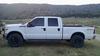
I'd be embarrassed if my rear sagged like your old truck!
Interested in how the 17 does. What's your tongue weight? My trailer pushes over 950#.
I have an equalizer but only use it if on highway for long period of time. Too much of a pain when going short distances or under 60mph.
Interested in how the 17 does. What's your tongue weight? My trailer pushes over 950#.
I have an equalizer but only use it if on highway for long period of time. Too much of a pain when going short distances or under 60mph.

Posting Guru
Joined: Oct 2005
Posts: 1,460
Likes: 3
My 2011 sagged just like that....but my tongue weight was 1119 on my TT as it was a front slide (4 slides total). Even sagged with my Equalizer hitch. I recently sold it so I won't be able to see how it does on my '17. I'm downsizing to a smaller camper next Spring and probably won't even need the Equalizer on it. Shoot....my crew golf cart on my '12 tandem sagged the back of my '11 F250. I think two bags of ice in a cooler drops it down to the bump stops......LOL...LOL
Thread Starter
|
Cargo Master
Joined: Jul 2008
Posts: 2,787
Likes: 658
I'd be embarrassed if my rear sagged like your old truck!
Interested in how the 17 does. What's your tongue weight? My trailer pushes over 950#.
I have an equalizer but only use it if on highway for long period of time. Too much of a pain when going short distances or under 60mph.
Interested in how the 17 does. What's your tongue weight? My trailer pushes over 950#.
I have an equalizer but only use it if on highway for long period of time. Too much of a pain when going short distances or under 60mph.
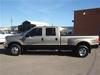
Had a WD hitch and still looked like that, hooking up late this afternoon...we will see.
Laughing Gas
Joined: Oct 2013
Posts: 861
Likes: 7
From: AZ
Whether it can keep the sway under control electronically or not would not be my concern, nor the hitches capability of carrying the weight, I like a WD hitch to help with the squat which is putting some weight on your front tires at the same time. No reason to carry all the weight behind the rear axle and put all the stress on the rear tires, let the front help out some too.

Prolocutor
Joined: Jan 2009
Posts: 13,618
Likes: 1,247
From: Western MA

Need it? No. Will it give you a better towing experience? Absolutely. Transferring some weight to the front axle will give you a safer and more relaxed towing experience. The same applies to sway control. The best easiest system to install and use that does both is the Equalizer E4. The Reese Dual Cam as mentioned above works just as well but is more expensive and much more difficult to dial in.
All that said, the easiest way to decided if you want (as said, you don't need) WD/SC is to do your first tow without it. The truck is rated to handle it so give it a try. If you feel completely comfortable in all situations, you just saved yourself $450. If not, RV Wholesalers parts dept. is generally the cheapest on the E4 system I mentioned.
All that said, the easiest way to decided if you want (as said, you don't need) WD/SC is to do your first tow without it. The truck is rated to handle it so give it a try. If you feel completely comfortable in all situations, you just saved yourself $450. If not, RV Wholesalers parts dept. is generally the cheapest on the E4 system I mentioned.

Lead Driver
Joined: Jun 2005
Posts: 8,477
Likes: 728
From: Calgary Canada
I agree with this comment, BUT, proper weight distribution can do a lot to reduce or eliminate sway. The other way to say this is that a poorly distributed load can CREATE sway.
And, from what I've seen, most hitches that have sway control features, also happen to have weight distribution features.
My two cents, or three up here in Canada due to the exchange, is that a WDH is helpful, even when it's not needed. A little time spent at the CAT scales convinced me that pretty firmly. No matter how that new Ford hitch is attached, it can't put weight ONTO the front tires of the truck, but a WDH can.
And, from what I've seen, most hitches that have sway control features, also happen to have weight distribution features.
My two cents, or three up here in Canada due to the exchange, is that a WDH is helpful, even when it's not needed. A little time spent at the CAT scales convinced me that pretty firmly. No matter how that new Ford hitch is attached, it can't put weight ONTO the front tires of the truck, but a WDH can.