When you click on links to various merchants on this site and make a purchase, this can result in this site earning a commission. Affiliate programs and affiliations include, but are not limited to, the eBay Partner Network.
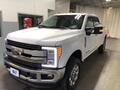
I am a transfer from the classic threads. I was in older classics for a couple years with my 1977 F 250 4x4 Ranger. Now I purchased a 2016 Lariat FX4 Crew Cab.
I put this in today. I really liked the quality of the manufacturing and I will keep you all posted on the gains in fuel economy.
Bill - No offense here but a CAI on a Turbo Diesel with an after-cooler is just not going to get you anything other than more intake noise. NA Gassers are another matter..
I have the same, but with the dry disposable membrane and pre filter. I use it for capacity, very dusty here, you could use half a dozen stock disposable filters a year easy.
Bill - No offense here but a CAI on a Turbo Diesel with an after-cooler is just not going to get you anything other than more intake noise. NA Gassers are another matter..
Sure, it will get you something. A lighter wallet and plenty of dirt in the engine.
With the HP/Torque wars between the big three, don't you think they would be doing the same if it helped without being detrimental to the engine which they have to warranty?
As one of the guys that has used similar products on a lot of different trucks, I'd thought I post my results:
You can hear slightly more turbo whistle (which is justification for many right there to be honest).
It looks great under the hood.
That's about it. I'm totally not knocking you at all because I'm in your club and have done the same mod multiple times. Just wanted to tell you that I have never had any increase of power or increased fuel economy from the install. Your results may vary from mine. Nice truck Bill!
I run the S&B. It cleans the engine bay up nice and for the money, it is a very quality intake. Running a bigger HP file, you need a CAI for airflow purposes. Enjoy it.
Now I know. If the dash computer is any sort of reliable, I seem to be getting a little better average on my MPGs.
I installed an aFe Pro5 drop-in and saw a 1 mpg improvement in fuel mileage, so I disagree on getting nothing out of them. The S&B seems to be very high quality.
With the HP/Torque wars between the big three, don't you think they would be doing the same if it helped without being detrimental to the engine which they have to warranty?
X2....
Be realistic here..
Physics are -
Air is being sucked through a filter panel that may be warm air from under the hood.
The Air is compressed by the turbocharger which heats the air.
The Air is now routed to an aftercooler which reduces or increases the air temperature (depending on state of air charge - all air, whether idle air or turbocharged goes through the aftercooler. The aftercooler is a liquid cooling system which retains heat and transfers that heat. If the heat of the intake air is cooler than the aftercooler, then it is warmed up. Visa versa if the intake air is warmer than the aftercooler, that heat is transferred from the air to the aftercooler liquid.
Diesels need air to be HOT in the combustion chamber in order for the fuel charge to ignite when the injector sprays it into the chamber. The temperature of that air MUST be within the right parameters for the engine to run efficiently.
---
The filter panel supplied by Ford has far enough filtration capacity to present very little restriction when clean. This is where an aftermarket filter may benefit you "IF" it has greater filter capacity than the stock panel which would make it flow enough air in dirty conditions longer than the OEM filter..
---
What can happen to people when they spend money on a fix for fuel economy and power, is that they can experience a placebo effect. They can subconsciously alter their driving style to accomodate the anticipated gains in mileage and power.
The only way I will believe that these devices work is to see credible dynomometer reports by an independant third party which would duplicate precise conditions in all tests, taking the best of three tests from each method.
---
While I've never built a performance diesel, I have built inumerable gasser engines both for street and competition. I've seen and know the tricks that dyno operators can use to increase power beyond what would be reasonable.
---
Enjoy your new filter and the sound that may go with it.. Chart your fuel economy over a period of time in various conditions before and after such changes and you will see your real-world results.
What can happen to people when they spend money on a fix for fuel economy and power, is that they can experience a placebo effect.
Yahhhh.
I put 7 things on my truck, each of which promises 20% increase in fuel economy. Trouble now is, I have to stop every couple hundred miles and drain the tank so it won't overflow. Power is so great I have to keep it in neutral or it exceeds the speed limit.
Be realistic here..
Physics are -
Air is being sucked through a filter panel that may be warm air from under the hood.
The Air is compressed by the turbocharger which heats the air.
The Air is now routed to an aftercooler which reduces or increases the air temperature (depending on state of air charge - all air, whether idle air or turbocharged goes through the aftercooler. The aftercooler is a liquid cooling system which retains heat and transfers that heat. If the heat of the intake air is cooler than the aftercooler, then it is warmed up. Visa versa if the intake air is warmer than the aftercooler, that heat is transferred from the air to the aftercooler liquid.
Diesels need air to be HOT in the combustion chamber in order for the fuel charge to ignite when the injector sprays it into the chamber. The temperature of that air MUST be within the right parameters for the engine to run efficiently.
---
The filter panel supplied by Ford has far enough filtration capacity to present very little restriction when clean. This is where an aftermarket filter may benefit you "IF" it has greater filter capacity than the stock panel which would make it flow enough air in dirty conditions longer than the OEM filter..
---
What can happen to people when they spend money on a fix for fuel economy and power, is that they can experience a placebo effect. They can subconsciously alter their driving style to accomodate the anticipated gains in mileage and power.
The only way I will believe that these devices work is to see credible dynomometer reports by an independant third party which would duplicate precise conditions in all tests, taking the best of three tests from each method.
---
While I've never built a performance diesel, I have built inumerable gasser engines both for street and competition. I've seen and know the tricks that dyno operators can use to increase power beyond what would be reasonable.
---
Enjoy your new filter and the sound that may go with it.. Chart your fuel economy over a period of time in various conditions before and after such changes and you will see your real-world results.
All this AND to put more air in, one wuold likely need a bigger turbo..........then to utilize the bigger turbo, one would probably need more fuel pump...........$$$$$$$$$$$$ The only real limitation would be the depth of ones pocket book!
But....not my circus and not my monkeys! I really like the fact that my nice 5er stays relatively clean, not all black down the side!
The 109R is long gone, Been on a Street Glide for years now. I just kept the name.
Thanks for all the input on the CAI. I liked how it was good quality and provides better filtration than a stock dry filter. (I did actually read the specs on standard and particulate heavy operations.)
It cleaned up the engine bay and I have a habit of upgrading which, for some reason, frustrates my wife to no end.
So I will be heading back to the classic truck 73-79 trucks as there are far fewer ********* in that group.
Rezvani's Latest Post-Apocalyptic Monster Is a Ford F-150 Raptor Underneath
Slideshow: Called the Fortress, the 850-horsepower pickup combines Raptor underpinnings with military-inspired features, survival equipment, and a starting price of $285,000.




















 Power is so great I have to keep it in neutral or it exceeds the speed limit.