





Possible PCM Issue???

Thread Starter
|
Junior User
Joined: Jan 2016
Posts: 50
Likes: 0
From: Valrico, FL
Possible PCM Issue???
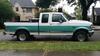
1994 Ford F150 5.0 auto w/E4OD 4x4
---
Not sure if it is a PCM issue or not.
---
Abridged version of problem at end
---
Driving fine, I was coming to a stop sign and it stalled. If would not crank.(I had a similar issue not long ago with the pip sensor. I replace the dizzy and it has work fine for 2 months.) I tried to crank it a few times and it finally turned over running rough. It went into limp mode. I was able to get it home. I tried to start it again and the fuel pump kept running instead of a few second prime. It did this on front and back fuel tank. I tried to pull codes with my scanner, it would not pull a code at all. I ran some errands with the wife and came back about 3 hours later. It started fine runs fine and the fuel pumps are working correctly. I tried to pull the codes and it comes back as PASS or 111.
---
Doing some research it points to the PCM. What do you guys think? Can the PCM be intermittent ? I went to advance auto parts and they said i can get one in 24 hours for $165. Before I go buying a part I wanted to see what you guys thought.
---
1. car started fine
2. Stalled at stop sign
3. would not crank
4. pushed out of road
5. Tried to crank it a few times it finally turned over and ran rough (limp mode)
6. got it home
7. tried to pull a code, scanner would not pull any codes
8. fuel pump constantly running
9. left to run errands for 3 hours
10. came home, it started right up like nothing happened
11. ran codes everything clear 111
12. fuel pump works normally now
---
HELP????
---
Not sure if it is a PCM issue or not.
---
Abridged version of problem at end
---
Driving fine, I was coming to a stop sign and it stalled. If would not crank.(I had a similar issue not long ago with the pip sensor. I replace the dizzy and it has work fine for 2 months.) I tried to crank it a few times and it finally turned over running rough. It went into limp mode. I was able to get it home. I tried to start it again and the fuel pump kept running instead of a few second prime. It did this on front and back fuel tank. I tried to pull codes with my scanner, it would not pull a code at all. I ran some errands with the wife and came back about 3 hours later. It started fine runs fine and the fuel pumps are working correctly. I tried to pull the codes and it comes back as PASS or 111.
---
Doing some research it points to the PCM. What do you guys think? Can the PCM be intermittent ? I went to advance auto parts and they said i can get one in 24 hours for $165. Before I go buying a part I wanted to see what you guys thought.
---
1. car started fine
2. Stalled at stop sign
3. would not crank
4. pushed out of road
5. Tried to crank it a few times it finally turned over and ran rough (limp mode)
6. got it home
7. tried to pull a code, scanner would not pull any codes
8. fuel pump constantly running
9. left to run errands for 3 hours
10. came home, it started right up like nothing happened
11. ran codes everything clear 111
12. fuel pump works normally now
---
HELP????

Fleet Mechanic
Joined: Mar 2014
Posts: 1,926
Likes: 116
From: Saskatchewan Canada
I get a sense of "crank" and "turn over" being used to say something they do not really mean.
Does the starter engage and rotate the engine's crankshaft when you turn the key? That would be the usual meaning of crank and turn over.
Does the engine fire and continue to run after the starter has been engaged? Desireable outcome, but this is not what is typically meant by crank and turn over. More accurately, this is described by saying the engine is running, although the engine may be running well, or not.
At any rate, cranking the engine has nothing to do with the PCM. Cranking circuits are simply the battery, solenoid and starter motor along with the primary cables. Cranking is controlled by a battery circuit from the ignition switch which has been physically engaged with the key.
Of course, all this has to be in the context of our old trucks. Bring new technology with vehicle antitheft systems present in the PCM and you will quickly call me a liar, but that just is not relevant here.
So, please excuse my confusion here, but is what you are saying that your truck is hard to get running because it will crank, but not fire and run, possibly intermittantly?
Does the starter engage and rotate the engine's crankshaft when you turn the key? That would be the usual meaning of crank and turn over.
Does the engine fire and continue to run after the starter has been engaged? Desireable outcome, but this is not what is typically meant by crank and turn over. More accurately, this is described by saying the engine is running, although the engine may be running well, or not.
At any rate, cranking the engine has nothing to do with the PCM. Cranking circuits are simply the battery, solenoid and starter motor along with the primary cables. Cranking is controlled by a battery circuit from the ignition switch which has been physically engaged with the key.
Of course, all this has to be in the context of our old trucks. Bring new technology with vehicle antitheft systems present in the PCM and you will quickly call me a liar, but that just is not relevant here.
So, please excuse my confusion here, but is what you are saying that your truck is hard to get running because it will crank, but not fire and run, possibly intermittantly?

Senior User
Joined: Nov 2014
Posts: 104
Likes: 0
From: Upper Michigan
I was advised that one sign of a PCM possibly going bad is the inability to pull codes, reader failing to communicate with the PCM. You may want to pull your PCM and inspect the board for discrepancies. I also thought that abnormal fuel pump behavior could also be attributed to a PCM going bad. Still, you could have an intermittent wiring concern. I am sure someone out there can give you a better answer/advice. Looking forward to hearing about the fix for this topic.

Elder User

Joined: Feb 2014
Posts: 501
Likes: 0
From: Lincoln, NE
I wouldn't waste any more time and inspect the ECU. Mine had interment issues for a couple of years before pulling the ECU and finding a lead corroded off one of the caps. Go pull the ECU and inspect it.
Thread Starter
|
Junior User
Joined: Jan 2016
Posts: 50
Likes: 0
From: Valrico, FL
Trending Topics
Thread Starter
|
Junior User
Joined: Jan 2016
Posts: 50
Likes: 0
From: Valrico, FL
FTE Stories
Ford Trucks for Ford Truck Enthusiasts

3 Best / 3 Worst Parts of Modern Ford Ownership
Brett Foote
10 Amazing Upgrades That Solve Common Ford Truck Owner Headaches
Pouria Savadkouei
Every 2026 Ford Engine Explained
Brett Foote
10 Ugly Ford Trucks That We Still Kinda Love
Joe Kucinski
10 Things Every Truck Owner NEEDS (2026 Edition)
Michael S. Palmer
Rezvani's Latest Post-Apocalyptic Monster Is a Ford F-150 Raptor Underneath
Verdad Gallardo
Top 10 Most Expensive Ford Trucks Ever Sold on Bring a Trailer
Joe Kucinski
2027 Ford Super Duty Buyer's Guide (Every Model, Engine, & Package)
Brett Foote
Top 10 Ford Truck Tragedies
Joe Kucinski

Fleet Owner


Joined: Aug 2005
Posts: 23,667
Likes: 301
From: Easton,Ks
I would say that is a bad capacitor. Replacing it may or may not fix your problem.
That capacitor is the filter for the incoming power.
What numbers does the PCM plug have on it?
In other words is that a rebuilt PCM? I ask this because that is the second photo of a PCM with surface mount capacitor filters I have seen on here in the last month and none in all the years before in this forum.
That capacitor is the filter for the incoming power.
What numbers does the PCM plug have on it?
In other words is that a rebuilt PCM? I ask this because that is the second photo of a PCM with surface mount capacitor filters I have seen on here in the last month and none in all the years before in this forum.
Thread Starter
|
Junior User
Joined: Jan 2016
Posts: 50
Likes: 0
From: Valrico, FL
I would say that is a bad capacitor. Replacing it may or may not fix your problem.
That capacitor is the filter for the incoming power.
What numbers does the PCM plug have on it?
In other words is that a rebuilt PCM? I ask this because that is the second photo of a PCM with surface mount capacitor filters I have seen on here in the last mount and none in all the years before in this forum.
That capacitor is the filter for the incoming power.
What numbers does the PCM plug have on it?
In other words is that a rebuilt PCM? I ask this because that is the second photo of a PCM with surface mount capacitor filters I have seen on here in the last mount and none in all the years before in this forum.

Fleet Owner
Joined: Aug 2005
Posts: 23,667
Likes: 301
From: Easton,Ks
Just guessing but maybe that (those) PCM computers were sent off for repair and the repair place just cut off the radial capacitor pins flush with the board. Then took a shortcut and replaced the capacitor(s) with surface mounted capacitor(s) in lieu of sucking out the solder as a short cut.
If this is the case then the brown on the board in the above photos may be from the old capacitors that were on the board before and leaked.
If this is the case then the brown on the board in the above photos may be from the old capacitors that were on the board before and leaked.
Fleet Mechanic
Joined: Mar 2014
Posts: 1,926
Likes: 116
From: Saskatchewan Canada
I noticed the ECU in this thread is from 1994 and the one in the other thread that subford mentions is from 1995. OBDII was mandated for 1996 and I believe EECV was the first use of the new protocol for Ford. I recall Ford had some sort of exemption for the 1996 OBS trucks which also carried into 1997 with the F250HD and F350. Exception for California and that is the only reason you see OBDII in these vehicles. Now, I have never seen an OBDII equipped OBS truck in my neck of Canuckistan, but since they do exist, could anyone verify if they are EECIV or EECV? I know the V8 Explorers with the 5.0 were EECV. And sorry for the
 .
.SMT requires a different circuit board than does wire lead components like the capacitors typically seen, so Ford must have engineered a new circuit board in the mid 90's. I'm pretty sure the cost savings alone for using the SMT electrolytic capacitors may not be sufficient to warrant this. Perhaps there was some consideration for developing OBDII within the EECIV platform? I have an EECIV ECU from a 4.6 modular engine that used OBD1 and incorporates MAF and EDIS. I have read somewhere that there is increased processing power in the later EECIV ECU's and perhaps the redesigned board also accommodated this?
Back on track for this thread, changing SMT caps requires some pretty delicate soldering. The components were typically glued to the circuit board and wave soldered. It is possible to change them with more conventional tools, but it requires a steady hand and a good soldering pencil. A temperature controlled station with a fine tip is probably the minimum you should be using here and cleanliness is essential. Remove the flux when you are finished! I repaired electronic equipment from the 70's through Y2K. It has been some time since I have had my hand in this, but I can say that it has been done successfully.