When you click on links to various merchants on this site and make a purchase, this can result in this site earning a commission. Affiliate programs and affiliations include, but are not limited to, the eBay Partner Network.
Ok, I'm not the smartest at electrical stuff - in fact it's my least favorite part of my rebuild. But now I'm confused.
I did the 6V to 12V conversion, and rewired everything under the dash to engine using a harness kit, but haven't done anything, or even realized I had to do something, about fuses.
Help please.
The original '52 came with 2 circuit breakers (15 amp and 30 amp) and no fuses. These probably sufficed in the original configurations.
I think most 12 volt conversions are done to support more accessories, which should be fused. I'm still 6 volt, but removed my cb's and installed a fuse panel when I rewired the truck.
I don't know (but someone on here will) if the first 12 volt trucks had fuses or still used the circuit breakers.
The original trucks did not have very much in the way of fuse protection. My 54 only had 2 thermo fuse buttons. The new lay out will have 21 circuits and fuses all set up in a nice package. There are some nice pics in this thread
There is usually a schematic in the back of the Repair Manuel. You can also find it on line by putting you truck year and model and searching foor wiring diagrams. If you have any trouble, get back to me and I will help you fine one..
Well it sounds like fuses are certainly a good thing. Where would I find a diagram converting from the circuit breakers by my gauges to a fuse panel?
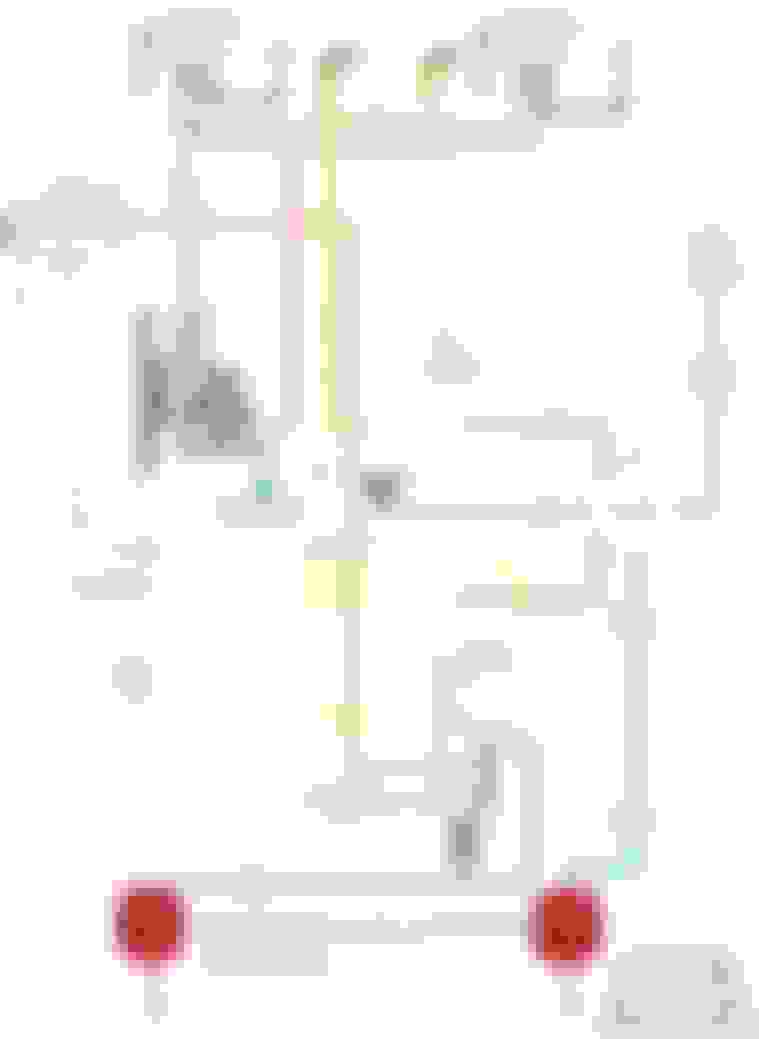
I got this one from ClassicCarWiring.com. I find it's easier to read than the ones in the Shop Manual and it's color coded per the original wiring color scheme. It does not include turn signals or the cigar lighter. It's 11x17 in size and is laminated so you won't get grease on it.
I got my fuse panel from Amazon. I went with the 14 gang panel, but could probably just gotten the 10 gang, since I'm only using 7 of the fuses to protect all the lines that were originally protected by the circuit breakers (and I added one for turn signals).
The diagram Joe mentioned is great. But, it is the stock wiring without a fuse panel. For my 55, I couldn't find a diagram that had turn signals either.
The instrument lights are run off the headlight switch and turn signal.
Here is a diagram I have put together that includes a fuse panel and headlight relay for the lighting system. This is for a 55, so yours might be a little different. I also haven't fully tested my diagram, but I think it is pretty good.
The turn signal wire colors are what were on my truck. The new ones you buy are different colors.
I have similar diagrams for Generator circuit, ignition circuit and some other basic diagrams for lighting. Drawing them sure helped me understand the systems more.
The diagram Joe mentioned is great. But, it is the stock wiring without a fuse panel. For my 55, I couldn't find a diagram that had turn signals either.
The instrument lights are run off the headlight switch and turn signal.
Here is a diagram I have put together that includes a fuse panel and headlight relay for the lighting system. This is for a 55, so yours might be a little different. I also haven't fully tested my diagram, but I think it is pretty good.
The turn signal wire colors are what were on my truck. The new ones you buy are different colors.
I have similar diagrams for Generator circuit, ignition circuit and some other basic diagrams for lighting. Drawing them sure helped me understand the systems more.
That's a good drawing Joe.
I used the ClassicCarWiring diagram to identify which circuits were protected by the circuit breakers, so I could use 15 amp or 30 amp fuses accordingly. On my '51, there are only 6 circuits protected directly by the cb's: the light switch (headlights, taillights and instrument lights), the stop lights through the stop light switch and the dome light. This changes if you add turn signals, as you said, but the t/s switch comes with a wiring diagram.
I fused the ignition switch, stop light switch, headlight switch and dome light with individual 30 amp fuses. (I later added a relay to the headlight circuit) I fused the taillights and the turn signals with individual 15 amp fuses. I put a 25 amp fuse on the cigar lighter (not shown on the diagram). So I only used 7 fuses in my 14 bus panel.
And I mounted my fuse panel to the firewall next to the "entry" hole for the harness from the engine bay. It's on a board with the barrier strips I used to connect everything.
I want to mount mine in the glove box area. My idea is to make it so all the fuses are easy to get to by opening the glove box door and removing a small access panel.
Now whether or not I can accomplish this is yet to be seen. I will be running a Vintage Air unit. So I'm not sure how much room I'll have left to work with. I'll find out when I get a little more of my project done.
Rezvani's Latest Post-Apocalytic Monster Is a Ford F-150 Raptor Underneath
Slideshow: Called the Fortress, the 850-horsepower pickup combines Raptor underpinnings with military-inspired features, survival equipment, and a starting price of $285,000.













 I will be running a Vintage Air unit. So I'm not sure how much room I'll have left to work with. I'll find out when I get a little more of my project done.